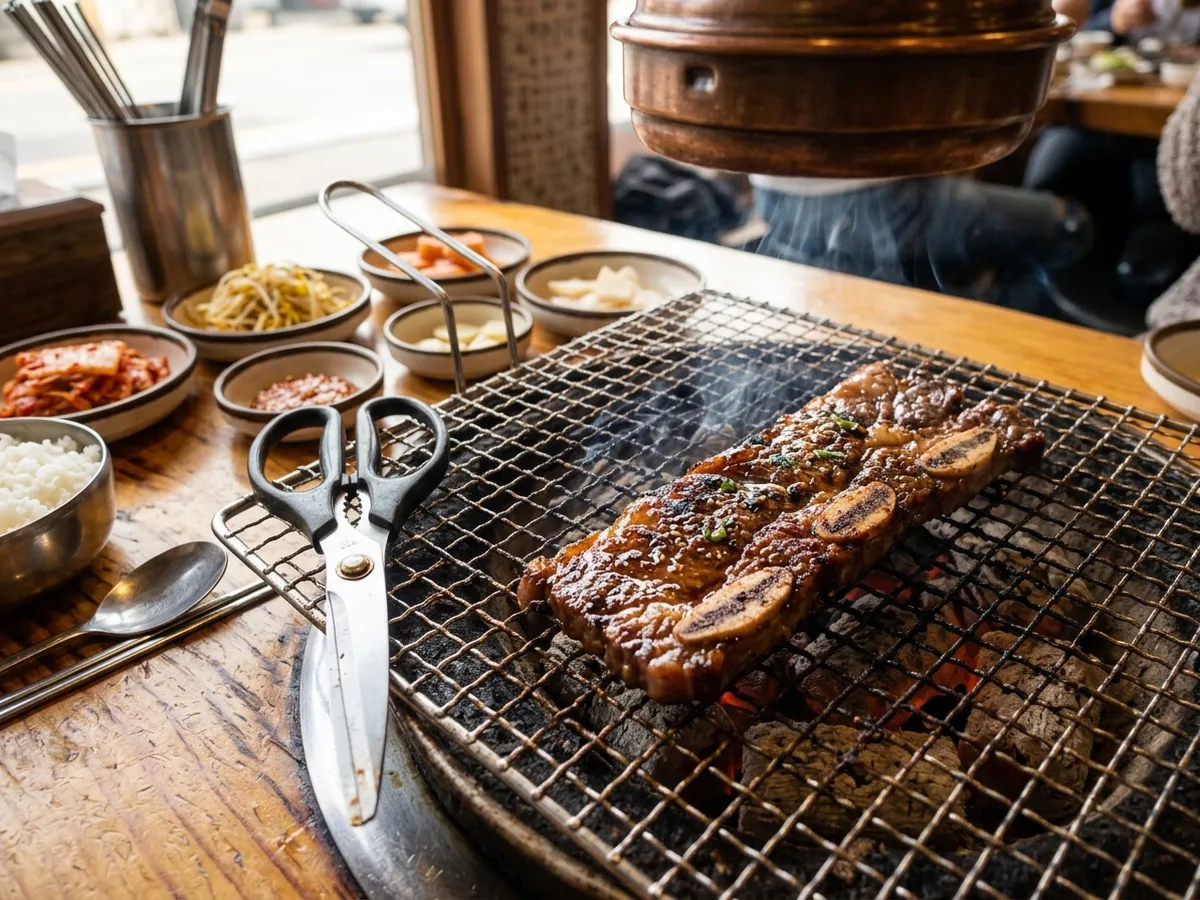
How to Cook Samgyeopsal at Home: No Oil, No Marinade, No Mystery
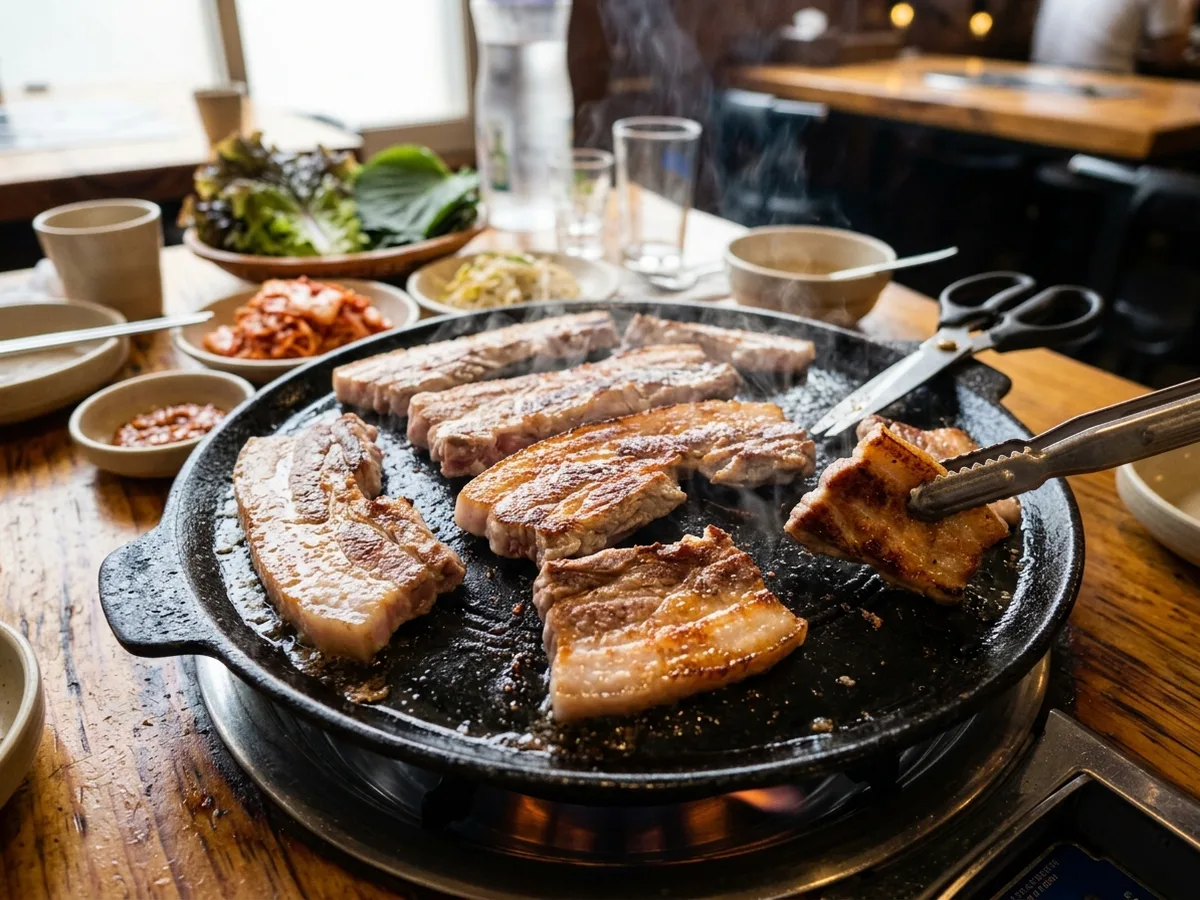
Cooking samgyeopsal (삼겹살) at home is the most common “let’s not cook tonight” meal in Korea — because it barely counts as cooking. There’s no marinade, no sauce work, no timing chart. The entire method is heat control and a few non-negotiable rules, and the first one surprises everyone: no oil.
What you need
- Pork belly, sliced about 1cm thick (standard Korean grilling cut). Thin “daepae” shavings and thick slab cuts both work but cook very differently.
- Salt or ssamjang — that’s the entire seasoning section.
- Optional but traditional: garlic, kimchi, lettuce and perilla leaves, scallion salad, pickled onion.
The method, step by step
- Preheat the pan or grill plate properly. The meat should sizzle hard on contact.
- Lay the pork on with no oil. The belly renders its own fat almost immediately — added oil only adds spatter.
- Leave it alone until the underside is golden, then flip. Don’t chase a clock: thickness, starting temperature and flame strength all change the timing, so cook by look, not by minutes.
- Cut into bite-size pieces with scissors once both sides have color, right in the pan — then keep cooking so the cut faces sear too. If a cut face shows pink, it’s not done; stand the pieces on the raw faces.
- Garlic and kimchi go in after the fat has rendered, cooking in the pork fat — that’s the point of them. Kimchi’s sugars and seasoning burn far faster than meat, so give it the cooler side of the pan.
- Drain the fat as it pools. Tip it into a bowl or blot with paper towels. Too much standing fat and the pork starts deep-frying instead of grilling — the texture goes soft where it should crisp.
The three failure modes (and the fixes)
- Crowding the pan drops the temperature and steams the meat. Cook in batches; the pieces shouldn’t touch.
- Thick cuts burning outside, raw inside — sear the surface on high heat, then drop to medium-low and let the interior catch up.
- Charcoal flare-ups (for outdoor grilling): dripping pork fat hits the coals, flames jump, soot lands on your meat. Keep the meat off the drip line, or sear in a pan first and finish briefly over charcoal for the smoke flavor — a genuinely common hybrid trick.
Ventilation is part of the recipe
Rendering pork fat means smoke, smell, and a fine mist of airborne grease. Koreans open the window and run the range hood for the whole cook — it’s a ritual as fixed as the meal itself. An air fryer or oven cuts down the spatter, but nothing fully contains the smell. Accept it; dinner is worth it.
The mandatory ending
Whatever else happens: leftover pork fat + kimchi + rice = kimchi fried rice. Fry the kimchi in the fat first, add rice, press it flat, and let it crisp. This is not optional in any Korean household, and it shouldn’t be in yours.
🥢 Eating it out instead? How to Eat Samgyeopsal (Korean BBQ Pork Belly) Like a LocalNutrition
| Calories | 467 kcal |
|---|---|
| Carbohydrate | 0.35 g |
| Protein | 22.56 g |
| Fat | 41.69 g |
| Sodium | 576 mg |
Per serving (~200g): ≈934 kcal · sodium ≈1,152 mg (58% of the WHO daily guideline, 2,000 mg)
FAQ
Do you need oil to cook samgyeopsal?
No — never. Pork belly renders plenty of its own fat within the first minute on a properly preheated pan. Adding oil just means more spatter and greasier meat. If anything, you'll be removing fat from the pan as you go.
How long do you cook samgyeopsal on each side?
There's no fixed time — it depends on thickness (standard grilling cuts run about 1cm), the meat's starting temperature and your heat. Cook by appearance instead: flip when the underside is golden brown, then cut a piece and check the cut face; if any pink remains, sear the cut faces until it's gone.
Why does cooking samgyeopsal make so much smoke?
Rendering pork fat produces smoke and airborne grease — it's unavoidable, which is why Koreans open a window and run the hood fan the entire time. An air fryer or oven reduces spatter, but doesn't eliminate the smell. It's a known cost of one of Korea's favorite home meals.
What do you do with the leftover pork fat in the pan?
The classic move: fry kimchi in it, then add rice for kimchi fried rice. The rendered fat carries the whole flavor of the meal. Drain the excess into a container first — you want a coated pan, not a deep-fryer.