How to Eat Gimbap: Kinds, Ordering, and Kimbap-Shop Survival
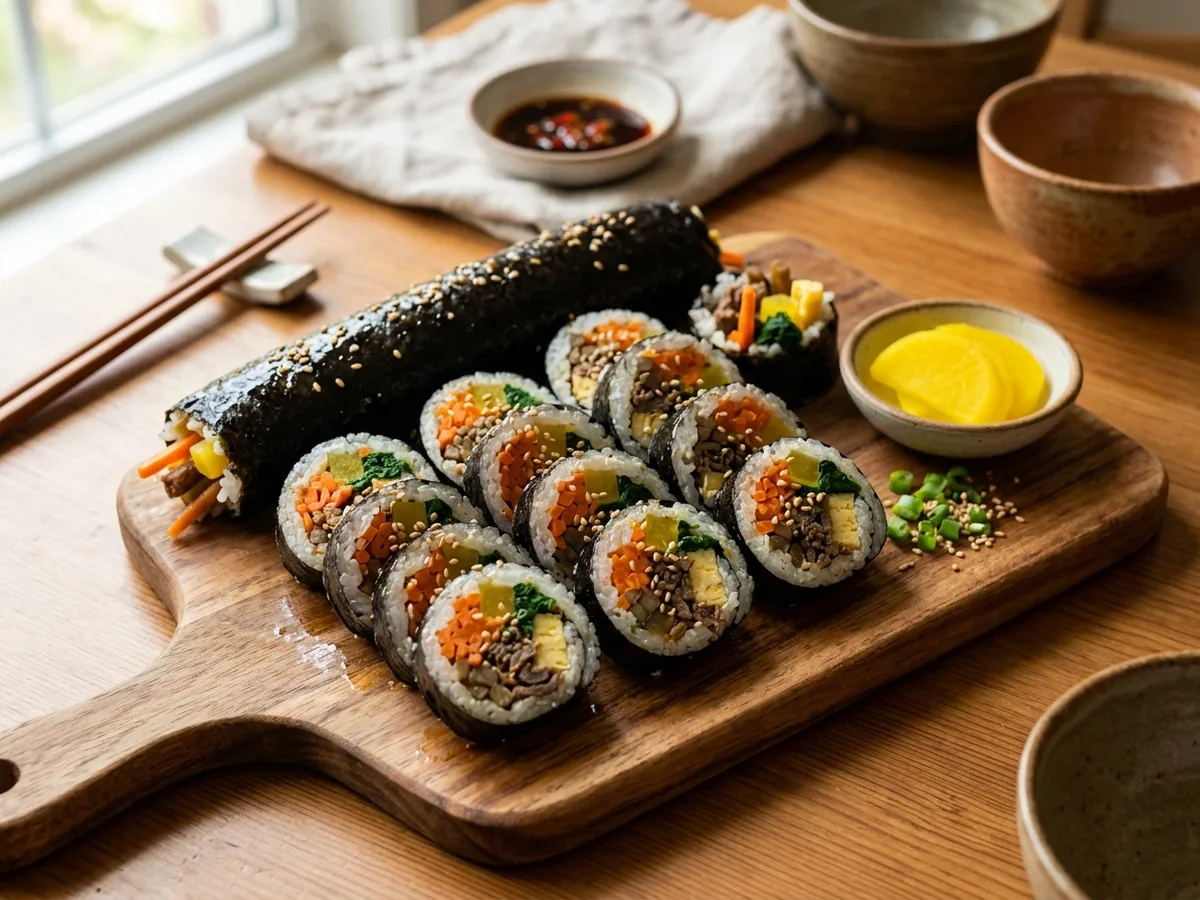
Gimbap (김밥) — rice, vegetables and fillings rolled in seaweed — is Korea’s everyday portable meal: the thing you grab before a hike, a train ride, or a 15-minute lunch. It also comes with a whole institution attached: the kimbap shop (김밥집), one of the most useful restaurant formats in Korea for a visitor to master.
What you’re ordering
Every kimbap shop has a wall menu of rolls, each sold whole and pre-sliced:
| Menu item | What’s inside |
|---|---|
| 원조/야채김밥 (original/veggie) | The baseline: egg, danmuji, carrot, spinach, ham |
| 참치김밥 (chamchi) | Tuna-mayo — arguably the modern favorite |
| 치즈김밥 (cheese) | A slice of processed cheese melted through |
| 소고기/불고기김밥 (beef/bulgogi) | Sweet-soy marinated beef |
| 김치김밥 (kimchi) | Kimchi fried into the filling |
| 누드김밥 (nude) | Inside-out — rice on the outside |
| 꼬마김밥 (kkoma) | Mini skinny rolls, often with a mustard dip |
One roll (₩3,500–₩5,500) is a light meal; two rolls or a roll plus ramyeon is a full one.
How kimbap shops work
Kimbap shops (including the famous 24-hour chains) are Korea’s diners: laminated menus with fifty items, water and cutlery self-serve, food in five minutes. The unwritten rules:
- Order at the table or the counter, depending on the shop — watch what others do, or just sit and a staff member will come.
- Takeout is the default mode for gimbap itself — say “포장이요” (po-jang-i-yo, “to go”) and it’s wrapped in foil in a minute.
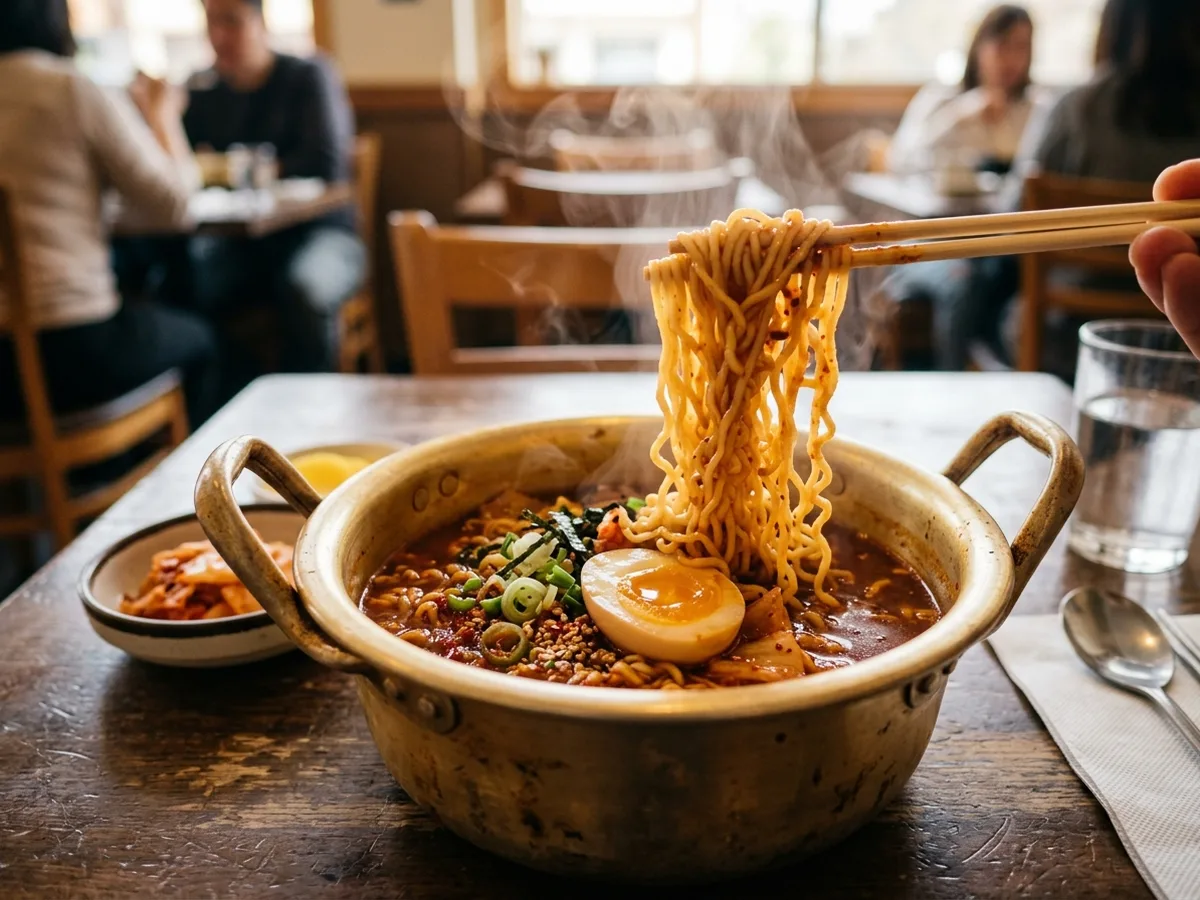
- The classic combo is gimbap + ramyeon (라면): dunking a piece of gimbap into spicy ramyeon broth is a certified national habit, not a quirk.
- Free danmuji and kimchi usually come on the side, or sit in self-serve containers.
How to eat it
One slice, one bite — gimbap pieces are sized for exactly that. No dipping sauce, no soy, no wasabi; if a piece is falling apart near the end of a roll (the “꽁다리”, the end piece), eating it with your fingers is standard. The end pieces, overloaded with filling, are considered either the best part or the cook’s snack — households genuinely argue about this.
Price and where to go
Any kimbap shop will do the classics honestly. Beyond that: department-store basements and premium chains sell “gourmet” rolls at double the price, and convenience stores sell triangle gimbap (삼각김밥) for around ₩1,500–₩2,000 — a different food with its own unwrapping ritual, covered in our convenience store guides.
Picnic note: gimbap is the Korean picnic food. If you’re going to a park, a palace lawn, or a Han River evening, showing up with a couple of foil-wrapped rolls is the most local move available.
Nutrition
| Calories | 140 kcal |
|---|---|
| Carbohydrate | 19.98 g |
| Protein | 4.84 g |
| Fat | 4.55 g |
| Sodium | 307 mg |
Per serving (~230g): ≈322 kcal · sodium ≈706 mg (35% of the WHO daily guideline, 2,000 mg)
FAQ
Is gimbap the same as a sushi roll?
No — the resemblance is only visual. Gimbap rice is seasoned with sesame oil and salt (not vinegar), fillings are cooked or pickled rather than raw fish, and it's eaten as everyday food — picnics, hikes, quick lunches — with no soy sauce or wasabi involved.
Do you dip gimbap in soy sauce?
No. Gimbap is fully seasoned already — the sesame-oil rice and the pickled radish inside carry the flavor. It's eaten as-is, one whole piece at a time, often with a cup of instant ramyeon on the side.
Why is there always yellow radish in gimbap?
Danmuji (단무지, pickled yellow radish) provides the crunch and sweet-sour note that balances the rice and sesame oil. Kimbap shops also serve extra danmuji slices on the side, free, the way other places serve kimchi.
How much does gimbap cost in Korea?
Roughly ₩3,500–₩5,500 a roll at kimbap shops as of recent years, with premium fillings (bulgogi, cheese, tuna) toward the top of the range. It remains one of the cheapest full meals in the country.