How to Eat Tteokbokki: Ordering, Spice Levels, and the Bunsik Trinity
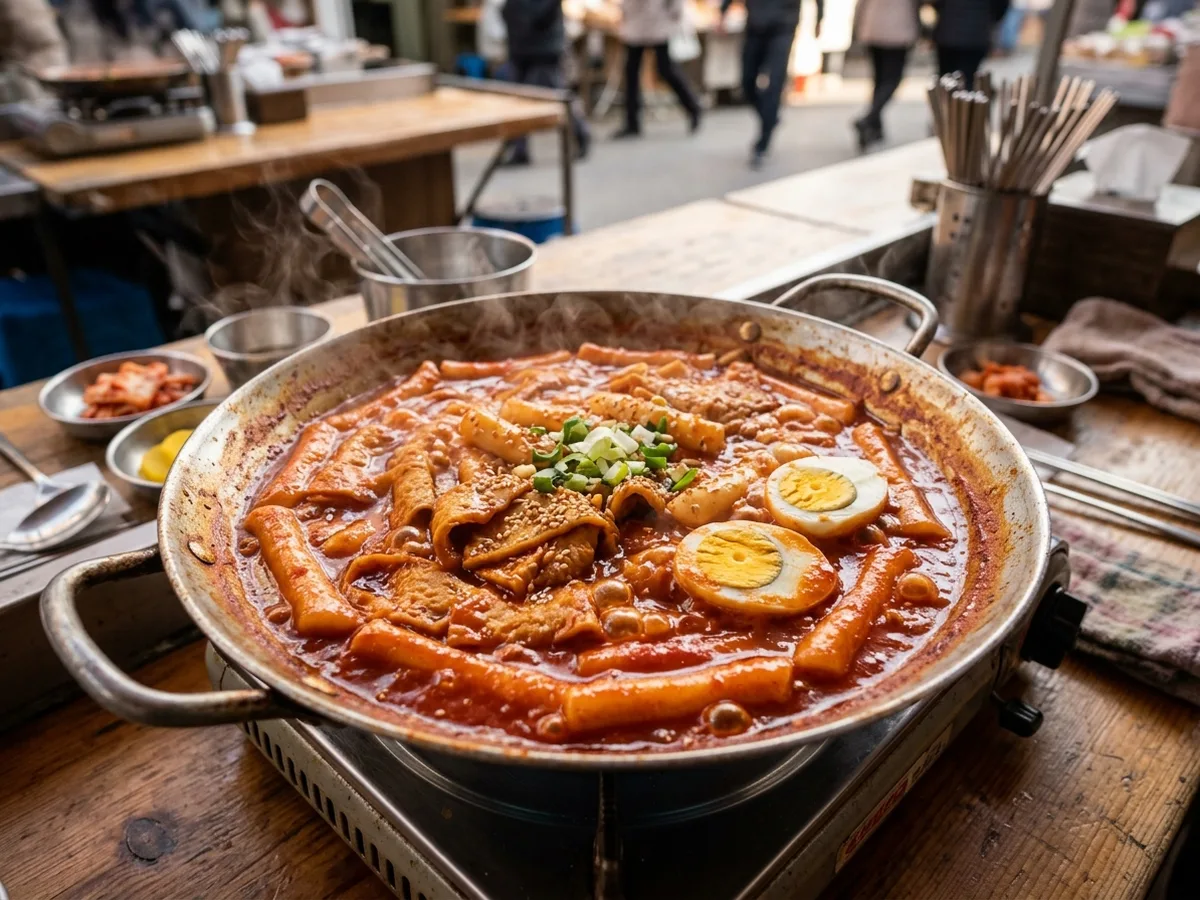
Tteokbokki (떡볶이) — chewy rice cakes in a sweet-spicy gochujang sauce — is the anchor of an entire food category: bunsik (분식), Korea’s cheap, fast, beloved snack-food canon. Eating it “right” is mostly about knowing what to order alongside it.
What you’re ordering
The base order is just tteokbokki: rice cakes (떡), fish cakes (어묵), scallion and sauce, ₩3,500–₩6,000 a portion. But the real move is the bunsik trinity:
| Item | What it is |
|---|---|
| 떡볶이 (tteokbokki) | The rice cakes and the all-important sauce |
| 튀김 (twigim) | Korean tempura — fried squid, sweet potato, dumplings, peppers |
| 순대 (sundae) | Steamed blood sausage with glass noodles |
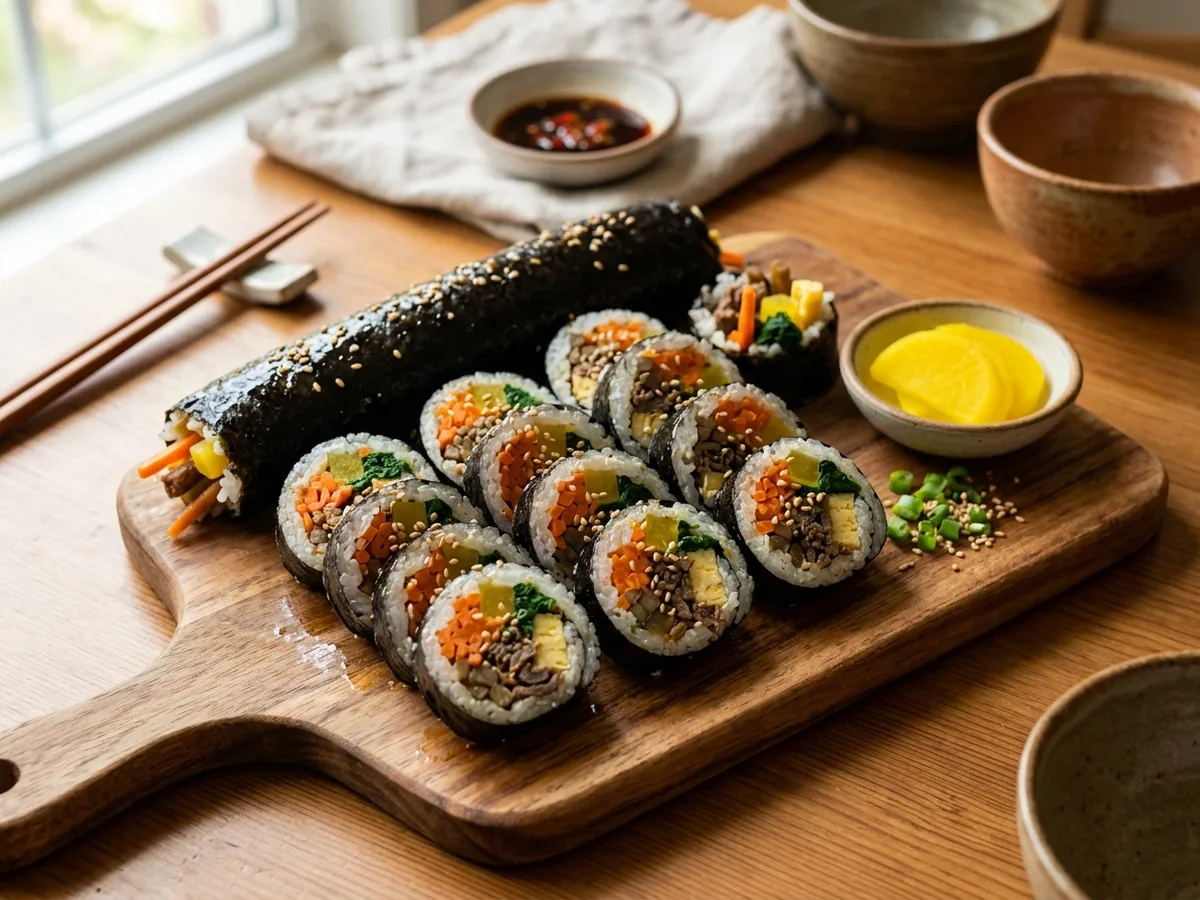
Order all three and you’ve assembled the classic after-school meal that every Korean adult is nostalgic about. Kimbap or a boiled egg round it out.
The dipping rule
This is the part nobody tells you: the tteokbokki sauce is communal property. Twigim gets dunked into it. Sundae gets dragged through it. Some people spoon sauce directly over their fried food. At a bunsik shop, asking for your twigim “떡볶이 국물에” (in the tteokbokki sauce) will get you an approving nod and a plate of fried things already dressed in sauce.
How to eat it, step by step
- Start with a rice cake solo to calibrate the spice before committing.
- Alternate textures: chewy rice cake → crunchy sauce-dipped twigim → soft sundae. The contrast is the whole experience.
- Don’t skip the fish cakes (어묵) hiding in the sauce — they’ve absorbed more flavor than anything else in the pan.
- At a stall, there’s usually a cup of broth (어묵 국물) free from the fish cake pot — it’s the standard chaser when the spice builds. Help yourself where you see cups stacked.
- At a jeukseok tteokbokki restaurant (pot cooked at your table), always say yes to the fried rice (볶음밥) at the end — the crusty rice scraped off the sauce-coated pan is the best bite of the meal.
Price and where to go
Street carts and market stalls charge ₩3,500–₩5,000 a cup or plate; bunsik shops slightly more with actual seating. Every market (시장) has a legendary tteokbokki stall — follow the schoolkids around 4pm; they have decades of collective quality-control behind them.
Spice warning that’s actually serious: franchise names built on heat — the famous ultra-spicy delivery tteokbokki brands — are calibrated for Korean spice veterans. “순한맛” (mild) at those places still outguns normal street tteokbokki. Work up to it.
Nutrition
| Calories | 144 kcal |
|---|---|
| Carbohydrate | 25.96 g |
| Protein | 3.51 g |
| Fat | 2.96 g |
| Sodium | 391 mg |
Per serving (~180g): ≈259 kcal · sodium ≈704 mg (35% of the WHO daily guideline, 2,000 mg)
FAQ
How spicy is Korean tteokbokki?
Standard street tteokbokki is a solid medium — sweet first, then a building gochujang heat. Most visitors manage it fine. Specialty spicy brands (like Yupdduk-style '엽떡') are a different sport entirely; treat anything advertising extra heat seriously.
What do you dip in tteokbokki sauce?
Twigim (Korean tempura) and sundae are the classics — locals dunk fried vegetables, dumplings or squid straight into the tteokbokki sauce, or spoon sauce over them. The sauce is treated as a shared condiment for the whole table.
What's the difference between street cart tteokbokki and restaurant tteokbokki?
Carts and market stalls sell it ready-made from a big pan, by the cup or plate. Bunsik shops serve bigger portions at tables, and 'jeukseok tteokbokki' restaurants cook a whole pot at your table with add-ins like ramyeon noodles and cheese, finished with fried rice.
Is tteokbokki a meal or a snack?
Both. A cup from a cart is a snack; a bunsik-shop set with twigim, sundae and kimbap is absolutely a meal. The jeukseok (table-pot) version with fried rice at the end is a full dinner.