Injeolmi (인절미)
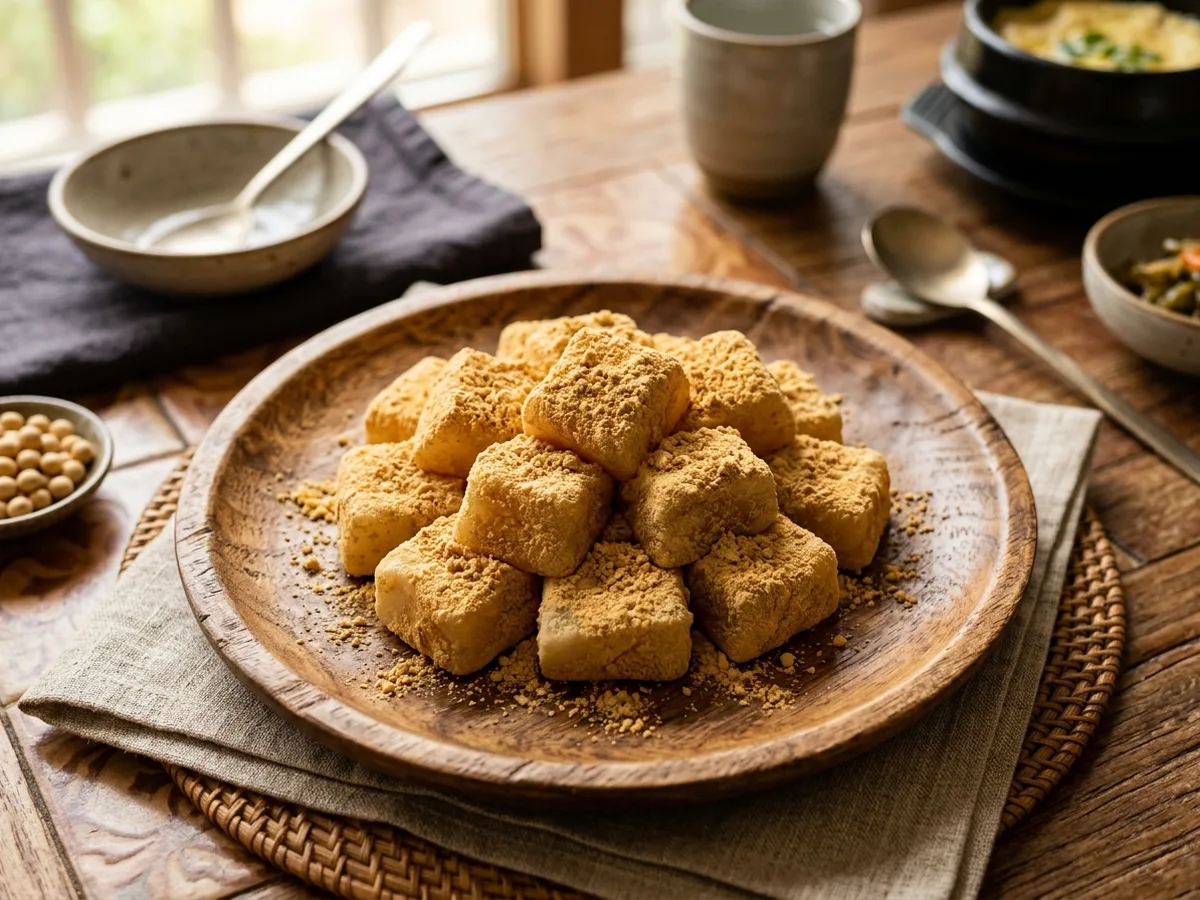
Chewy rice cake dusted in roasted soybean powder.
- Korean name
- 인절미
- Spice level
- Not spicy
- Flavor
- nutty · chewy
- Typically contains
- rice cake, soybean powder
- Vegetarian / vegan
- Typically plant-based — one of the safer picks for vegans (still confirm when ordering)
- Typical price
- ₩3,000–₩8,000 per portion checked 2026-07 — varies by area
- Good to know
- Beginner-friendly ●●●●● Solo dining ●●●●○ Kid-friendly ●●●○○
- Also written as
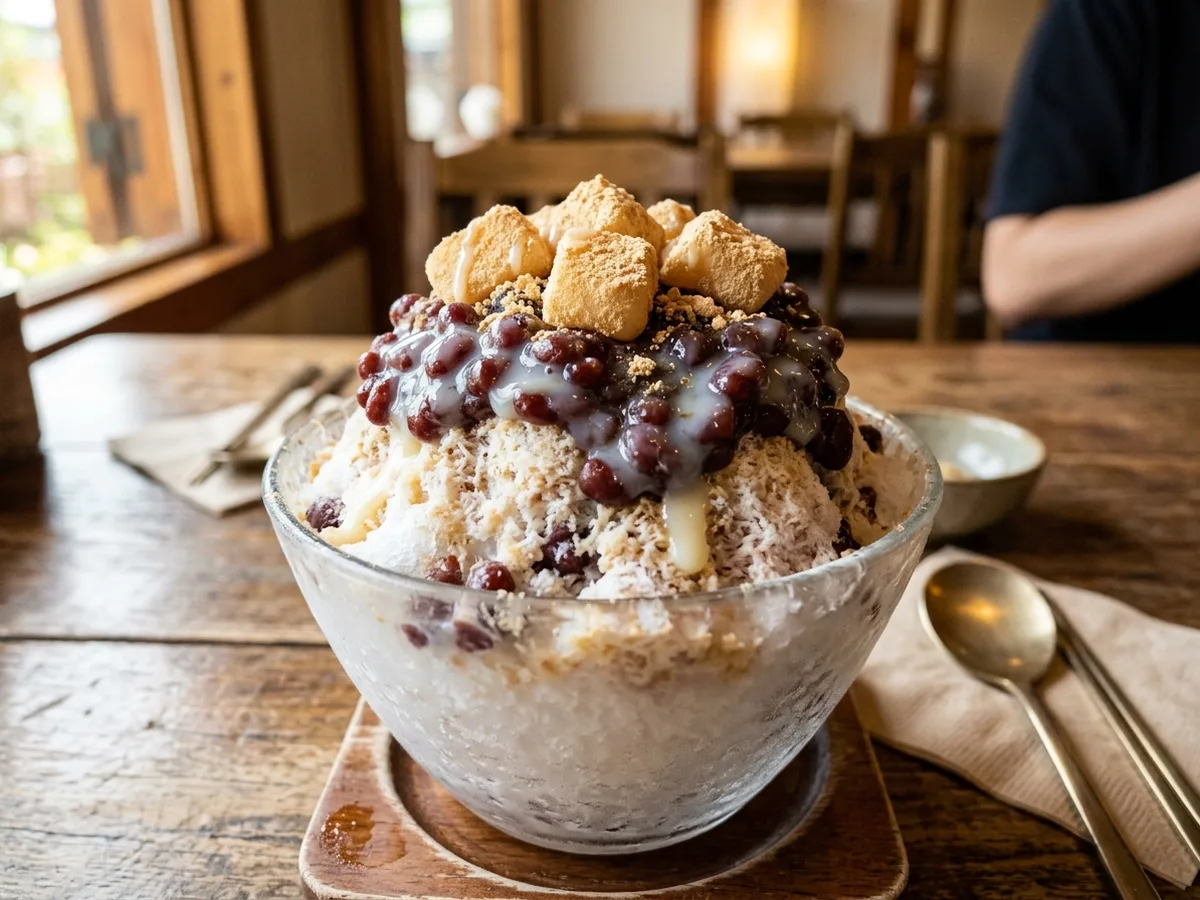
- injulmi, injeolmi tteok, bean powder rice cake, injeolmi bingsu
What is Injeolmi?
Injeolmi (인절미) is a soft rice cake coated in roasted soybean powder (konggaru) — pounded glutinous rice with a mochi-like pull and a nutty, toasty coat. It is among the most beloved tteok varieties, eaten at celebrations and teatime, and its flavor has become a whole genre: injeolmi bingsu, injeolmi toast, injeolmi lattes.
How to eat it
- Small pieces, chew thoroughly. Like all glutinous rice cake, injeolmi is sticky and dense — cut or bite small, especially for children and older adults.
- Expect powder everywhere. The soybean coating dusts everything; lean over the plate and consider the provided pick or fork.
- Pair it with something to drink. Sikhye, barley tea, or milk — injeolmi is dry-coated and benefits from a companion drink.
Cooking it at home
- Soak glutinous rice (or use glutinous rice flour), steam until fully cooked, then pound or beat until smooth and very elastic — a stand mixer with a paddle is the modern shortcut.
- Turn out onto a surface dusted thickly with roasted soybean powder.
- Flatten, cut into bite-sized rectangles with an oiled knife, and roll every piece in more konggaru.
Good to know
- Sticky rice cakes are a genuine choking hazard — this is the standard warning printed with tteok in Korea; eat small pieces and avoid giving large chunks to toddlers or the elderly.
- Contains soy (the coating); best the day it is made — it hardens in the fridge (a brief steam or microwave revives it).
Vegan as traditionally made — rice, soybean powder, and a little salt and sugar.
The name is tied to a Joseon-era anecdote about King Injo praising the cake — a story every Korean schoolchild hears.
Nutrition
| Calories | 242 kcal |
|---|---|
| Carbohydrate | 50.07 g |
| Protein | 5.64 g |
| Fat | 2.16 g |
| Sodium | 297 mg |
Per serving (~100g): ≈242 kcal · sodium ≈297 mg (15% of the WHO daily guideline, 2,000 mg)