Tangsuyuk (탕수육)
Sweet-and-sour fried pork — the 'dip or pour' debate dish.
- Korean name
- 탕수육
- Spice level
- Not spicy
- Flavor
- sweet · tangy
- Typically contains
- pork, wheat flour
- Vegetarian / vegan
- Not vegetarian — meat or seafood is core to the dish
- Typical price
- ₩18,000–₩30,000 per dish checked 2026-07 — varies by area
- Good to know
- Beginner-friendly ●●●●● Solo dining ●●○○○ Kid-friendly ●●●●●
- Also written as
- tangsooyuk, tang su yuk, sweet and sour pork korean
What is Tangsuyuk?
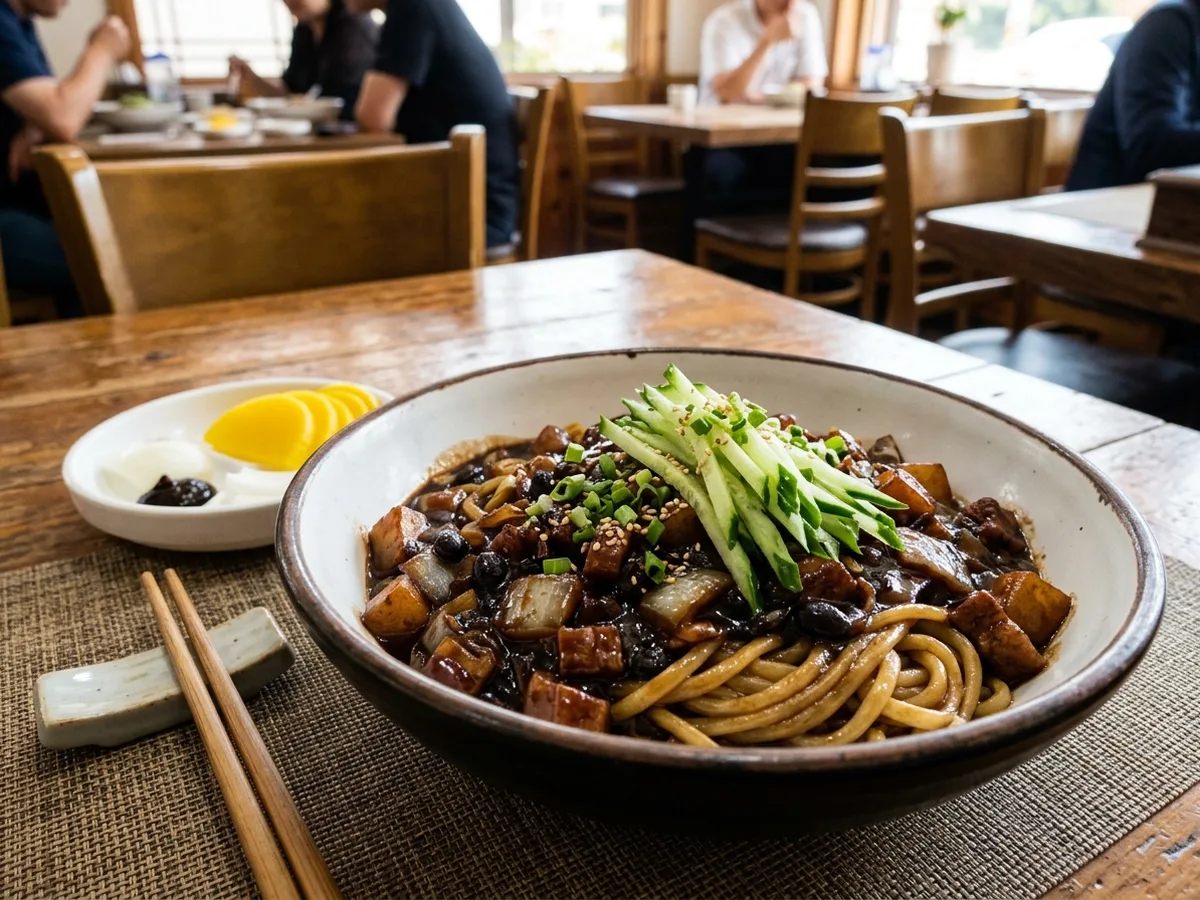
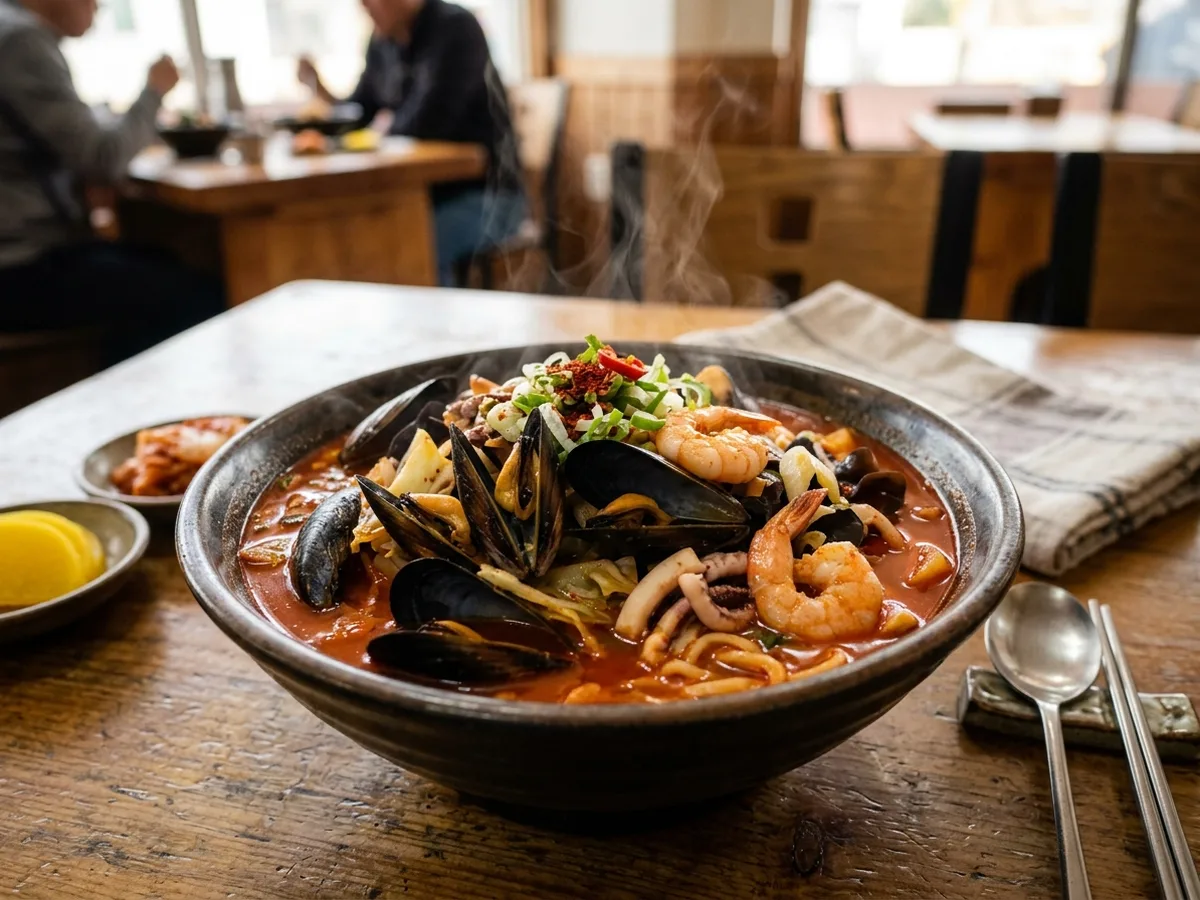
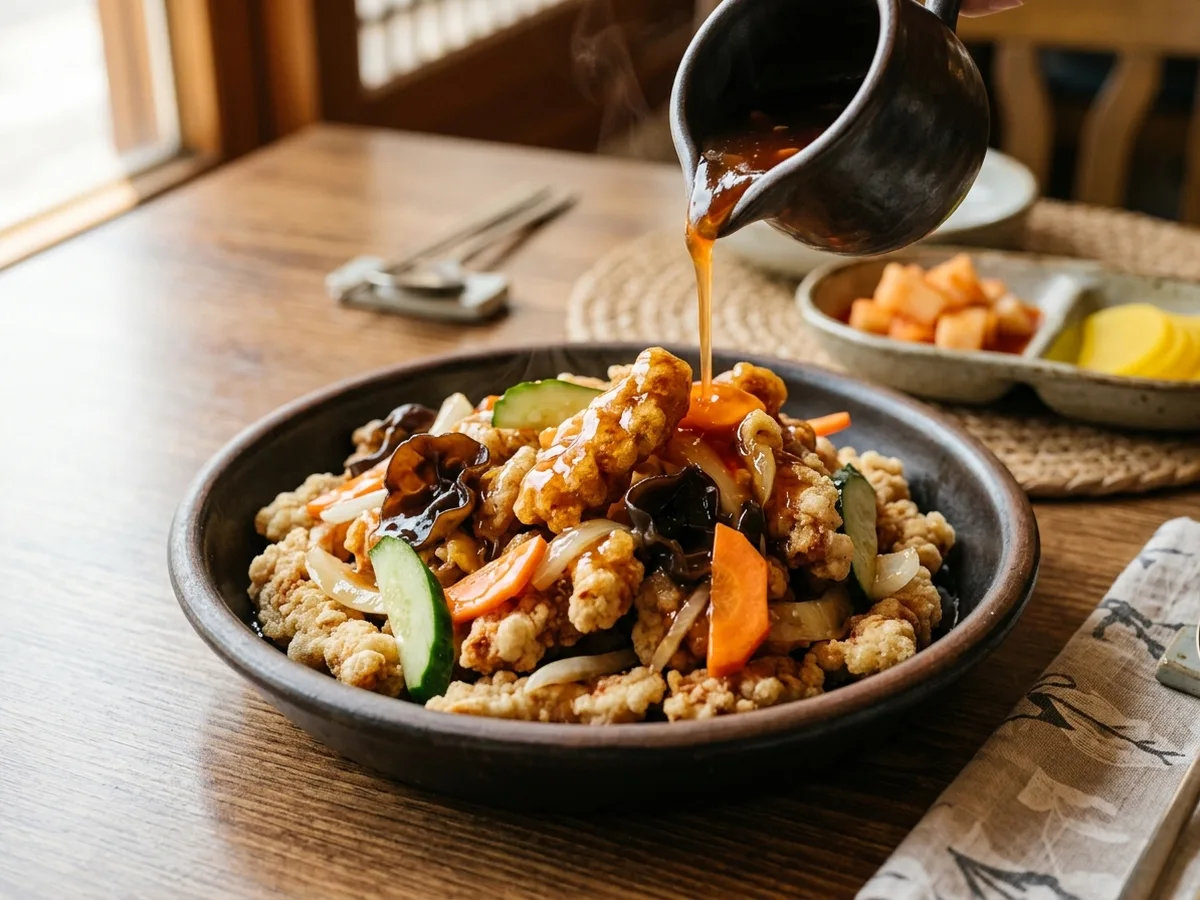
Tangsuyuk is Korean-Chinese sweet-and-sour pork: crackly potato-starch-battered pork under (or beside) a glossy fruit-and-vinegar sauce. It's the shared centerpiece of every jjajangmyeon outing — and home of Korea's most famous fake controversy: 부먹 vs 찍먹, pour the sauce or dip.
How to eat it
- Settle the table's bu-meok (pour) vs jjik-meok (dip) stance BEFORE the sauce arrives — this is law.
- Eat it hot; the starch batter's crackle fades fast.
- Alternate with jjajangmyeon/jjamppong — tangsuyuk is the sharing dish, not a solo main.
Cooking it at home
- Double-fry potato-starch-battered pork strips for the signature glass crunch.
- Simmer a sauce of vinegar, sugar, soy and fruit; thicken with starch.
- Sauce meets pork at the last possible second.
Good to know
- The 'sweet' reads dessert-level to some palates — it's a feature.
The pour-vs-dip debate is a genuine cultural institution — job interviews have jokingly asked it.
Nutrition
| Calories | 113 kcal |
|---|---|
| Carbohydrate | 11.21 g |
| Protein | 6.7 g |
| Fat | 4.4 g |
| Sodium | 146 mg |
Per serving (~343ml): ≈388 kcal · sodium ≈501 mg (25% of the WHO daily guideline, 2,000 mg)