Dongchimi (동치미)
Icy radish water-kimchi — drink the brine, that's the point.
- Korean name
- 동치미
- Spice level
- Not spicy
- Flavor
- tangy · refreshing
- Vegetarian / vegan
- Typically plant-based — one of the safer picks for vegans (still confirm when ordering)
- Good to know
- Beginner-friendly ●●●○○ Solo dining ●●●●● Kid-friendly ●●●●○
- Also written as
- dong chimi, water kimchi, radish water kimchi
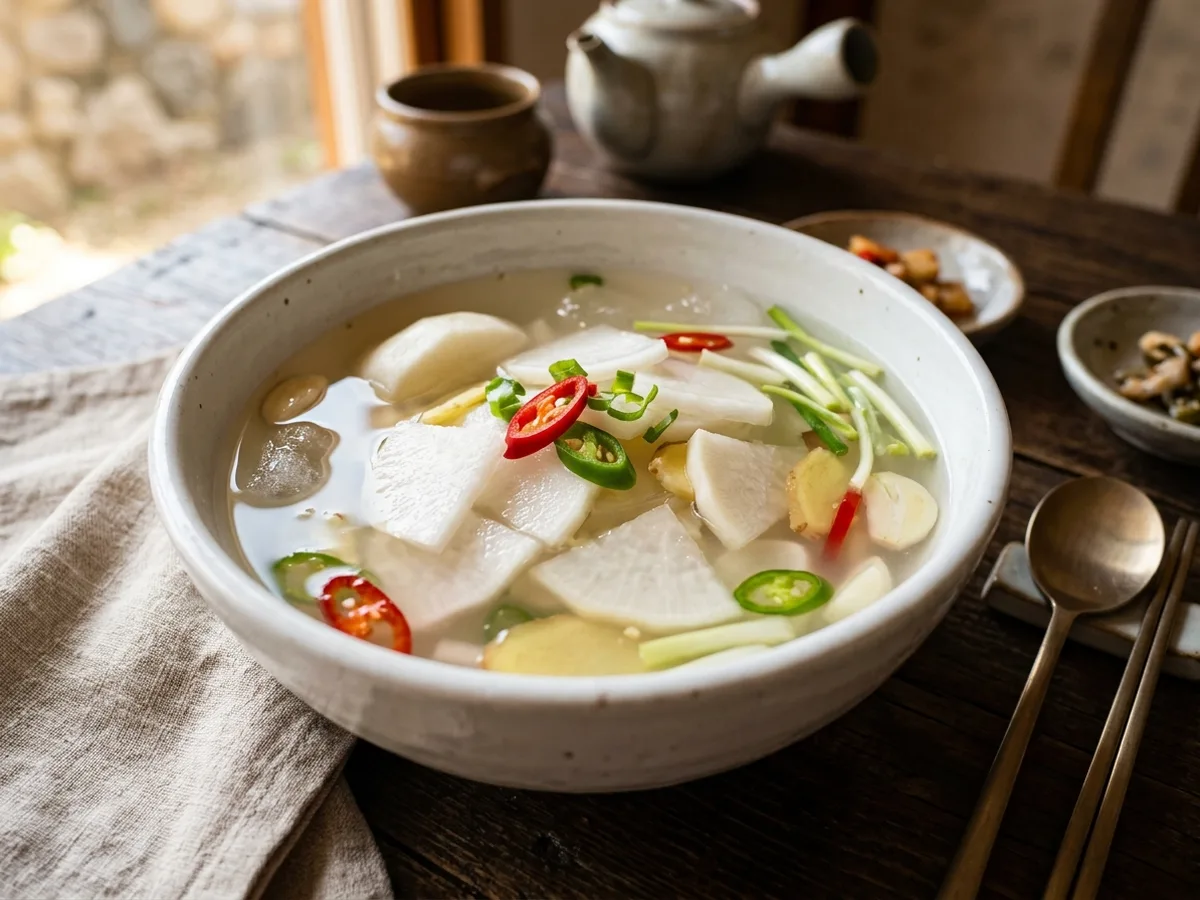
What is Dongchimi?
Dongchimi (동치미) is white water-kimchi — whole small radishes fermented in a clear, unspiced brine with pear, ginger, and scallion until the liquid turns effervescent, tart, and cold-refreshing. There is no chili at all. The broth is drunk like a beverage, used as a naengmyeon base, and prized as a hangover remedy.
How to eat it
- Drink the broth. Dongchimi is as much about the sparkling-sour liquid as the radish — sip it straight from your bowl with a spoon.
- Eat the radish in slices. The fermented radish is served sliced; it should crunch loudly.
- Use it as a chaser. Between bites of rich or oily food (jeon, tteok-galbi), dongchimi works like a palate-cleansing soda.
Cooking it at home
- Salt small whole radishes overnight, then submerge in brine (roughly 1 tablespoon salt per liter of water) with Asian pear, ginger, garlic, and whole scallions.
- Ferment at cool room temperature 2–3 days until the brine fizzes slightly, then refrigerate.
- Serve icy cold — some homes float a few ice shards in the bowl.
Good to know
- One of the few kimchi types that is typically vegan (no fish sauce in most traditional recipes) — but confirm, as some households add salted shrimp.
- The fizz is natural carbonation from fermentation; cloudiness with off-smell, however, means it has turned.
Traditional winter naengmyeon in North Korean style was served in dongchimi broth — the modern beef-broth version came later.
Nutrition
| Calories | 14 kcal |
|---|---|
| Carbohydrate | 2.28 g |
| Protein | 0.29 g |
| Fat | 0.37 g |
| Sodium | 412 mg |
Per serving (~200g): ≈28 kcal · sodium ≈824 mg (41% of the WHO daily guideline, 2,000 mg)
Related foods
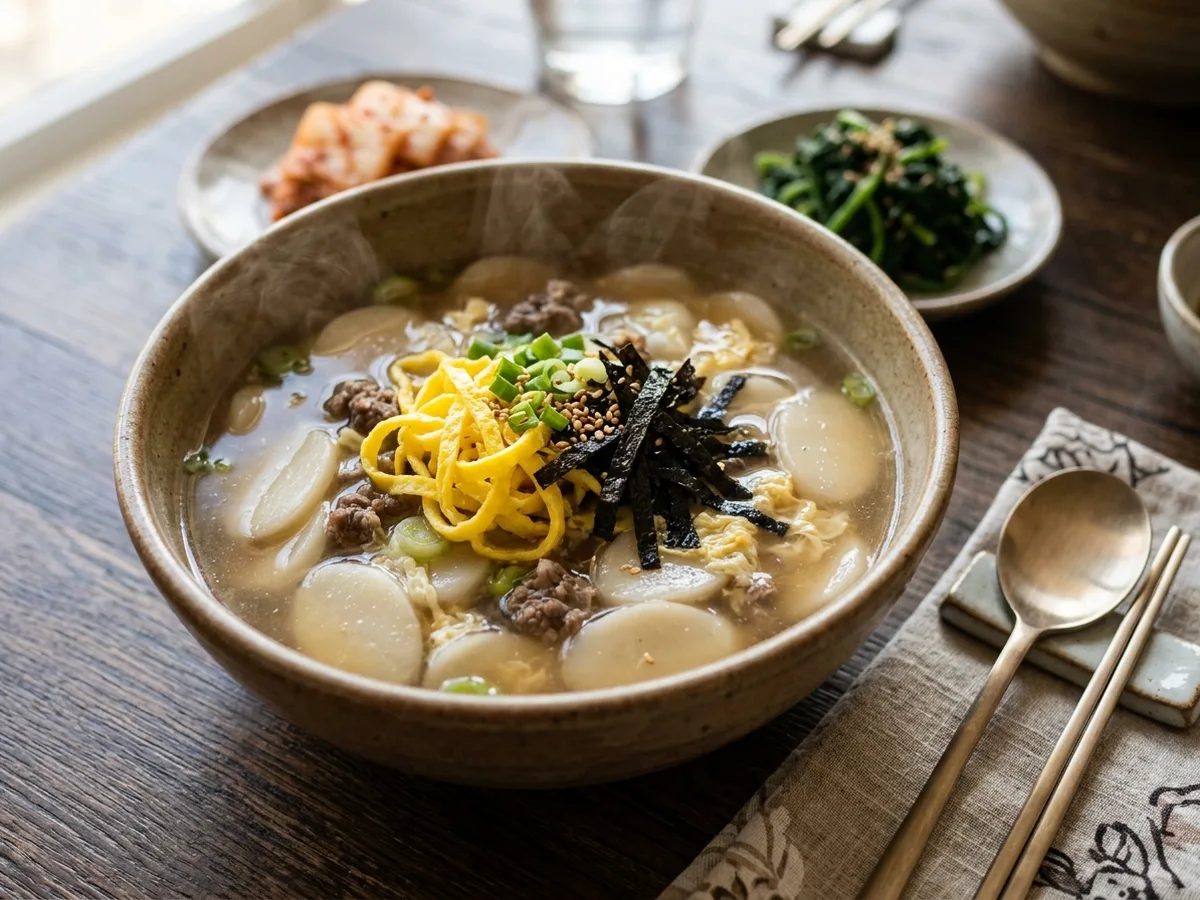 떡국 · TteokgukOften eaten together Sliced rice-cake soup — eat a bowl, turn a year older (New Year).
 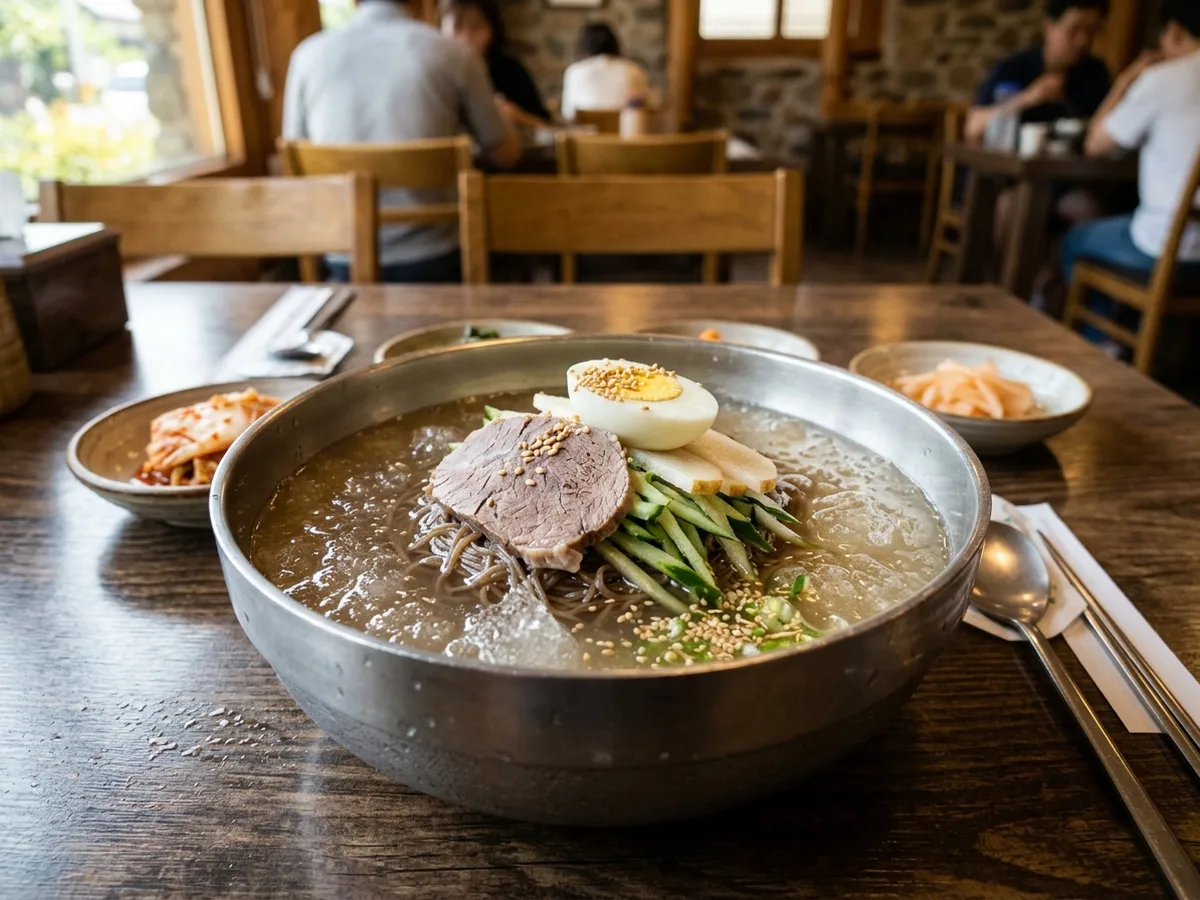 물냉면 · Mul NaengmyeonOften eaten together Buckwheat noodles in icy beef broth — the post-BBQ finisher.
 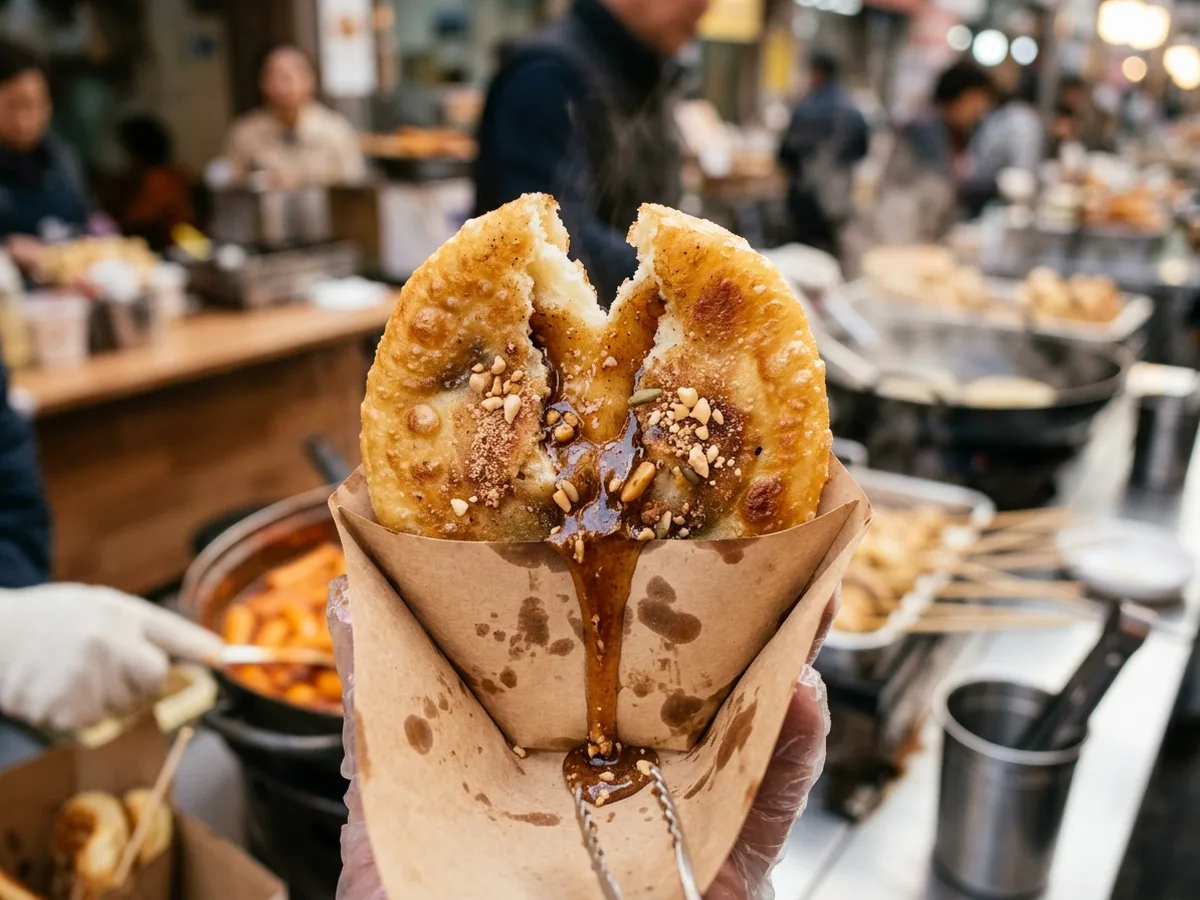 호떡 · HotteokOften eaten together Griddled pancake with molten brown-sugar filling — winter street gold.
 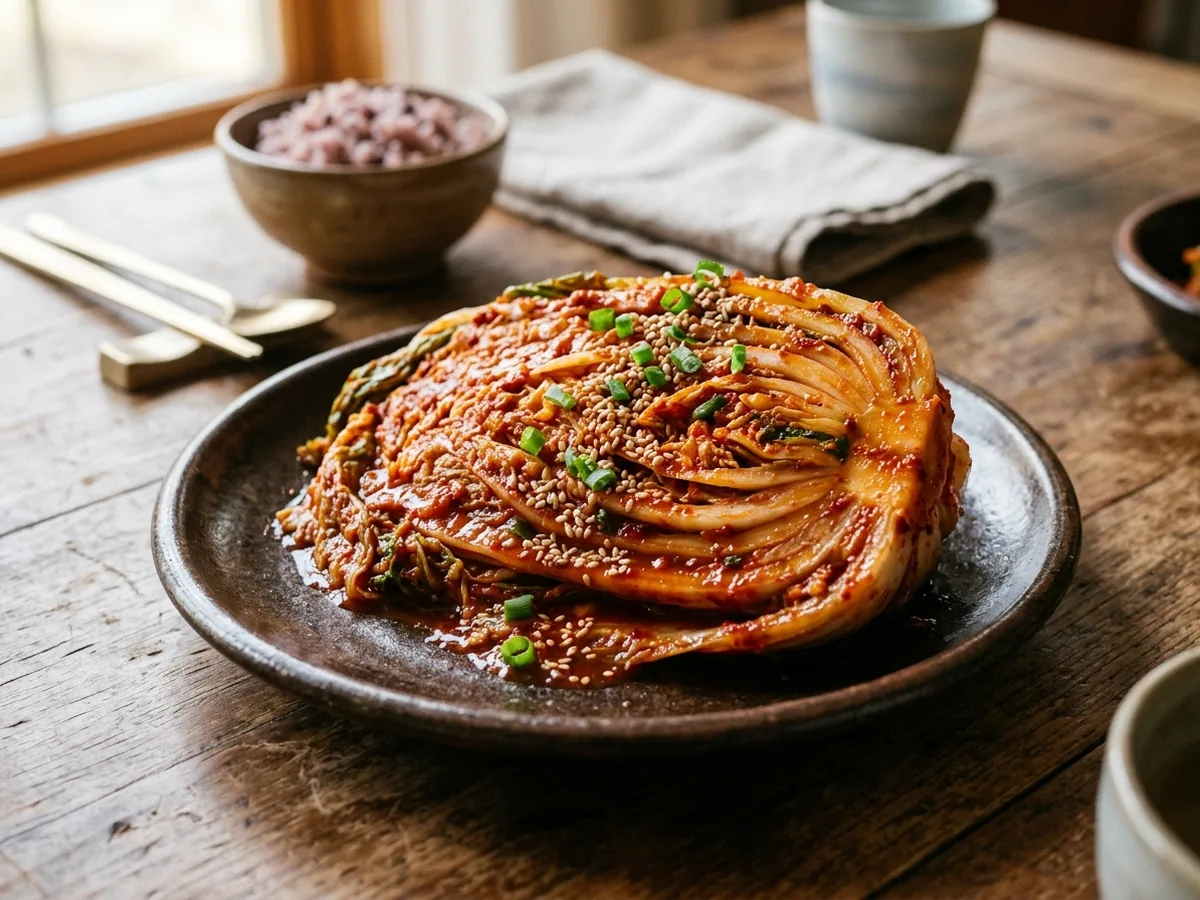 배추김치 · KimchiSpicier alternative Fermented napa cabbage — the one dish on every Korean table.
 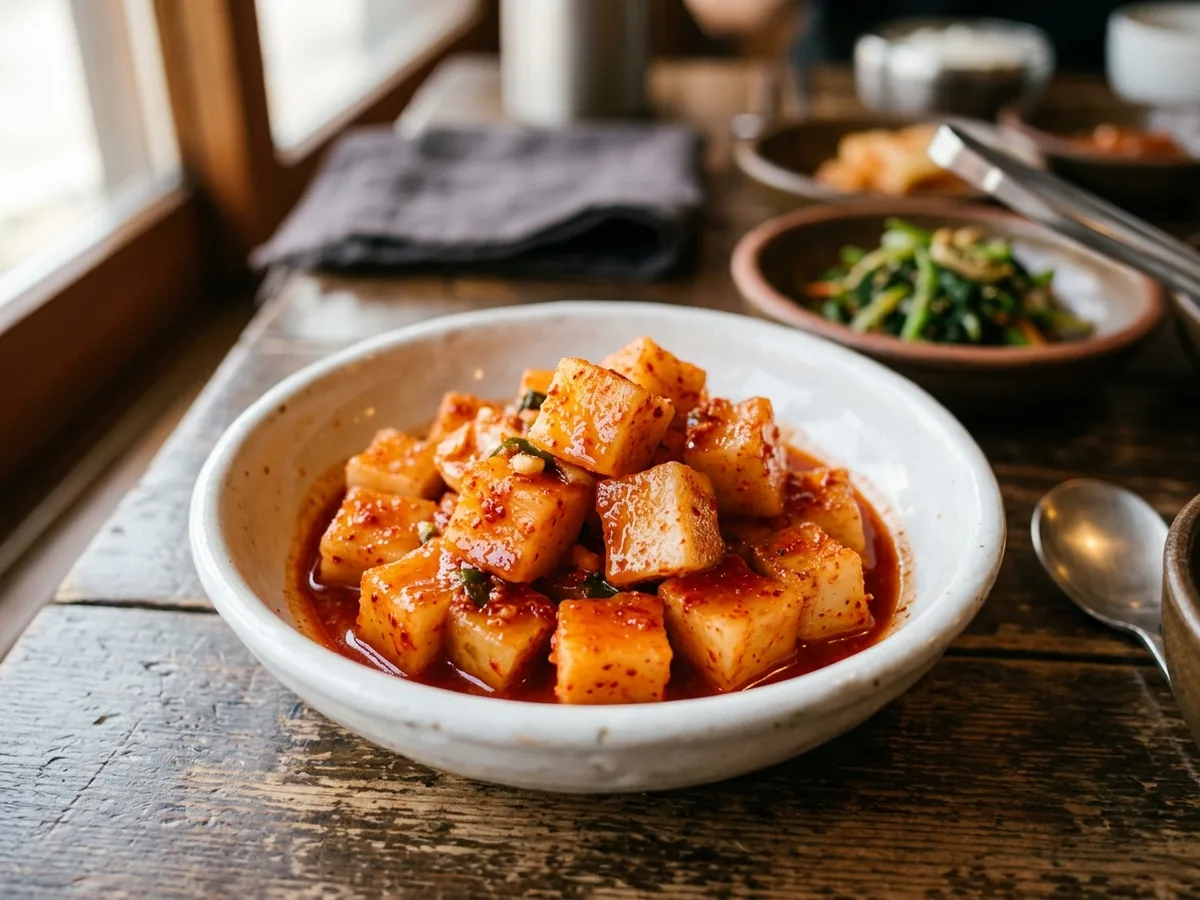 깍두기 · KkakdugiSpicier alternative Cubed radish kimchi — crunchy, juicy, born for gukbap.