Jjamppong (짬뽕)
Spicy seafood noodle soup — jjajangmyeon's eternal rival.
- Korean name
- 짬뽕
- Spice level
- Spicy
- Flavor
- spicy · savory
- Typically contains
- seafood, wheat noodles
- Vegetarian / vegan
- Not vegetarian — meat or seafood is core to the dish
- Typical price
- ₩9,000–₩12,000 per person checked 2026-07 — varies by area
- Good to know
- Beginner-friendly ●●●○○ Solo dining ●●●●○ Kid-friendly ●○○○○
- Also written as
- jjambbong, jambong, jampong, spicy seafood noodle soup
What is Jjamppong?
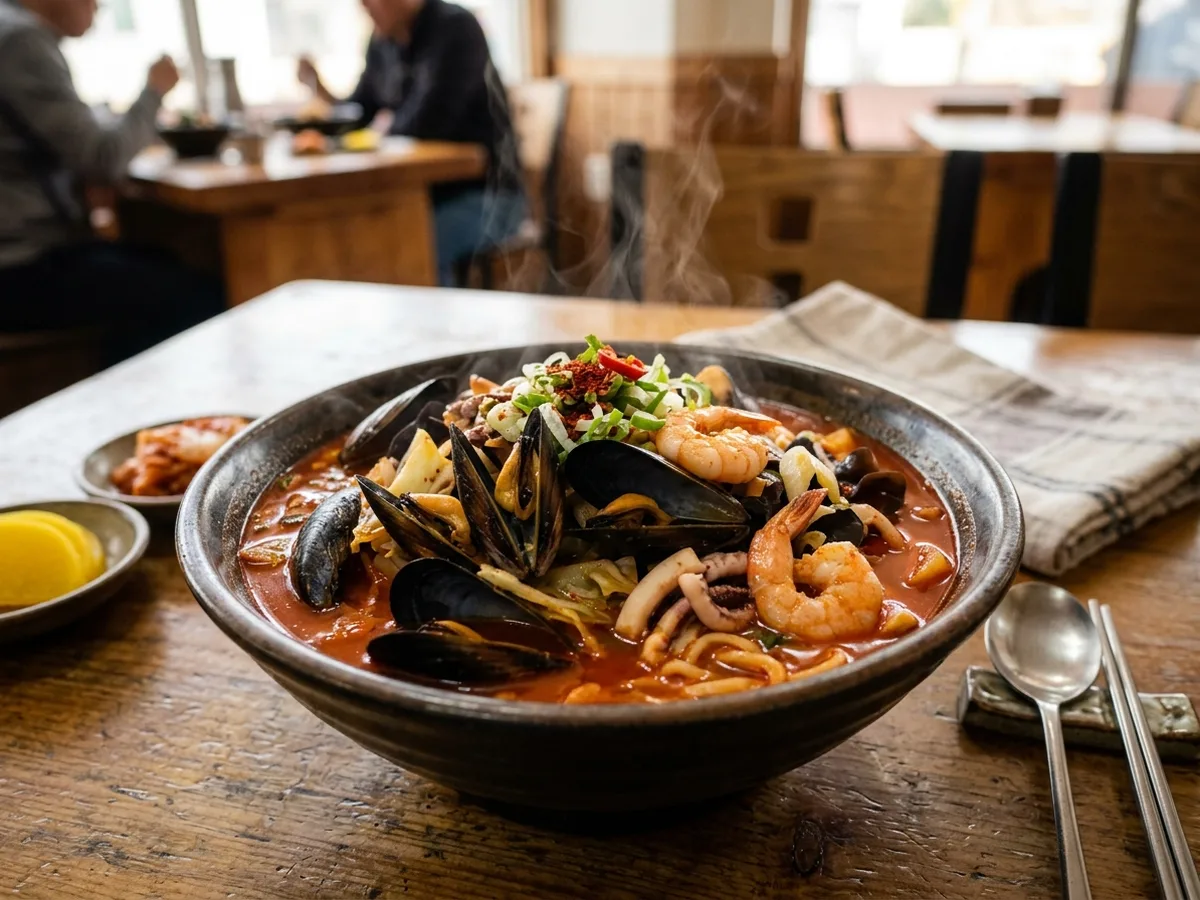
Jjamppong is the fire-red counterweight to jjajangmyeon: noodles in a chili-charged seafood broth crowded with mussels, squid and shrimp, wok-breathed and unapologetically hot. It's the Korean-Chinese answer to a cold day, a hangover, or the eternal 'I want soup AND noodles AND heat' craving.
How to eat it
- Drink a spoon of broth first — the wok-char depth (bul-mat) is the quality test.
- Work through shellfish with hands as needed; a shell bowl appears for a reason.
- Finish with rice in the leftover broth if you're committed.
Good to know
- Legitimately spicy as a default — gul-jjamppong (oyster, milder white versions) exist for the heat-averse.
- A shellfish minefield for allergies — mussels, shrimp, squid standard.
Ordering jjamppong at a Chinese restaurant and eyeing your friend's jjajangmyeon is the national condition.
Where to eat it
Local classicSince 1948 — oldest Chinese restaurant
Korea's oldest surviving Korean-Chinese restaurant and the home of gul-jjamppong — the milky oyster jjamppong that Euljiro veterans swear by.
Known for: Jjamppong
Open as of our last check (2026-07-20) · Sources: Siksin · DiningCode — hours, prices and status can change; check the map link before visiting.
Nutrition
| Calories | 58 kcal |
|---|---|
| Carbohydrate | 8.26 g |
| Protein | 2.79 g |
| Fat | 1.54 g |
| Sodium | 181 mg |
Per serving (~800g): ≈464 kcal · sodium ≈1,448 mg (72% of the WHO daily guideline, 2,000 mg)