Dak Kkochi (닭꼬치)
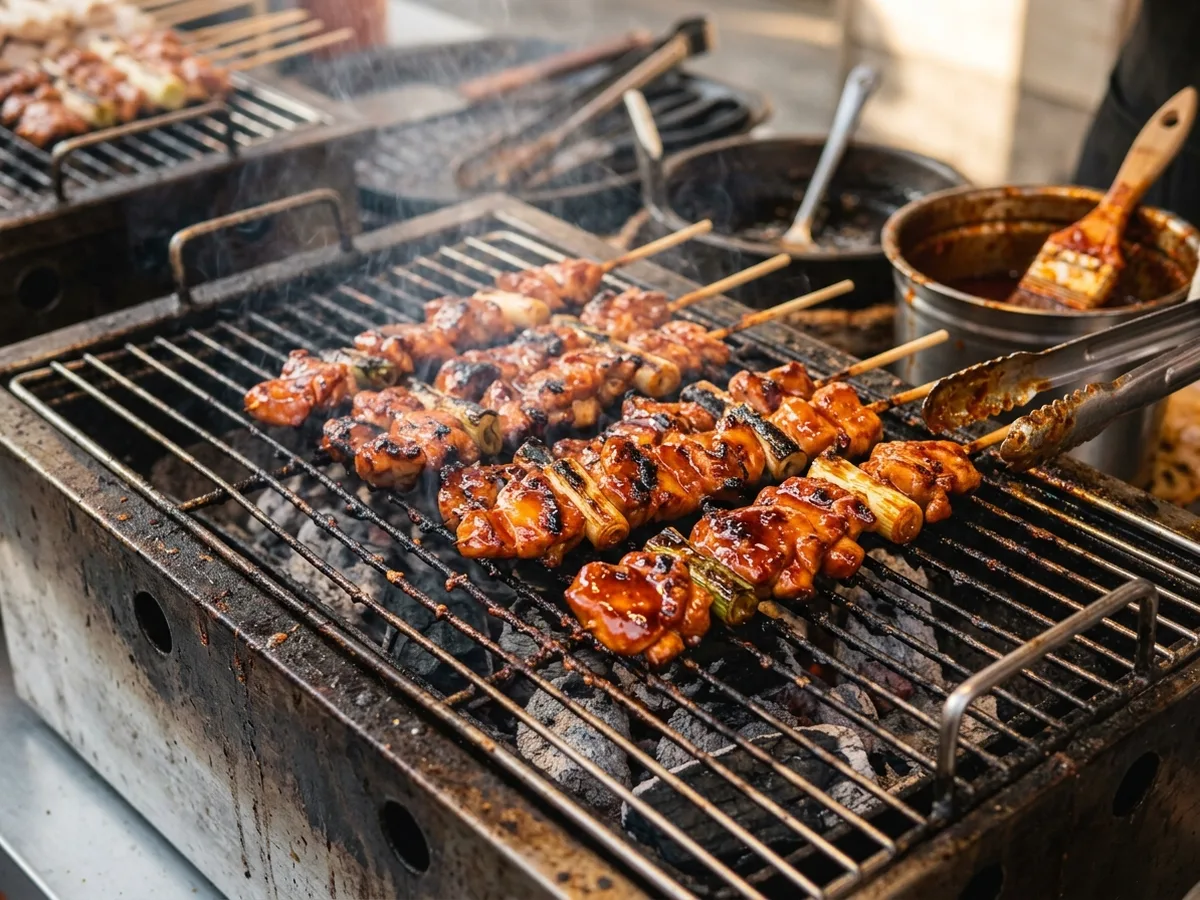
Grilled chicken skewers brushed with sweet-spicy glaze.
- Korean name
- 닭꼬치
- Spice level
- Medium
- Flavor
- sweet · spicy
- Typically contains
- chicken
- Vegetarian / vegan
- Not vegetarian — meat or seafood is core to the dish
- Typical price
- ₩3,000–₩5,000 per portion checked 2026-07 — varies by area
- Good to know
- Beginner-friendly ●●●●○ Solo dining ●●●●● Kid-friendly ●●●○○
- Also written as
- dakkochi, dak kochi, chicken skewers korean
What is Dak Kkochi?
Dak-kkochi is Korea's after-dark skewer: chicken thigh pieces grilled over street-cart flames, brushed rounds of sweet-soy or gochujang glaze until lacquered and lightly charred. It's one-hand food built for night markets, festival alleys and the walk between bars.
How to eat it
- Choose your glaze tier — soy (mild), yangnyeom (medium), 'hell' options at ambitious carts.
- Rotate the skewer as you eat; glaze pools at the bottom.
- Napkins are not optional.
Good to know
- Char is flavor but the glaze burns fast — a good cart shows constant brushing and turning, not standing flames.
- Skewer tips at face height in crowds: genuine night-market hazard.
The generational rival of tornado potatoes and eomuk for 'festival food of record'.
Nutrition
| Calories | 181 kcal |
|---|---|
| Carbohydrate | 5.55 g |
| Protein | 32.1 g |
| Fat | 2.58 g |
| Sodium | 122 mg |
Per serving (~90ml): ≈163 kcal · sodium ≈110 mg (6% of the WHO daily guideline, 2,000 mg)
Related foods
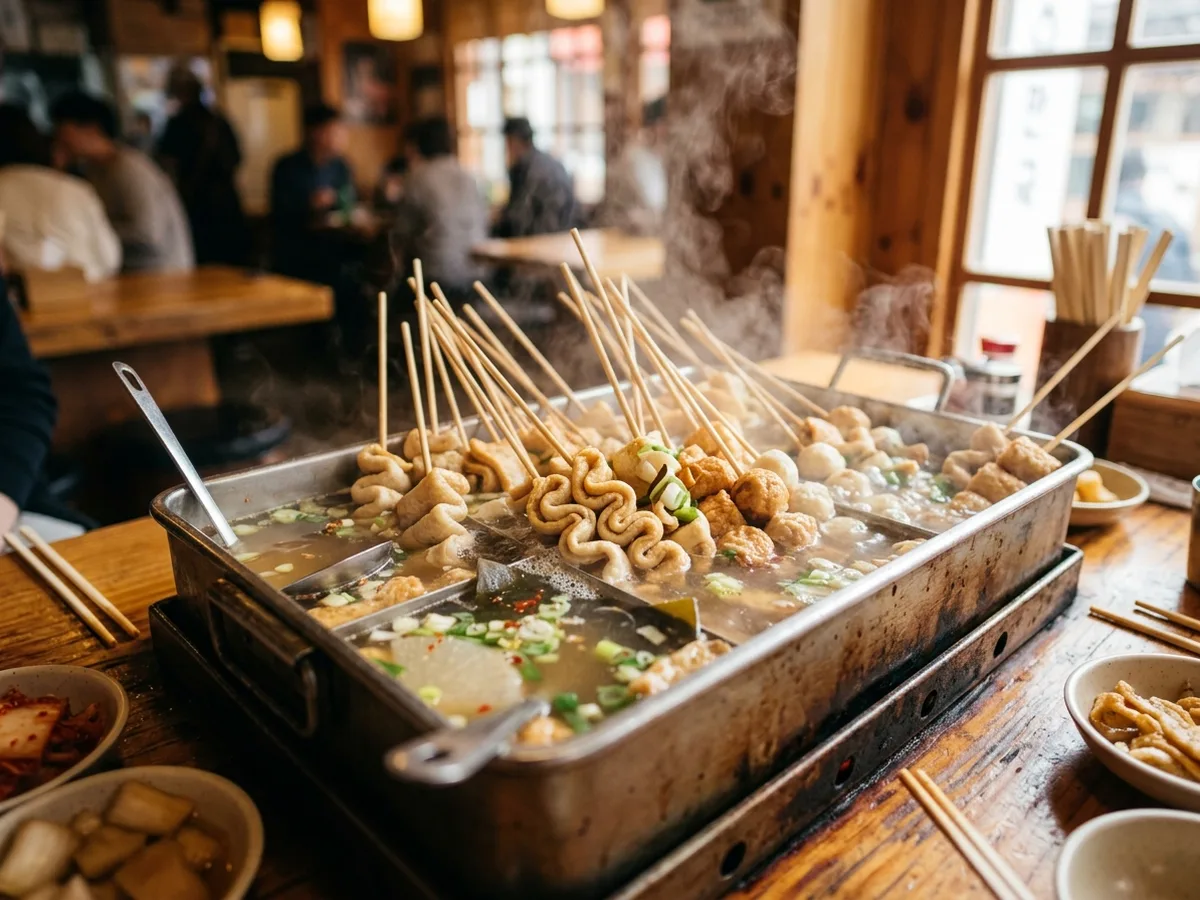 어묵탕 · Eomuk TangOften eaten together Fish-cake skewer soup — the street-stall winter warmer.
 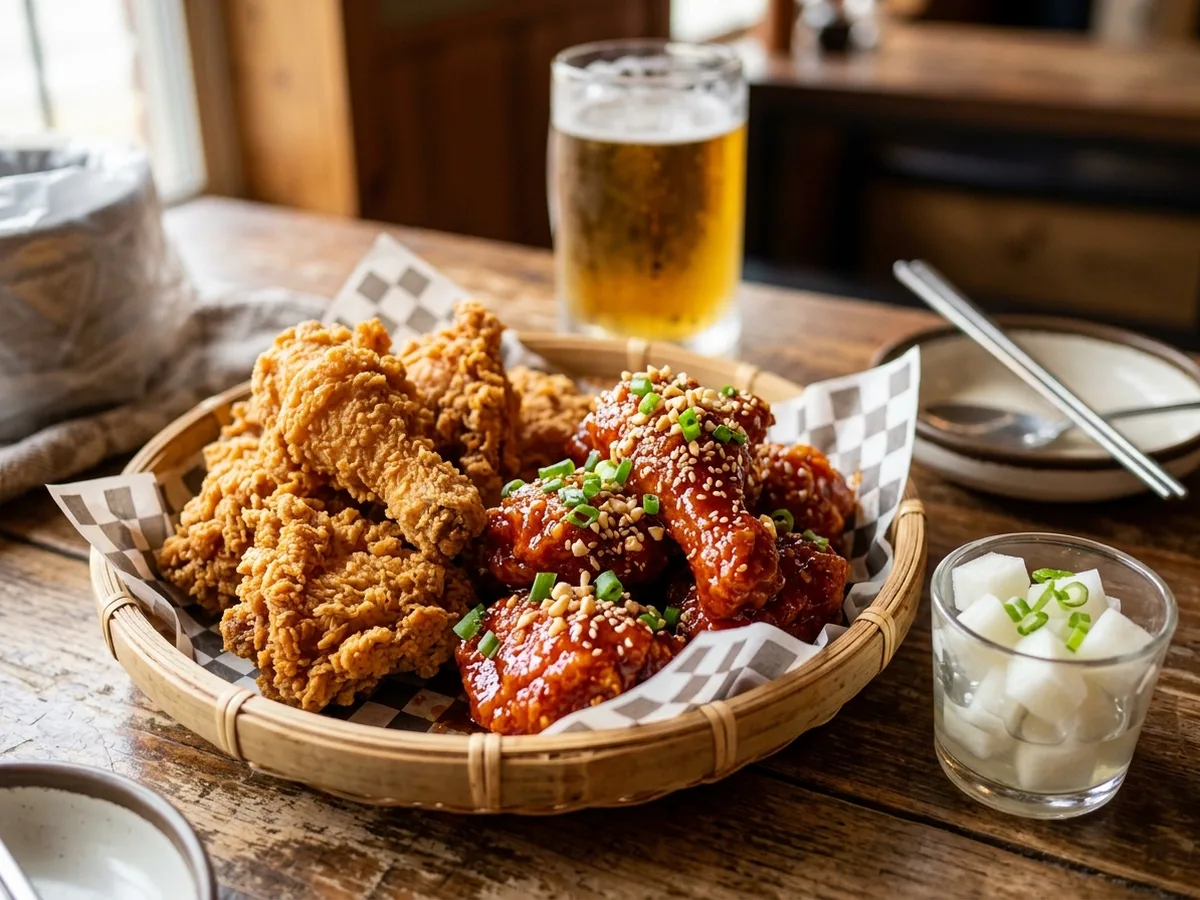 치킨 · Korean Fried ChickenOften eaten together Double-fried, shatter-crisp chicken — the heart of chimaek culture.
 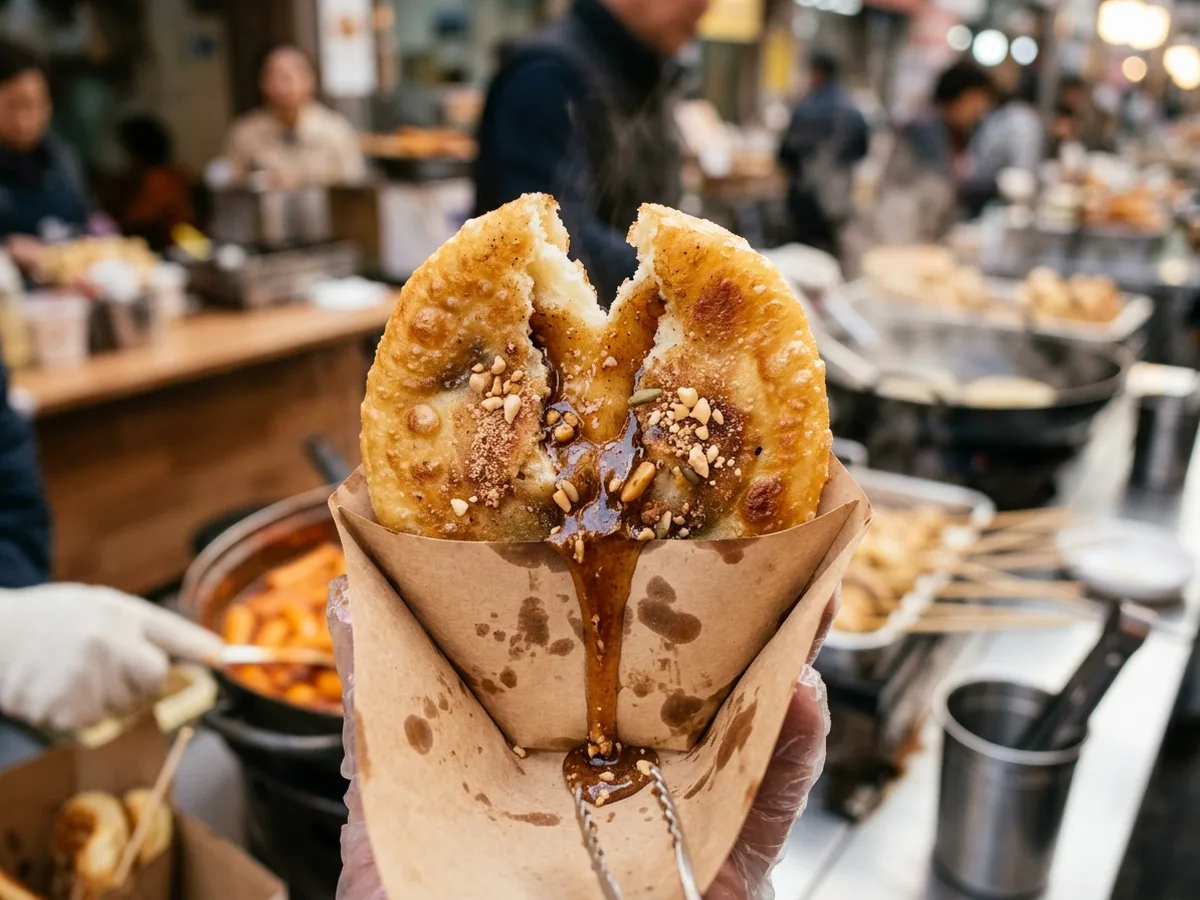 호떡 · HotteokOften eaten together Griddled pancake with molten brown-sugar filling — winter street gold.
 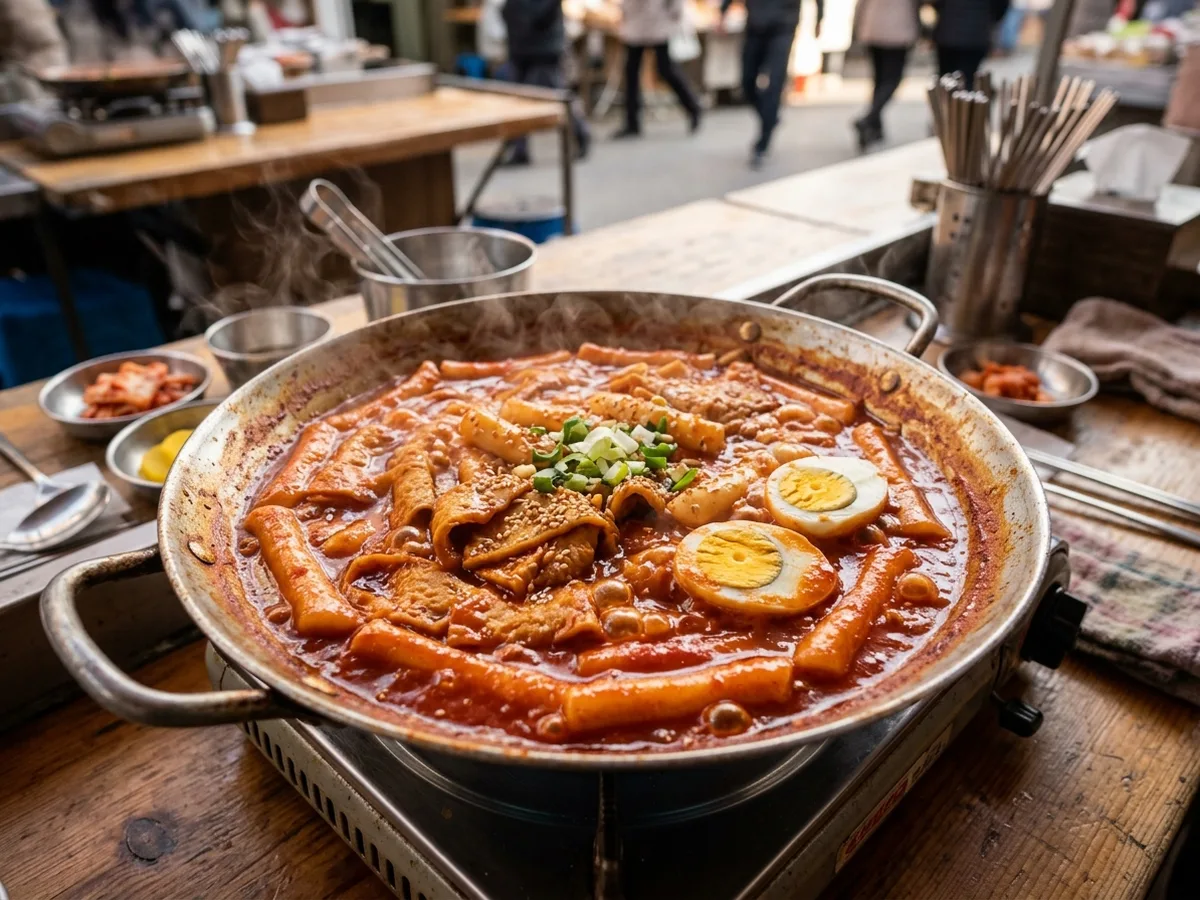 떡볶이 · TteokbokkiSimilar flavor · sweet, spicy Chewy rice cakes in sweet-spicy gochujang sauce.
 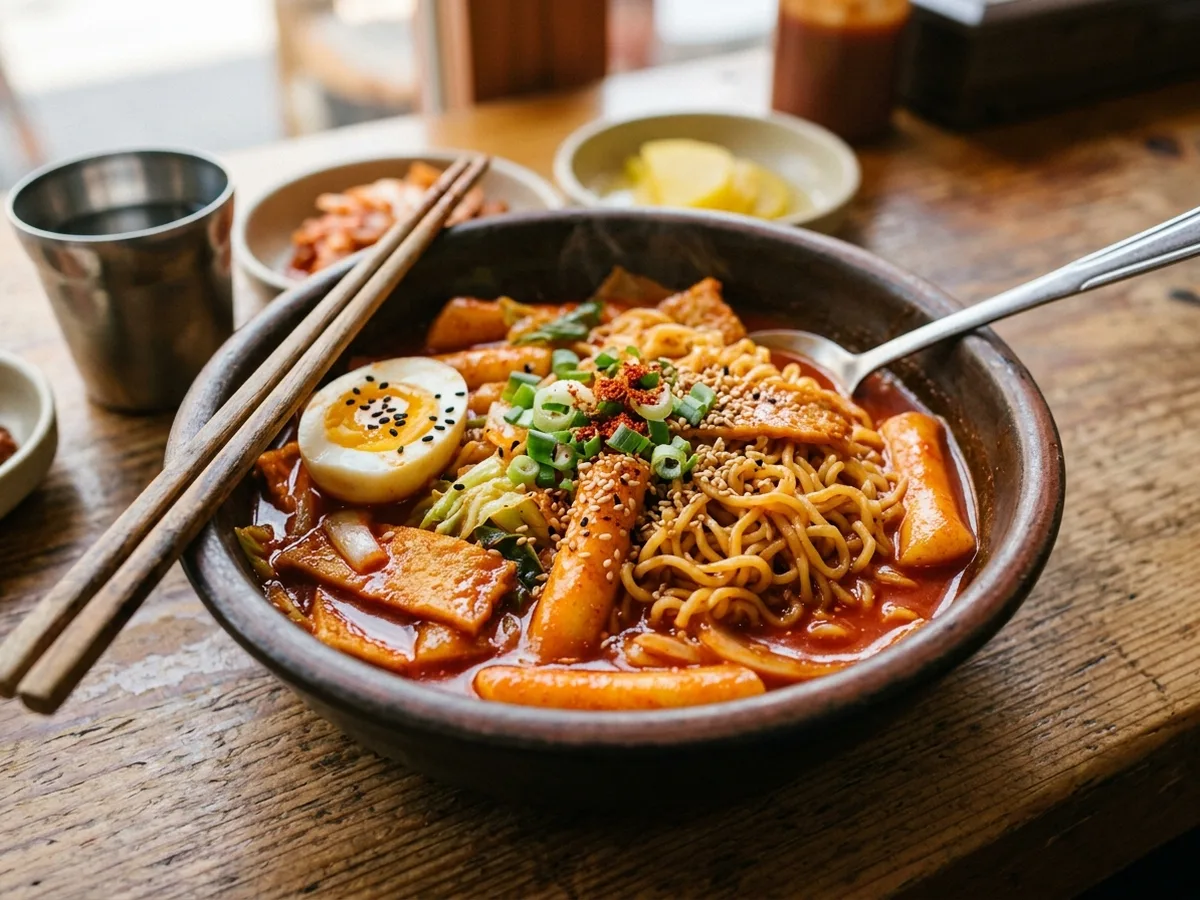 라볶이 · RabokkiSimilar flavor · sweet, spicy Tteokbokki plus ramyeon noodles — the best of both.