Must-Try Korean Street Food: Markets, Carts and Bunsik
Korean street food lives in three habitats: traditional markets (Gwangjang is the famous one), tented pojangmacha carts, and bunsik snack shops. Almost everything costs ₩1,500–₩7,000, so the right strategy is a crawl — small portions, many stops. This is the canonical circuit, in roughly the order a local would graze it.
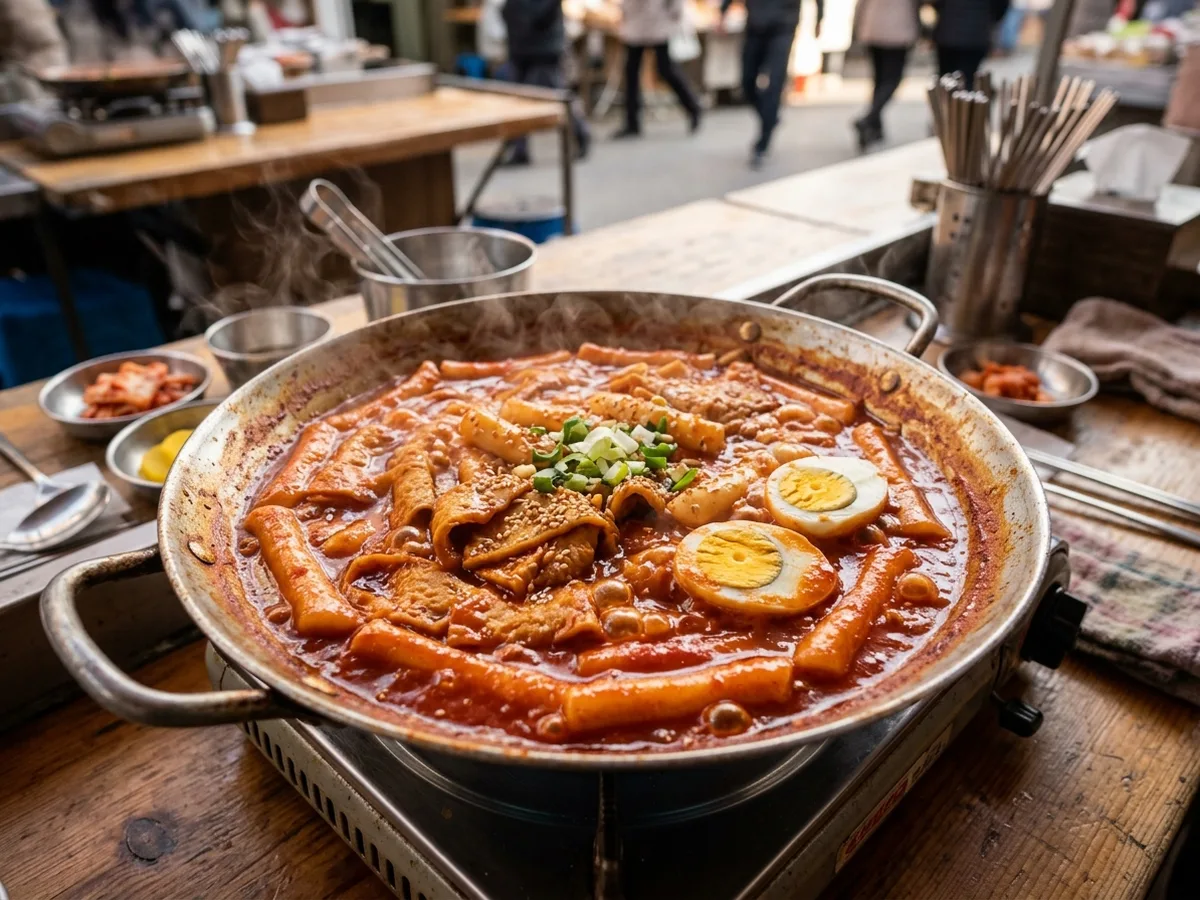 떡볶이 · Tteokbokki Chewy rice cakes in sweet-spicy gochujang sauce.
 The gateway dish and the standard by which every market is judged.
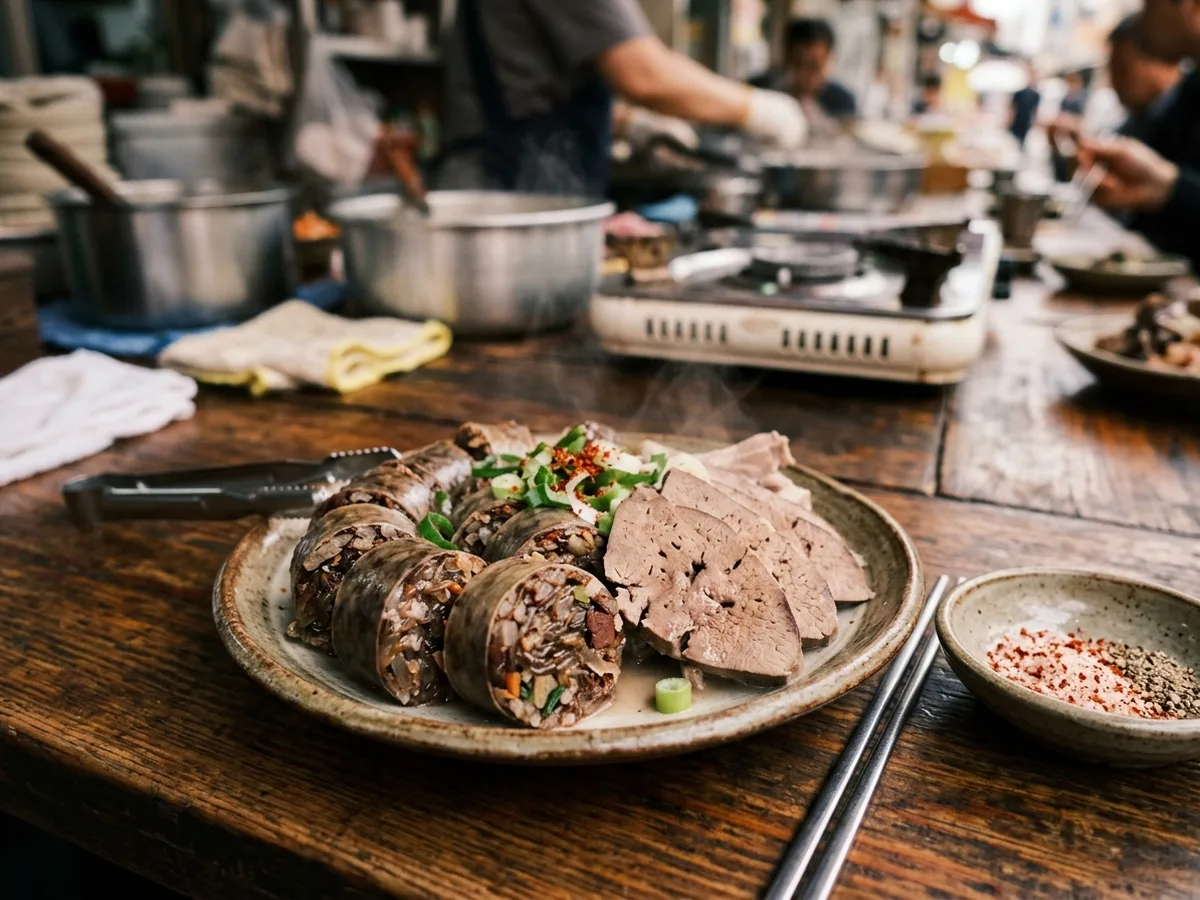 순대 · Sundae Korean blood sausage with glass noodles — dip it in seasoned salt.
 Blood-sausage with tteokbokki sauce for dipping — the classic pairing at the same stall.
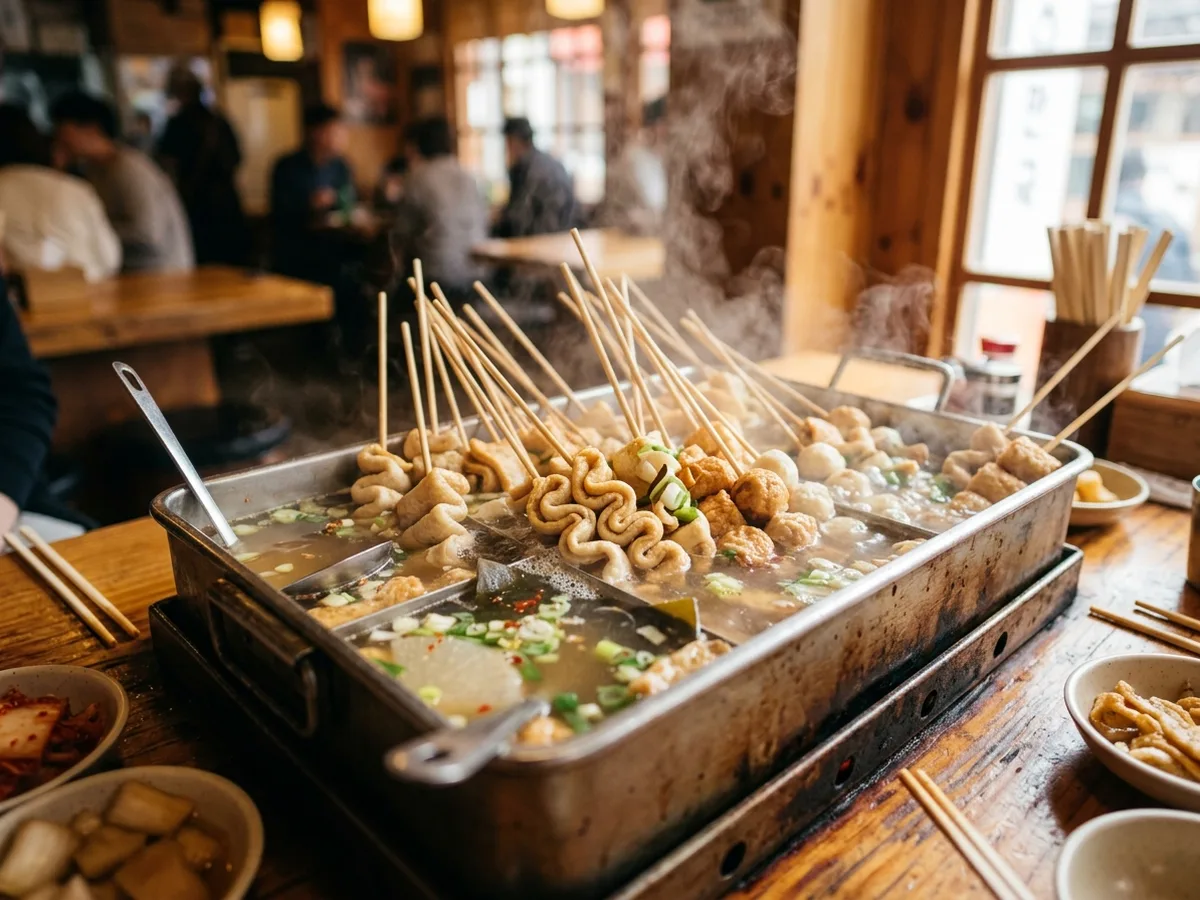 어묵탕 · Eomuk Tang Fish-cake skewer soup — the street-stall winter warmer.
 Fish-cake skewers; the free hot broth in paper cups is the best part in winter.
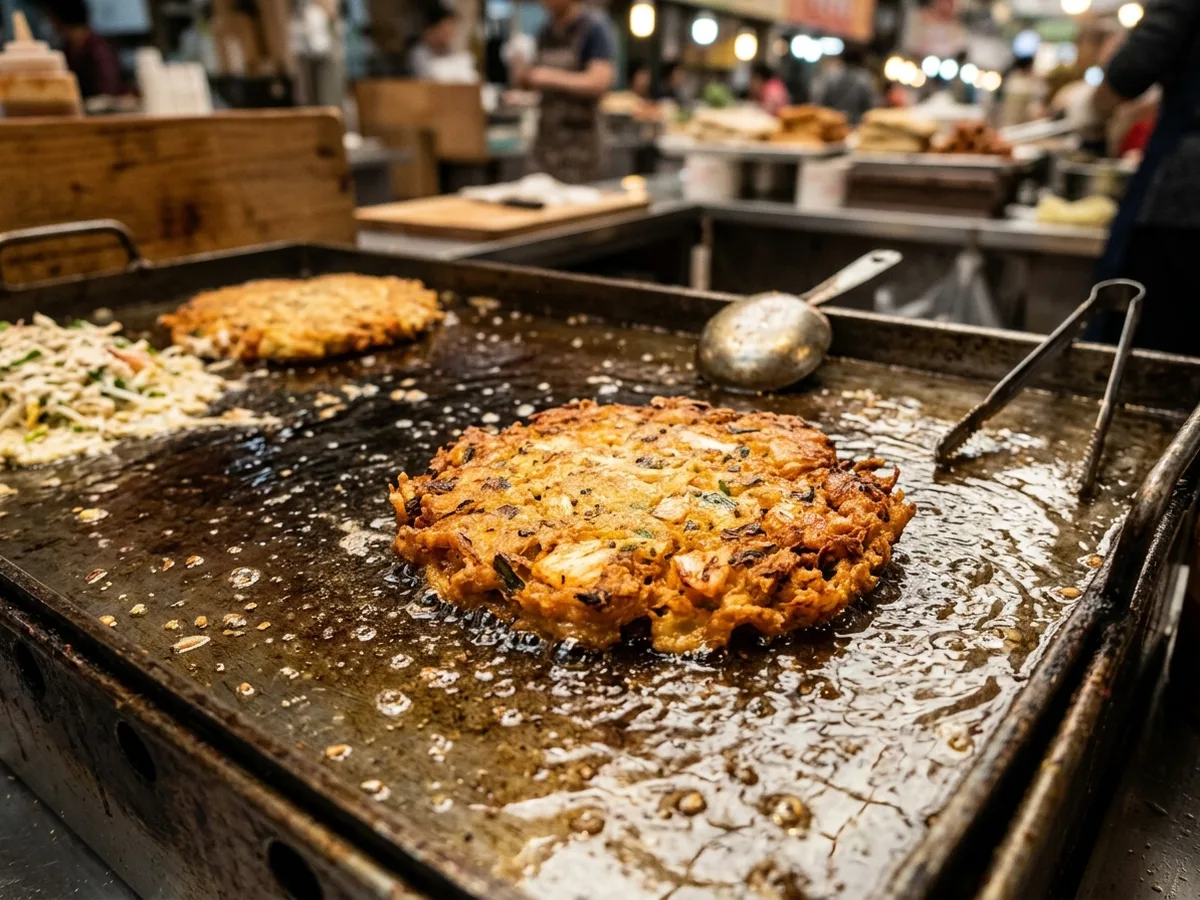 빈대떡 · Bindaetteok Mung-bean pancake with pork and sprouts — market-stall classic.
 Mung-bean pancakes fried to order at Gwangjang Market — eat them standing.
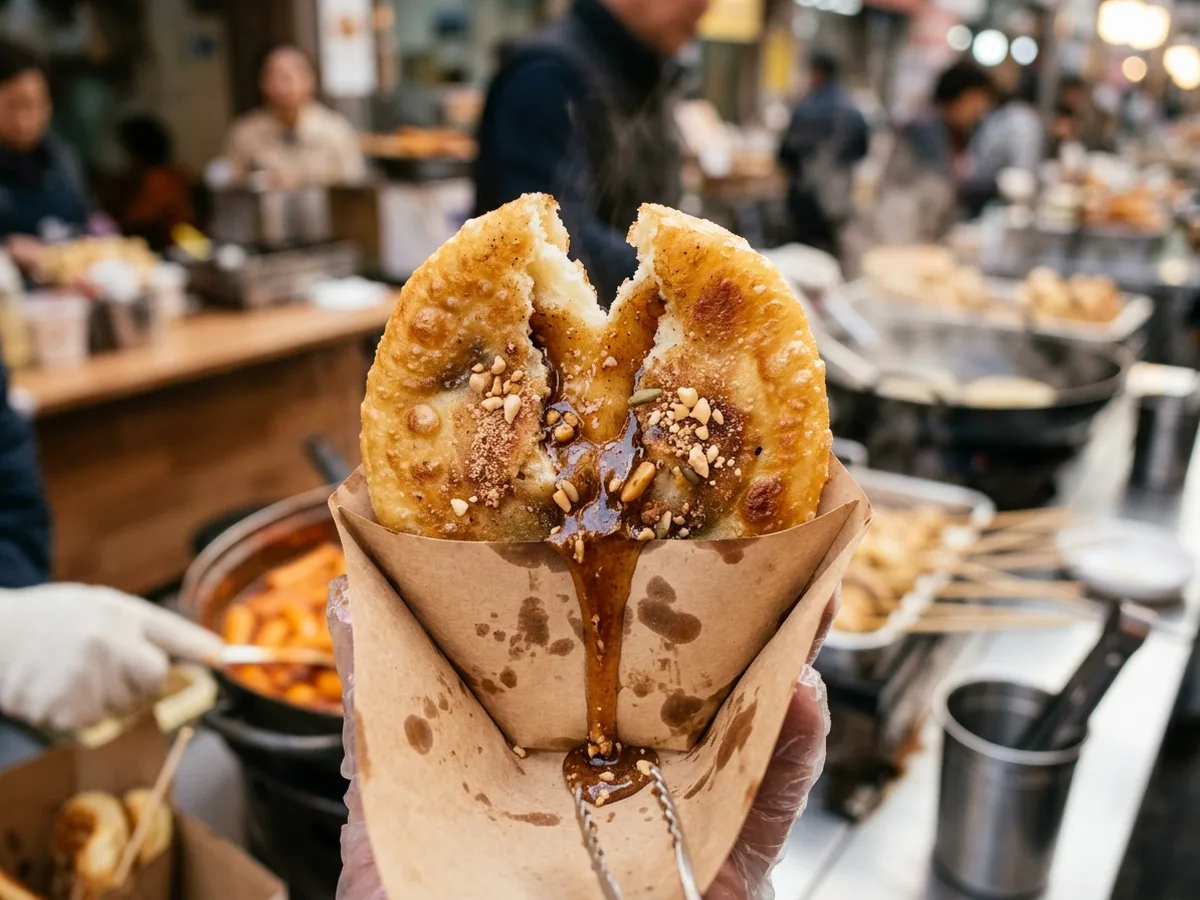 호떡 · Hotteok Griddled pancake with molten brown-sugar filling — winter street gold.
 The molten brown-sugar pancake that defines Korean winter streets.
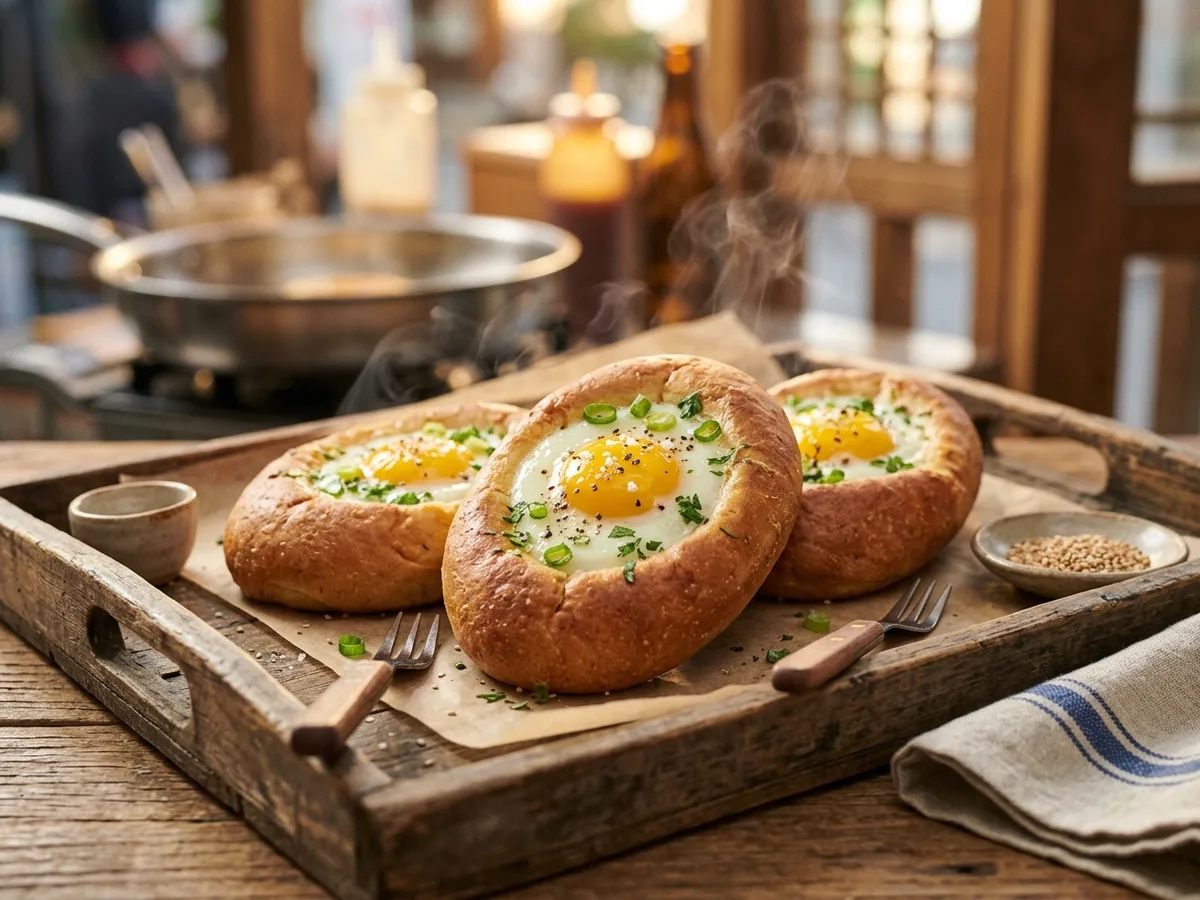 계란빵 · Gyeranppang Warm mini bread with a whole egg baked on top.
 Egg bread: a whole egg baked into sweet cake, best from a steaming cart.
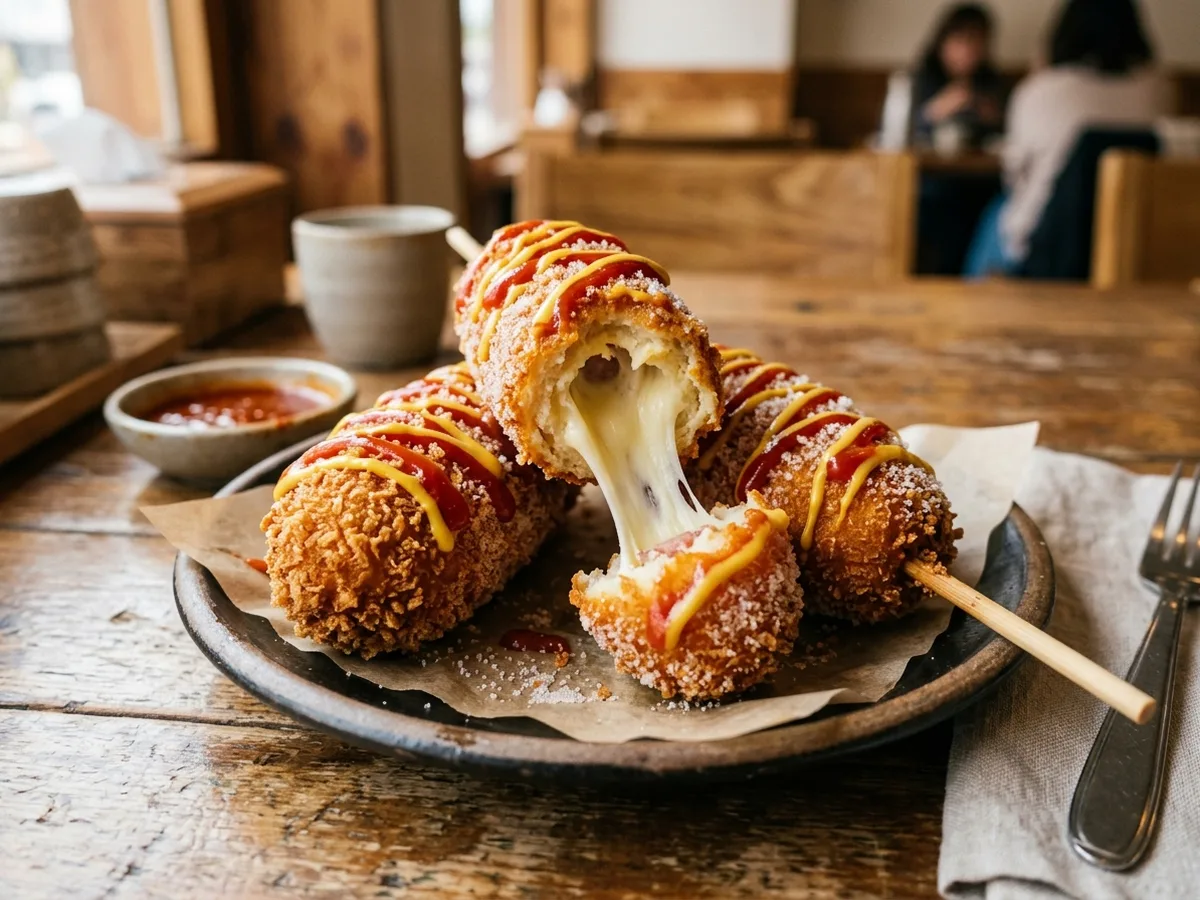 핫도그 · Korean Corn Dog Crunchy-coated hot dog on a stick — sugar-dusted, sometimes all cheese.
 The modern-generation hit — mozzarella pull included.
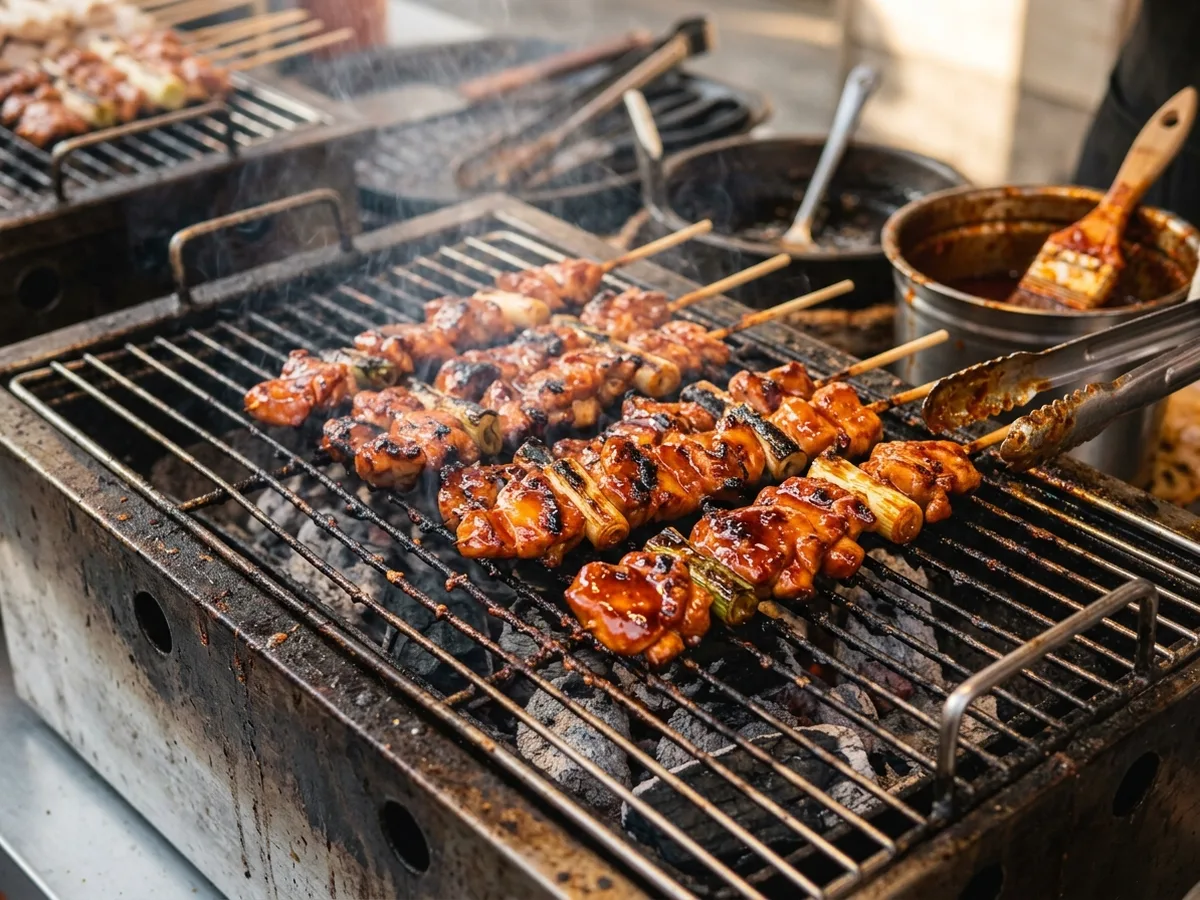 닭꼬치 · Dak Kkochi Grilled chicken skewers brushed with sweet-spicy glaze.
 Glazed chicken skewers, from mild soy to weapons-grade spicy.
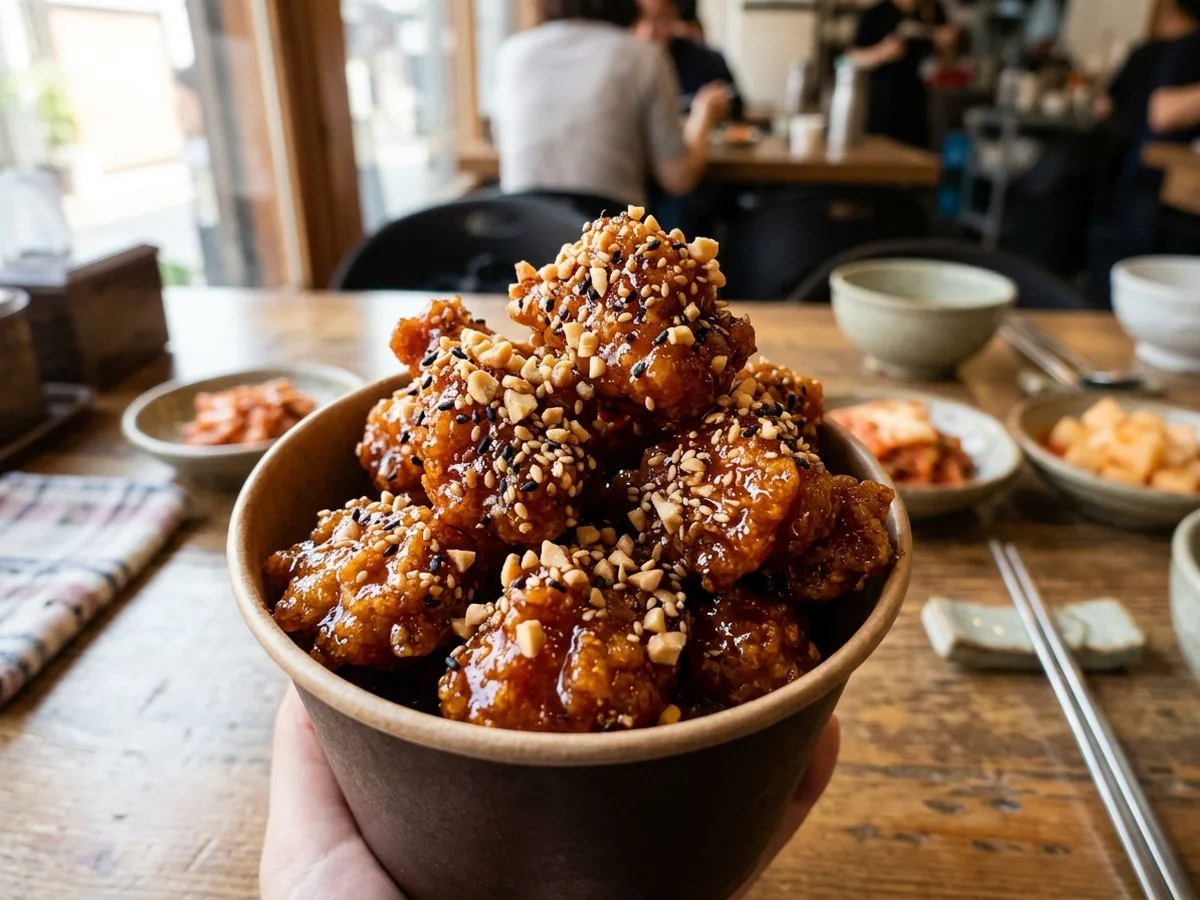 닭강정 · Dakgangjeong Bite-size crispy chicken in a sticky sweet glaze.
 Sweet-crisp chicken bites in a cup, made for walking.
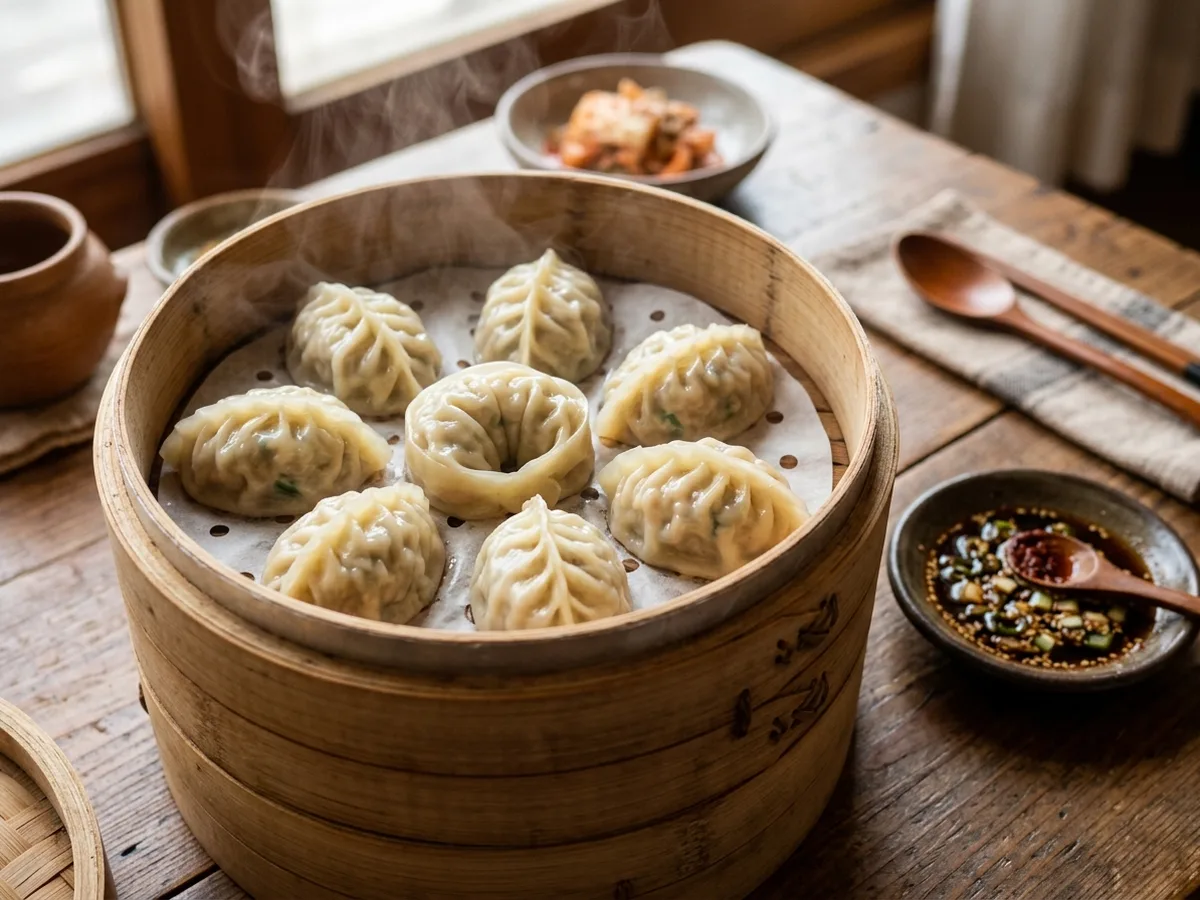 고기만두 · Mandu Korean dumplings — steamed, fried or floated in soup.
 Market mandu steamed in towering stacks — buy them by the half-dozen.