Kimchi (배추김치)
Fermented napa cabbage — the one dish on every Korean table.
- Korean name
- 배추김치
- Spice level
- Medium
- Flavor
- spicy · sour · fermented
- Typically contains
- fermented seafood seasoning
- Vegetarian / vegan
- Sometimes — vegetable-forward, but anchovy broth, fish sauce or meat garnish is common. Ask first
- Good to know
- Beginner-friendly ●●●○○ Solo dining ●●●●● Kid-friendly ●●○○○
- Also written as
- kimchee, gimchi, baechu kimchi, napa cabbage kimchi
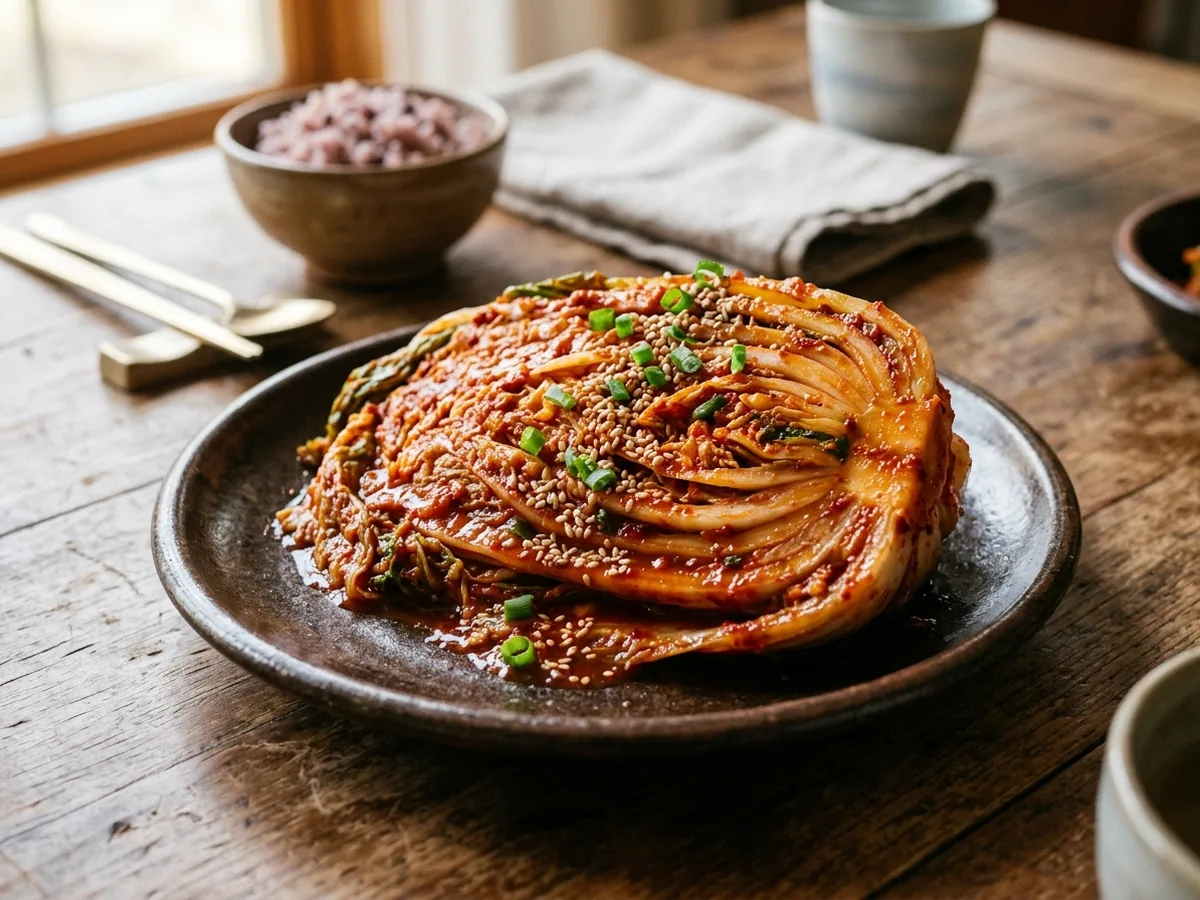
What is Kimchi?
Kimchi (김치) — specifically baechu-kimchi, fermented napa cabbage — is the food most identified with Korea, served free with virtually every meal. Cabbage is salted, coated with a paste of gochugaru chili, garlic, ginger, and fish sauce, then fermented from days to months. It is a side dish, an ingredient, and for Koreans a daily staple: government surveys consistently show it on the table at most meals.
How to eat it
- Treat it as a side, not a salad. Take a piece or two at a time with your chopsticks between bites of rice and mains — it is a pacing food.
- Cut large leaves with scissors if provided. At restaurants, whole-leaf kimchi is cut at the table; at home it is pre-cut.
- Match the age to the dish. Fresh kimchi (geotjeori-style) eats like a crisp salad with grilled meat; sour, aged kimchi suits stews and fried rice.
- Refills are free. In Korean restaurants, asking for more kimchi is normal and expected.
Cooking it at home
- Quarter a napa cabbage and brine in coarse salt 4–6 hours, turning, until leaves bend without snapping; rinse three times.
- Make the paste: gochugaru, minced garlic and ginger, fish sauce (or salted shrimp), a rice-flour porridge, and sliced radish and scallion.
- Coat every leaf, pack into a container, press out air, and leave at room temperature 1–2 days until it smells lightly sour.
- Refrigerate; it keeps improving for weeks and remains usable (for cooking) for months.
Good to know
- Almost always contains fish sauce and/or salted shrimp — not vegetarian by default; vegan kimchi exists but must be asked for.
- It is high in sodium; treat it as a condiment-sized side if you watch salt intake.
- Very sour kimchi is not spoiled — it is meant for stews and pancakes at that stage.
Kimjang, the communal early-winter kimchi-making, is inscribed on UNESCO's Intangible Cultural Heritage list.
Most Korean homes have a dedicated kimchi refrigerator — that is how central it is.
Seen on Screen
Reply 1988 (응답하라 1988, 2015) — The episode-one dinner exchange — kimchi and side dishes ferried between houses — defines the show's whole world of shared tables.
✓ Verified — editorial research · Explore the scene →
Nutrition
| Calories | 38 kcal |
|---|---|
| Carbohydrate | 6.49 g |
| Protein | 1.98 g |
| Fat | 0.43 g |
| Sodium | 551 mg |
Per serving (~100g): ≈38 kcal · sodium ≈551 mg (28% of the WHO daily guideline, 2,000 mg)
Related foods
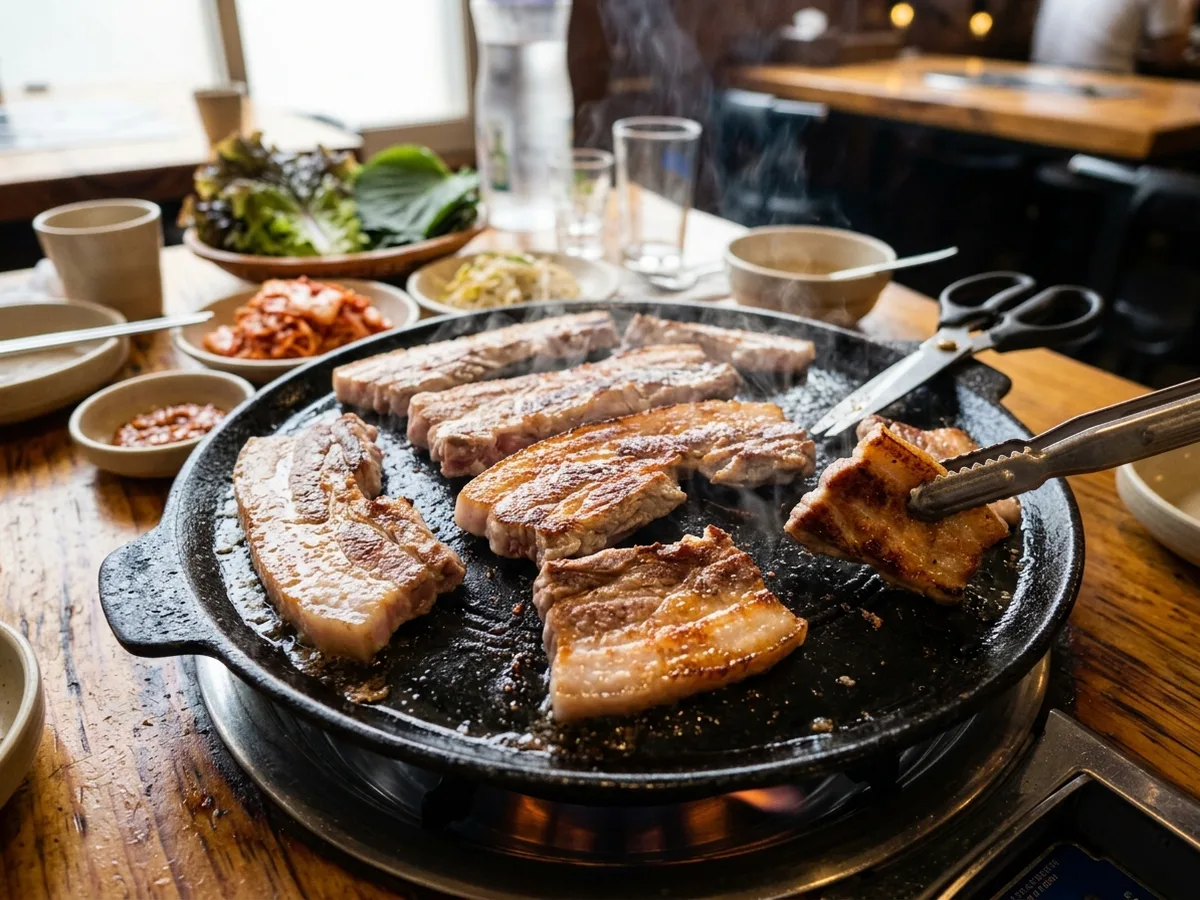 삼겹살 · SamgyeopsalOften eaten together Thick-cut grilled pork belly — Korea's default BBQ night.
 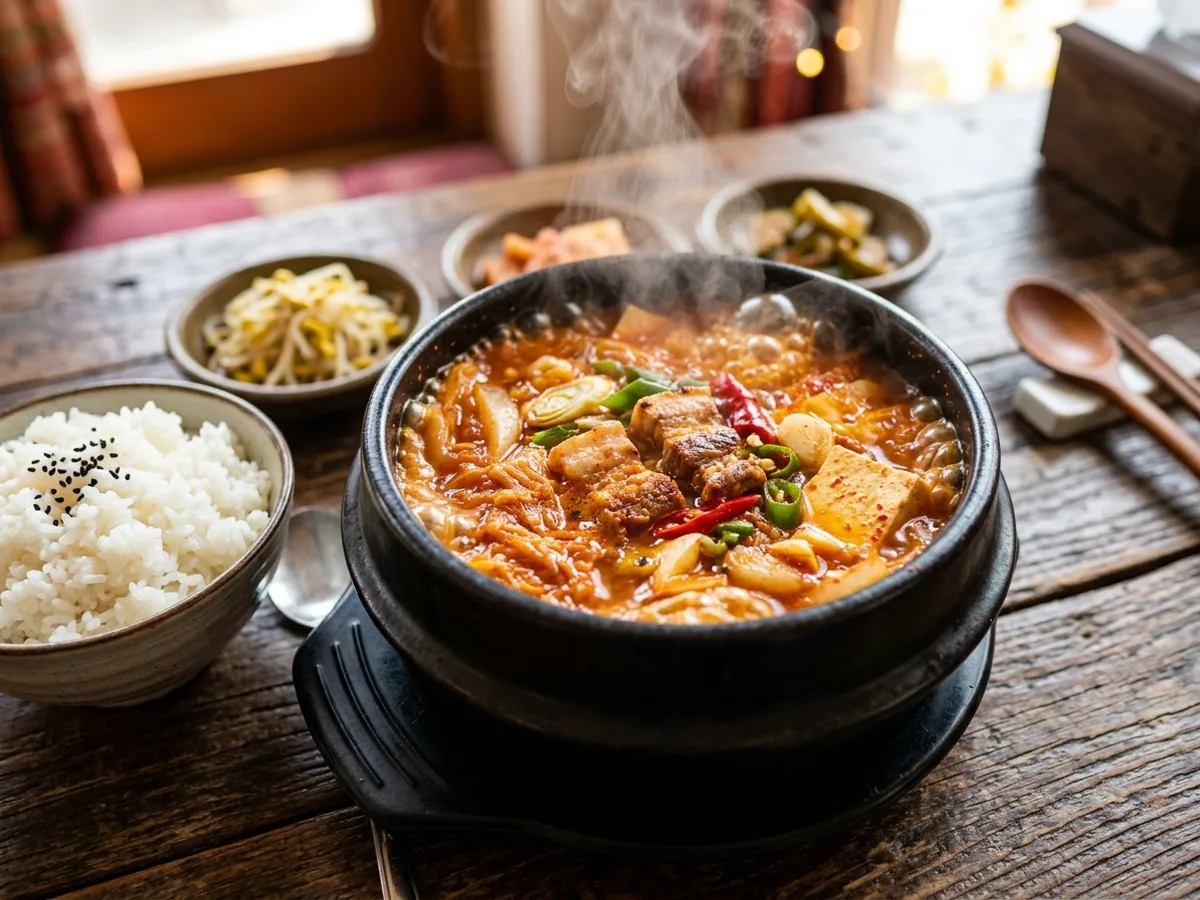 김치찌개 · Kimchi JjigaeOften eaten together Sour-aged kimchi stew, usually with pork — the national comfort food.
 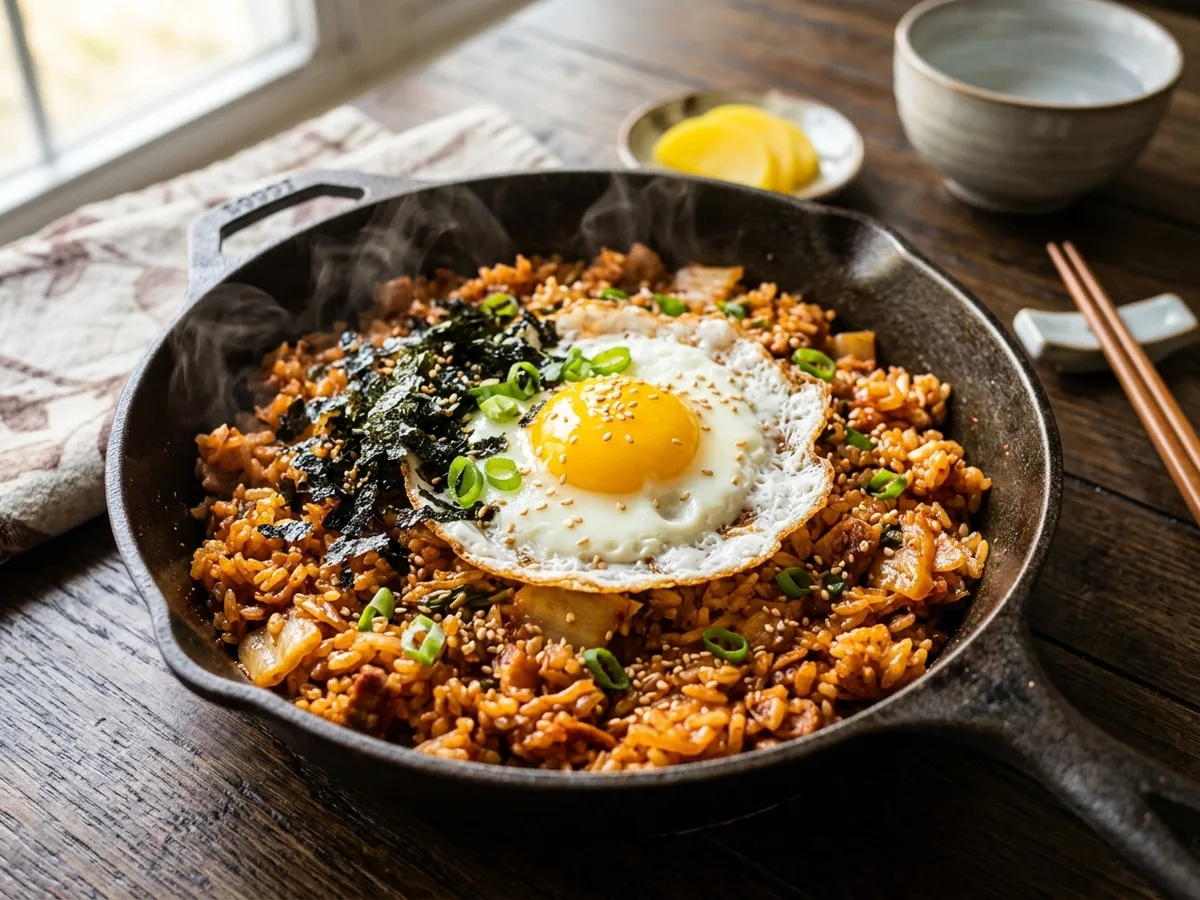 김치볶음밥 · Kimchi BokkeumbapOften eaten together Kimchi fried rice, best with a fried egg on top.
 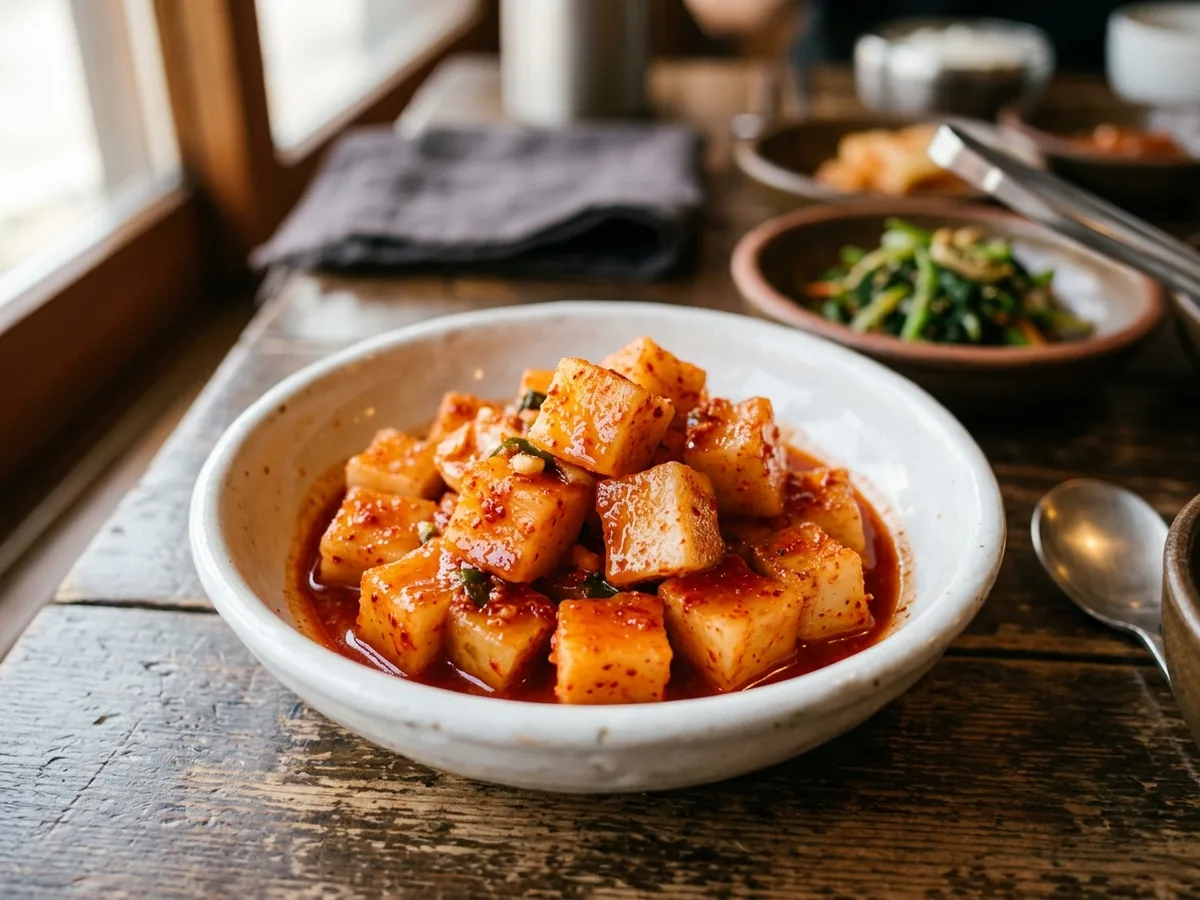 깍두기 · KkakdugiSame family · fermented seafood seasoning Cubed radish kimchi — crunchy, juicy, born for gukbap.
 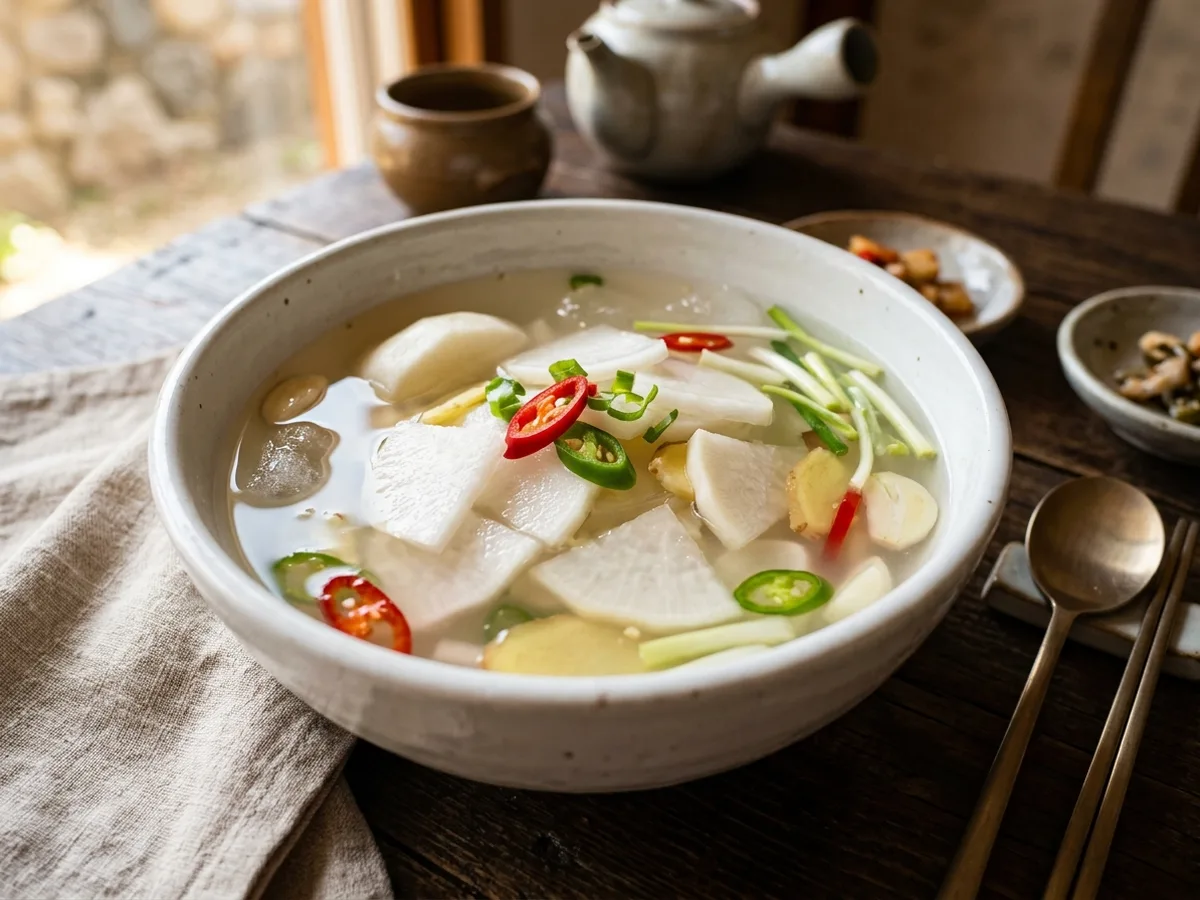 동치미 · DongchimiMilder alternative Icy radish water-kimchi — drink the brine, that's the point.