Kkakdugi (깍두기)
Cubed radish kimchi — crunchy, juicy, born for gukbap.
- Korean name
- 깍두기
- Spice level
- Medium
- Flavor
- spicy · crunchy
- Typically contains
- fermented seafood seasoning
- Vegetarian / vegan
- Sometimes — vegetable-forward, but anchovy broth, fish sauce or meat garnish is common. Ask first
- Good to know
- Beginner-friendly ●●●○○ Solo dining ●●●●● Kid-friendly ●●●○○
- Also written as
- kkakdoogi, kaktugi, ggakdugi, cubed radish kimchi
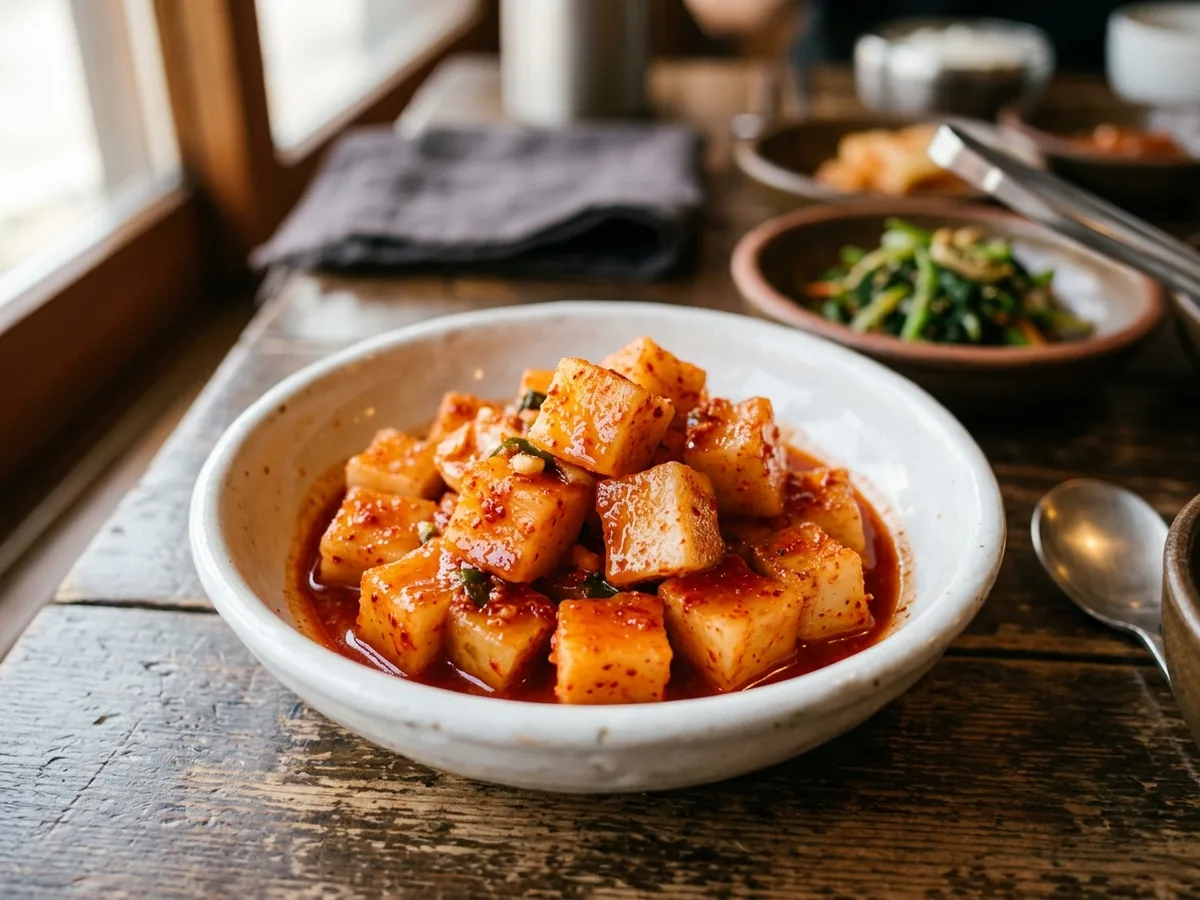
What is Kkakdugi?
Kkakdugi (깍두기) is cubed radish kimchi — crunchy dice of Korean radish in the same chili-garlic seasoning as cabbage kimchi, but with a cleaner, sweeter bite and a juicier crunch. It is the designated partner of long-simmered soups: seolleongtang and gomtang restaurants are judged as much on their kkakdugi as on their broth.
How to eat it
- Eat it with milky beef soups. One spoon of rice-in-broth, one cube of kkakdugi — the crunch and acidity reset the palate.
- Use the juice. At seolleongtang houses, many locals spoon a little kkakdugi brine into the bland broth to season it — a known move, not a faux pas.
- Take cubes one or two at a time from the communal bowl with the serving utensil or your chopsticks.
Cooking it at home
- Cut Korean radish (mu, 무) into 2 cm cubes, salt 30–40 minutes, and drain without rinsing.
- Toss with gochugaru first for color, then garlic, ginger, fish sauce or salted shrimp, a little sugar, and scallion.
- Ferment 1–2 days at room temperature, then refrigerate; it peaks at about 1–2 weeks when carbonation tingles.
Good to know
- Usually contains fish sauce or salted shrimp — not vegetarian by default.
- Well-fermented kkakdugi is lightly fizzy; that is normal fermentation, not spoilage.
At soup restaurants kkakdugi often arrives in a whole crock with tongs — take what you want, it is unlimited.
Nutrition
| Calories | 33 kcal |
|---|---|
| Carbohydrate | 4.24 g |
| Protein | 1.56 g |
| Fat | 1.06 g |
| Sodium | 808 mg |
Per serving (~50g): ≈17 kcal · sodium ≈404 mg (20% of the WHO daily guideline, 2,000 mg)
Related foods
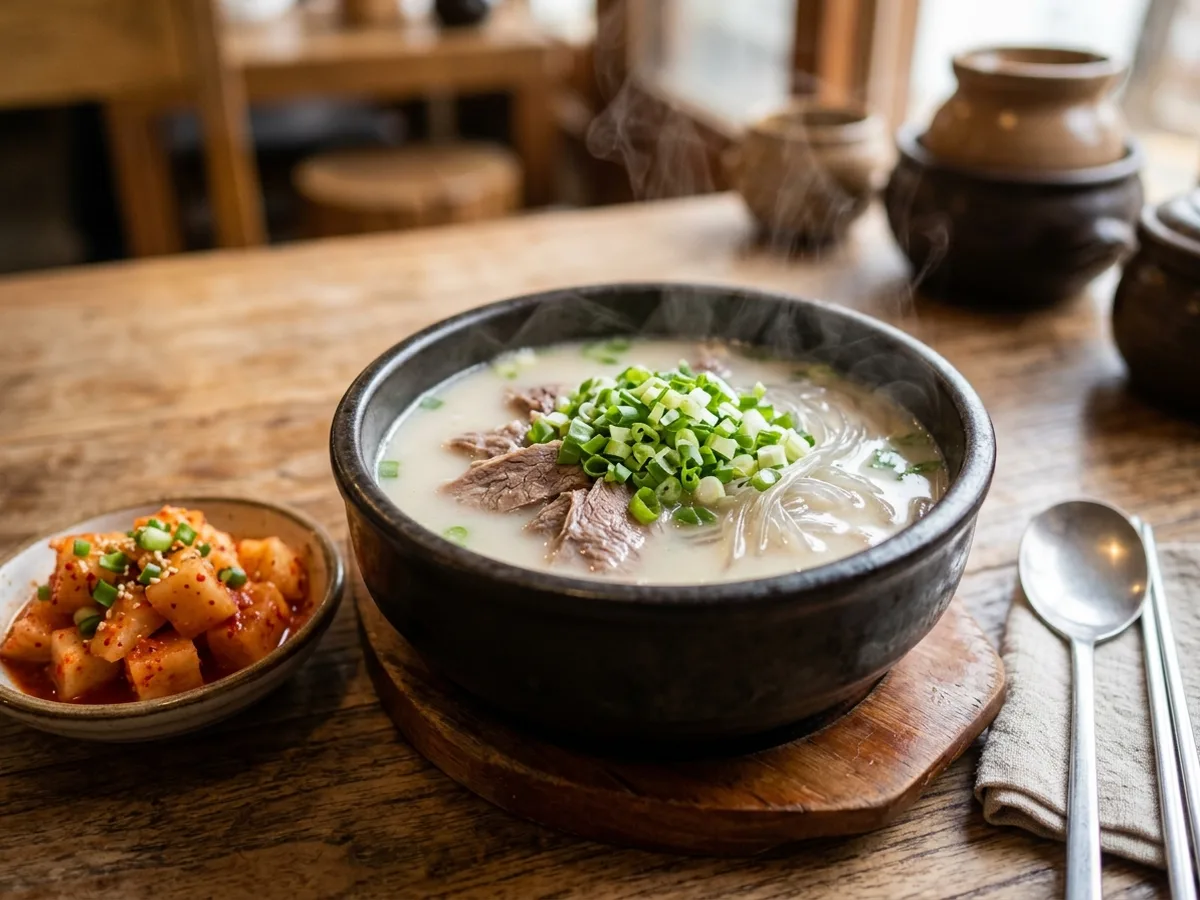 설렁탕 · SeolleongtangOften eaten together Milky ox-bone broth you season yourself with salt and scallions.
 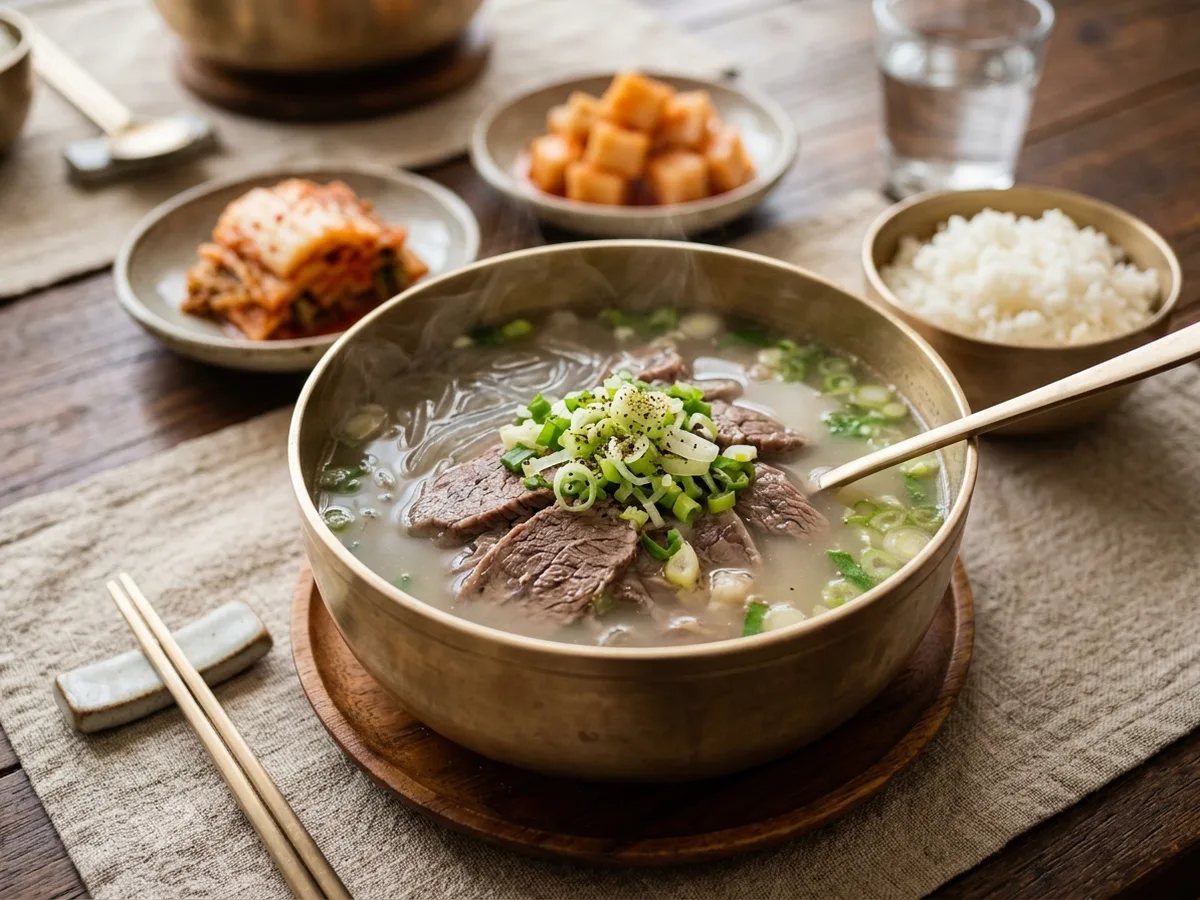 곰탕 · GomtangOften eaten together Slow-simmered beef soup, clearer cousin of seolleongtang.
 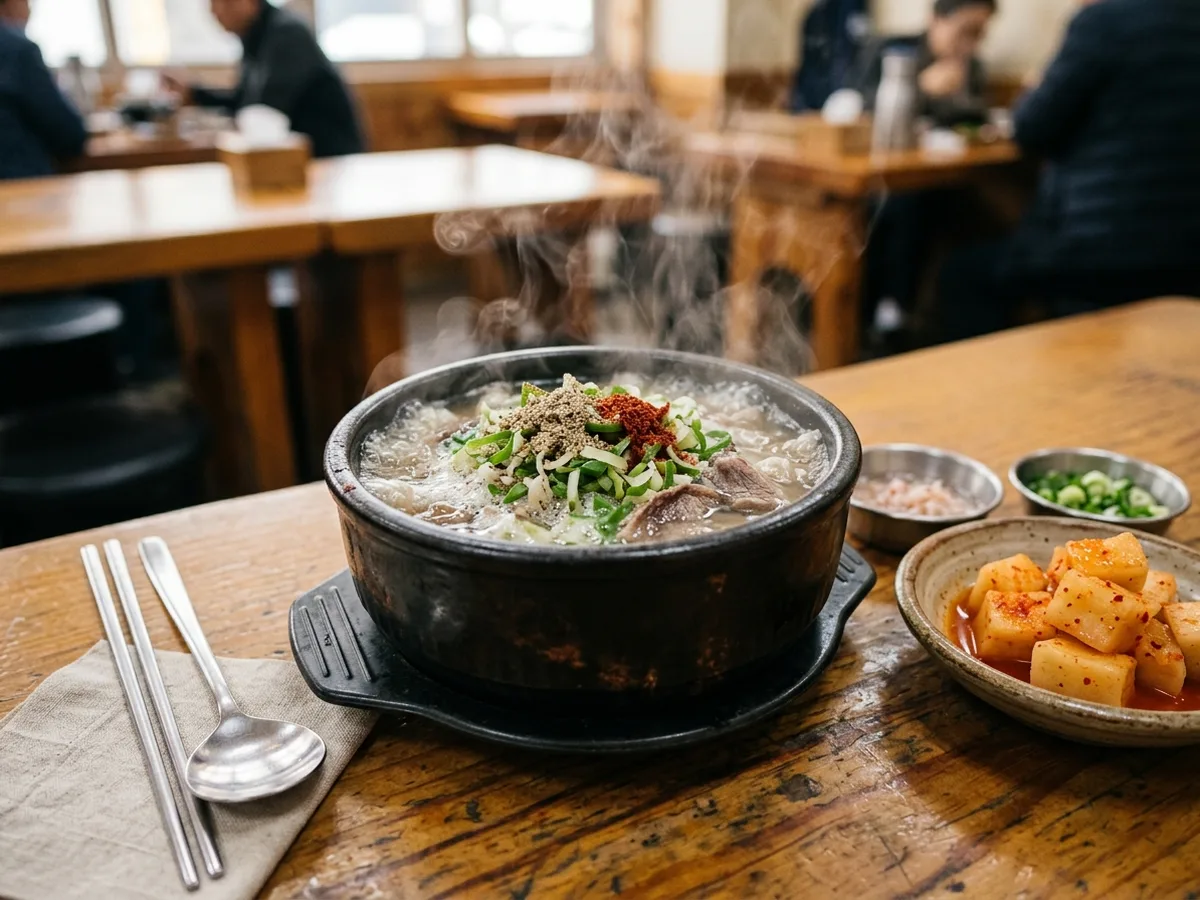 국밥 · GukbapOften eaten together Rice in hot soup — fast, cheap, and deeply Korean.
 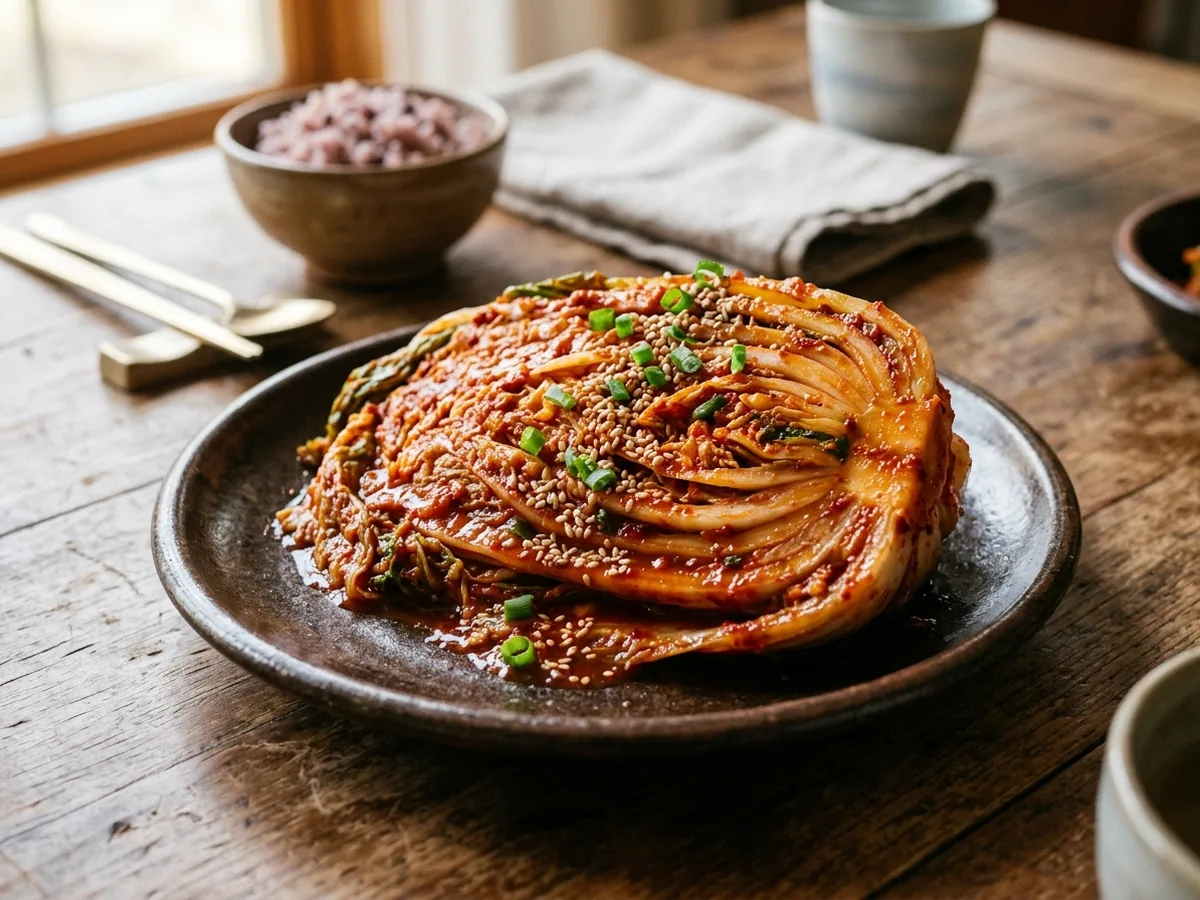 배추김치 · KimchiSame family · fermented seafood seasoning Fermented napa cabbage — the one dish on every Korean table.
 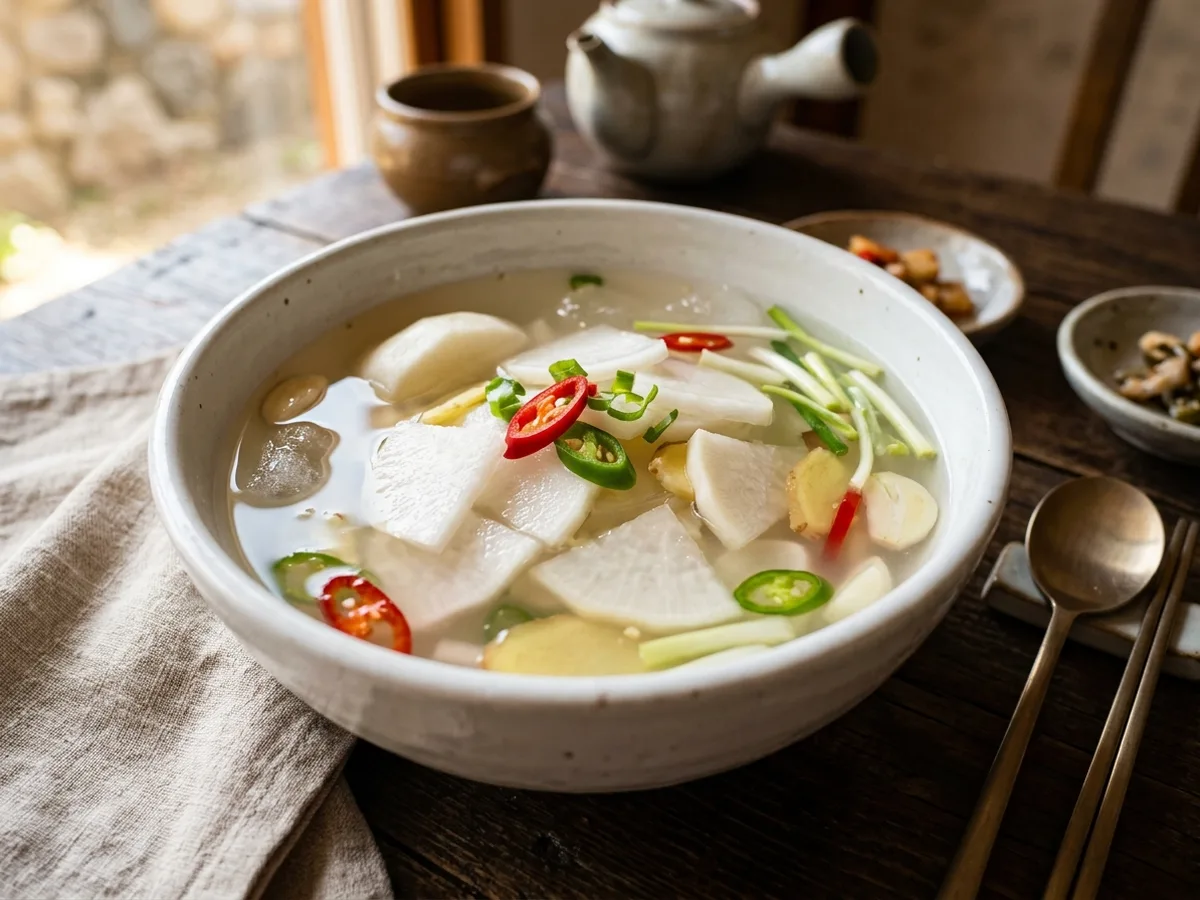 동치미 · DongchimiMilder alternative Icy radish water-kimchi — drink the brine, that's the point.