Japchae (잡채)
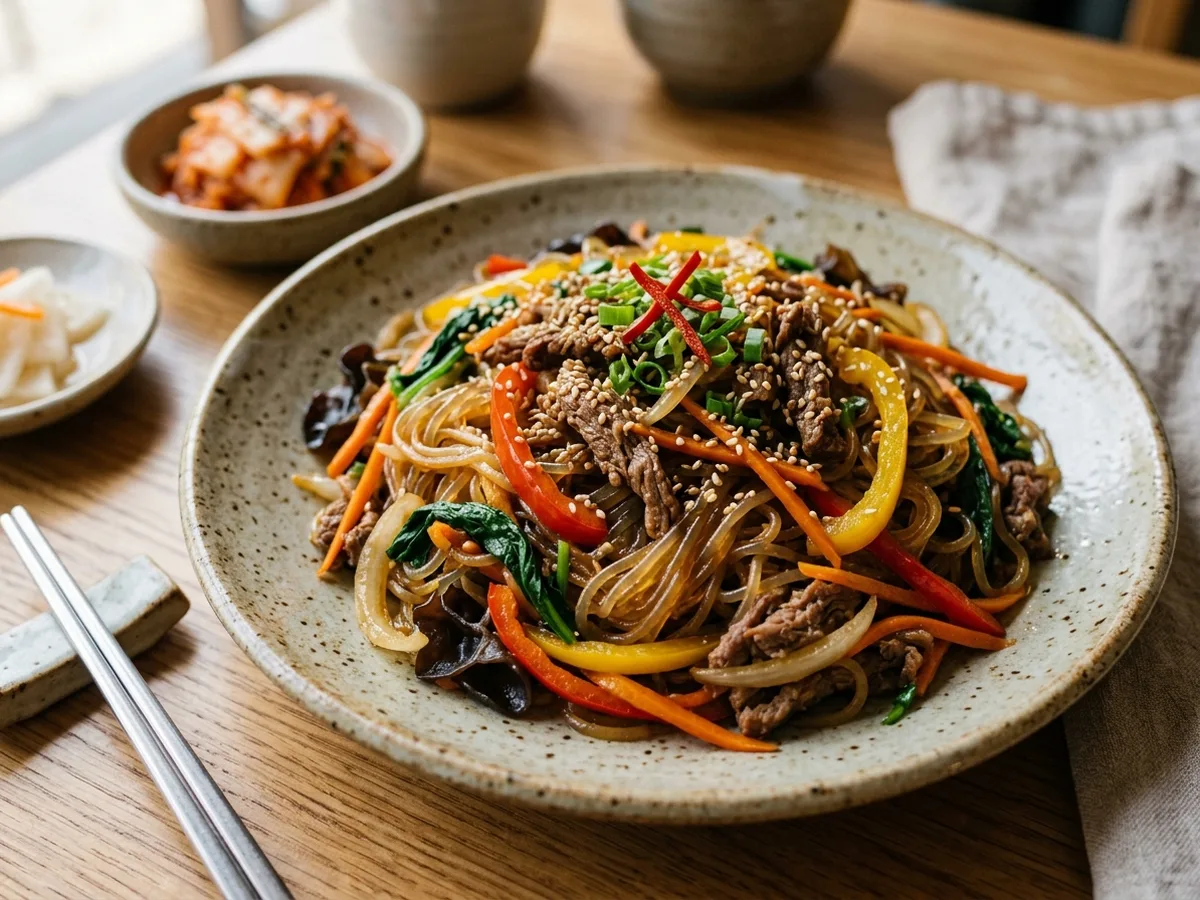
Sweet-potato glass noodles stir-fried with vegetables and beef.
- Korean name
- 잡채
- Spice level
- Not spicy
- Flavor
- sweet · savory · sesame
- Typically contains
- glass noodles, beef
- Vegetarian / vegan
- Sometimes — vegetable-forward, but anchovy broth, fish sauce or meat garnish is common. Ask first
- Typical price
- ₩7,000–₩10,000 per person checked 2026-07 — varies by area
- Good to know
- Beginner-friendly ●●●●● Solo dining ●●●○○ Kid-friendly ●●●●●
- Also written as
- japche, chapchae, jab chae, glass noodles
What is Japchae?
Japchae is the celebration noodle: sweet-potato glass noodles tossed glossy with soy, sugar, sesame and a rainbow of separately-cooked vegetables and beef. No holiday table, wedding buffet or school potluck escapes it — and no one has ever taken just one serving.
How to eat it
- Eat it warm or room-temperature — japchae is served both ways on purpose.
- As a side with rice, or over rice as japchae-bap for a full meal.
- Twirl with chopsticks; the noodles are slippery by design.
Cooking it at home
- Cook glass noodles, then toss with soy-sugar-sesame while warm so they absorb it.
- Stir-fry each vegetable separately (the traditional labor that defines good japchae) — spinach, carrot, onion, mushroom, beef.
- Combine everything with more sesame oil; adjust sweet-salty balance.
Good to know
- Glass noodles overcook into mush quickly — pull them a shade early.
- It's sweeter than it looks; diabetics often underestimate japchae.
Started as a 17th-century royal dish — originally without noodles at all; the sweet-potato noodles arrived in the 20th century.
Nutrition
| Calories | 146 kcal |
|---|---|
| Carbohydrate | 24.26 g |
| Protein | 4.71 g |
| Fat | 3.3 g |
| Sodium | 360 mg |
Per serving (~200g): ≈292 kcal · sodium ≈720 mg (36% of the WHO daily guideline, 2,000 mg)
Related foods
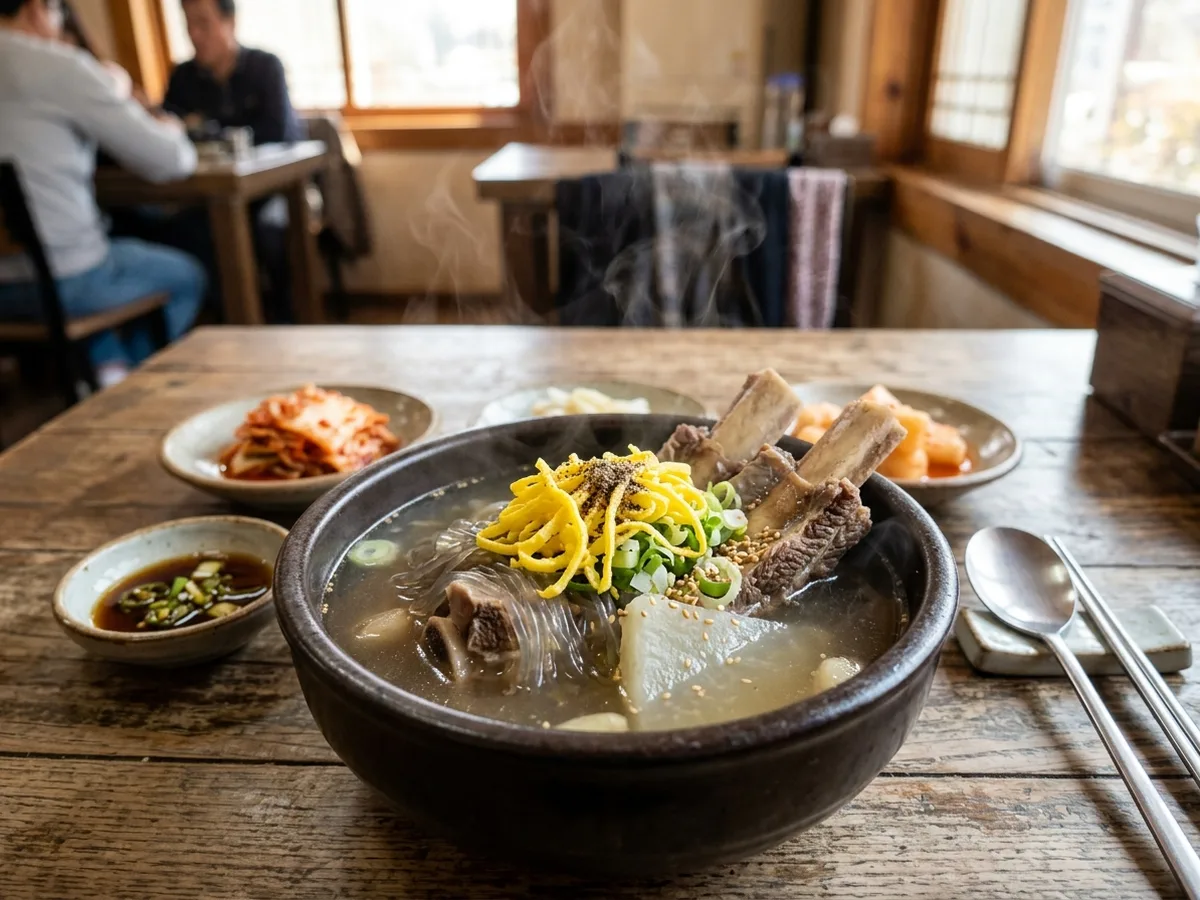 갈비탕 · GalbitangOften eaten together Clear beef short-rib soup — the polite lunch of choice.
 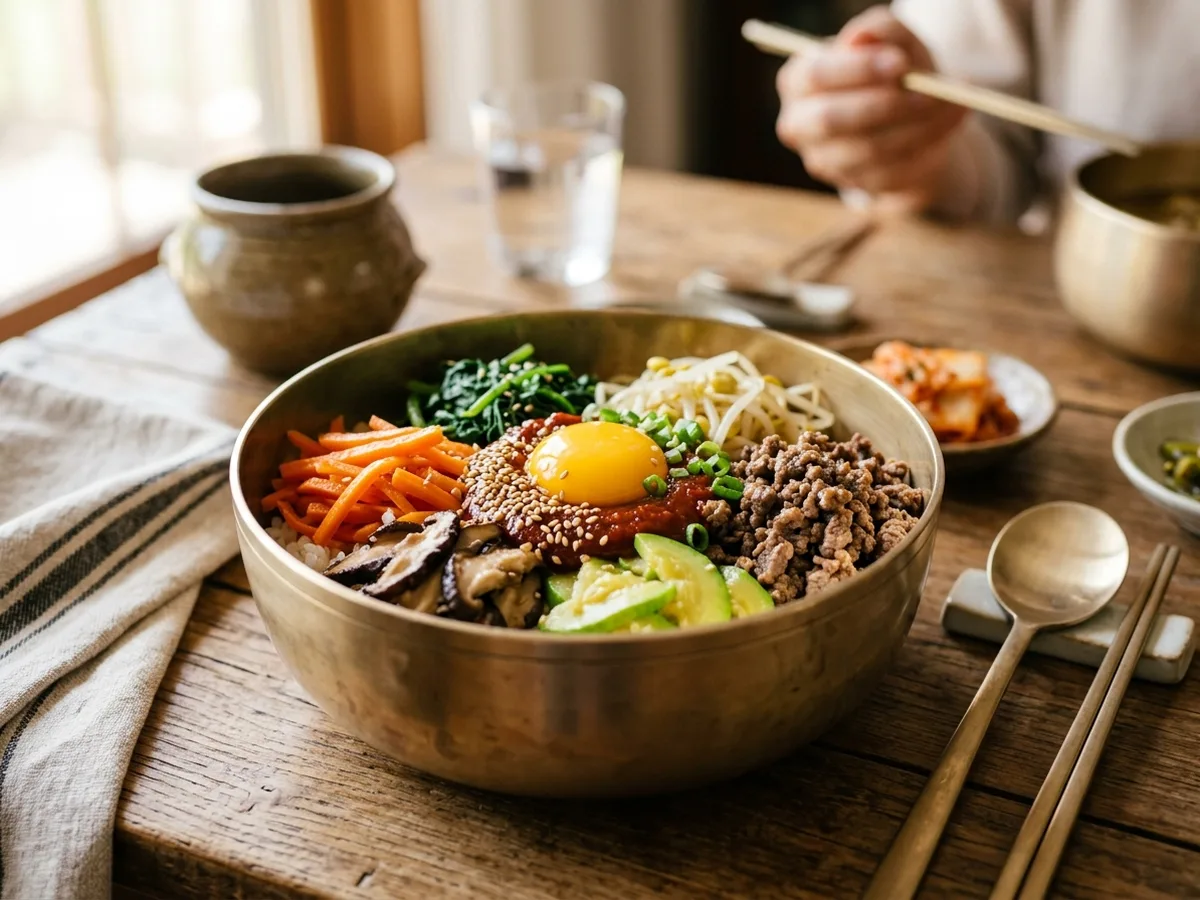 비빔밥 · BibimbapOften eaten together Rice bowl with seasoned vegetables and gochujang — mix hard, then eat.
 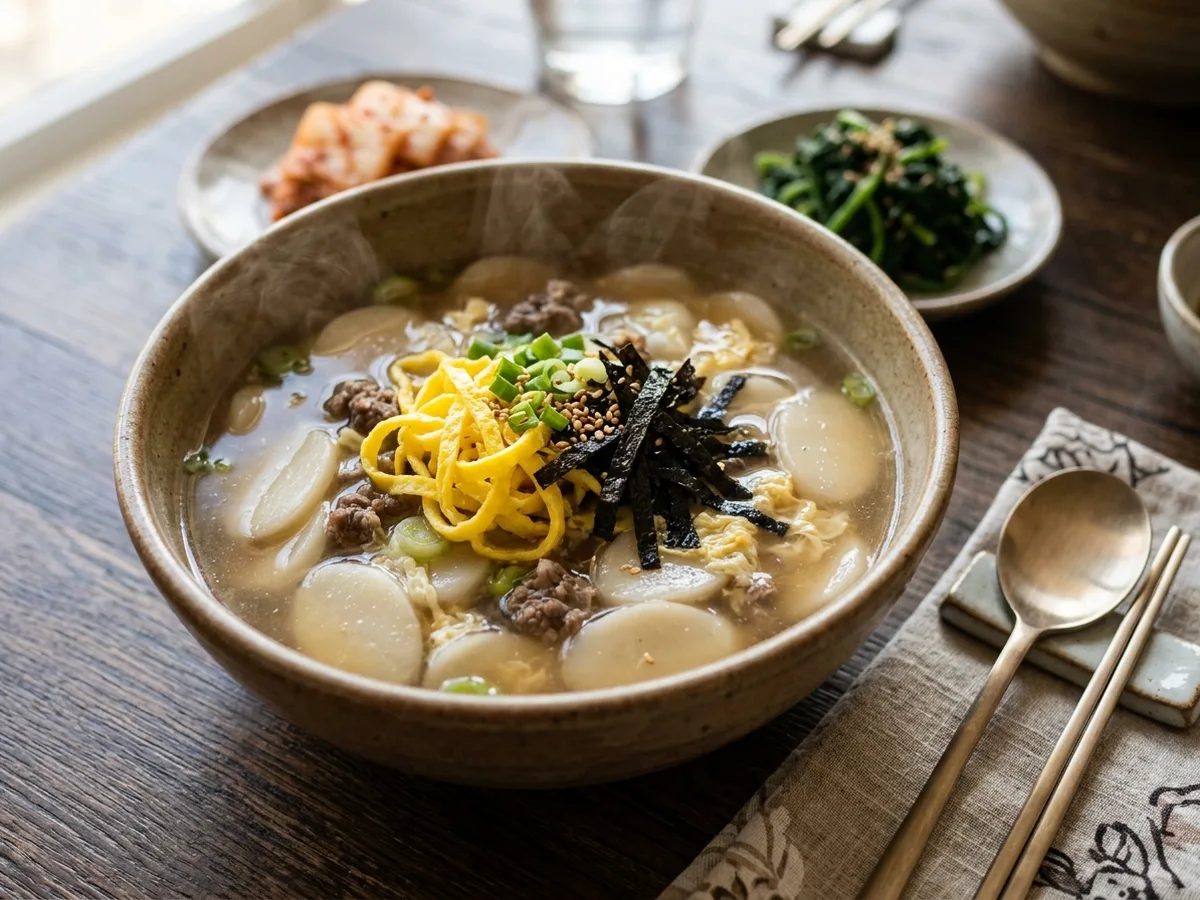 떡국 · TteokgukOften eaten together Sliced rice-cake soup — eat a bowl, turn a year older (New Year).
 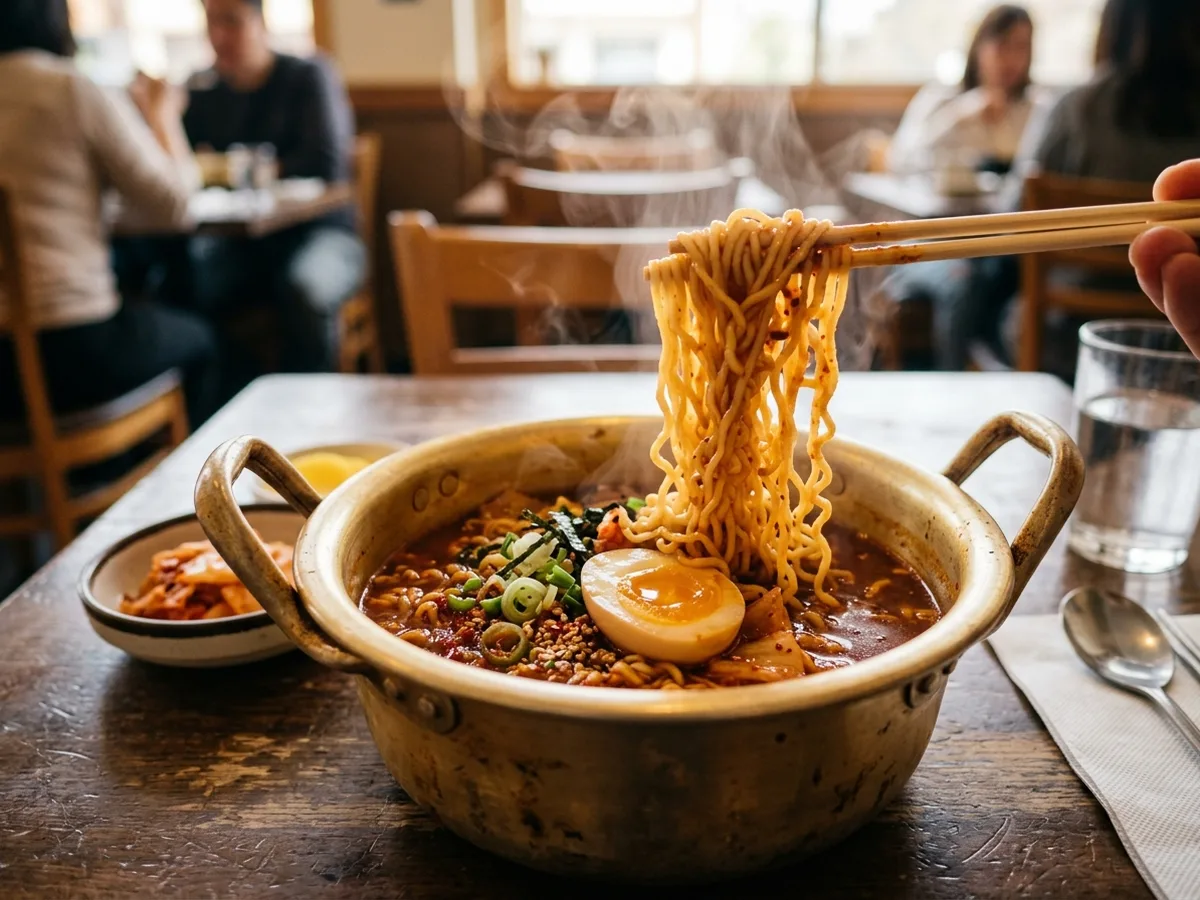 라면 · RamyeonSpicier alternative Korean instant noodles — a national institution, not a backup meal.
 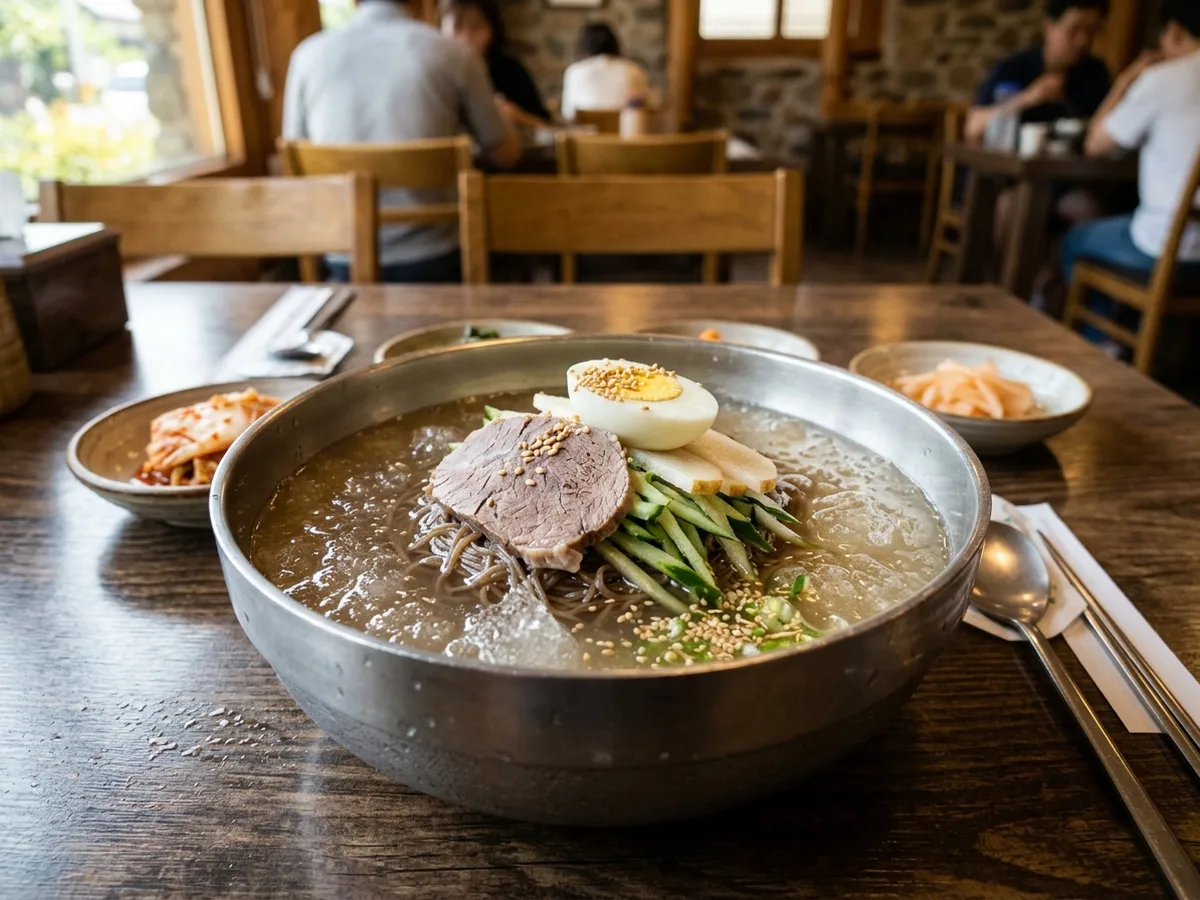 물냉면 · Mul NaengmyeonSame family · Noodles & Dumplings Buckwheat noodles in icy beef broth — the post-BBQ finisher.