Ramyeon (라면)
Korean instant noodles — a national institution, not a backup meal.
- Korean name
- 라면
- Spice level
- Spicy
- Flavor
- spicy · savory
- Typically contains
- wheat noodles, egg
- Vegetarian / vegan
- Not vegetarian — meat or seafood is core to the dish
- Typical price
- ₩3,000–₩6,000 per person checked 2026-07 — varies by area
- Good to know
- Beginner-friendly ●●●●● Solo dining ●●●●● Kid-friendly ●●●○○
- Also written as
- ramen, ramyun, korean instant noodles, ramyeon machine
What is Ramyeon?
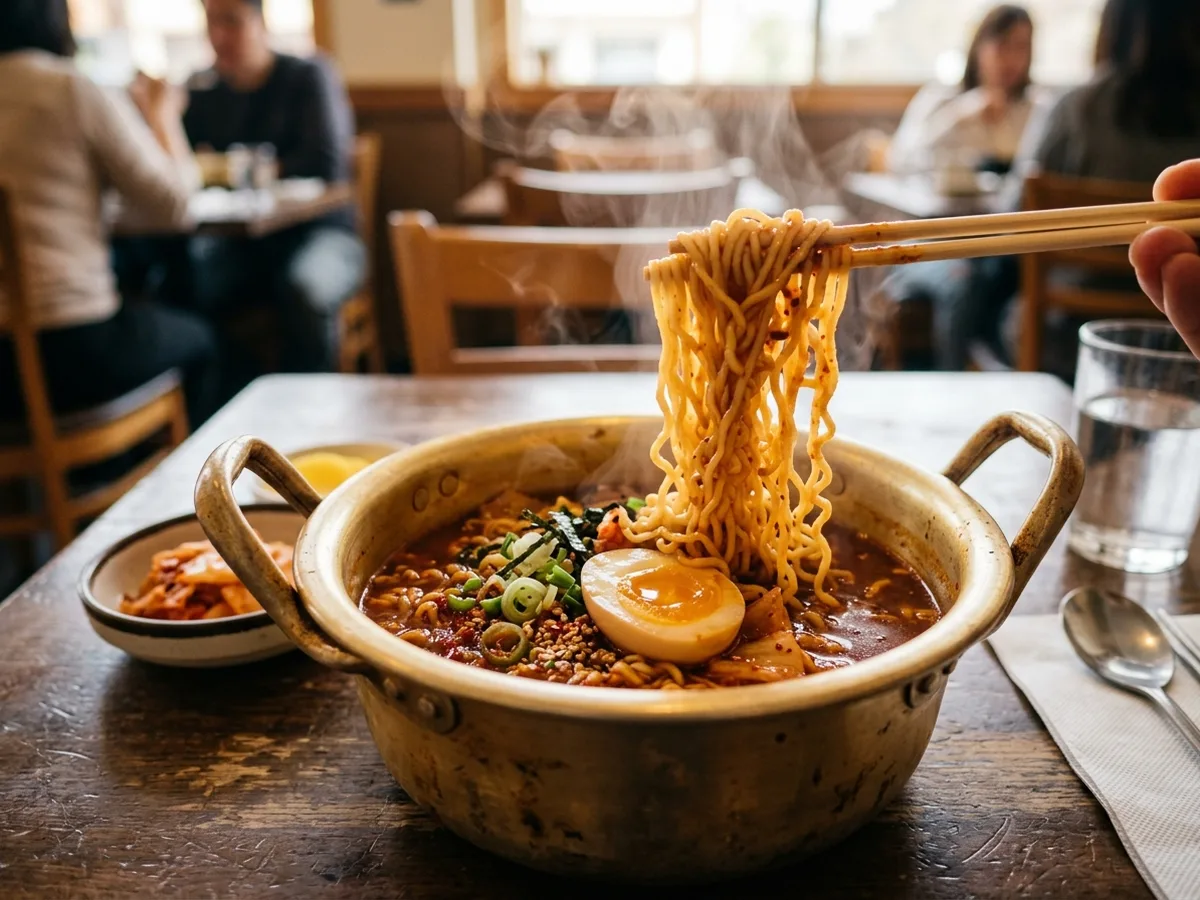
Ramyeon is Korean instant noodles — but calling it 'instant' undersells a national institution with its own etiquette, upgrade culture (egg, cheese, green onion), and dedicated corner of every convenience store, complete with self-serve cooking machines.
Unlike Japanese ramen, ramyeon is proudly from a packet: fast, spicy, and engineered for the communal gold-colored pot it's often served in. It's the food of study nights, camping trips and 2 a.m. decisions.
How to eat it
- At the convenience-store machine: pot on the rack, water to the line, press start, add the egg halfway.
- Slurp loudly and fast — ramyeon waits for no one; the noodles keep softening.
- Finish with rice in the leftover broth (bap-mari) — the true Korean ending.
Cooking it at home
- Boil 550ml water FIRST, then noodles and soup base together — 4 minutes, not more.
- Upgrades in order of orthodoxy: egg, scallion, a slice of cheese, dumplings.
- For 'jjolgit' chewy noodles, lift and drop the noodles with chopsticks as they boil.
Good to know
- The gold pot handle gets hot; grab it with the lid.
- Sodium is the honest cost — drinking every drop of broth is delicious and inadvisable.
Koreans average about 80 packets a year — the highest per-capita instant noodle consumption on Earth.
Nutrition
| Calories | 82 kcal |
|---|---|
| Carbohydrate | 13.65 g |
| Protein | 1.72 g |
| Fat | 2.28 g |
| Sodium | 283 mg |
Per serving (~550g): ≈451 kcal · sodium ≈1,557 mg (78% of the WHO daily guideline, 2,000 mg)
Related foods
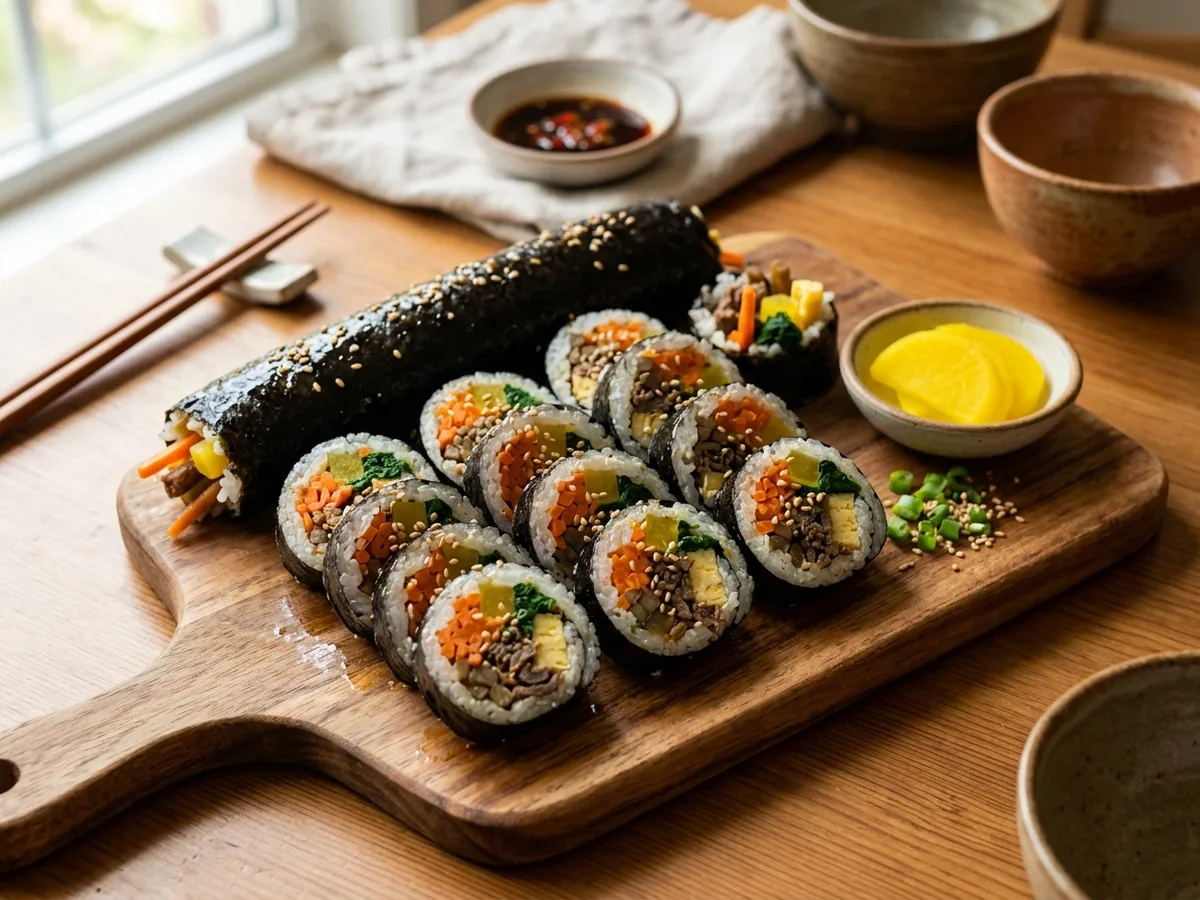 김밥 · GimbapOften eaten together Seaweed rice rolls — Korea's picnic and lunchbox default.
 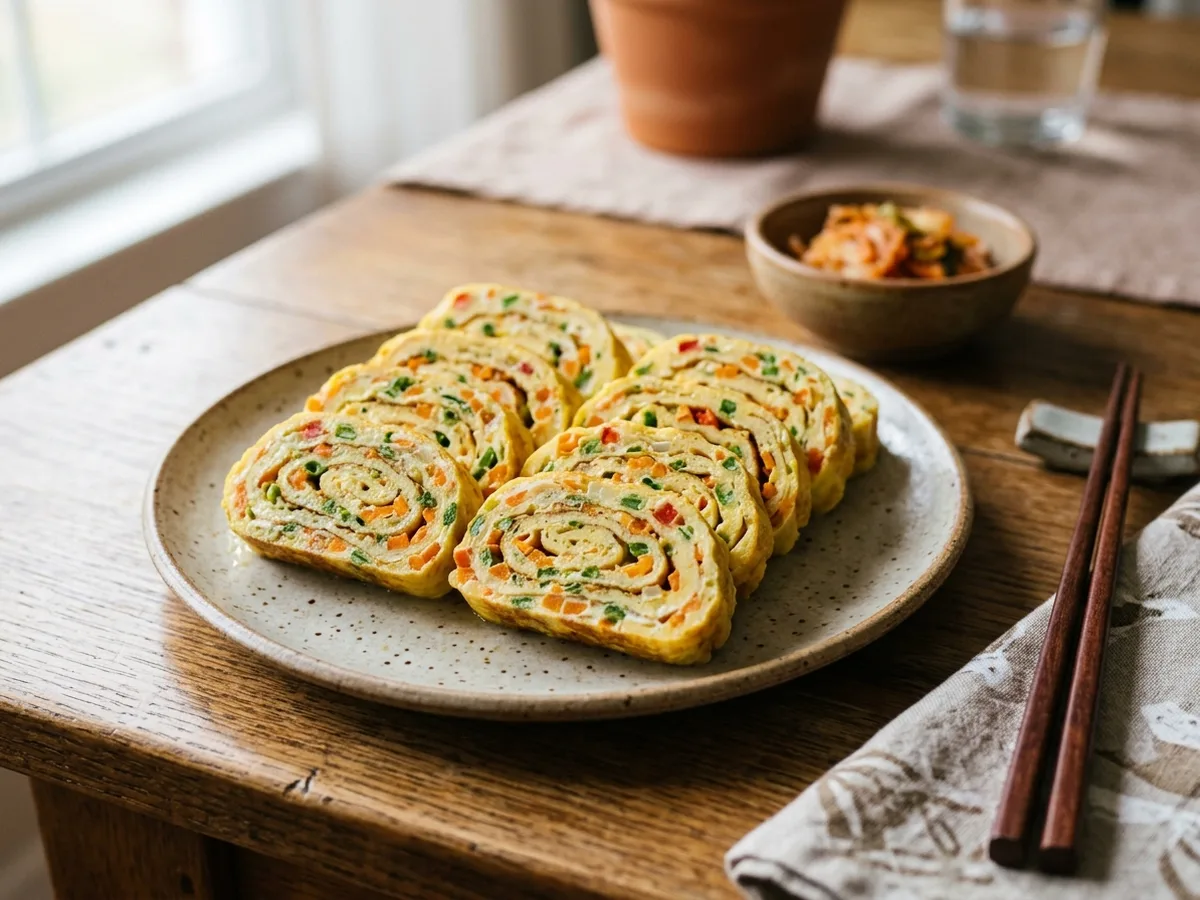 달걀말이 · Gyeran MariOften eaten together Rolled omelette, often with vegetables or gim inside.
 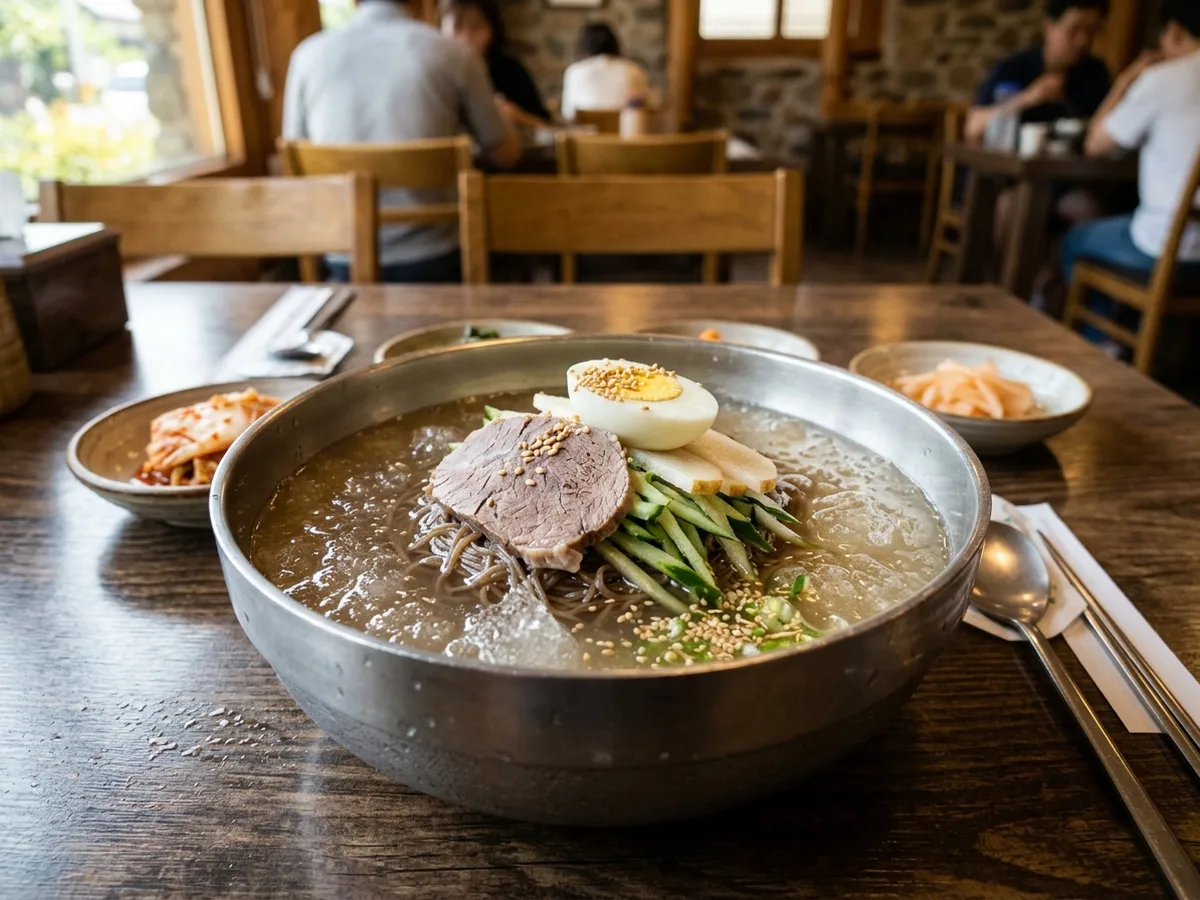 물냉면 · Mul NaengmyeonMilder alternative Buckwheat noodles in icy beef broth — the post-BBQ finisher.
 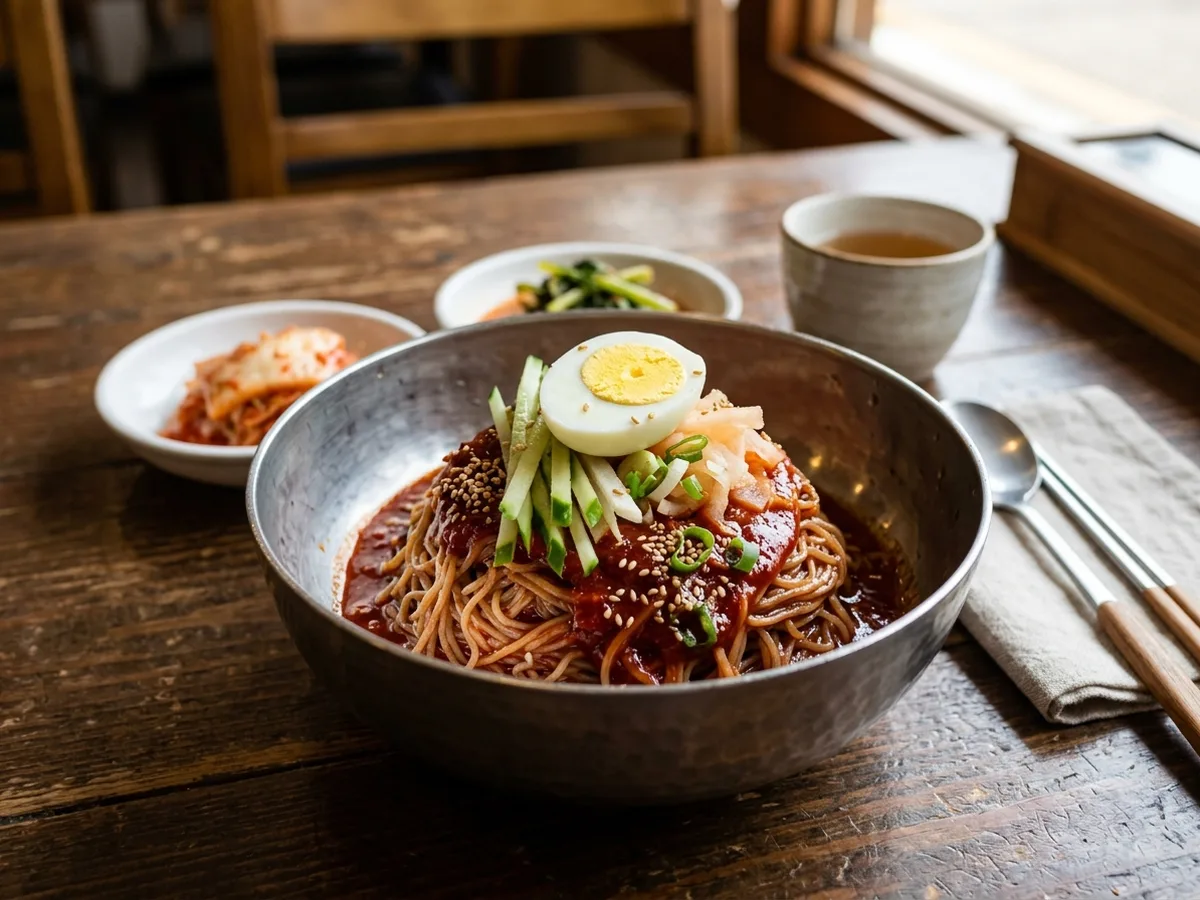 비빔냉면 · Bibim NaengmyeonSame family · Noodles & Dumplings Cold chewy noodles in sweet-spicy sauce — naengmyeon's fiery twin.
 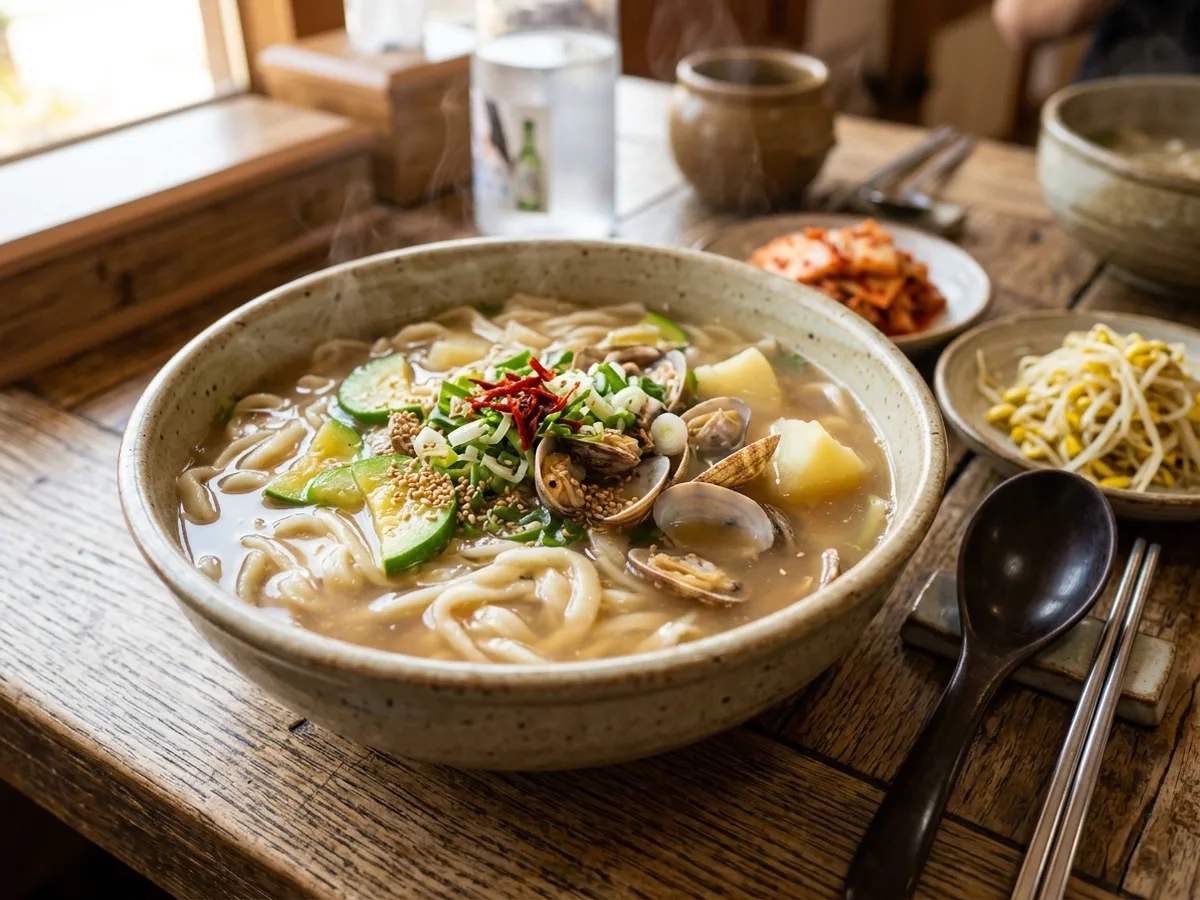 칼국수 · KalguksuMilder alternative Knife-cut wheat noodles in anchovy or clam broth.