Nurungji (누룽지)
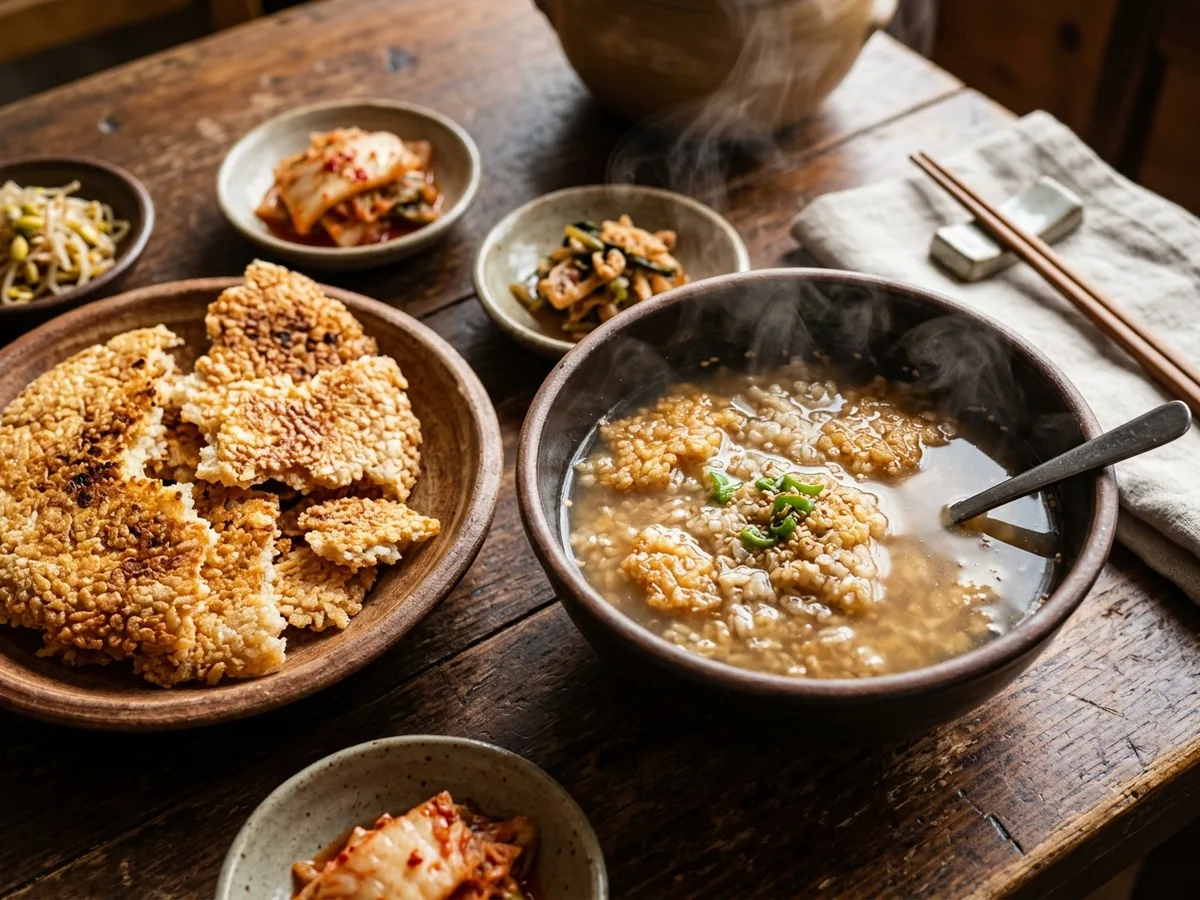
Scorched rice — eaten crunchy or simmered into a toasty porridge.
- Korean name
- 누룽지
- Spice level
- Not spicy
- Flavor
- toasty · plain
- Vegetarian / vegan
- Typically plant-based — one of the safer picks for vegans (still confirm when ordering)
- Typical price
- ₩8,000–₩12,000 per person checked 2026-07 — varies by area
- Good to know
- Beginner-friendly ●●●●○ Solo dining ●●●●○ Kid-friendly ●●●●●
- Also written as
- nurungji tang, scorched rice, crispy rice
What is Nurungji?
Nurungji is the golden crust that forms when rice toasts against the pot — and Korea's original dessert, snack and comfort food in one. Eaten crisp like a cracker, or simmered with water into nurungji-tang, its toasty, faintly sweet plainness is pure nostalgia for anyone raised before rice cookers.
How to eat it
- Crunch it dry as a snack, or pour hot water over and simmer for the porridge-tea version (sungnyung/nurungji-tang).
- At BBQ and jjim restaurants, order nurungji-tang as the gentle closer after heavy food.
- A pinch of sugar on crisp nurungji is the retro-kid move.
Cooking it at home
- Press cooked rice thin on a dry pan over low heat until golden and self-releasing.
- Flip once; patience over heat.
- Store dry — it keeps for weeks and revives with hot water.
Good to know
- Between crisp and burnt is a fine line — low heat, long time.
Sungnyung (the toasted-rice water) was the traditional after-meal drink before coffee took over.
Nutrition
| Calories | 87 kcal |
|---|---|
| Carbohydrate | 19.17 g |
| Protein | 1.5 g |
| Fat | 0.06 g |
| Sodium | 1 mg |
Per serving (~600ml): ≈522 kcal · sodium ≈6 mg (0% of the WHO daily guideline, 2,000 mg)
Related foods
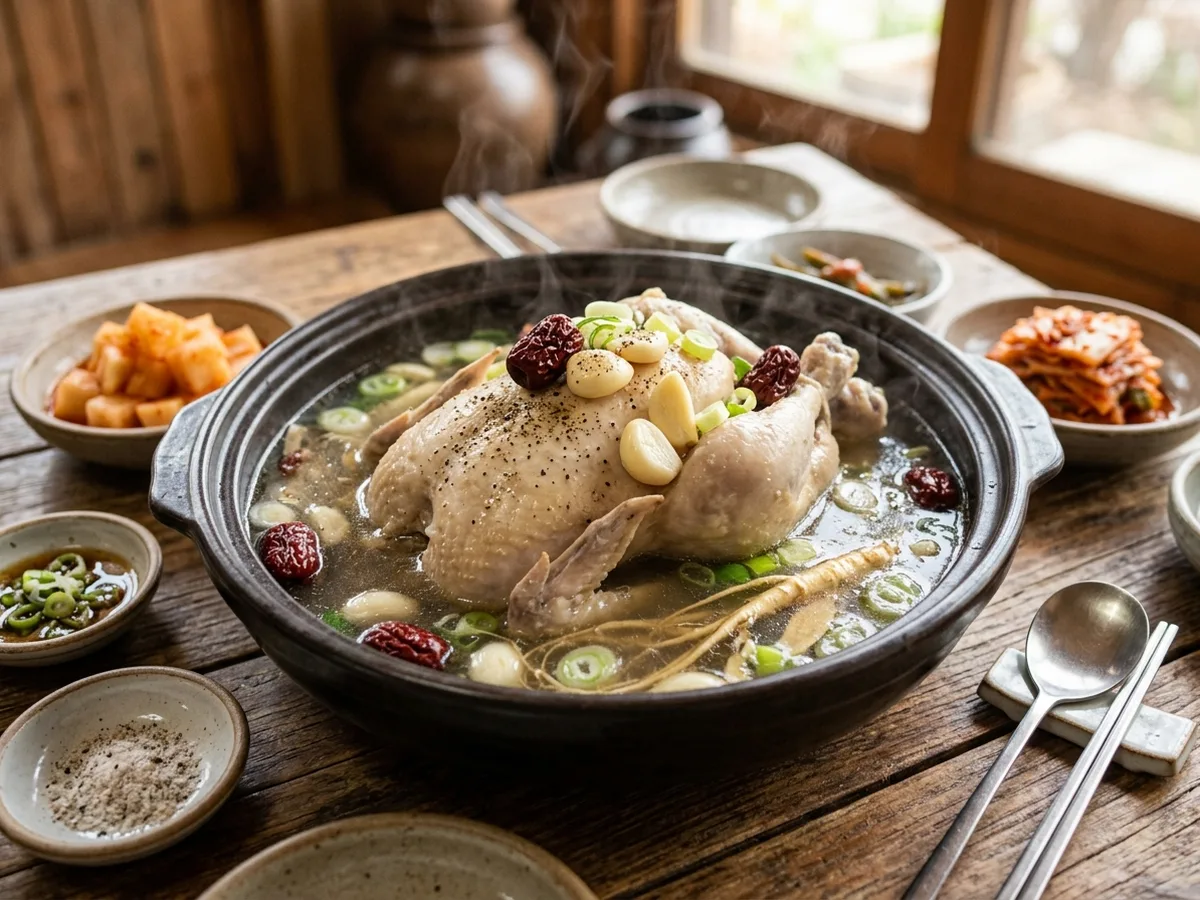 닭백숙 · Dak BaeksukOften eaten together Whole chicken gently boiled with garlic — samgyetang's plainer sibling.
 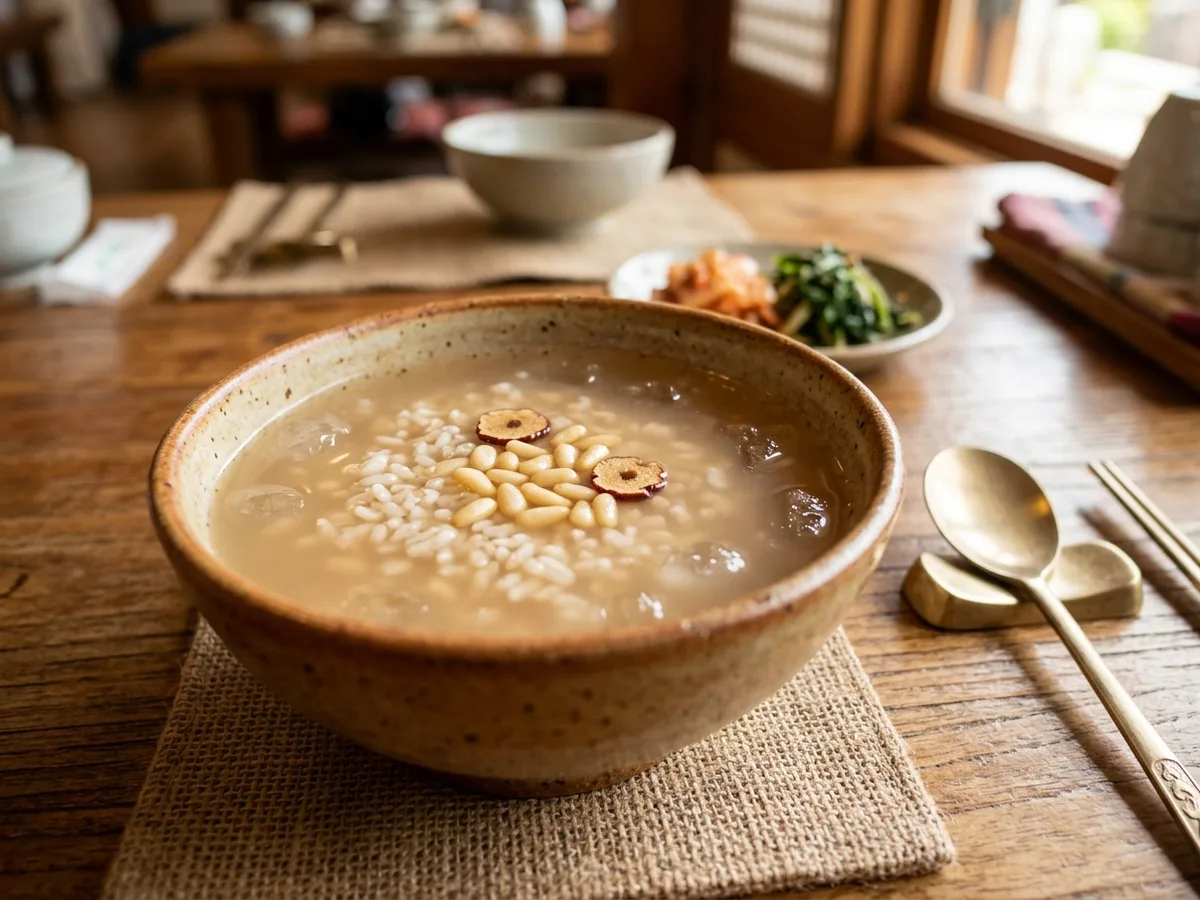 식혜 · SikhyeOften eaten together Sweet rice drink — the classic after-sauna refreshment.
 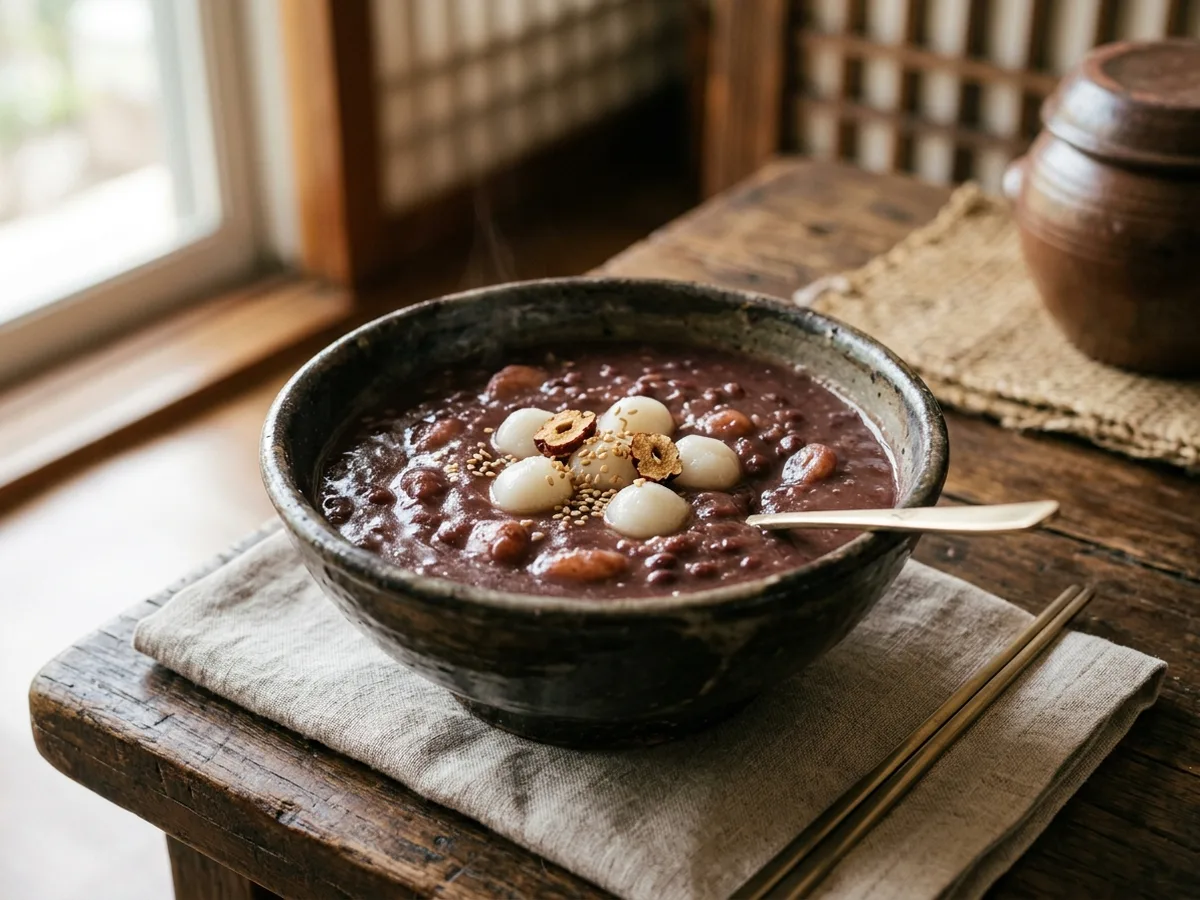 팥죽 · PatjukOften eaten together Red-bean porridge, traditionally eaten on the winter solstice.
 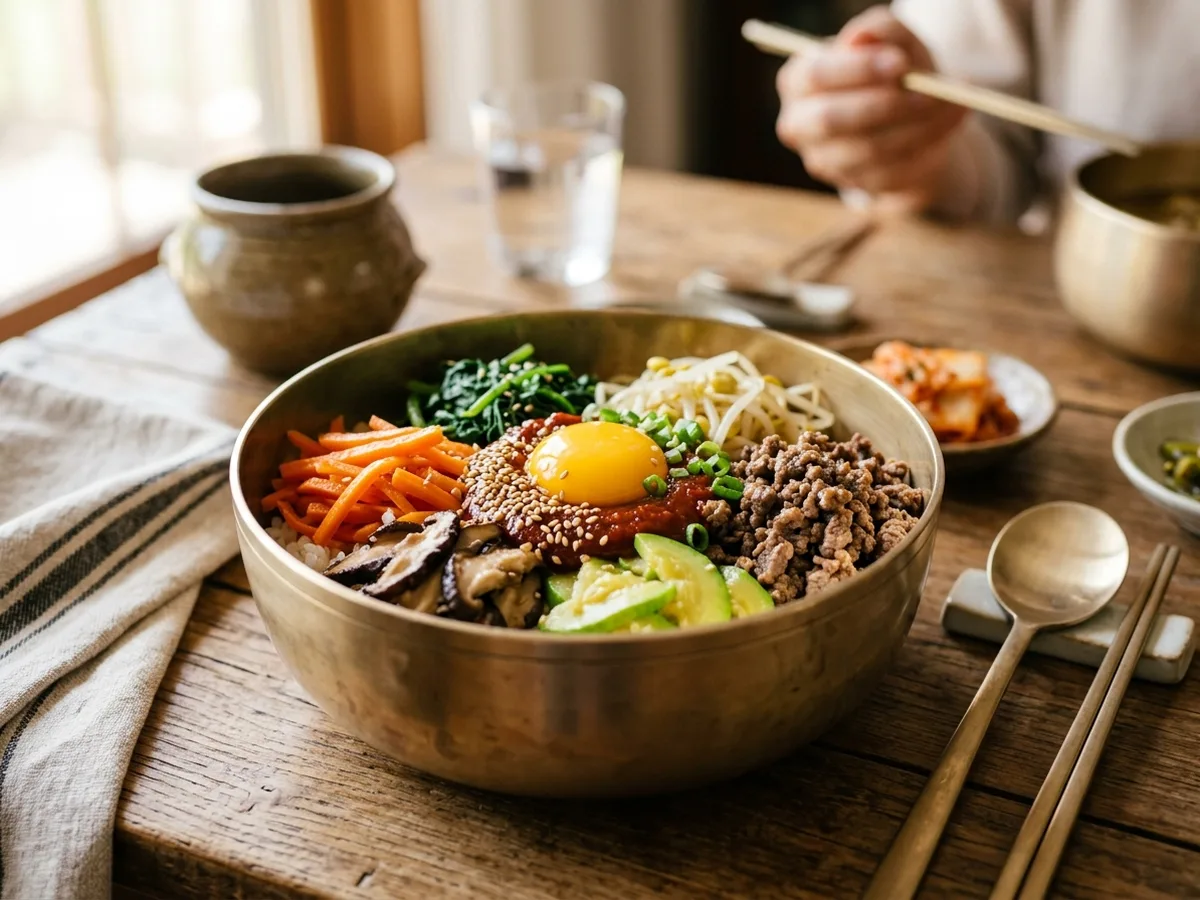 비빔밥 · BibimbapSame family · Rice & Porridge Rice bowl with seasoned vegetables and gochujang — mix hard, then eat.
 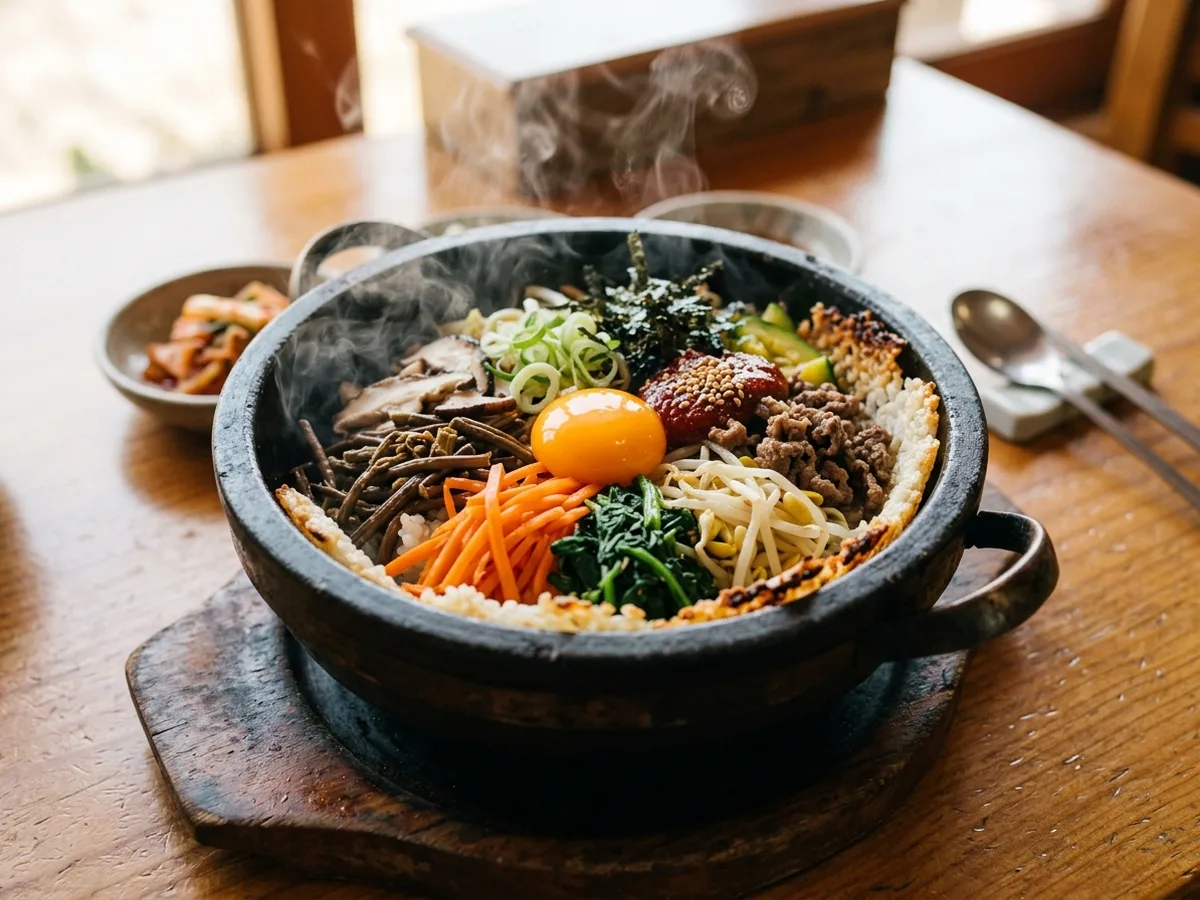 돌솥비빔밥 · Dolsot BibimbapSame family · Rice & Porridge Bibimbap in a sizzling stone pot — the crispy rice is the prize.