Pajeon (파전)
Green-onion pancake — the official food of rainy days.
- Korean name
- 파전
- Spice level
- Not spicy
- Flavor
- savory · crispy
- Typically contains
- wheat flour, egg
- Vegetarian / vegan
- Sometimes — vegetable-forward, but anchovy broth, fish sauce or meat garnish is common. Ask first
- Typical price
- ₩10,000–₩15,000 per dish checked 2026-07 — varies by area
- Good to know
- Beginner-friendly ●●●●○ Solo dining ●●●○○ Kid-friendly ●●●●○
- Also written as
- pa jeon, pajun, green onion pancake, scallion pancake korean
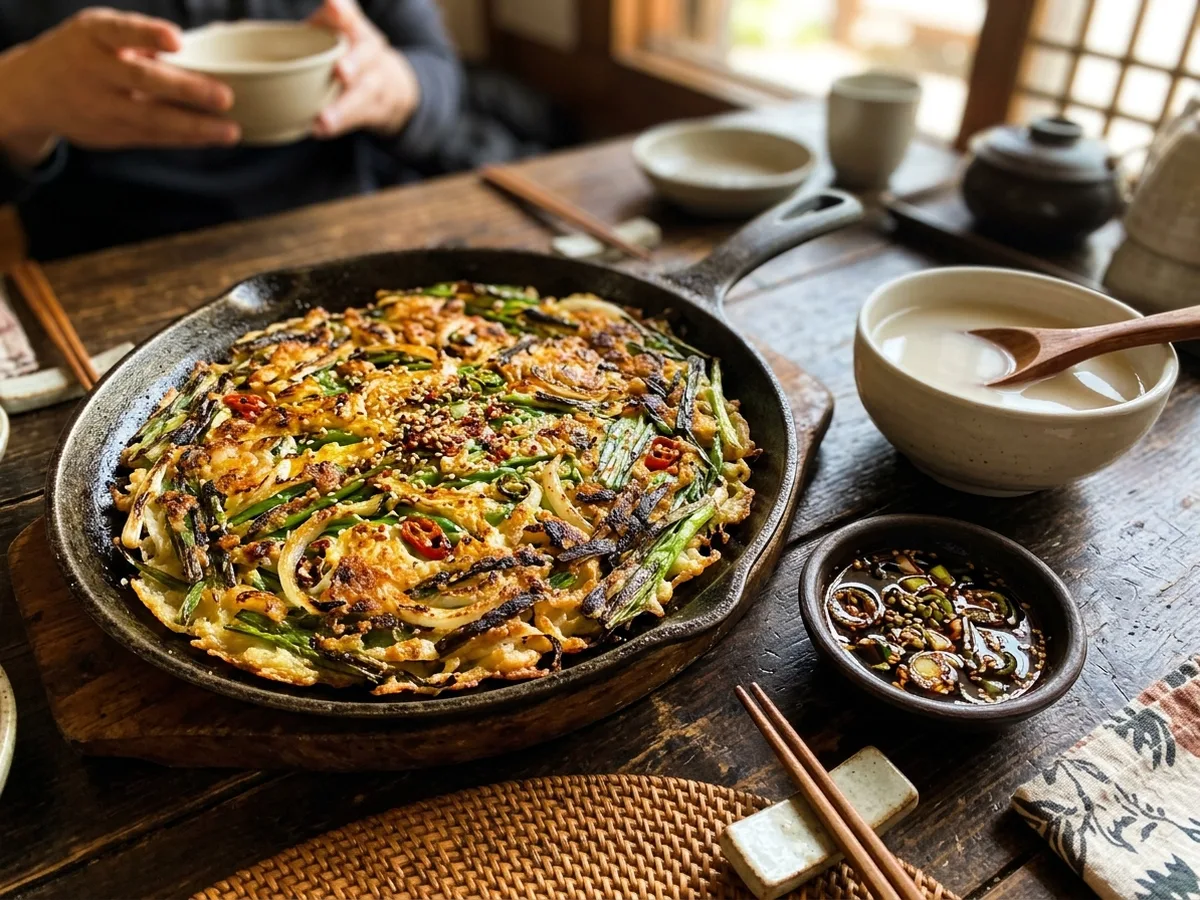
What is Pajeon?
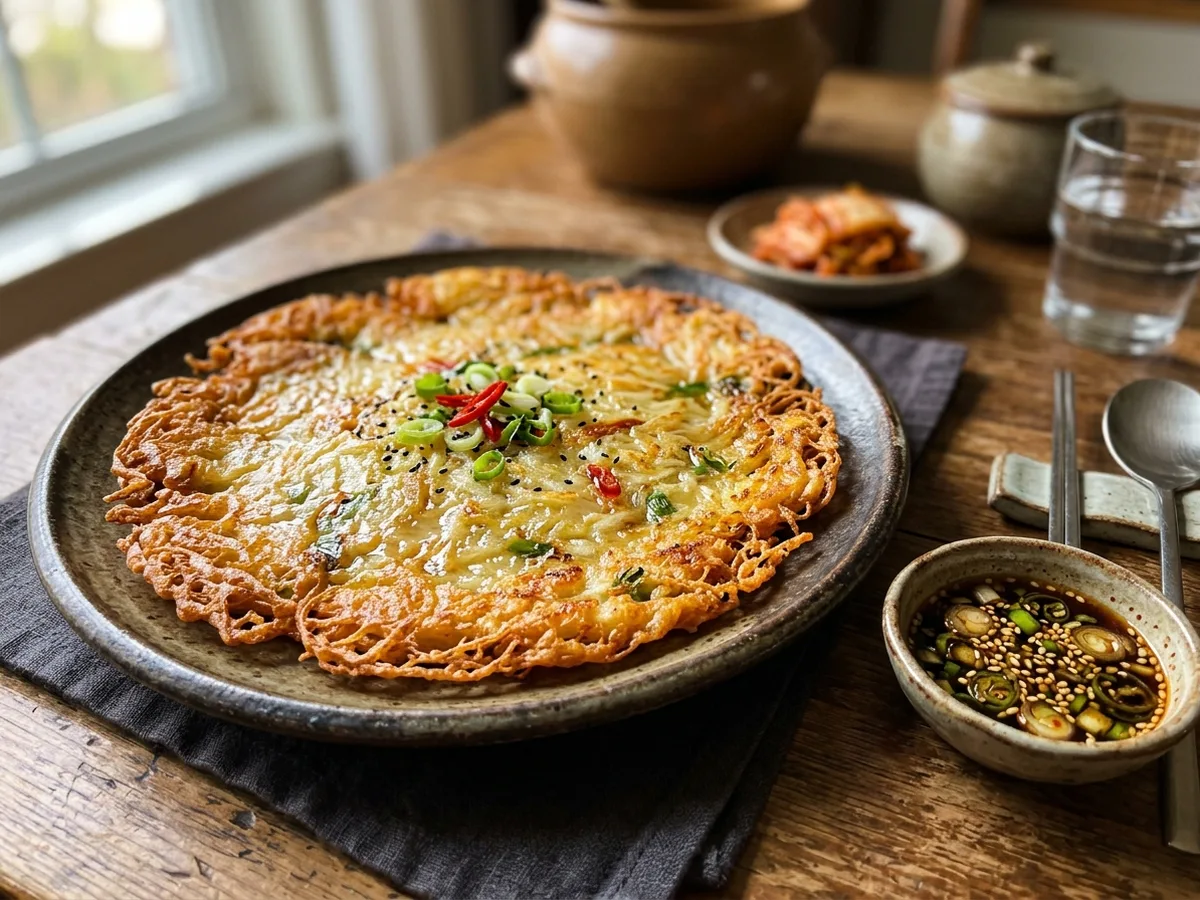
Pajeon (파전) is a savory scallion pancake — whole green onions bound in a light batter and pan-fried until the edges crisp. It is famously paired with makgeolli rice wine on rainy days, a habit Koreans half-jokingly attribute to the sound of rain resembling sizzling oil. You will find it at traditional pubs (jujeom), markets, and mountain-trail restaurants.
How to eat it
- Order one per 2–3 people. A proper pajeon arrives whole on a plate, often still sizzling; it is a sharing dish, not an individual portion.
- Cut with scissors or tear with chopsticks. Most places bring kitchen scissors — cut a grid, or tear wedge by wedge from the crispy edge inward.
- Dip lightly in the soy sauce. The dipping sauce (soy, vinegar, chili) is for accent — a quick dip of one corner, not a soak, or the crust goes soggy.
- Eat the edges first. The lacy, fried rim is the best part and softens fastest; locals work from the outside in.
Cooking it at home
- Make a thin batter — Korean pancake mix (buchimgaru, 부침가루) and ice-cold water, roughly 1:1. Cold water keeps it crisp.
- Lay whole scallions in a well-oiled, hot pan, pour batter just to cover, and press down.
- Fry over medium-high heat 3–4 minutes per side until deeply golden. Be generous with oil — pajeon is shallow-fried, not dry-cooked.
- Mix a dip of 2 parts soy sauce, 1 part vinegar, and a pinch of chili flakes.
Good to know
- Contains wheat (batter) and usually egg; seafood versions share the same oil and pan at most restaurants — tell them if you have a shellfish allergy.
- Best eaten immediately — it loses its crispness within about 10 minutes.
The rainy-day pajeon-and-makgeolli pairing is a genuine, widely practiced custom, not a tourist story.
Dongnae pajeon (동래파전) from Busan is a famous regional variant enriched with seafood and rice-flour batter.
Nutrition
| Calories | 195 kcal |
|---|---|
| Carbohydrate | 23.2 g |
| Protein | 4.56 g |
| Fat | 9.35 g |
| Sodium | 231 mg |
Per serving (~150g): ≈293 kcal · sodium ≈347 mg (17% of the WHO daily guideline, 2,000 mg)
Related foods
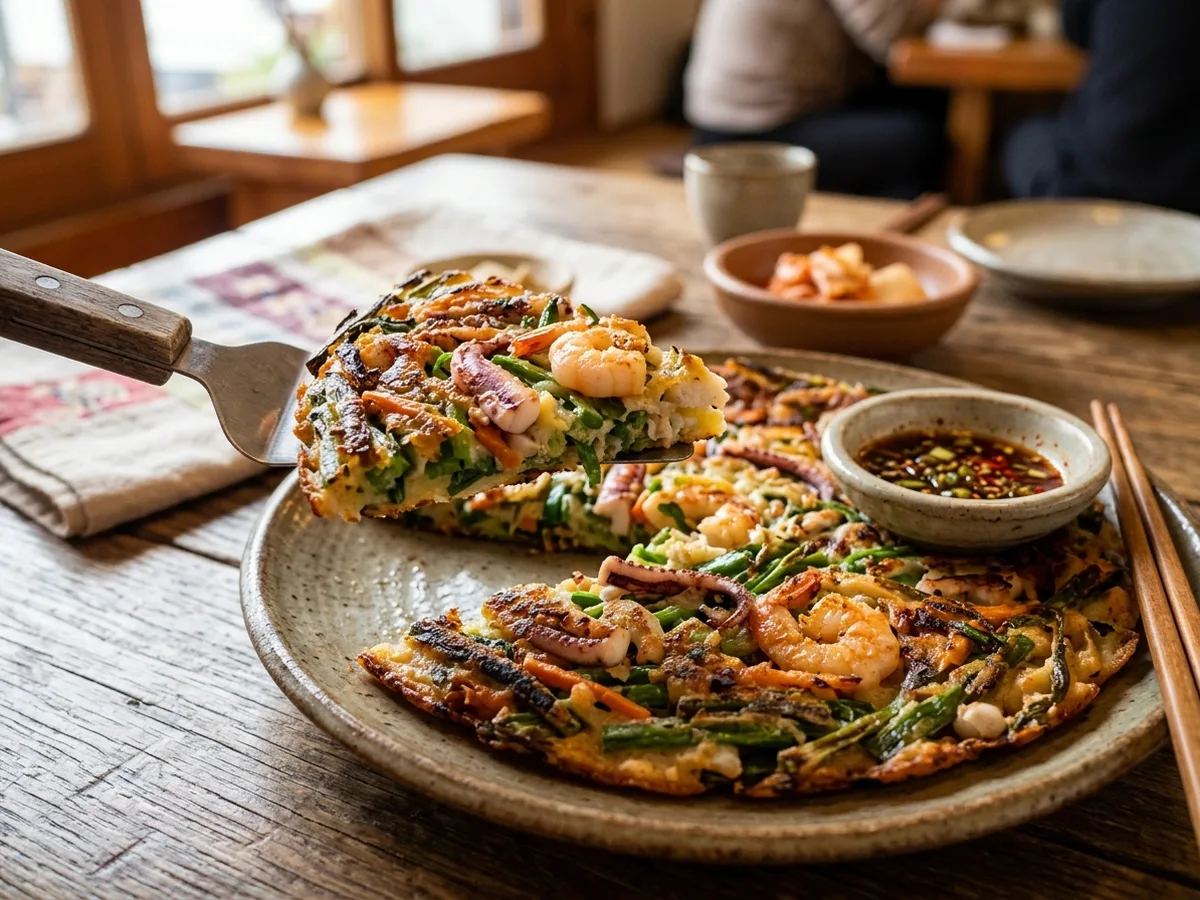 해물파전 · Haemul PajeonOften eaten together Seafood-loaded scallion pancake, made for makgeolli.
 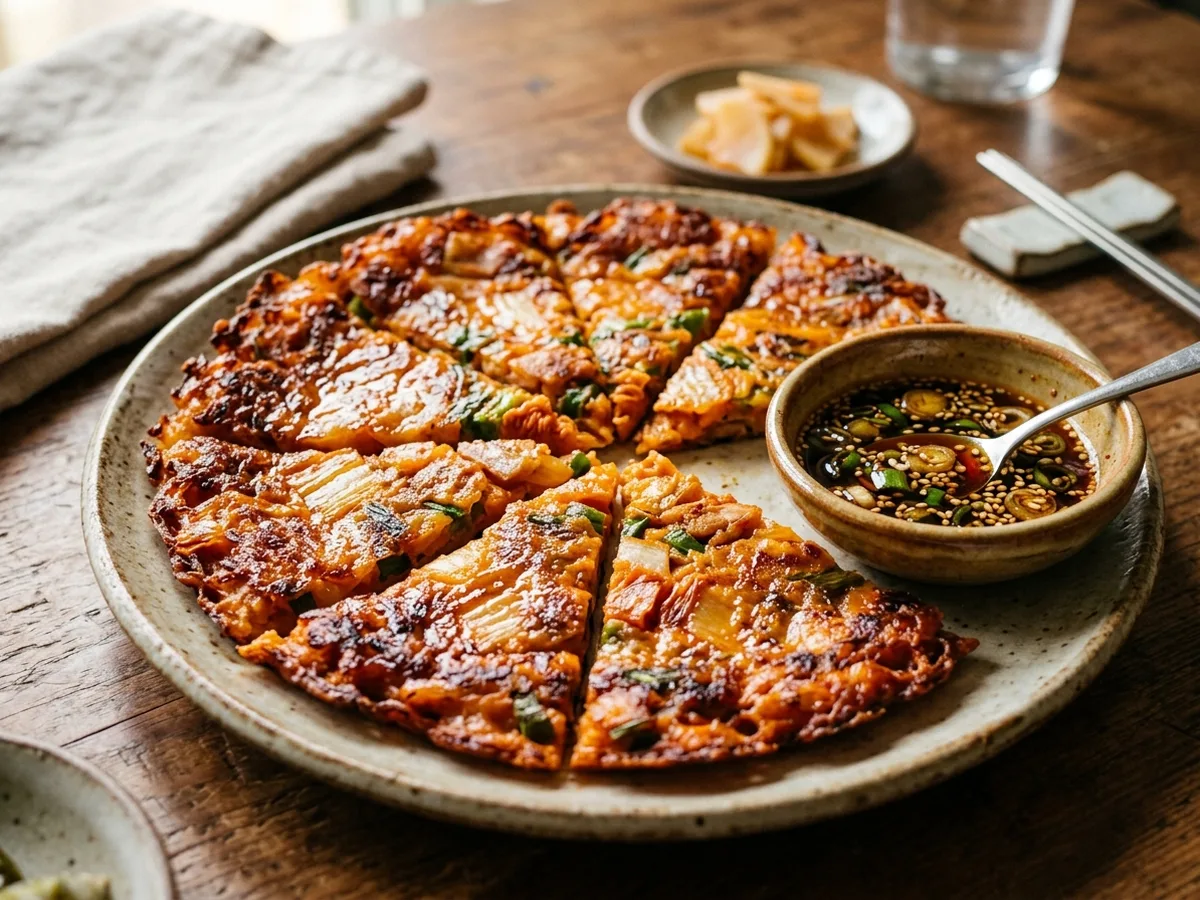 김치전 · KimchijeonOften eaten together Crispy pancake made from sour kimchi — zero waste, full flavor.
 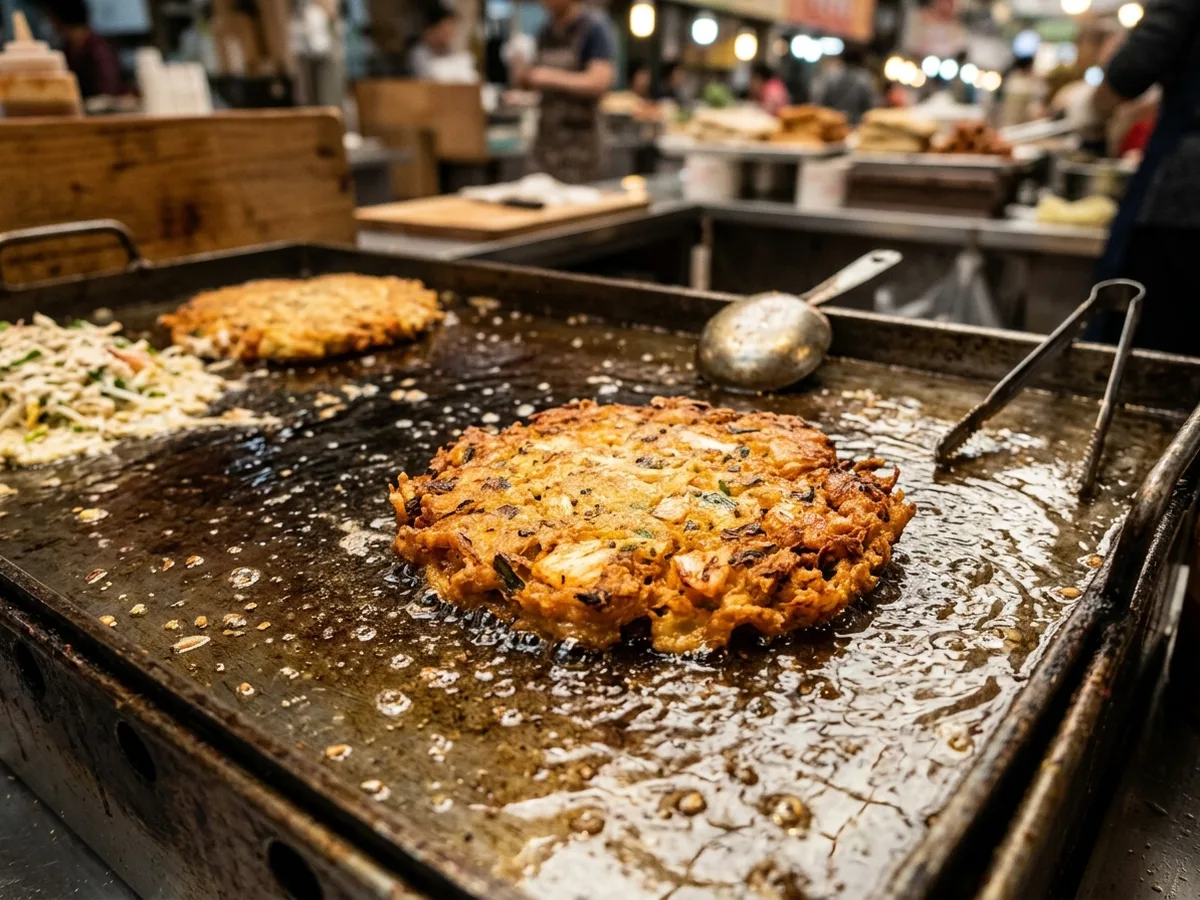 빈대떡 · BindaetteokOften eaten together Mung-bean pancake with pork and sprouts — market-stall classic.
  감자전 · GamjajeonOften eaten together Grated-potato pancake — crisp edge, chewy center.