Haemul Pajeon (해물파전)
Seafood-loaded scallion pancake, made for makgeolli.
- Korean name
- 해물파전
- Spice level
- Not spicy
- Flavor
- savory · crispy
- Typically contains
- seafood, wheat flour, egg
- Vegetarian / vegan
- Not vegetarian — meat or seafood is core to the dish
- Typical price
- ₩12,000–₩20,000 per dish checked 2026-07 — varies by area
- Good to know
- Beginner-friendly ●●●●○ Solo dining ●●●○○ Kid-friendly ●●●●○
- Also written as
- haemul pajeon, seafood pancake, seafood pajun
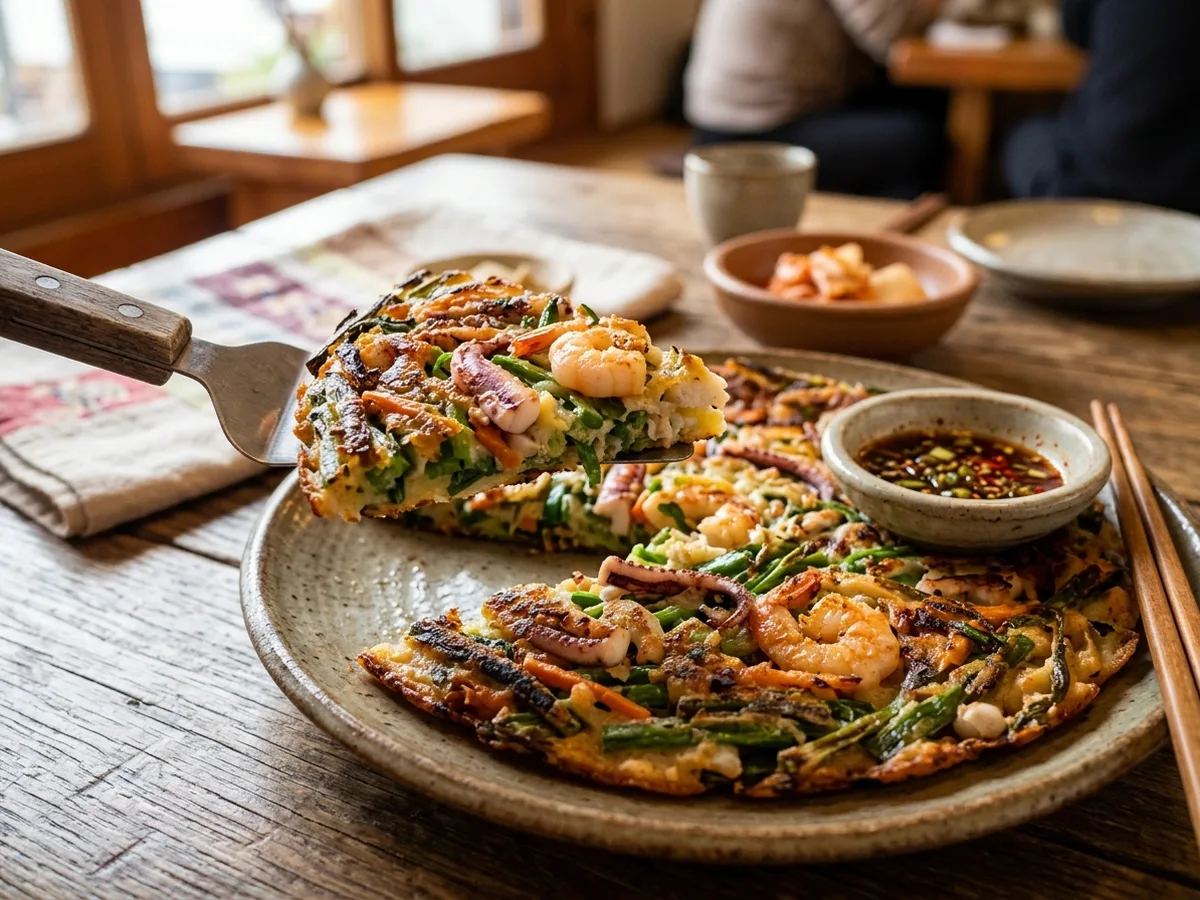
What is Haemul Pajeon?
Haemul-pajeon (해물파전) is the seafood-loaded version of the scallion pancake — squid, shrimp, and sometimes clams folded into the batter with whole green onions. It is thicker and richer than plain pajeon, and the default choice at makgeolli pubs. A good one is crisp at the rim and just-set, almost custardy, at the center.
How to eat it
- Share it hot off the pan. It arrives whole; cut it into a grid with the scissors provided or tear off wedges with chopsticks.
- Check the center. A slightly soft, eggy middle is intentional in a well-made haemul-pajeon — only the edges should be crunchy.
- Dip in the vinegared soy sauce. Touch one edge into the sauce; the seafood already carries plenty of savor.
- Pair it with makgeolli. The cloudy rice wine is the classic partner — order a kettle or bottle to share.
Cooking it at home
- Use pancake mix and ice water (about 1:1), and keep the batter thin — the seafood releases moisture as it cooks.
- Pat squid and shrimp very dry before mixing in; wet seafood makes the pancake fall apart.
- Fry in generous oil over medium-high heat, pressing flat; flip once when the underside is deep golden, 4–5 minutes per side.
- Slide onto a rack (not a plate) for a minute so the bottom stays crisp.
Good to know
- Contains shellfish, squid, wheat, and usually egg — this is one of the denser allergen combinations in Korean pub food.
- Thick pancakes can be undercooked in the middle at busy pubs; the seafood should be fully opaque.
Price at pubs typically runs ₩12,000–₩20,000 — it is treated as a main anju (drinking dish), not a side.
Nutrition
| Calories | 106 kcal |
|---|---|
| Carbohydrate | 10.63 g |
| Protein | 6 g |
| Fat | 3.99 g |
| Sodium | 267 mg |
Per serving (~153ml): ≈162 kcal · sodium ≈409 mg (20% of the WHO daily guideline, 2,000 mg)
Related foods
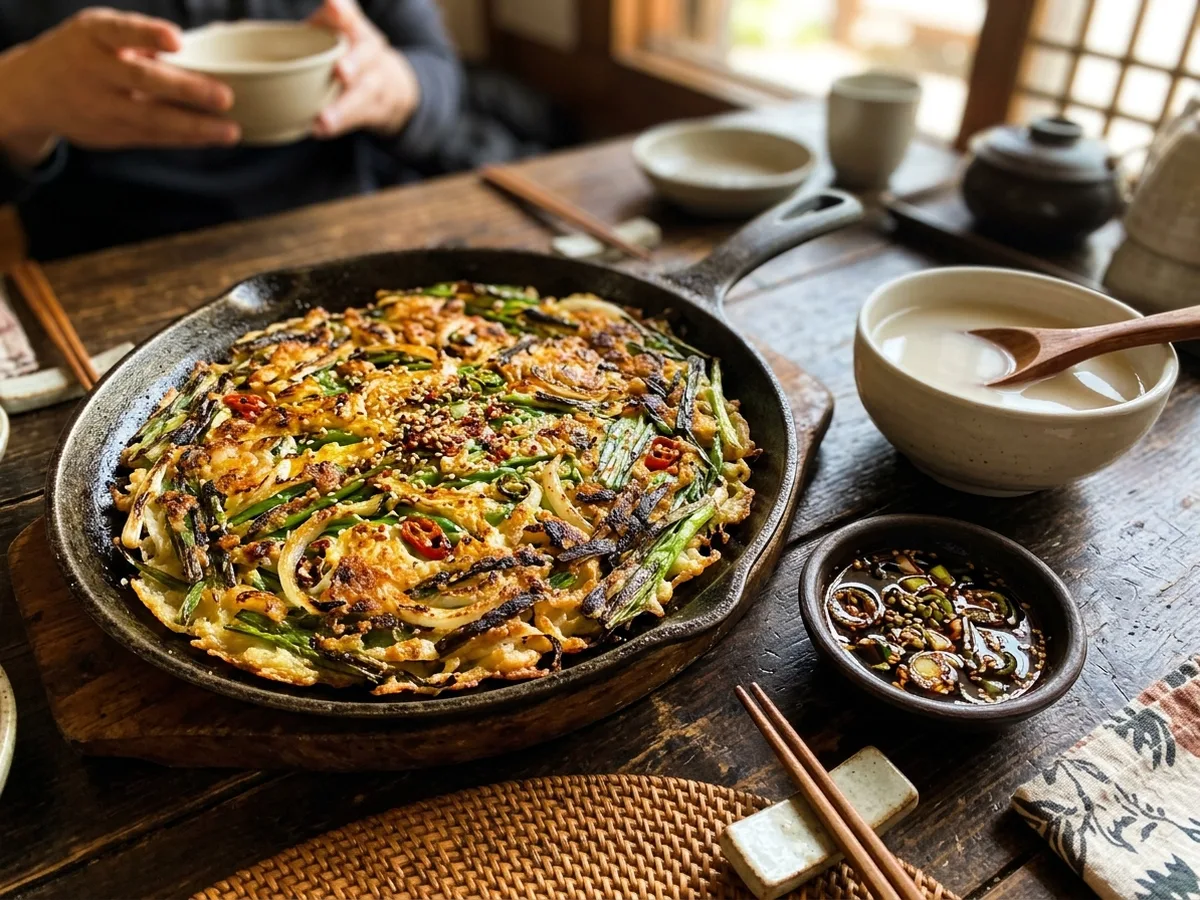 파전 · PajeonOften eaten together Green-onion pancake — the official food of rainy days.
 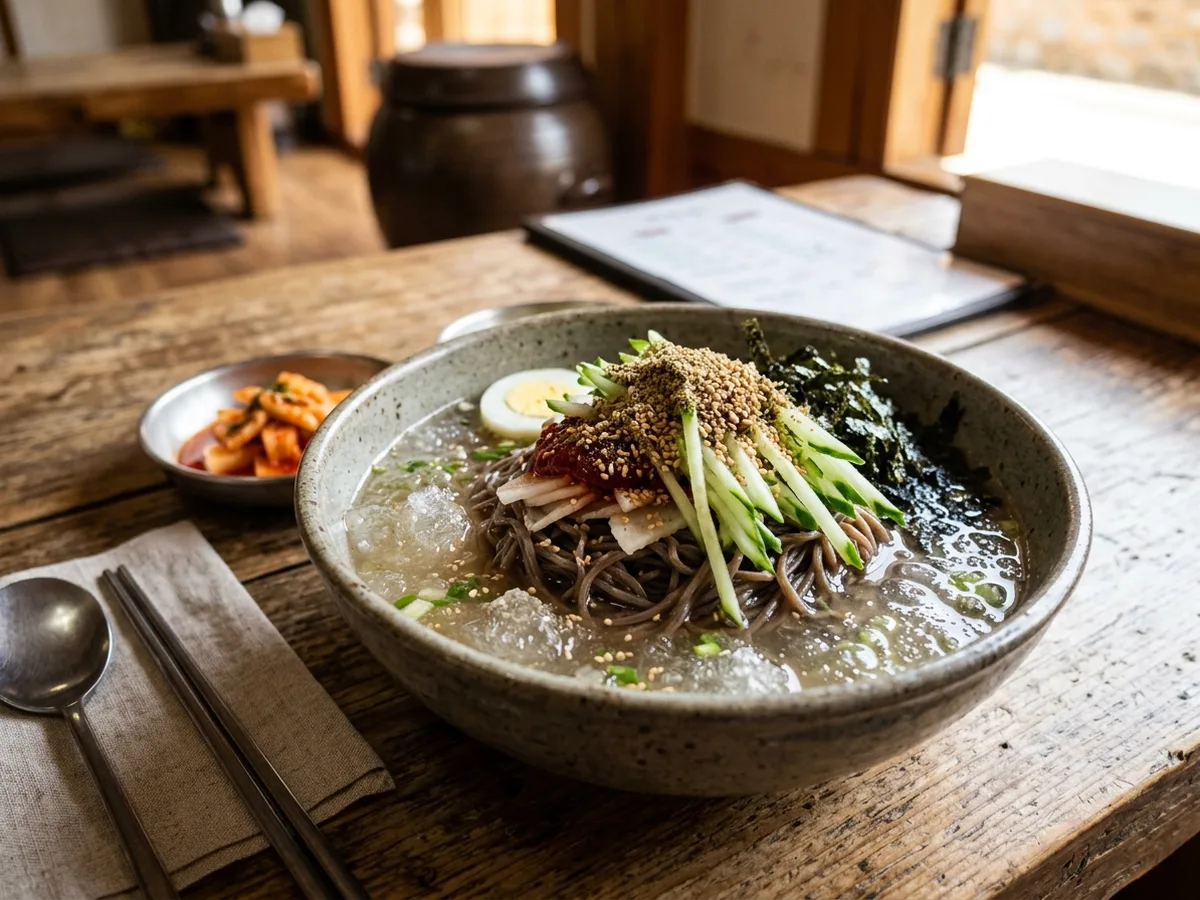 막국수 · MakguksuOften eaten together Gangwon-do buckwheat noodles, cold and tangy.
 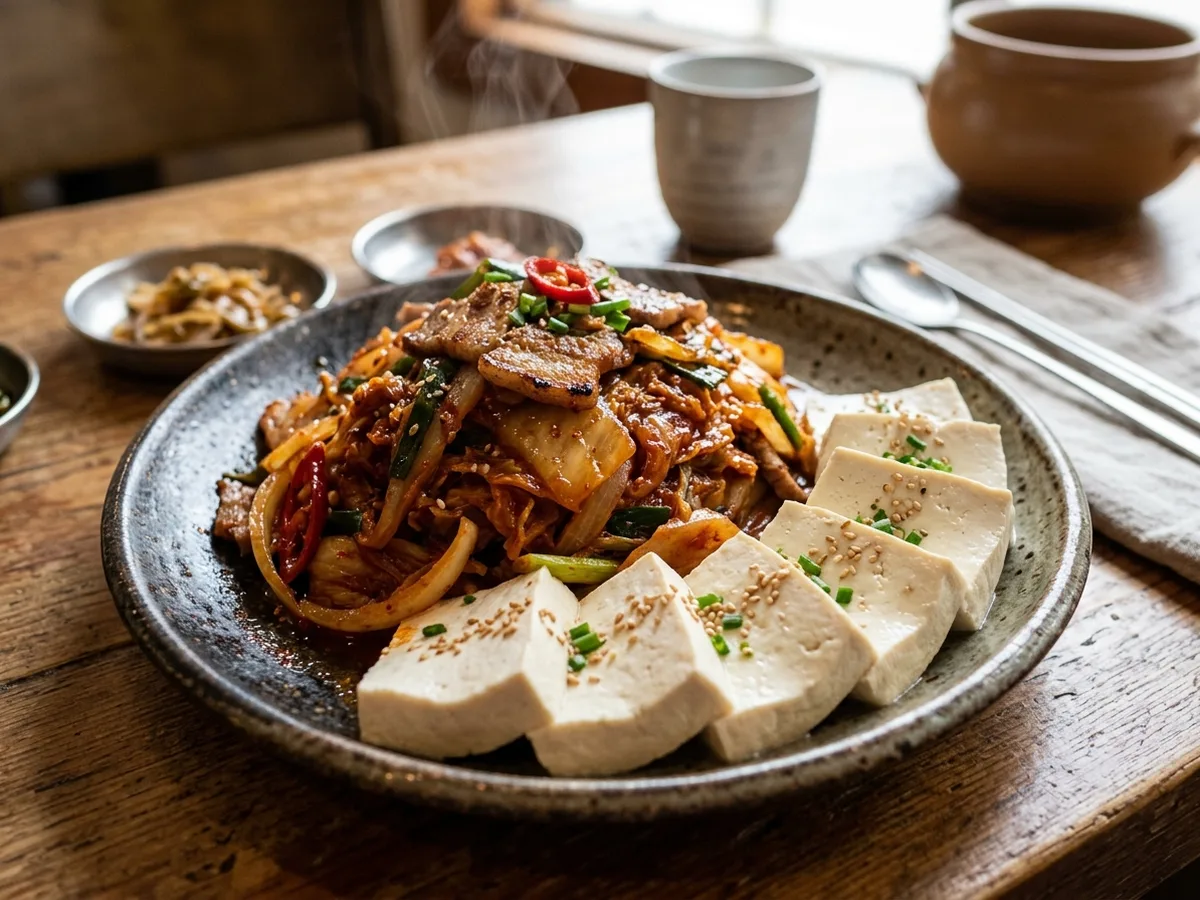 두부김치 · Dubu KimchiOften eaten together Warm tofu with stir-fried kimchi and pork — a top-tier anju.
 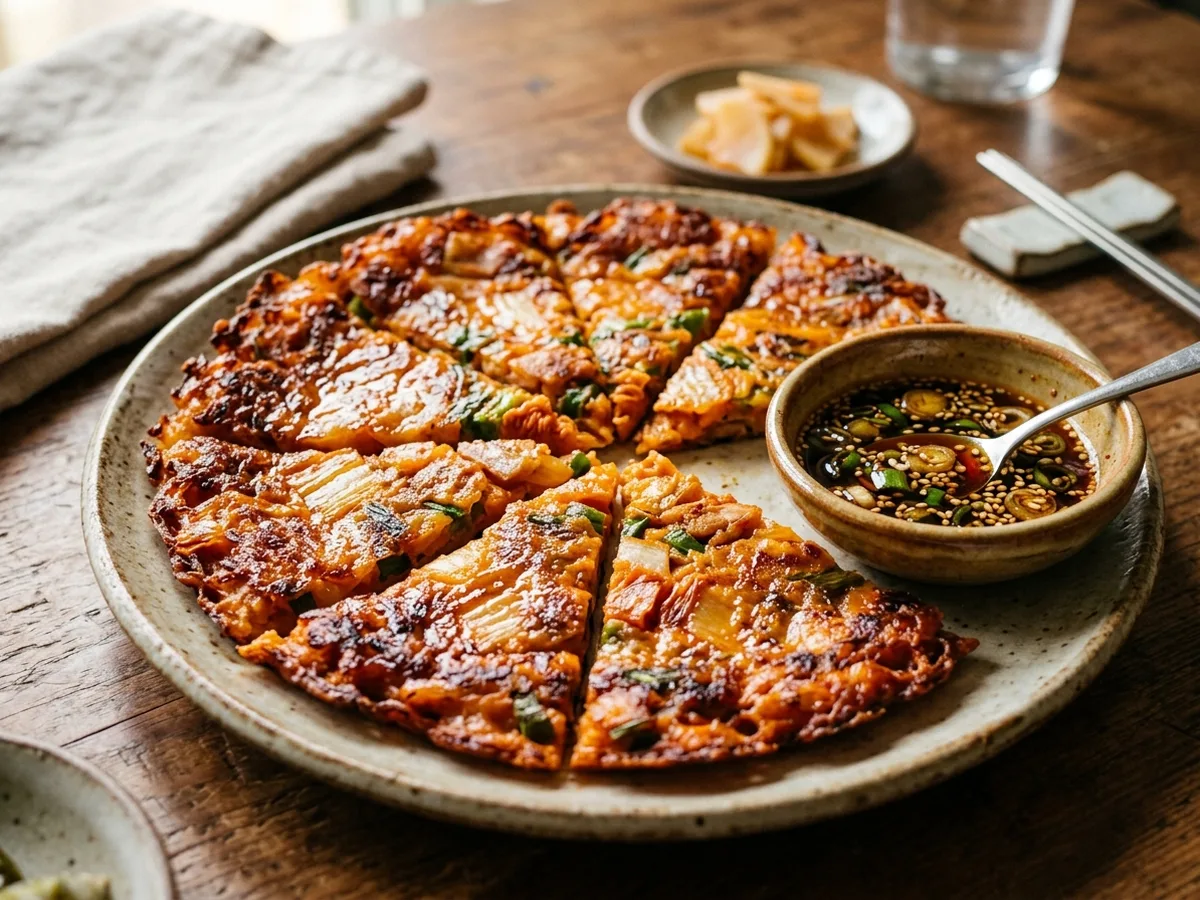 김치전 · KimchijeonSpicier alternative Crispy pancake made from sour kimchi — zero waste, full flavor.
 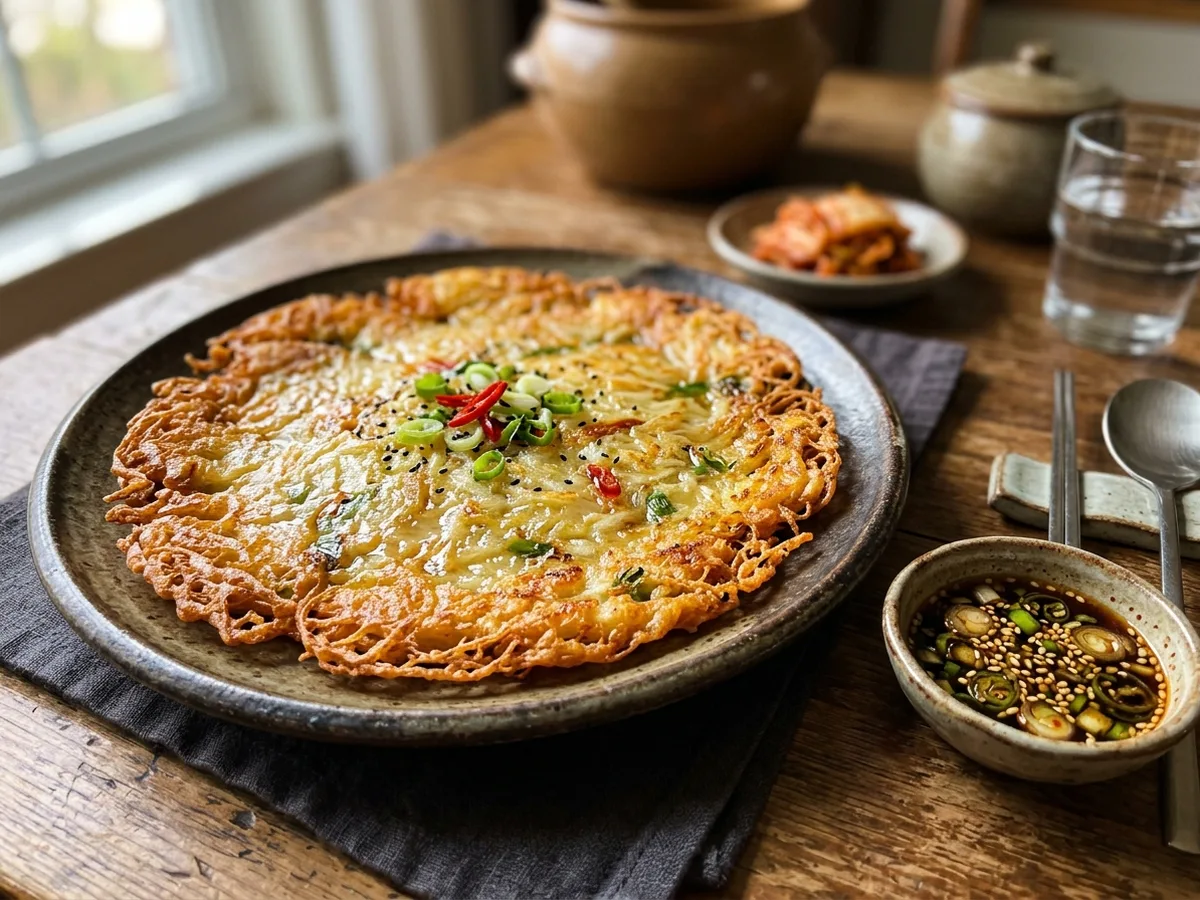 감자전 · GamjajeonSame family · Jeon (Savory Pancakes) Grated-potato pancake — crisp edge, chewy center.