Kimchijeon (김치전)
Crispy pancake made from sour kimchi — zero waste, full flavor.
- Korean name
- 김치전
- Spice level
- Medium
- Flavor
- spicy · sour · crispy
- Typically contains
- wheat flour
- Vegetarian / vegan
- Sometimes — vegetable-forward, but anchovy broth, fish sauce or meat garnish is common. Ask first
- Typical price
- ₩8,000–₩15,000 per dish checked 2026-07 — varies by area
- Good to know
- Beginner-friendly ●●●●○ Solo dining ●●●○○ Kid-friendly ●●○○○
- Also written as
- kimchi jeon, kimchijun, kimchi pancake
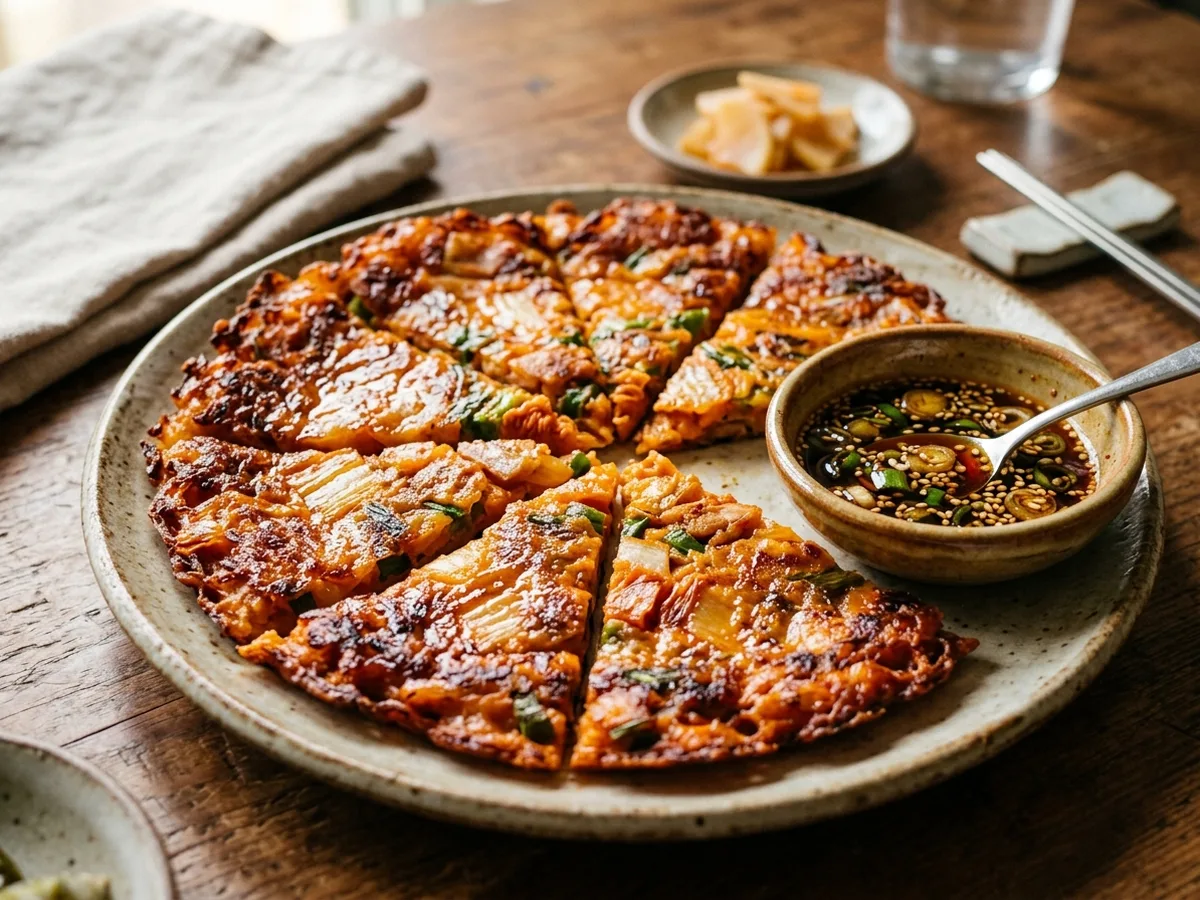
What is Kimchijeon?
Kimchijeon (김치전) is a pancake of chopped, well-fermented kimchi in a simple batter — one of Korea's great leftovers dishes. Sour, spicy, and crisp-edged, it is what Koreans make at home when kimchi has gone too tangy to eat fresh, and it needs almost no other ingredients.
How to eat it
- Tear, don't cut, at home. Kimchijeon is homey food — tear pieces off with chopsticks straight from the shared plate.
- Skip or go light on the dipping sauce. Unlike pajeon, kimchijeon is already seasoned by the kimchi; many Koreans eat it with no dip at all.
- Eat it hot. The contrast of crisp edge and chewy middle fades quickly as it cools.
Cooking it at home
- Chop about 1 cup of sour, fully fermented kimchi and mix with a few spoons of its juice — the juice is the seasoning.
- Add pancake mix (or flour) and just enough cold water for a pourable batter; a spoon of gochugaru deepens the color.
- Fry thin in a generously oiled pan over medium-high heat, 3 minutes per side, pressing flat with a spatula.
- Optional: a little sliced pork belly or canned tuna mixed in makes it a meal.
Good to know
- Contains wheat; kimchi typically contains fish sauce and salted shrimp, so it is not vegan by default.
- Fresh (unfermented) kimchi makes a flat-tasting jeon — this dish needs sour kimchi.
Along with kimchi-bokkeumbap, this is the standard answer to over-fermented kimchi in Korean homes.
Seen on Screen
Little Forest (리틀 포레스트, 2018) — The film's cooking is exactly this genre: preserved-vegetable pancakes and garden-to-pan home food. (Theme connection — not a specific-scene claim.)
Theme connection — not a specific-scene claim
Nutrition
| Calories | 134 kcal |
|---|---|
| Carbohydrate | 19.01 g |
| Protein | 5.05 g |
| Fat | 4.2 g |
| Sodium | 240 mg |
Per serving (~150g): ≈201 kcal · sodium ≈360 mg (18% of the WHO daily guideline, 2,000 mg)
Related foods
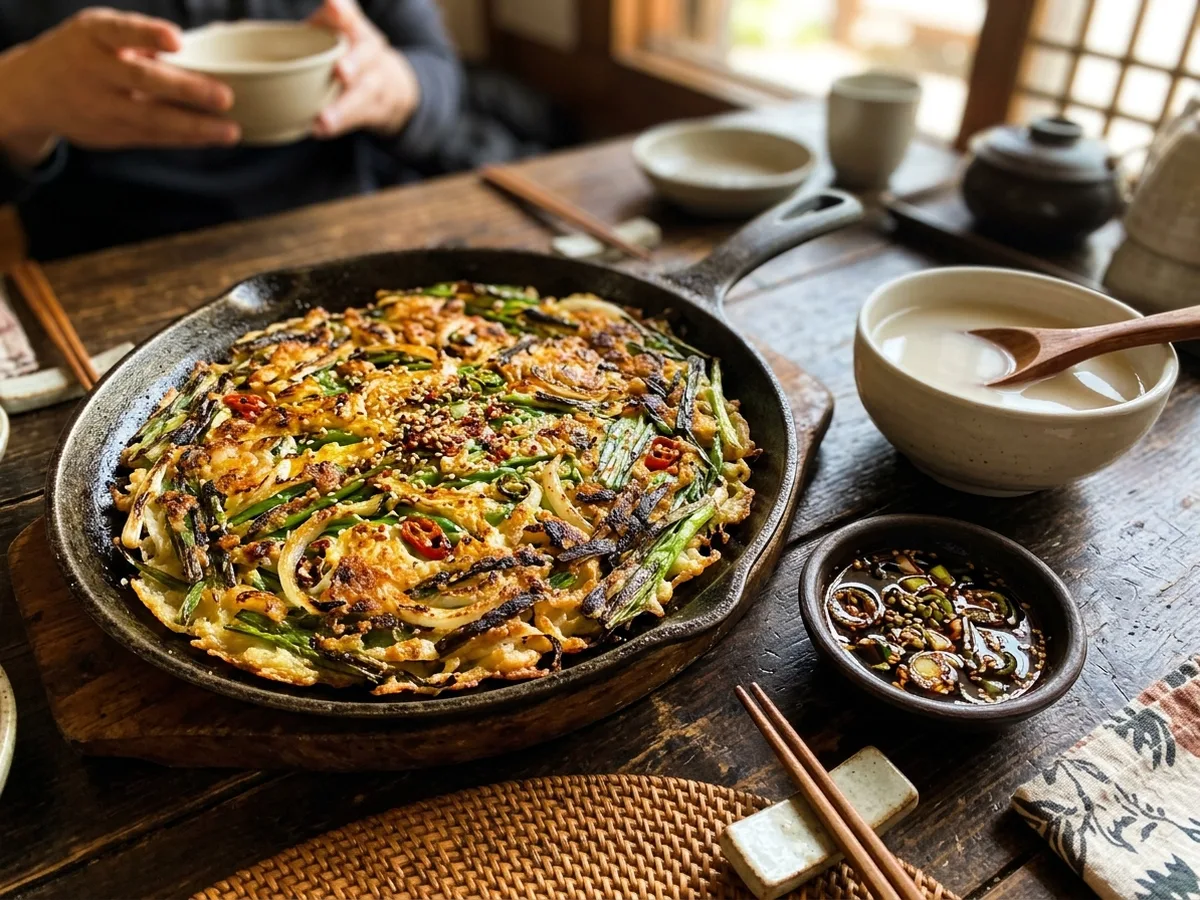 파전 · PajeonOften eaten together Green-onion pancake — the official food of rainy days.
 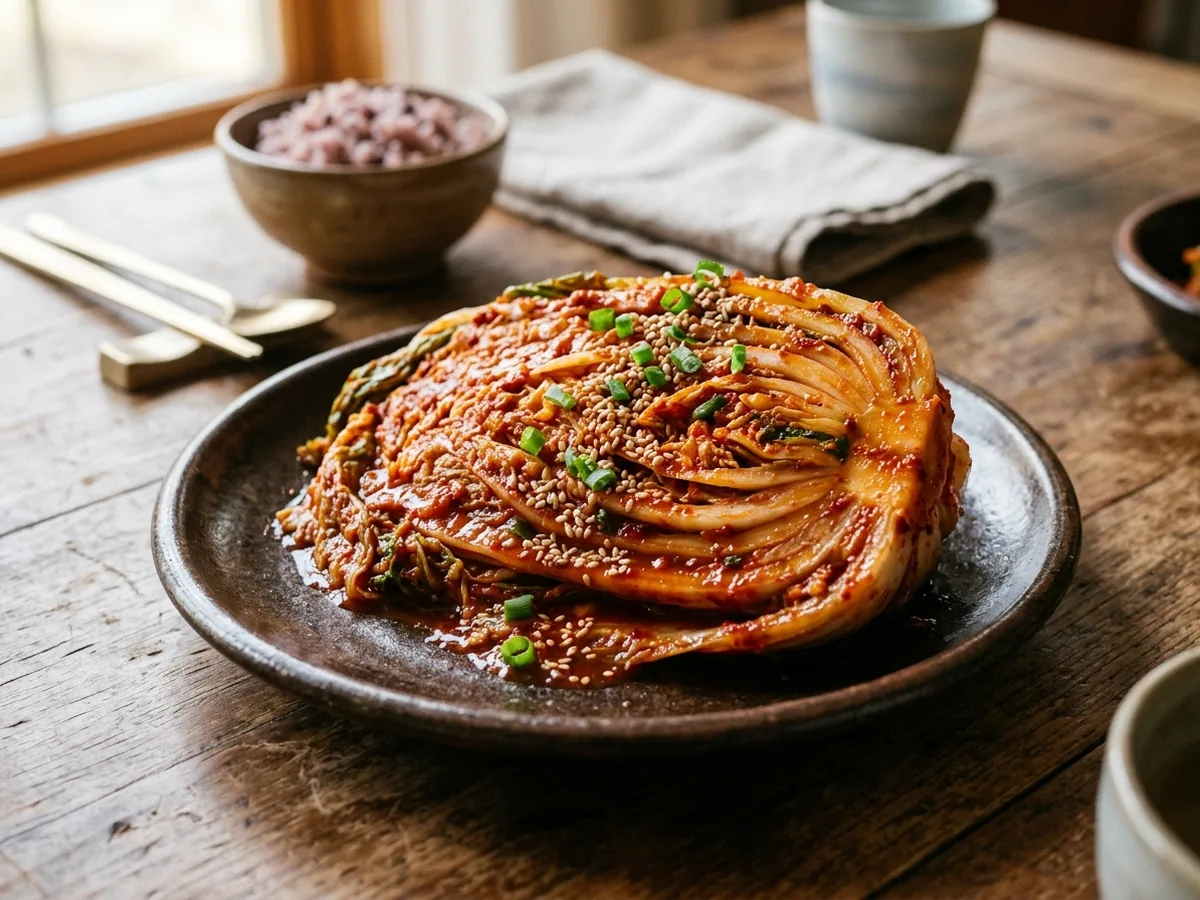 배추김치 · KimchiOften eaten together Fermented napa cabbage — the one dish on every Korean table.
 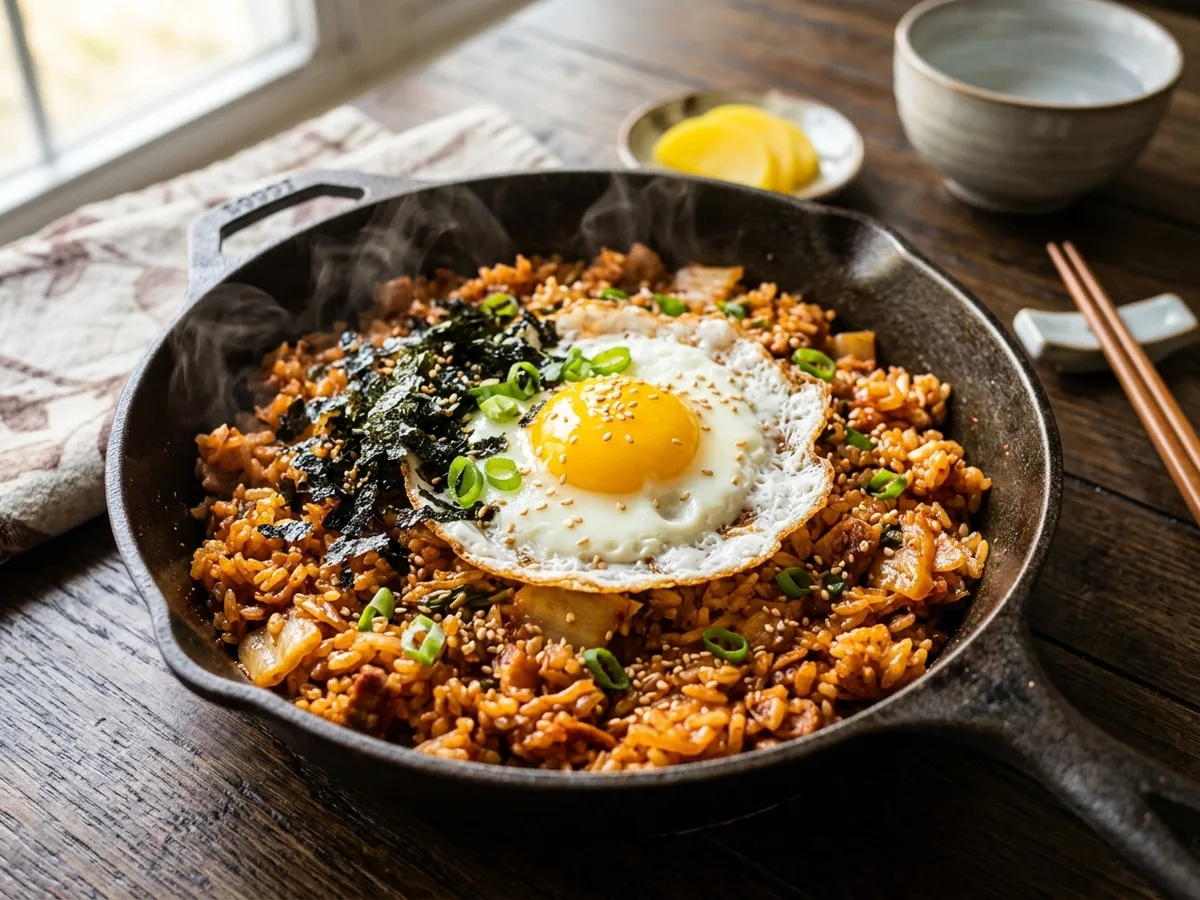 김치볶음밥 · Kimchi BokkeumbapOften eaten together Kimchi fried rice, best with a fried egg on top.
 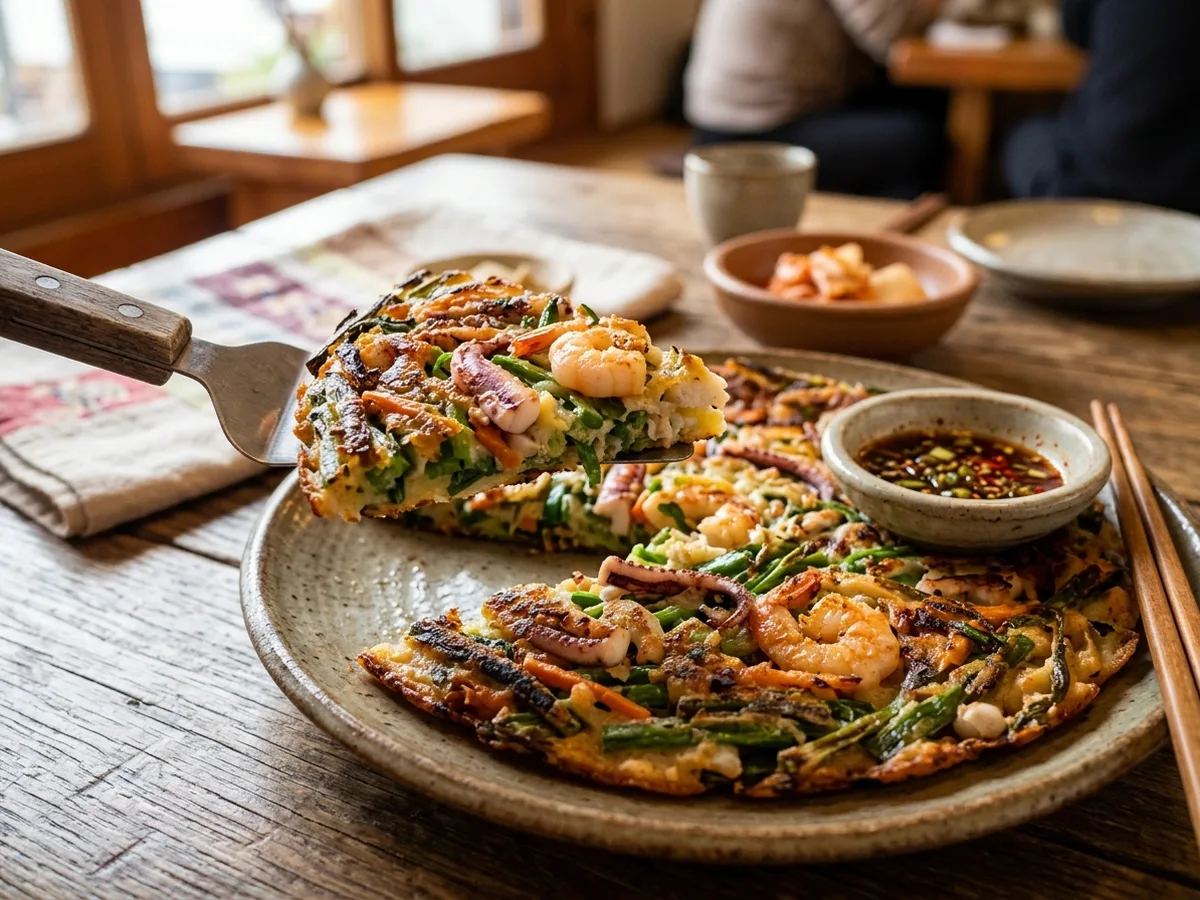 해물파전 · Haemul PajeonMilder alternative Seafood-loaded scallion pancake, made for makgeolli.
 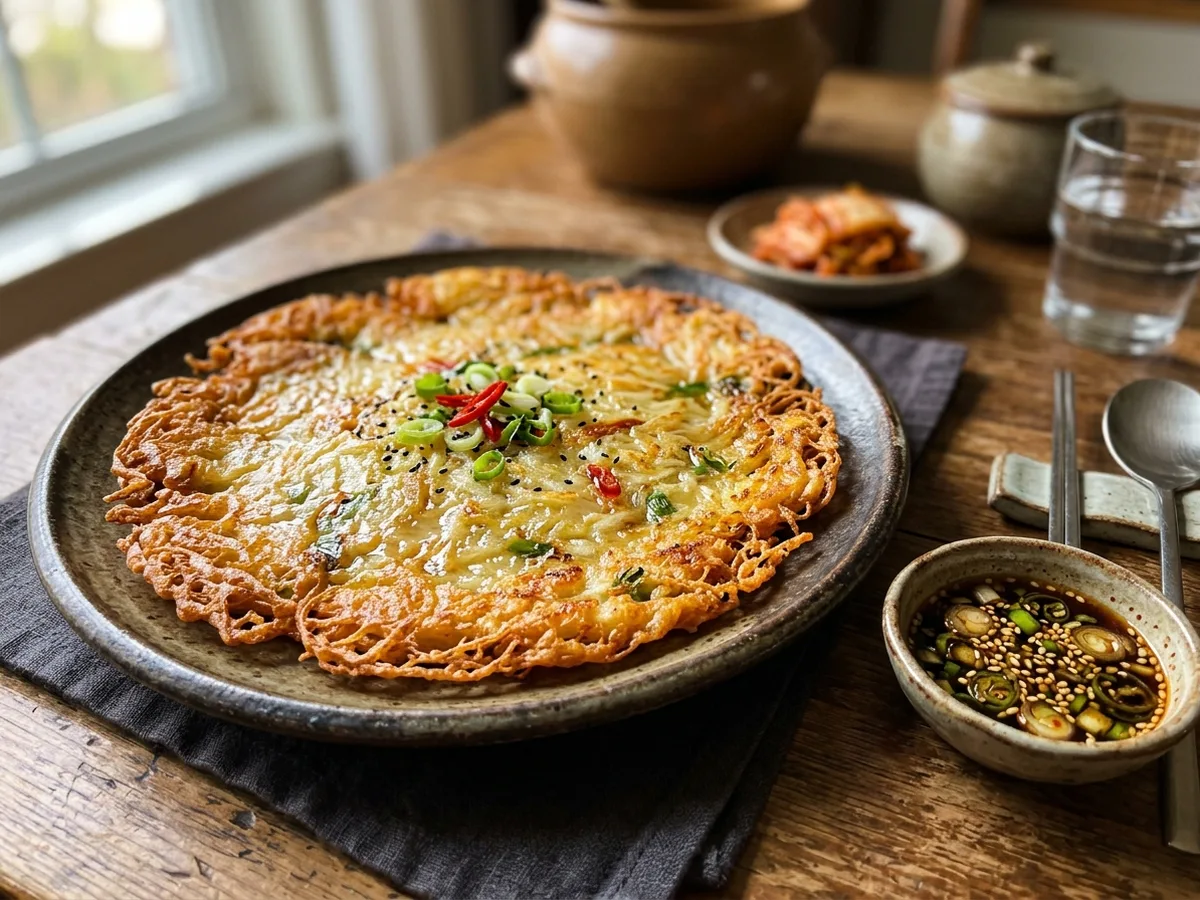 감자전 · GamjajeonMilder alternative Grated-potato pancake — crisp edge, chewy center.