Bindaetteok (빈대떡)
Mung-bean pancake with pork and sprouts — market-stall classic.
- Korean name
- 빈대떡
- Spice level
- Not spicy
- Flavor
- savory · crispy
- Typically contains
- mung bean, pork
- Vegetarian / vegan
- Not vegetarian — meat or seafood is core to the dish
- Typical price
- ₩5,000–₩7,000 per dish checked 2026-07 — varies by area
- Good to know
- Beginner-friendly ●●●●○ Solo dining ●●●○○ Kid-friendly ●●●●○
- Also written as
- bindaeddeok, bindaetteok pancake, mung bean pancake, nokdujeon
What is Bindaetteok?
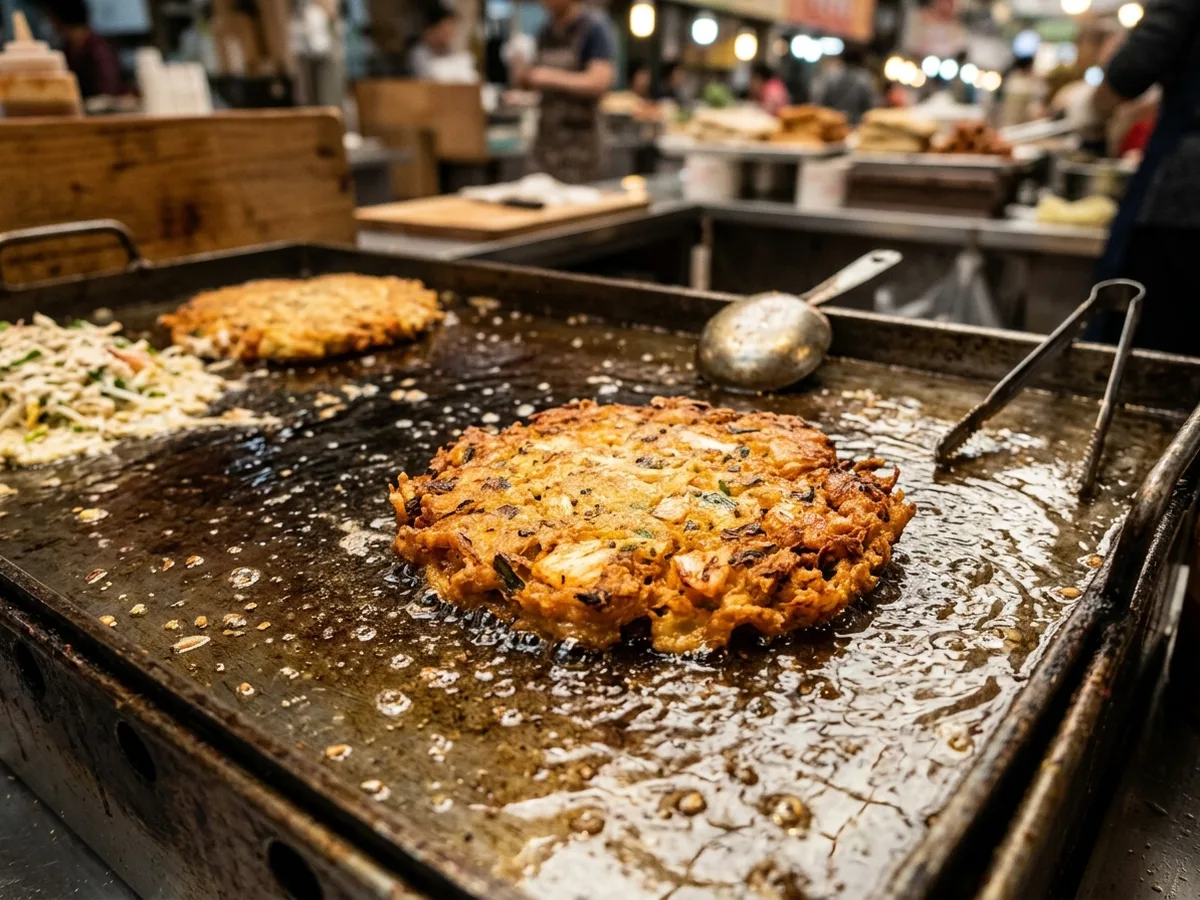
Bindaetteok (빈대떡) is a thick, rustic pancake of ground mung beans with mung bean sprouts, kimchi, and often pork, shallow-fried in lard or oil until shatteringly crisp outside. The classic place to eat it is Gwangjang Market in Seoul, where vendors grind the beans on stone mills in front of you and fry to order.
How to eat it
- Eat it standing or elbow-to-elbow at the market. At Gwangjang, you sit at the vendor's counter; one pancake per 1–2 people.
- Tear with chopsticks while scalding hot. The crust is the glory — bindaetteok cooled is bindaetteok wasted.
- Dip in the onion-soy sauce. Raw onion slices in soy sauce, served alongside, cut the richness; spear an onion piece with each bite.
- Order makgeolli with it. This is the definitive market pairing.
Cooking it at home
- Soak peeled mung beans (nokdu, 녹두) 3–4 hours and grind with a little water to a coarse batter.
- Fold in mung bean sprouts, chopped sour kimchi, and optional ground pork; season with salt only.
- Fry thick (about 1.5 cm) in a very generous layer of oil over medium heat, 4–5 minutes per side — it should almost deep-fry at the edge.
- Serve with soy sauce holding sliced raw onion.
Good to know
- Traditionally fried in lard and often contains pork — vegetarians should ask; the kimchi also usually contains fish sauce.
- Naturally flour-free (mung bean base), but cross-contact with wheat batters is common at market stalls.
The name has nothing to do with bedbugs (bindae) despite the spelling coincidence — etymology is debated.
At Gwangjang Market a pancake runs about ₩5,000–₩7,000 and portions are large.
Where to eat it
Best known for this dishGwangjang Market classic
The bindaetteok stall that anchors Gwangjang Market — mung beans stone-ground on the spot, fried loud and crisp in front of you.
Known for: Bindaetteok
Open as of our last check (2026-07-20) · Sources: DiningCode · Siksin — hours, prices and status can change; check the map link before visiting.
Nutrition
| Calories | 208 kcal |
|---|---|
| Carbohydrate | 20.93 g |
| Protein | 7.94 g |
| Fat | 10.27 g |
| Sodium | 232 mg |
Per serving (~100g): ≈208 kcal · sodium ≈232 mg (12% of the WHO daily guideline, 2,000 mg)
Related foods
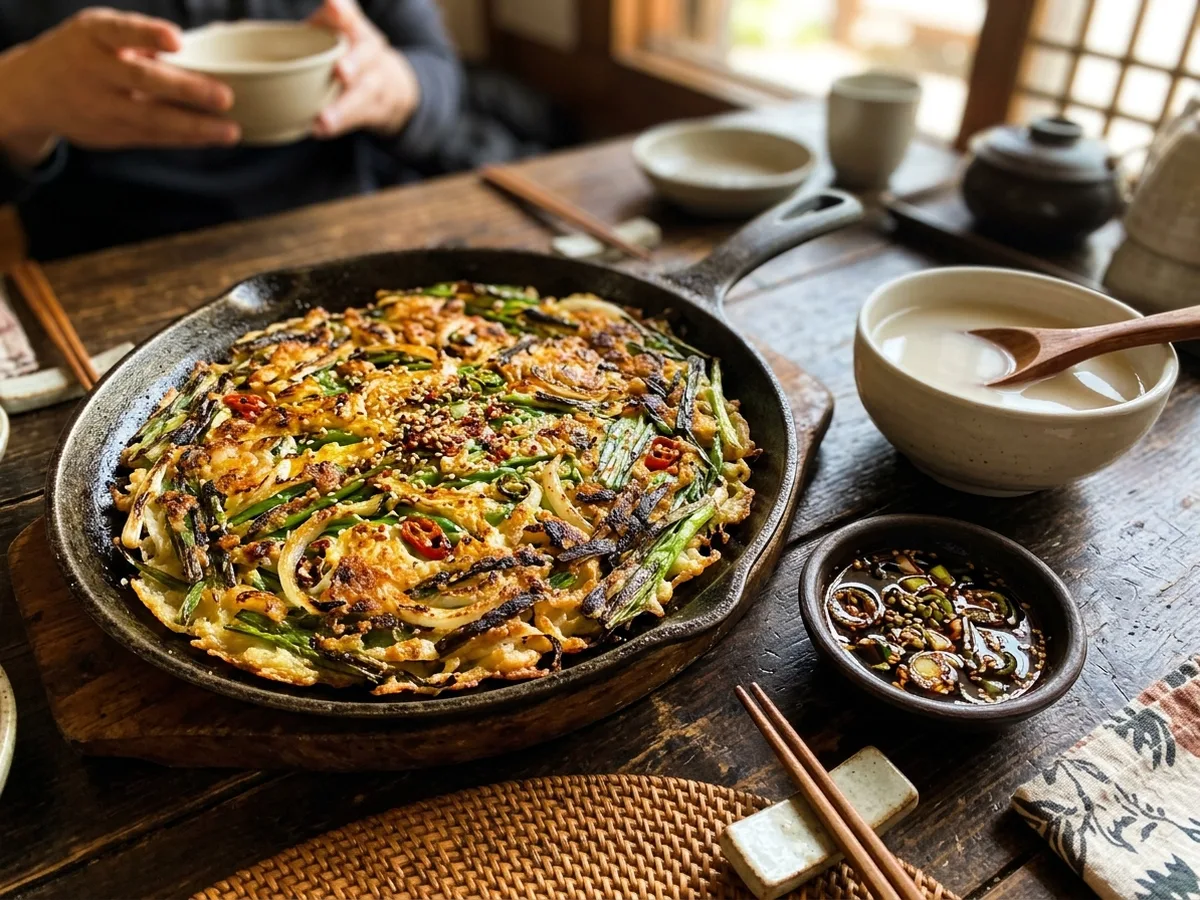 파전 · PajeonOften eaten together Green-onion pancake — the official food of rainy days.
 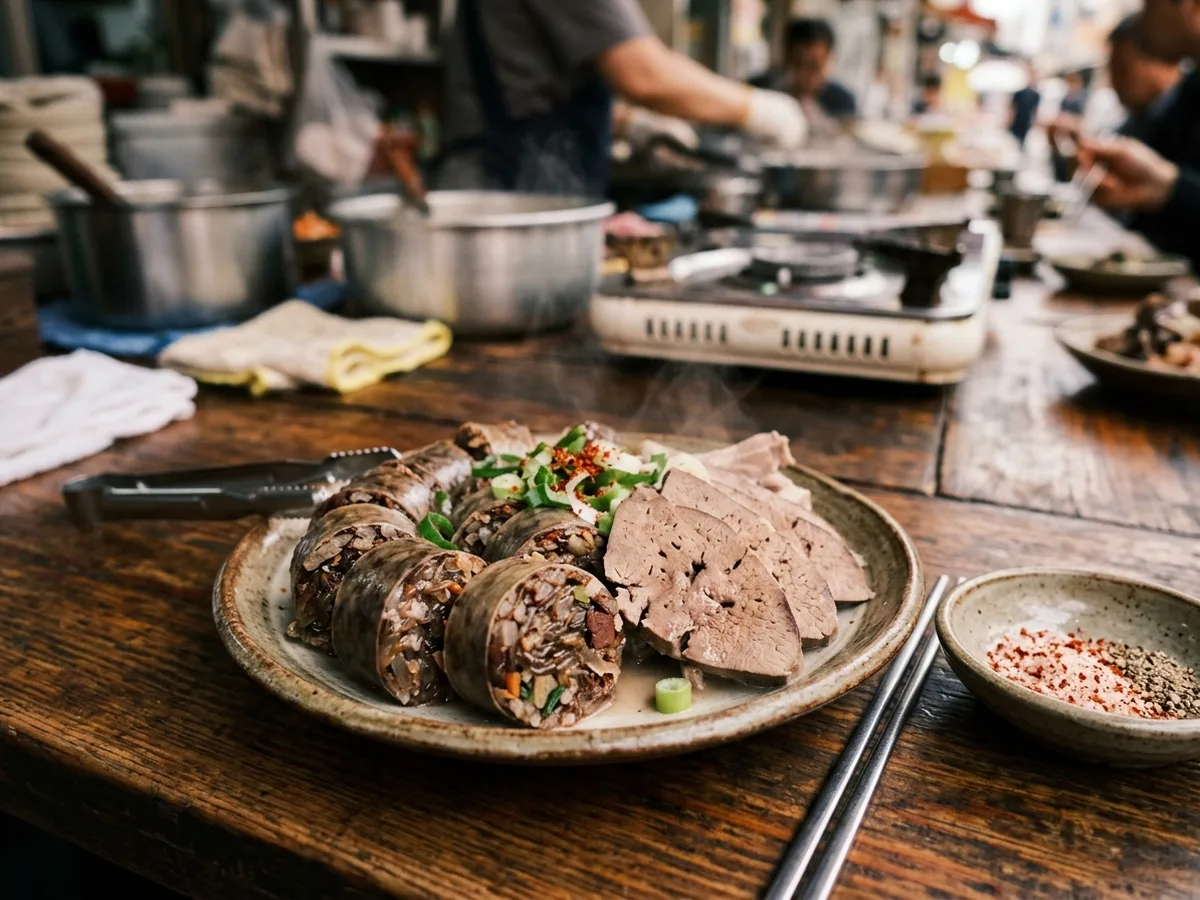 순대 · SundaeOften eaten together Korean blood sausage with glass noodles — dip it in seasoned salt.
 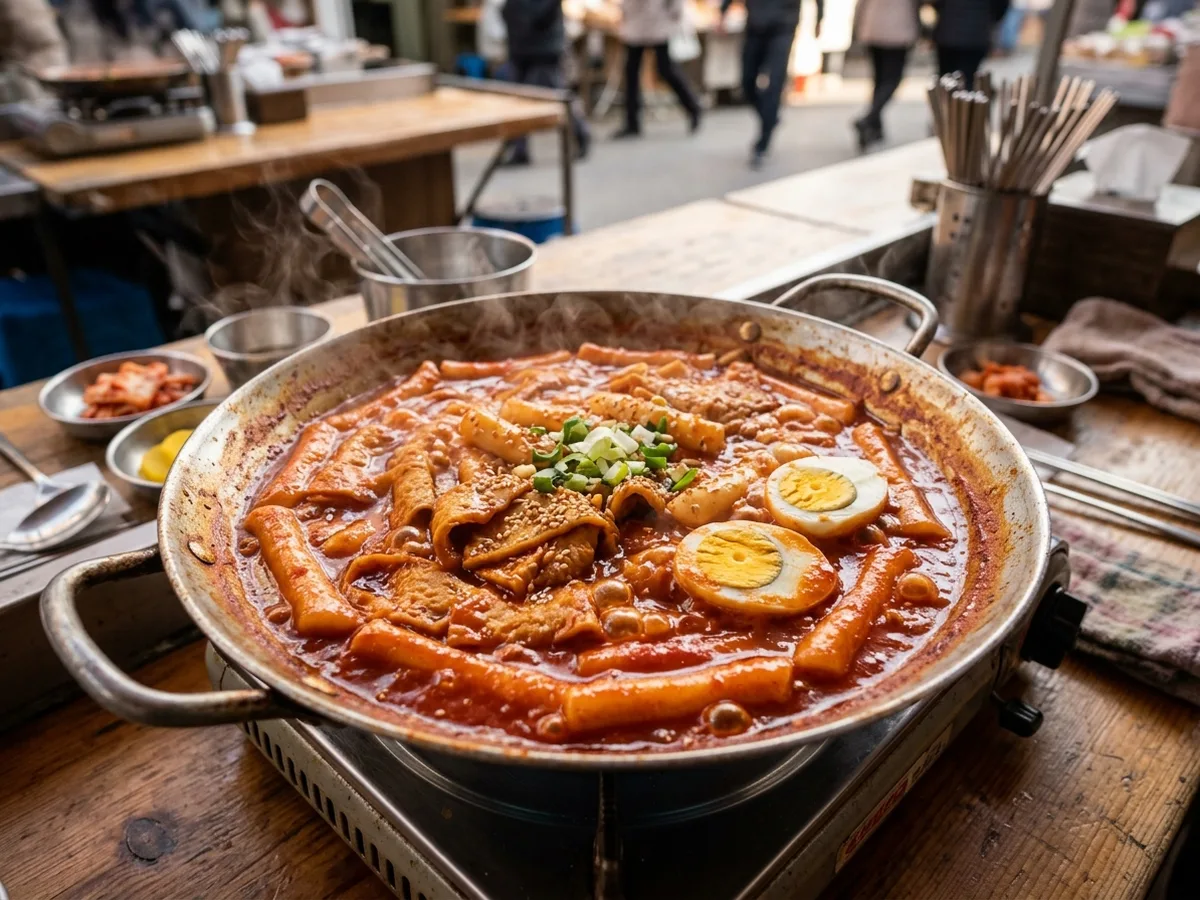 떡볶이 · TteokbokkiOften eaten together Chewy rice cakes in sweet-spicy gochujang sauce.
 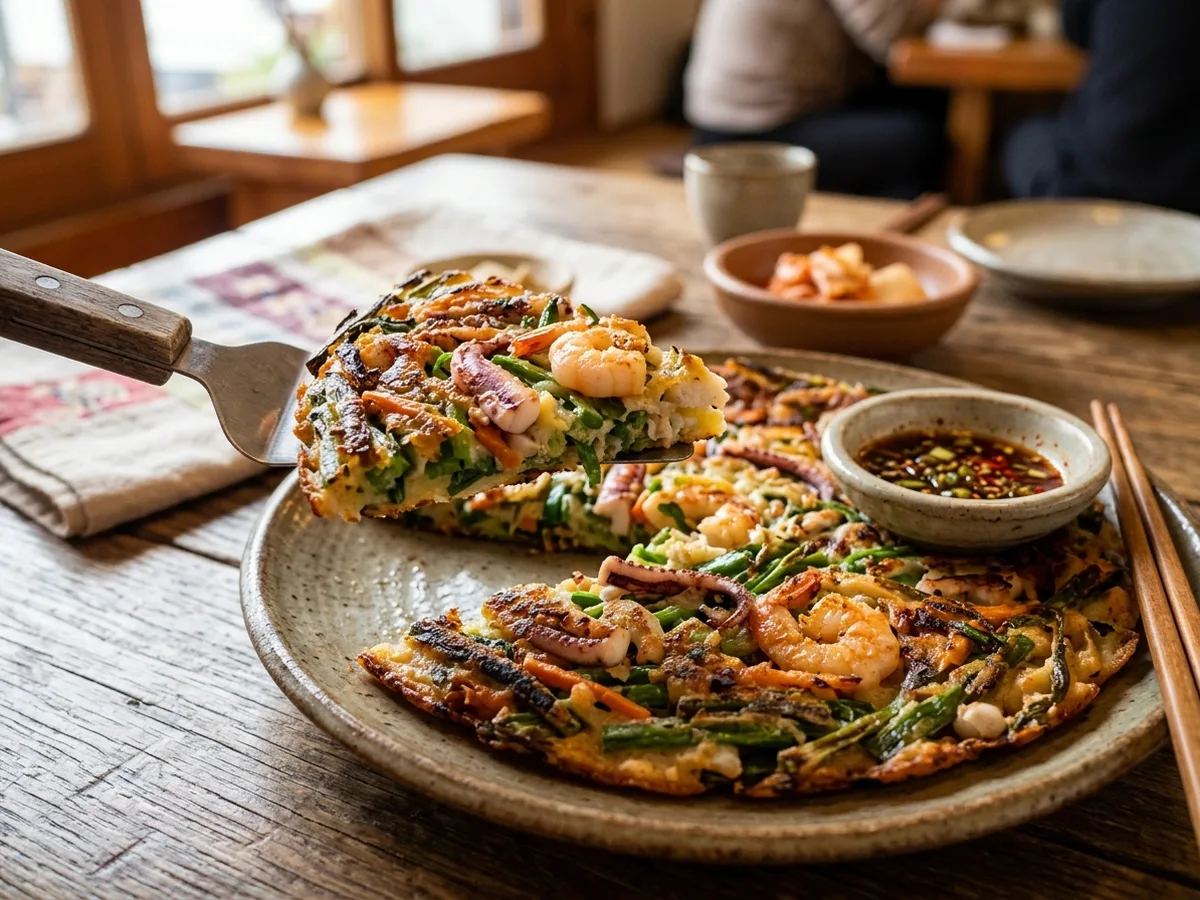 해물파전 · Haemul PajeonSimilar flavor · savory, crispy Seafood-loaded scallion pancake, made for makgeolli.
 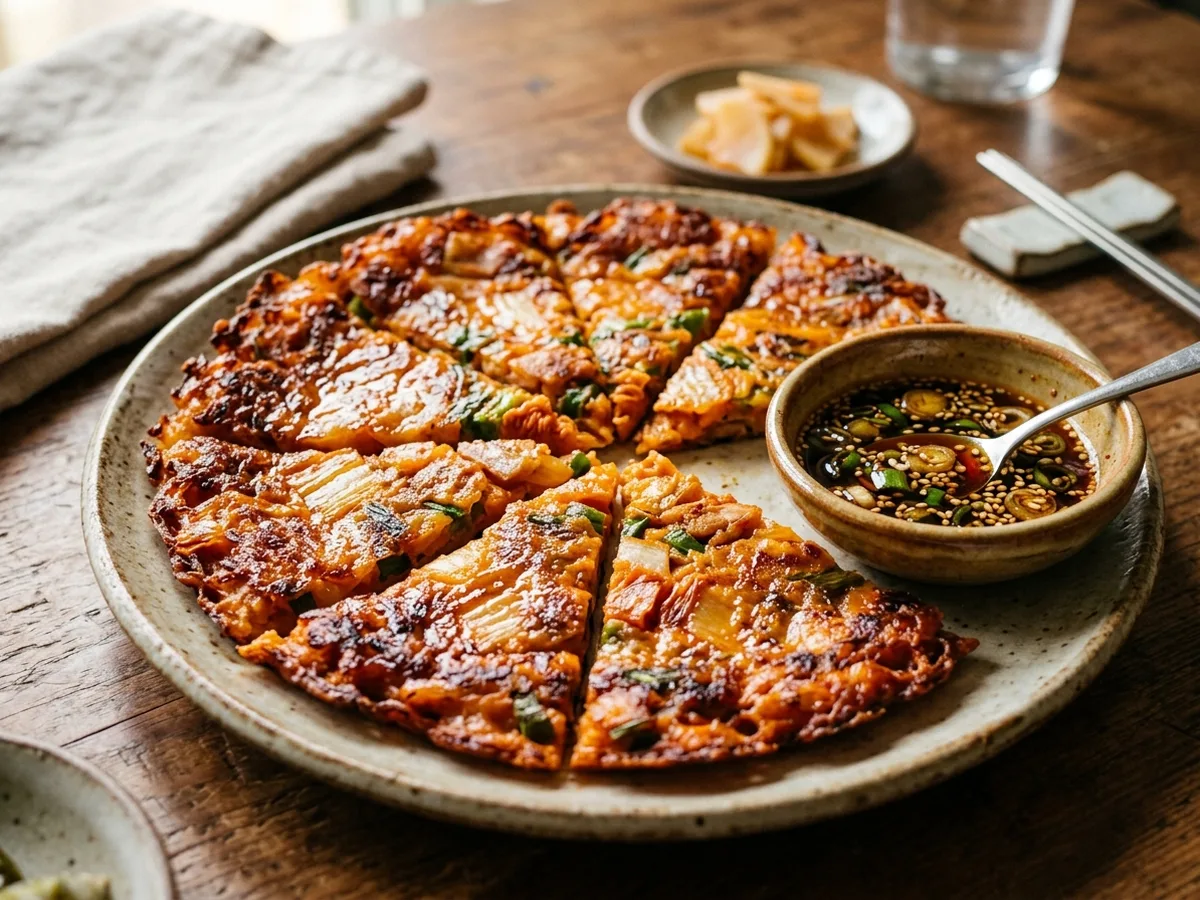 김치전 · KimchijeonSpicier alternative Crispy pancake made from sour kimchi — zero waste, full flavor.