Dotorimuk (도토리묵무침)
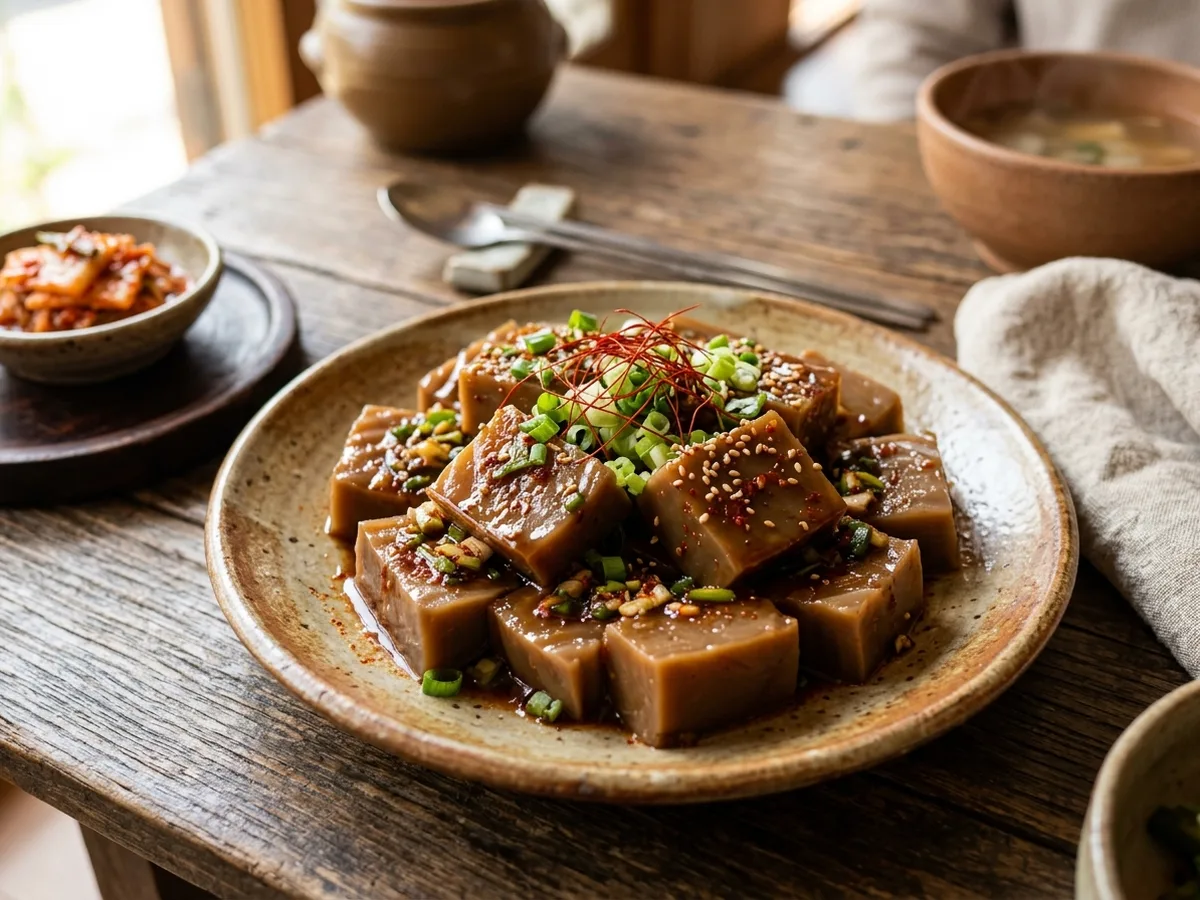
Acorn jelly salad with soy-scallion dressing — wobbly and refreshing.
- Korean name
- 도토리묵무침
- Spice level
- Mild
- Flavor
- nutty · tangy
- Typically contains
- acorn
- Vegetarian / vegan
- Typically plant-based — one of the safer picks for vegans (still confirm when ordering)
- Good to know
- Beginner-friendly ●●●○○ Solo dining ●●●●● Kid-friendly ●●●○○
- Also written as
- dotori muk, acorn jelly, dotorimuk muchim
What is Dotorimuk?
Dotorimuk (도토리묵) is acorn jelly — a wobbly, earthy-bitter brown jelly made from acorn starch, cut into slabs and dressed with a soy-scallion-chili sauce. Almost calorie-free and entirely plant-based, it is a mountain-region classic served at hiking-trail restaurants and traditional pubs.
How to eat it
- Master the chopstick grip. The jelly is slippery; support a piece from the side rather than pinching hard — locals scoop stubborn pieces with a spoon without shame.
- Get sauce on every piece. The muk itself is nearly flavorless by design; drag each slab through the soy-scallion dressing.
- Eat it cool. It is served at room temperature or chilled; the clean, faintly bitter finish is refreshing after fried or fatty food.
Cooking it at home
- Whisk acorn starch (dotori-garu) with water 1:5, plus a pinch of salt and a drop of oil.
- Stir constantly over medium heat until it thickens to a glossy paste and burps thickly, 10–15 minutes, then pour into a mold and chill until set.
- Cut into slabs and dress with soy sauce, gochugaru, sesame oil, scallion, and sesame seeds; often tossed with lettuce and perilla leaf as dotorimuk-muchim.
Good to know
- Vegan and gluten-free as typically made — one of the most diet-friendly items in Korean cuisine (the dressing's soy sauce contains wheat unless tamari-style).
- The slight bitterness is characteristic of acorn, not a defect.
You will find the best versions at restaurants near hiking mountains — acorn dishes are the signature of Korean mountain-village cooking.
Nutrition
| Calories | 56 kcal |
|---|---|
| Carbohydrate | 12.04 g |
| Protein | 0.6 g |
| Fat | 0.59 g |
| Sodium | 179 mg |
Per serving (~100ml): ≈56 kcal · sodium ≈179 mg (9% of the WHO daily guideline, 2,000 mg)
Related foods
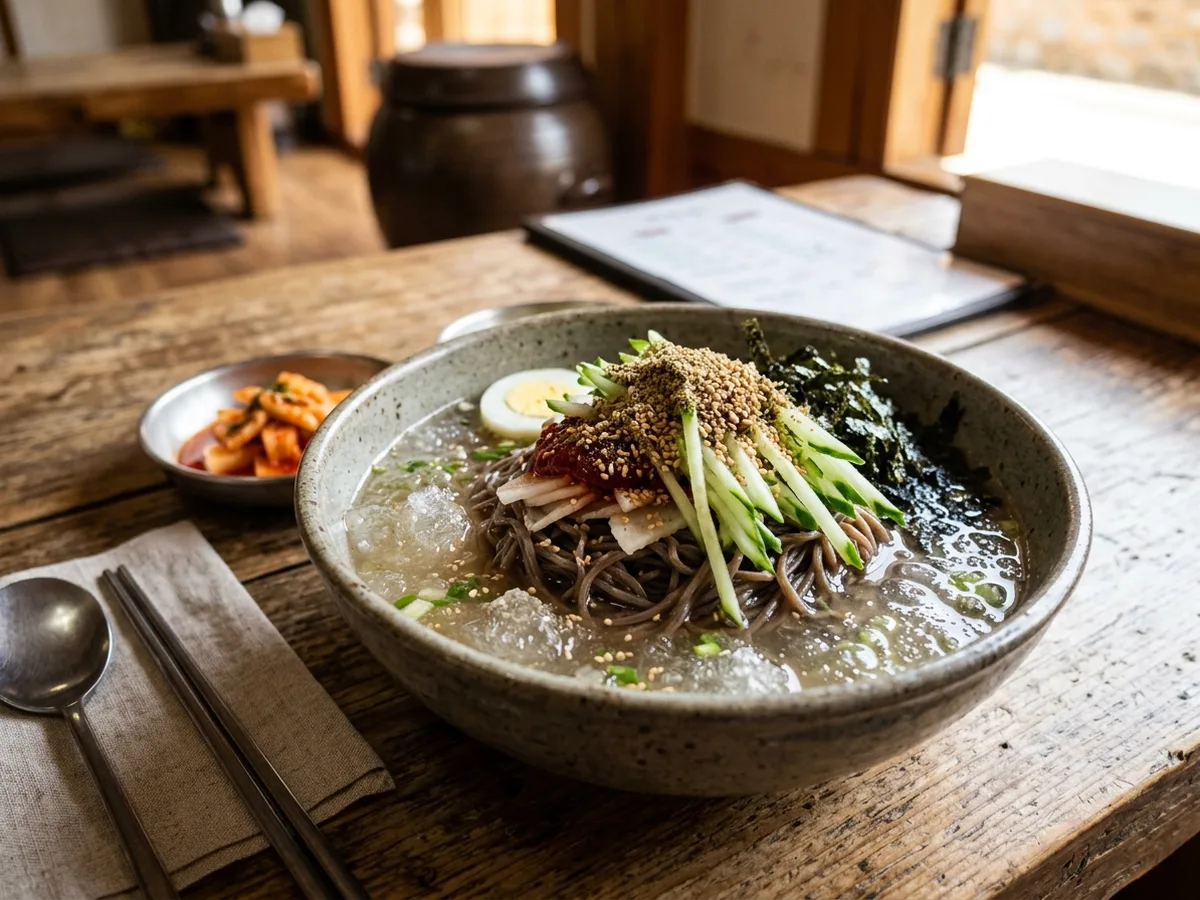 막국수 · MakguksuOften eaten together Gangwon-do buckwheat noodles, cold and tangy.
 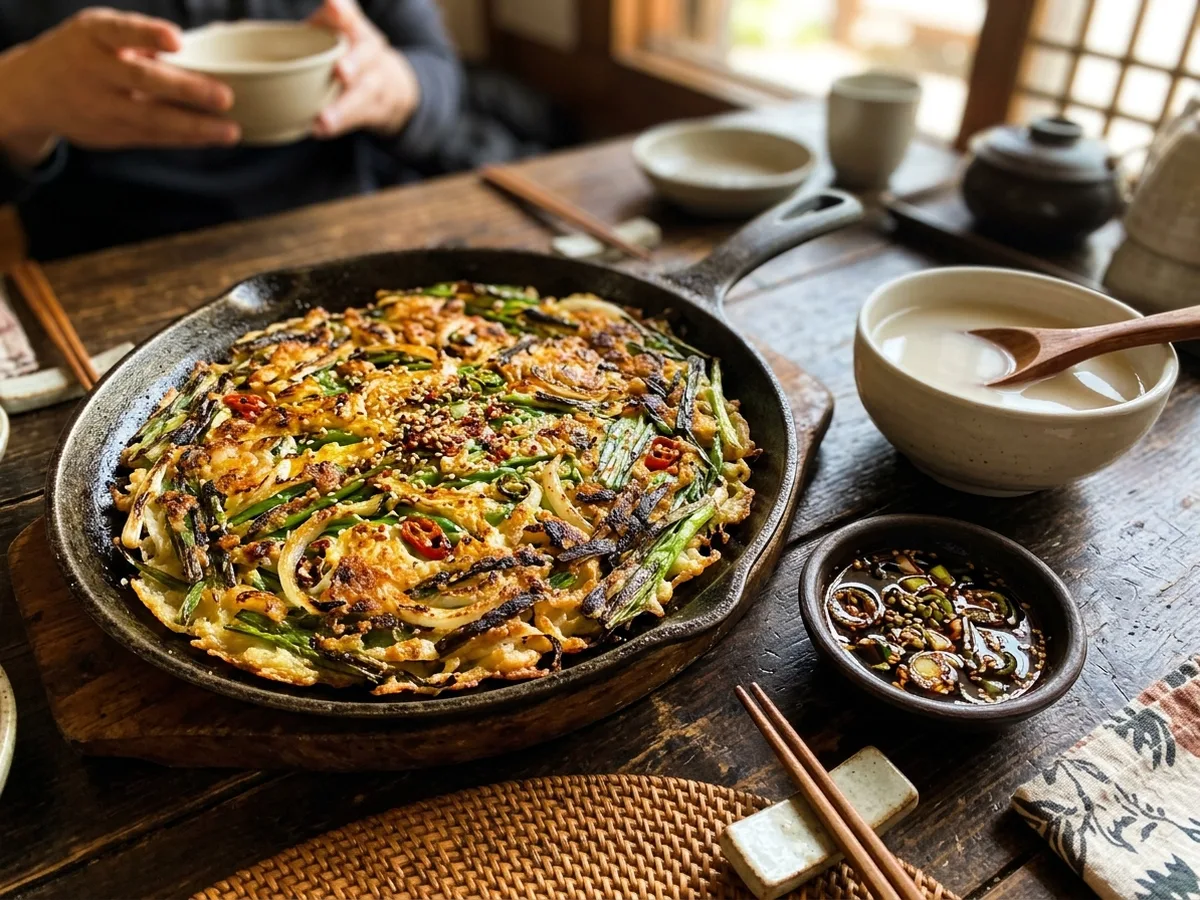 파전 · PajeonOften eaten together Green-onion pancake — the official food of rainy days.
 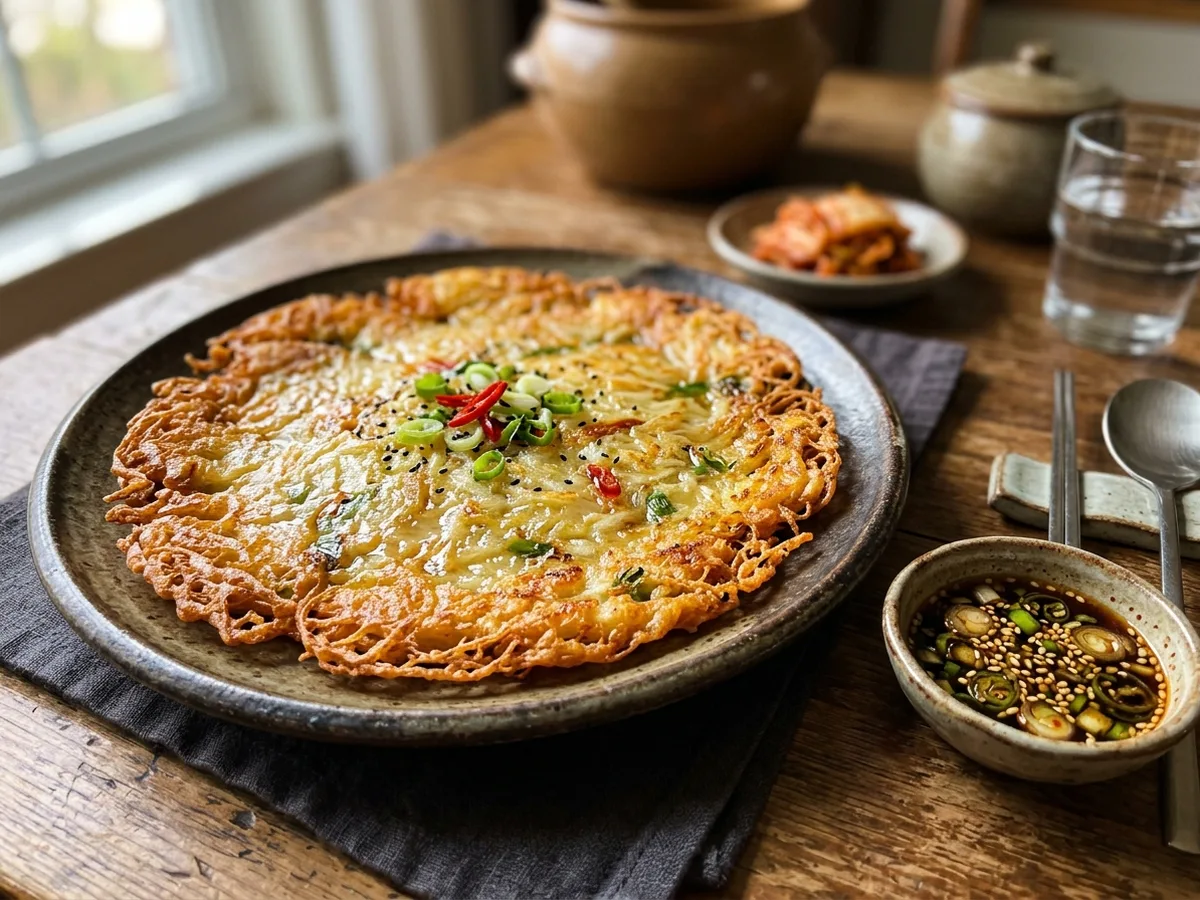 감자전 · GamjajeonOften eaten together Grated-potato pancake — crisp edge, chewy center.
 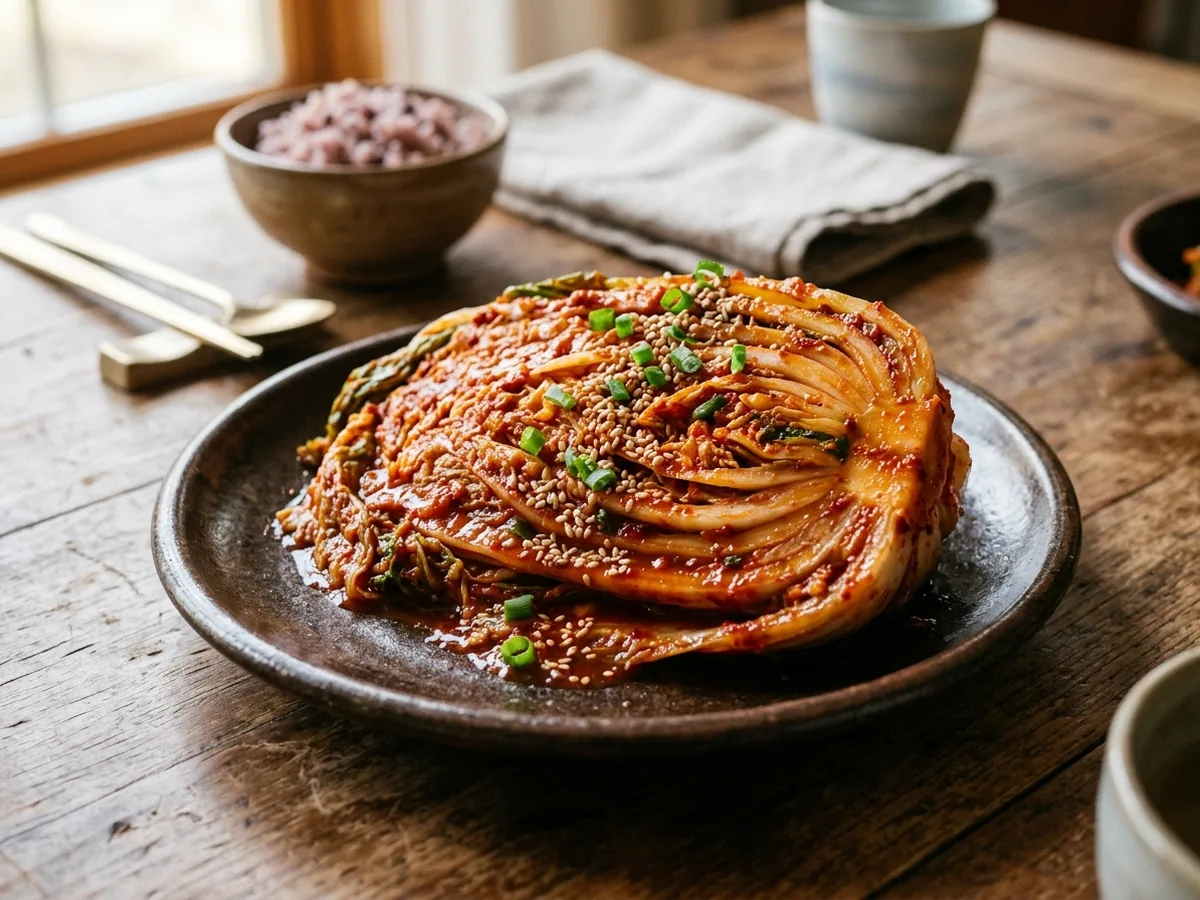 배추김치 · KimchiSame family · Kimchi & Banchan Fermented napa cabbage — the one dish on every Korean table.
 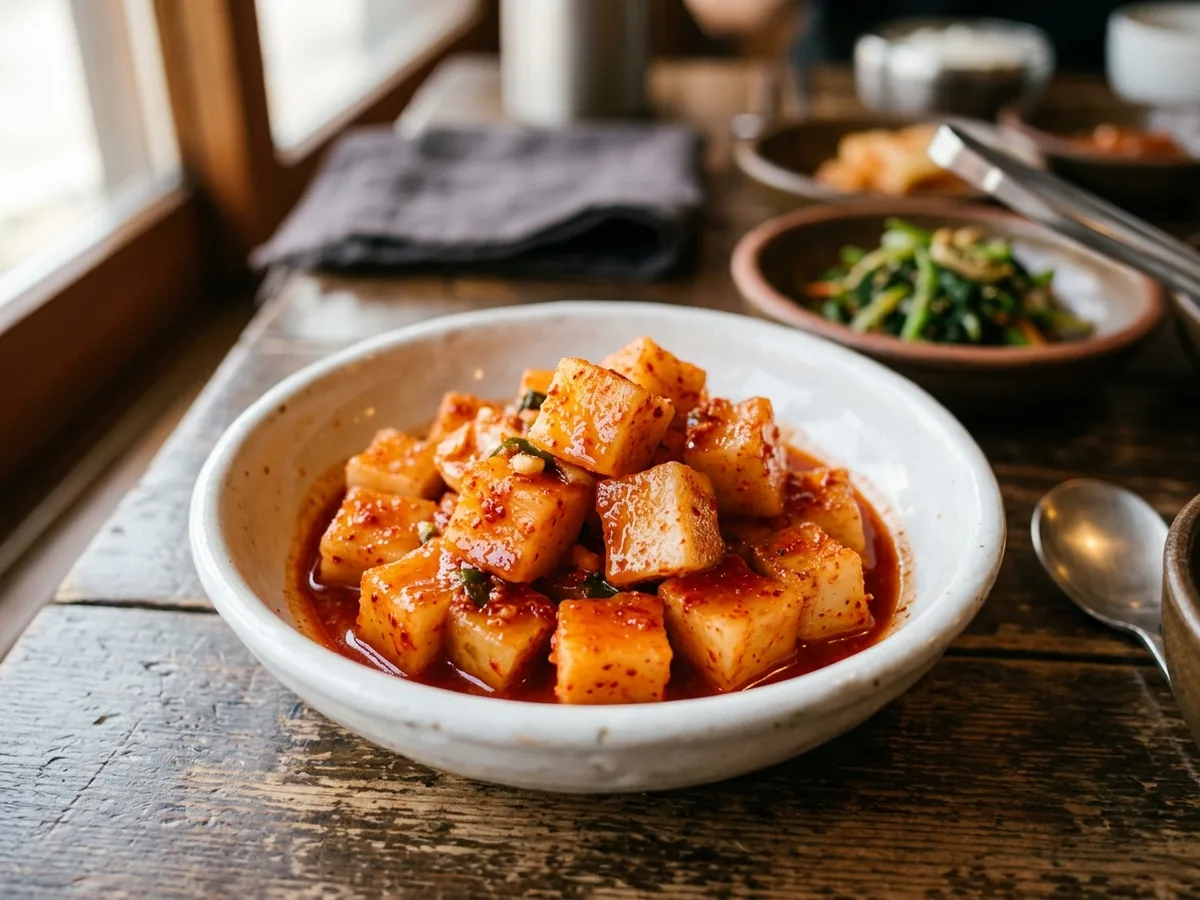 깍두기 · KkakdugiSame family · Kimchi & Banchan Cubed radish kimchi — crunchy, juicy, born for gukbap.