Makguksu (막국수)
Gangwon-do buckwheat noodles, cold and tangy.
- Korean name
- 막국수
- Spice level
- Medium
- Flavor
- tangy · nutty
- Typically contains
- buckwheat
- Vegetarian / vegan
- Sometimes — vegetable-forward, but anchovy broth, fish sauce or meat garnish is common. Ask first
- Typical price
- ₩7,000–₩10,000 per person checked 2026-07 — varies by area
- Good to know
- Beginner-friendly ●●●○○ Solo dining ●●●●○ Kid-friendly ●●●○○
- Also written as
- mak guksu, chuncheon makguksu, buckwheat noodles
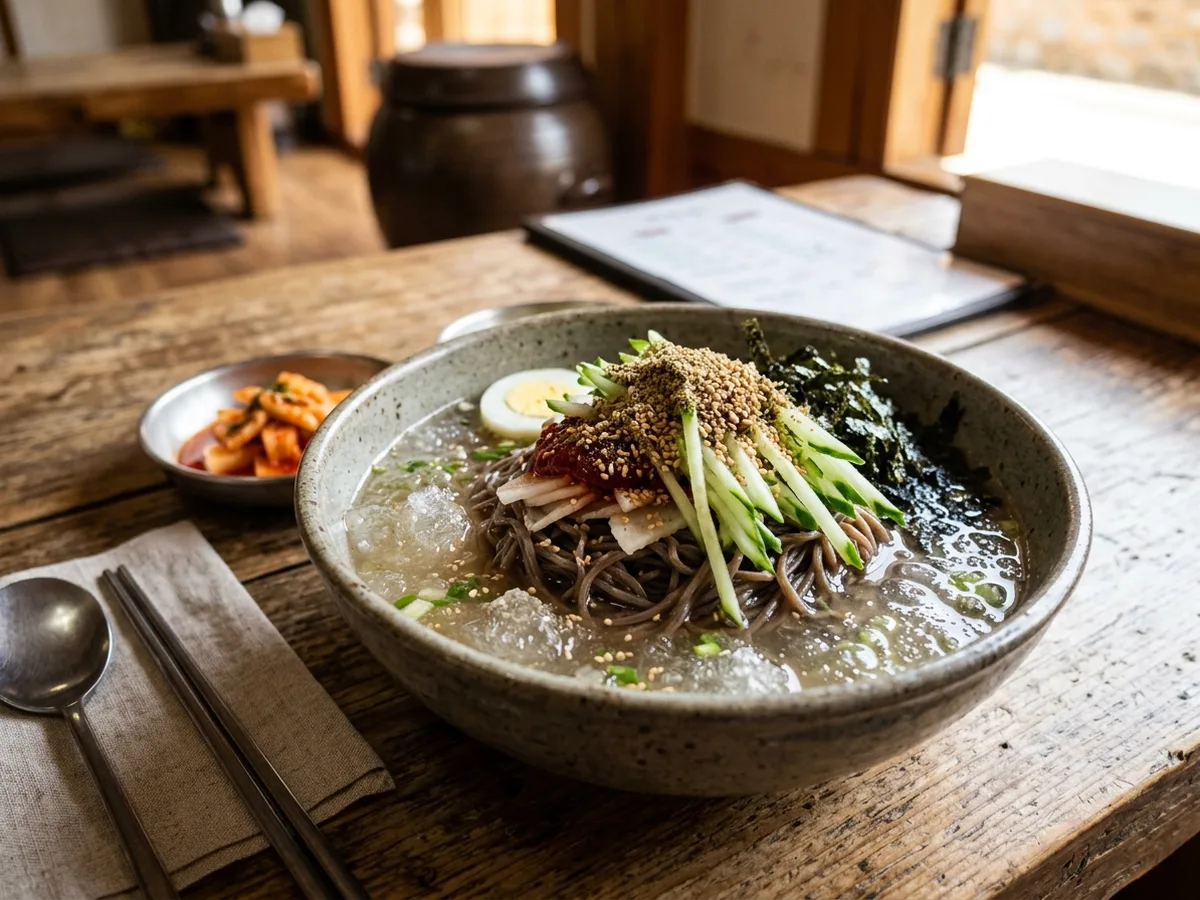
What is Makguksu?
Makguksu is Gangwon Province's rustic buckwheat noodle — 'hastily made noodles' by name, served cold with chilled broth, chili seasoning, and often a swirl of perilla oil and gim. Rougher and nuttier than naengmyeon, it's Chuncheon's other noodle religion alongside dakgalbi.
How to eat it
- Mix the seasoning through, then pour in cold broth (or dongchimi brine) to your preferred wetness — makguksu lives between 'bibim' and 'mul'.
- Add vinegar and mustard freely; makguksu is less purist than naengmyeon.
- The perilla-oil variant (deulgireum makguksu) is eaten broth-less — just oil, soy and gim.
Good to know
- Buckwheat allergy caveat, same as naengmyeon.
The deulgireum (perilla oil) makguksu boom made this humble dish trendy nationwide in recent years.
Nutrition
| Calories | 58 kcal |
|---|---|
| Carbohydrate | 10.96 g |
| Protein | 2 g |
| Fat | 0.6 g |
| Sodium | 226 mg |
Per serving (~732.6ml): ≈425 kcal · sodium ≈1,656 mg (83% of the WHO daily guideline, 2,000 mg)
Related foods
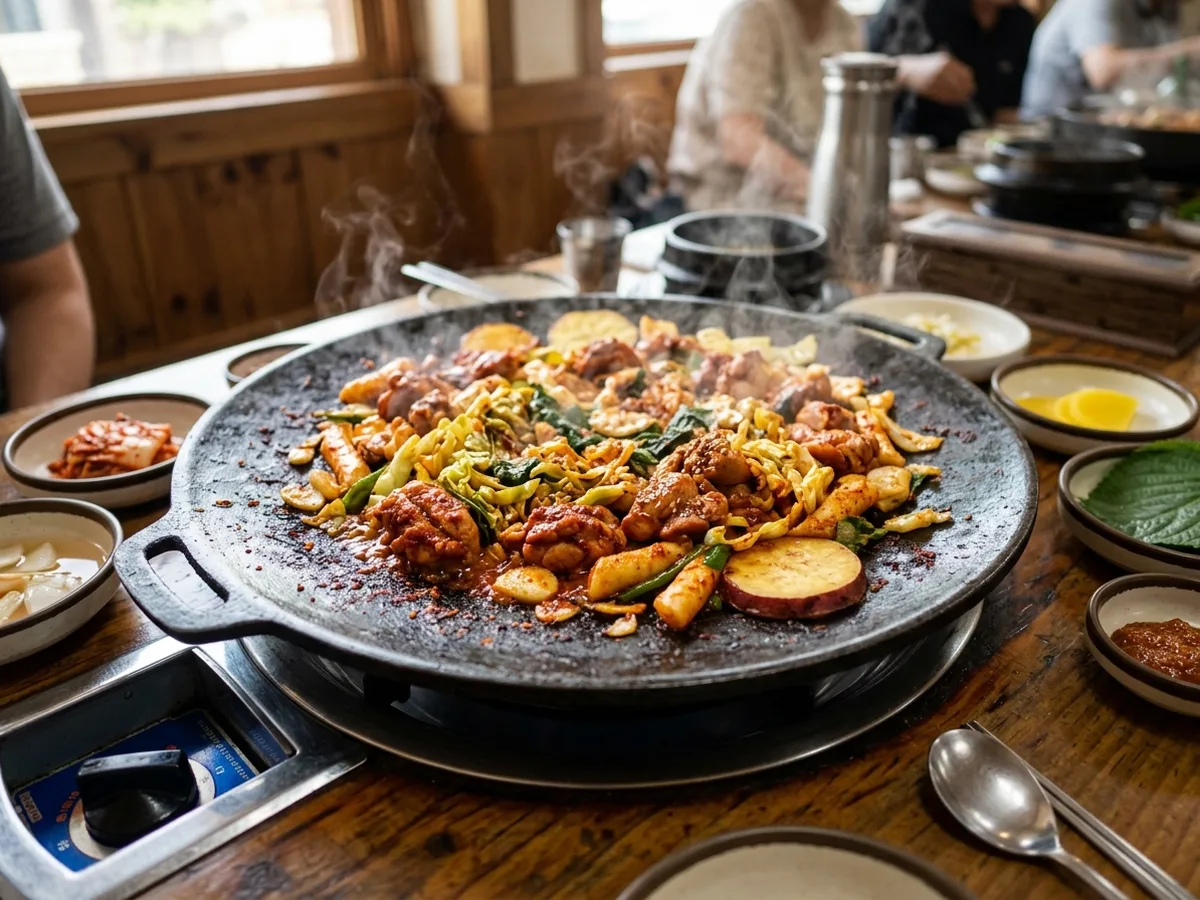 닭갈비 · DakgalbiOften eaten together Spicy chicken stir-fried on a big iron plate — Chuncheon's signature.
 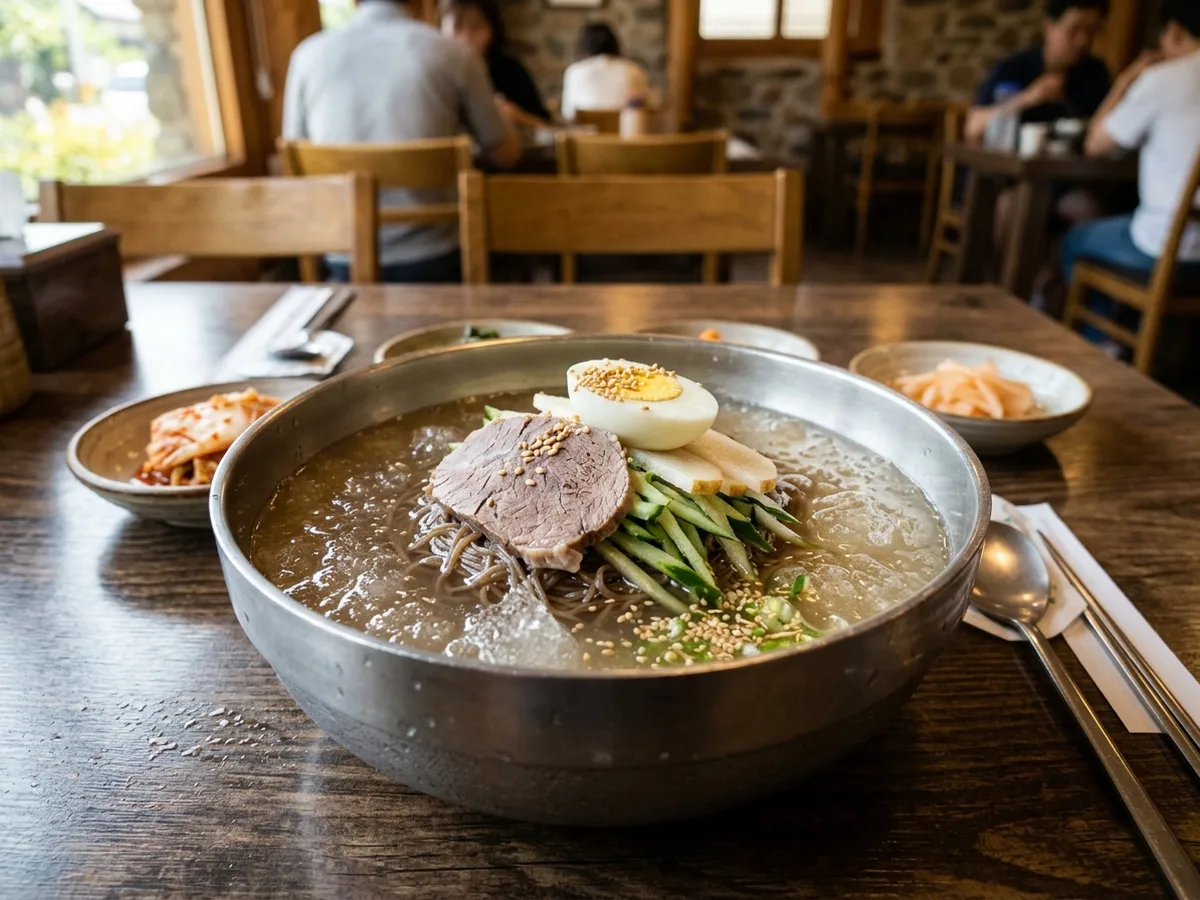 물냉면 · Mul NaengmyeonOften eaten together Buckwheat noodles in icy beef broth — the post-BBQ finisher.
 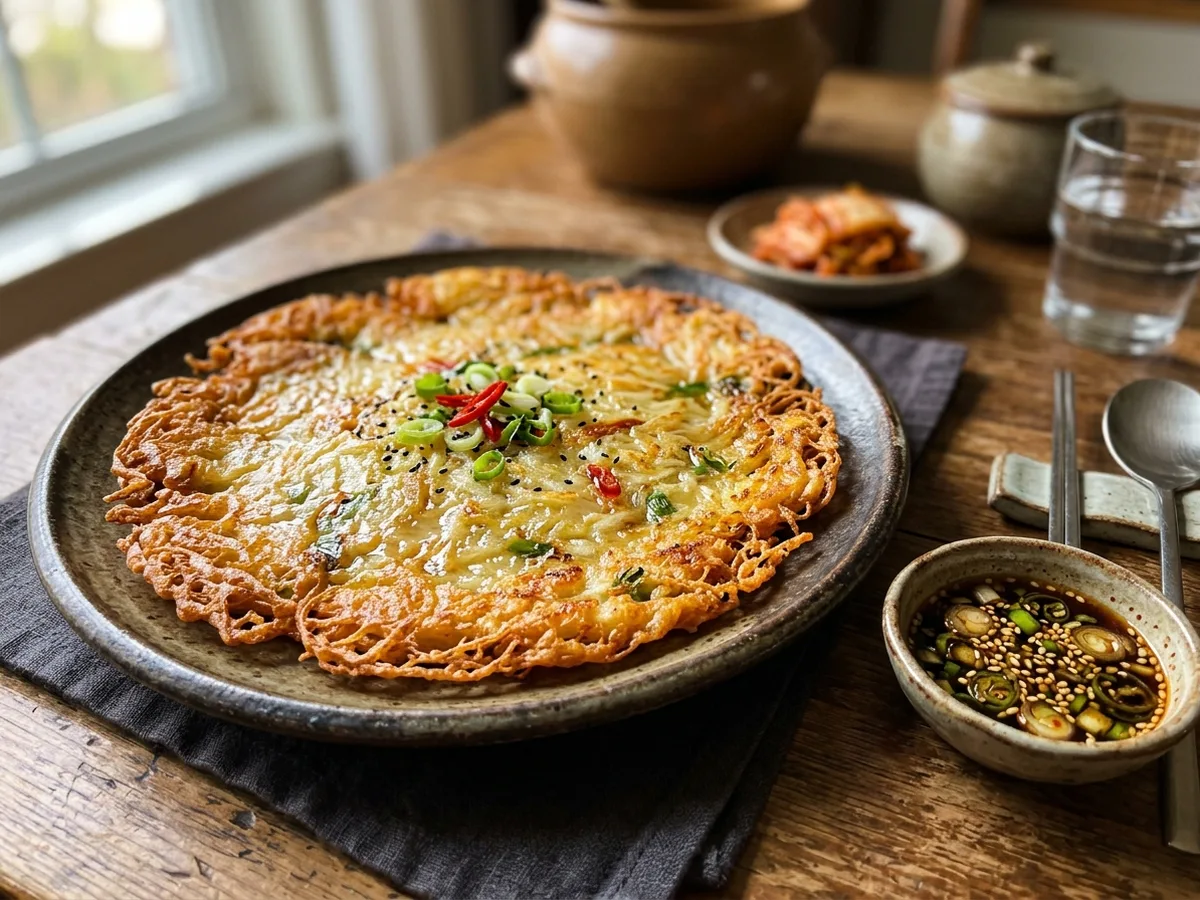 감자전 · GamjajeonOften eaten together Grated-potato pancake — crisp edge, chewy center.
 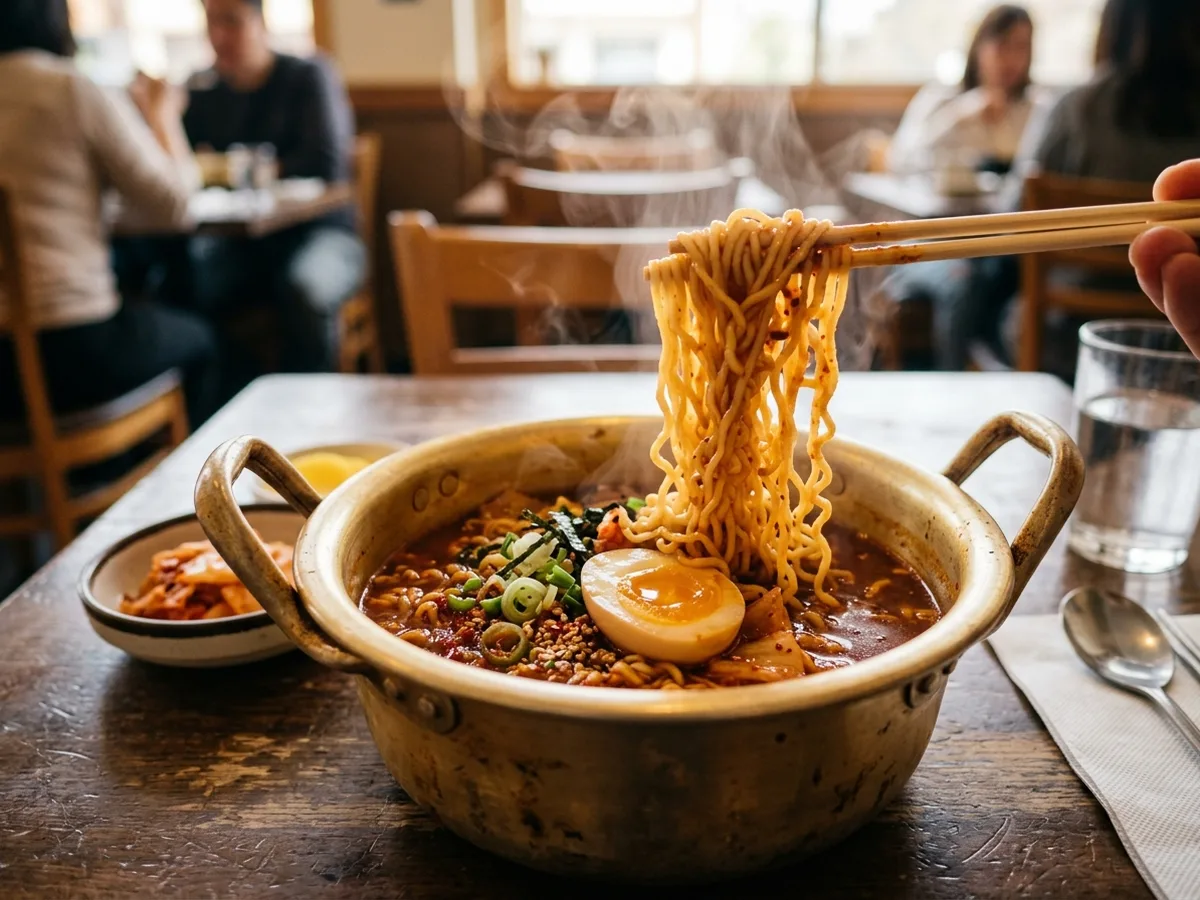 라면 · RamyeonSame family · Noodles & Dumplings Korean instant noodles — a national institution, not a backup meal.
 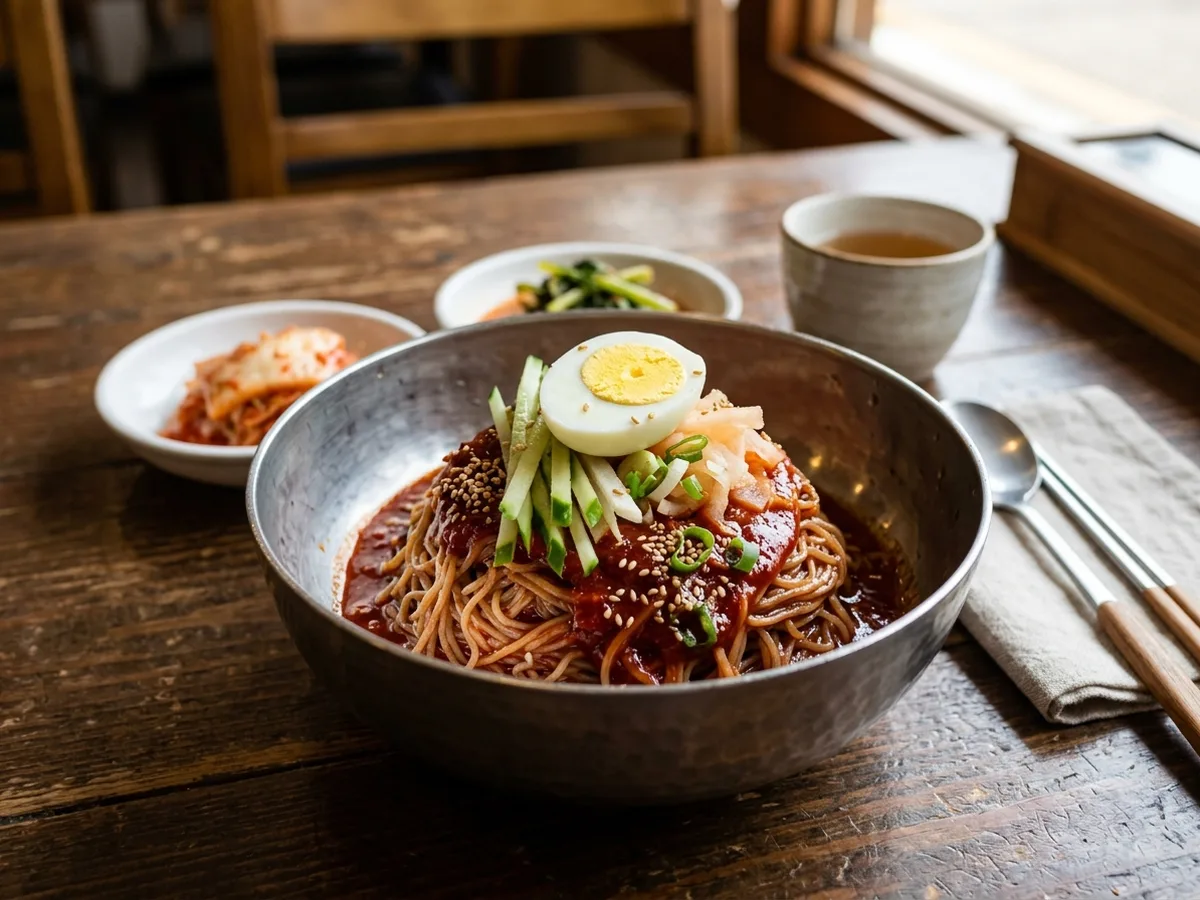 비빔냉면 · Bibim NaengmyeonSame family · buckwheat Cold chewy noodles in sweet-spicy sauce — naengmyeon's fiery twin.