Gopchang Jeongol (곱창전골)
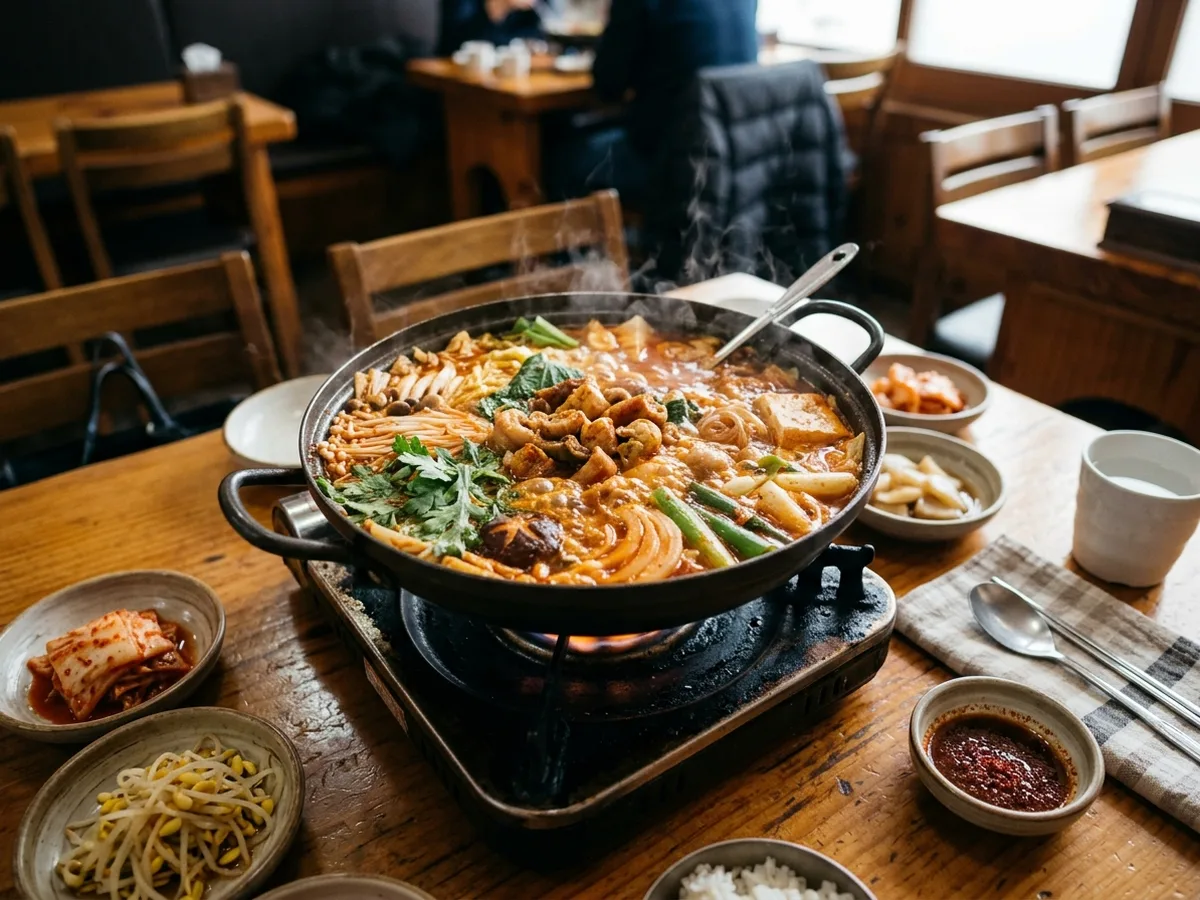
Spicy intestine hot pot that bubbles at the table.
- Korean name
- 곱창전골
- Spice level
- Spicy
- Flavor
- spicy · rich
- Typically contains
- beef
- Vegetarian / vegan
- Not vegetarian — meat or seafood is core to the dish
- Typical price
- ₩30,000–₩50,000 per dish checked 2026-07 — varies by area
- Good to know
- Beginner-friendly ●●○○○ Solo dining ●○○○○ Kid-friendly ●○○○○
- Also written as
- gopchang jungol, gopchang jeongol, intestine hot pot
What is Gopchang Jeongol?
Gopchang-jeongol is the communal, boiling-pot expression of Korea's intestine obsession: beef gopchang layered with vegetables, glass noodles and a gochujang-forward broth, reduced at the table until everything tastes of everything. It's late-night, soju-forward food with a fiercely loyal following.
How to eat it
- Let it reduce at the burner before serving yourself — early broth is thin, late broth is the prize.
- Fish for gopchang, mushrooms and glass noodles as they cook through.
- Close with the fried-rice finish pressed flat in the pot until it crackles.
Good to know
- Rich and heavy — the vegetables are outnumbered; pace yourself.
- Not the entry-level gopchang dish; try grilled gopchang first if offal is new to you.
The dish divides tables into broth-people and rice-finish-people — the correct answer is both.
Nutrition
| Calories | 47 kcal |
|---|---|
| Carbohydrate | 2.66 g |
| Protein | 3.57 g |
| Fat | 2.61 g |
| Sodium | 111 mg |
Per serving (~570ml): ≈268 kcal · sodium ≈633 mg (32% of the WHO daily guideline, 2,000 mg)
Related foods
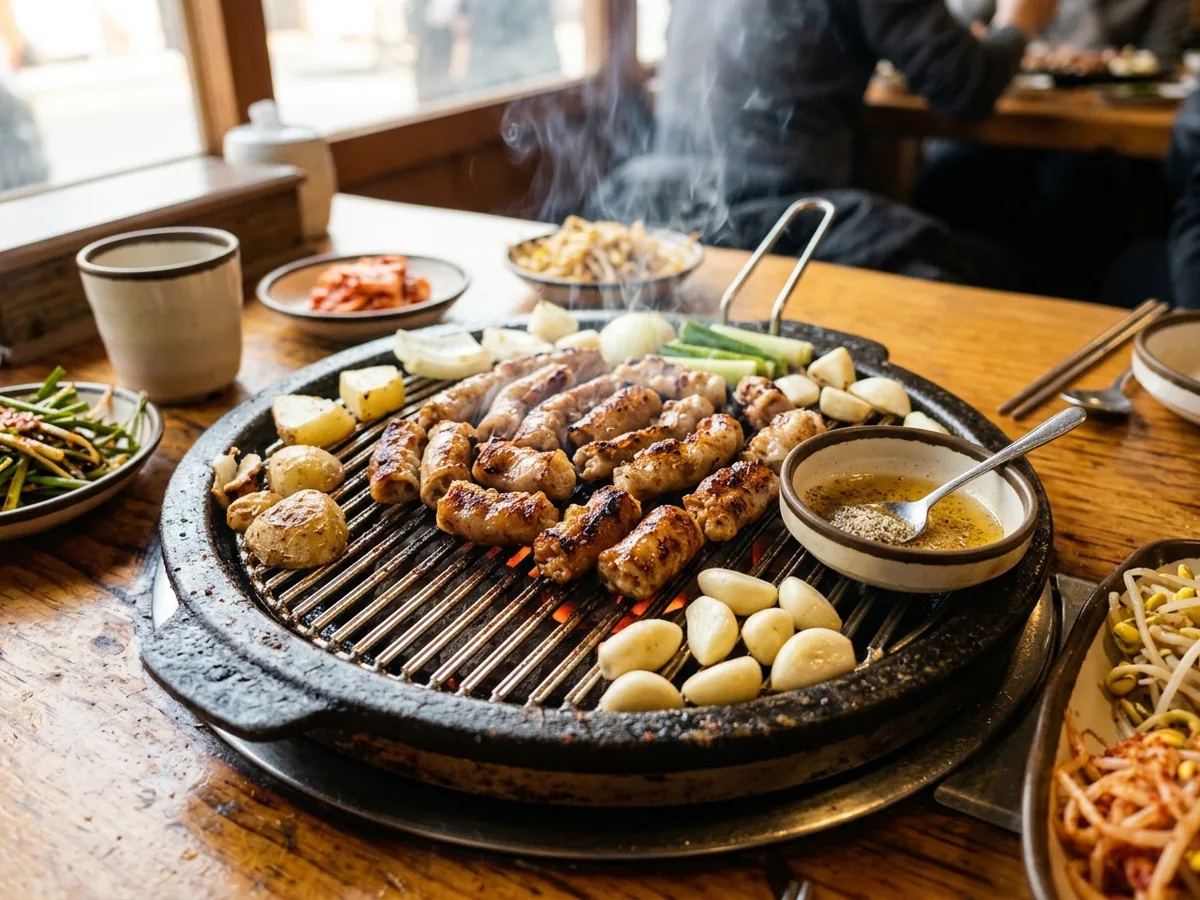 곱창구이 · Gopchang GuiOften eaten together Grilled beef small intestines — rich, chewy, beloved with soju.
 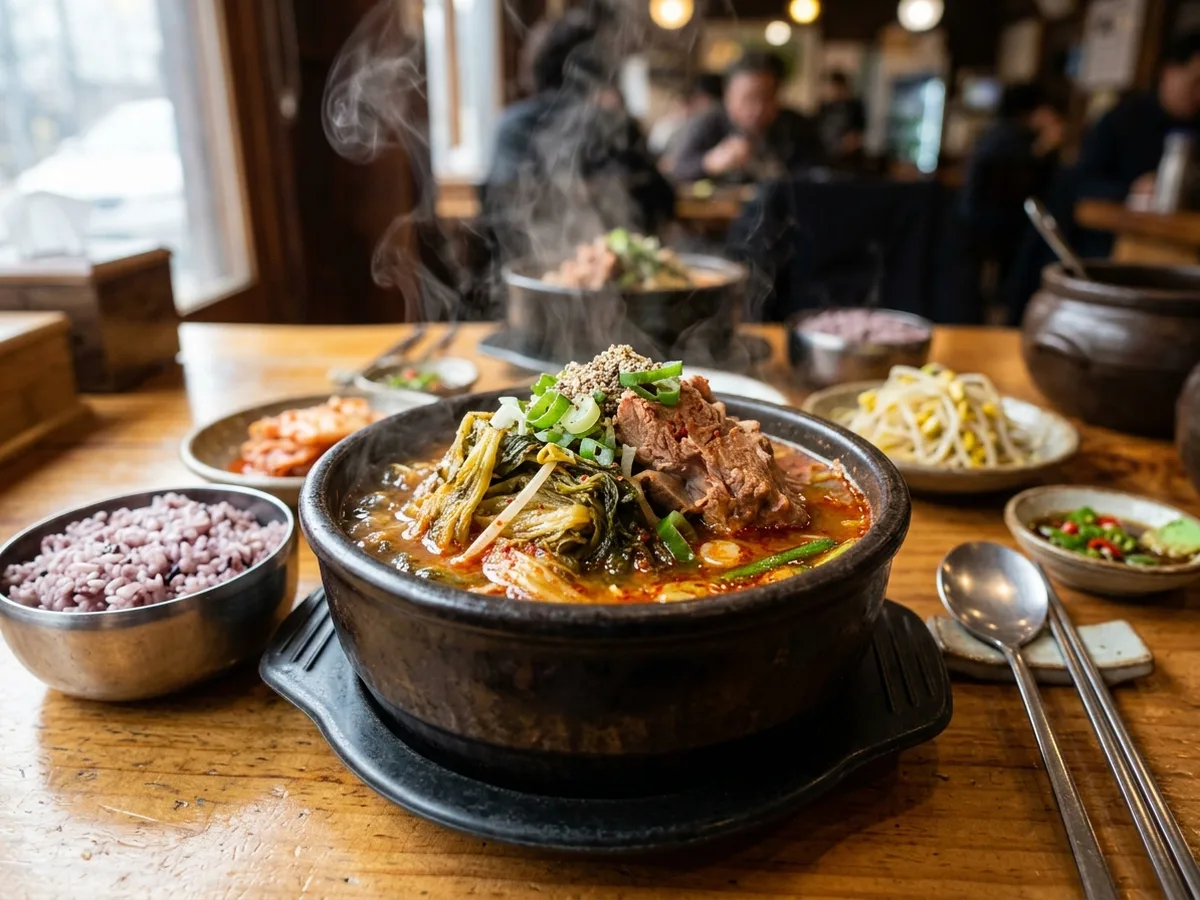 뼈다귀해장국 · HaejanggukOften eaten together Pork-bone 'hangover soup' — the heavy-duty morning-after fix.
 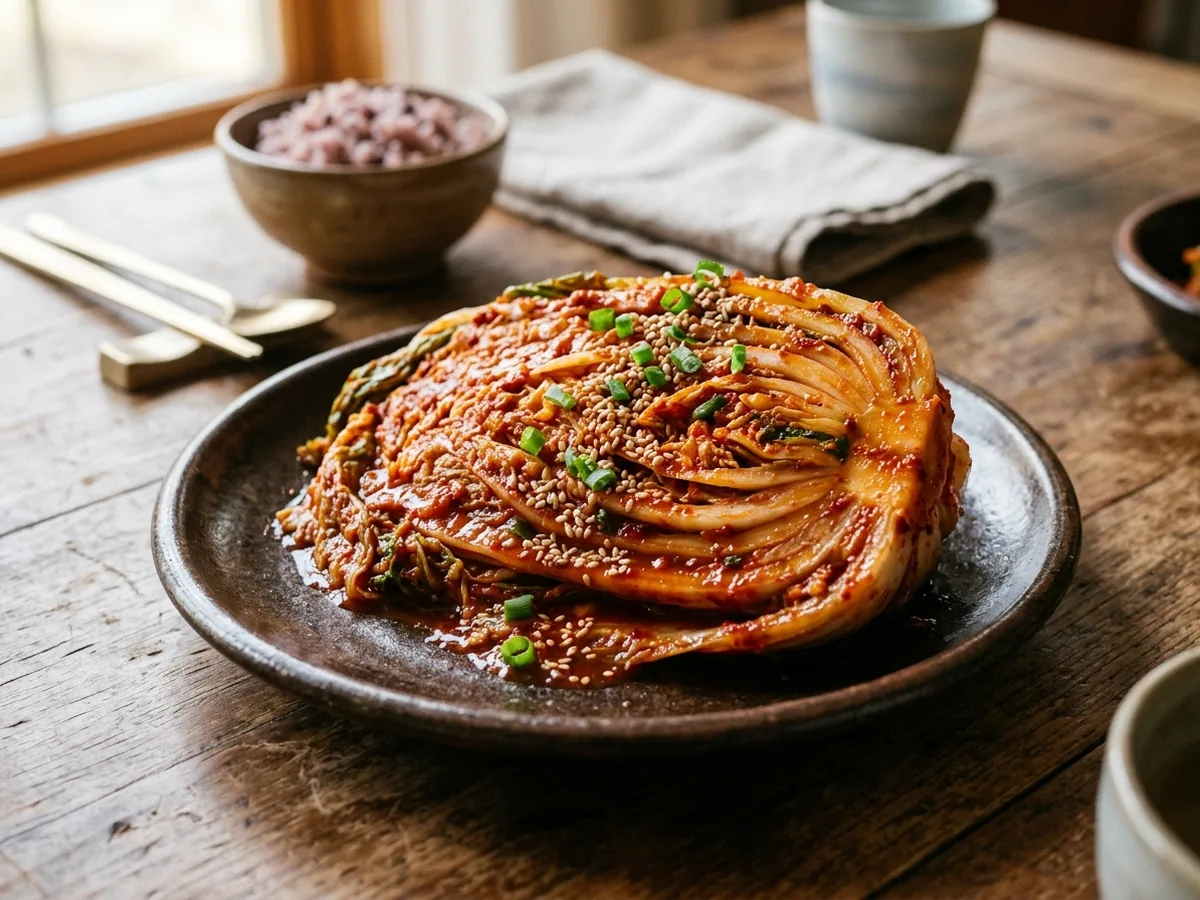 배추김치 · KimchiOften eaten together Fermented napa cabbage — the one dish on every Korean table.
 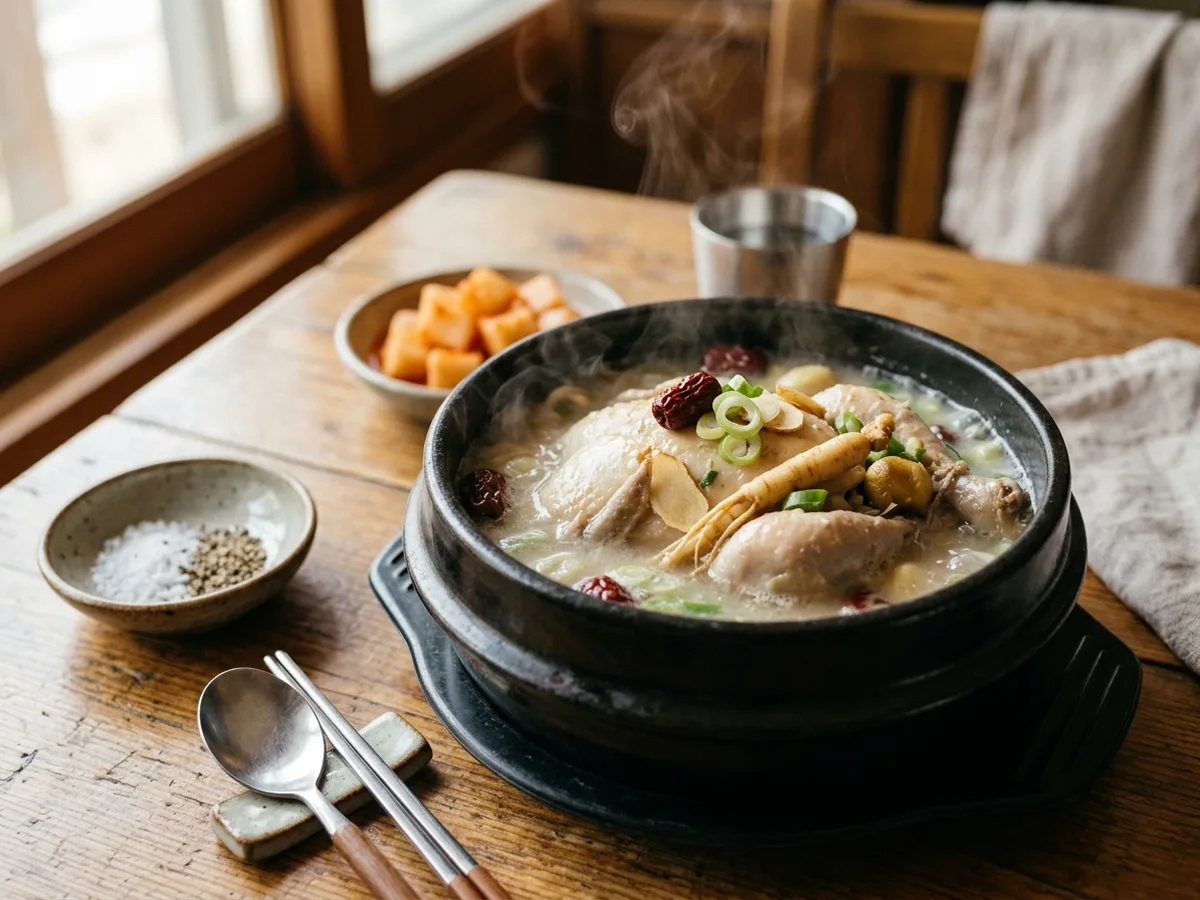 삼계탕 · SamgyetangMilder alternative Whole young chicken stuffed with rice and ginseng — summer stamina food.
 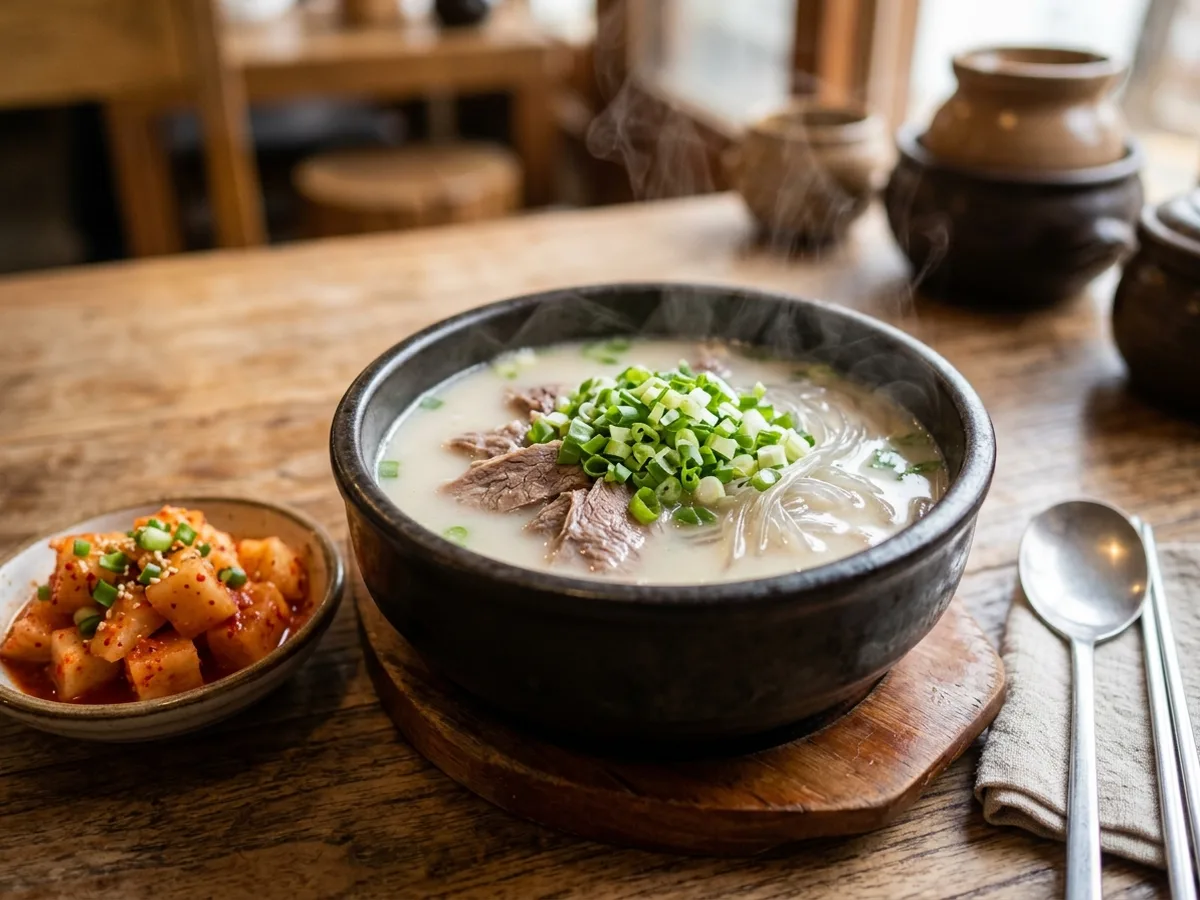 설렁탕 · SeolleongtangMilder alternative Milky ox-bone broth you season yourself with salt and scallions.