Haejangguk (뼈다귀해장국)
Pork-bone 'hangover soup' — the heavy-duty morning-after fix.
- Korean name
- 뼈다귀해장국
- Spice level
- Medium
- Flavor
- savory · spicy
- Typically contains
- pork
- Vegetarian / vegan
- Not vegetarian — meat or seafood is core to the dish
- Typical price
- ₩9,000–₩13,000 per person checked 2026-07 — varies by area
- Good to know
- Beginner-friendly ●●○○○ Solo dining ●●●●○ Kid-friendly ●○○○○
- Also written as
- haejang guk, hangover soup, ppyeo haejangguk, pork bone hangover soup
What is Haejangguk?
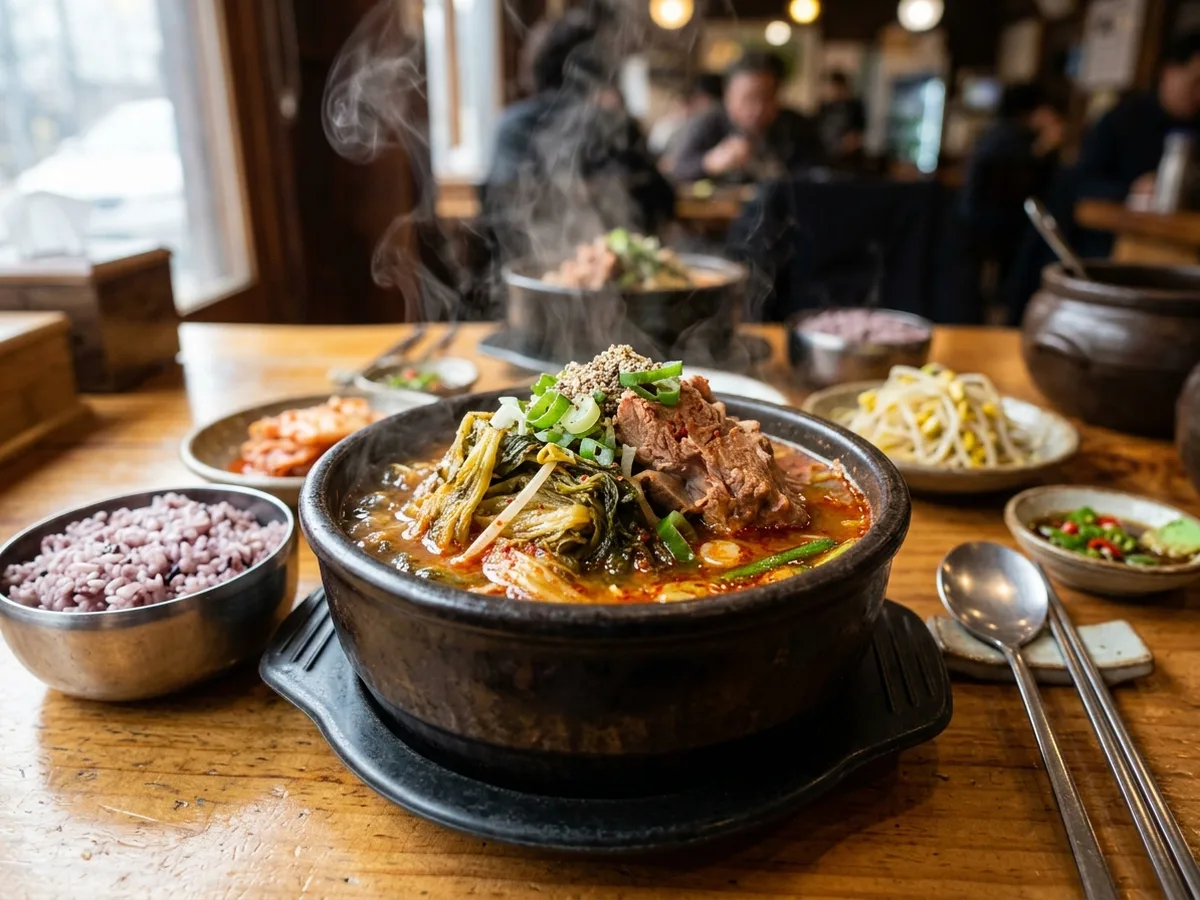
Haejangguk (해장국) literally means "soup to chase a hangover" — a family of restorative soups, most commonly ox-bone broth with ugeoji greens, congealed ox blood (seonji), and pork spine. Served scalding in stone pots at restaurants that never close, it is Korea's institutional answer to the morning after. Chongno's decades-old haejangguk houses feed office workers at dawn and drinkers at 3 a.m. alike.
How to eat it
- Add rice to the ttukbaegi and eat it as gukbap — this is working-person fuel, not a delicate course.
- Work meat off the backbone with chopsticks; the ugeoji (cabbage greens) carry the broth's depth.
- Season with chili paste or perilla powder at the table to taste.
Good to know
- 'Haejangguk' is a category, not one recipe — pork-bone (ppyeo), bean-sprout, blood-cake (seonji) versions differ a lot; ask what kind before ordering.
- Seonji (congealed blood) appears in many versions — opt out with '선지 빼주세요' if needed.
The name means 'soup that undoes the hangover' — 24-hour haejangguk houses are the after-midnight backbone of every Korean nightlife district.
Where to eat it
Local classicSince 1937
The haejangguk original, simmering since 1937 — three generations of Jongno drinkers have ended (or started) their nights here.
Known for: Haejangguk
Open as of our last check (2026-07-20) · Sources: Wikipedia · 공식 사이트 — hours, prices and status can change; check the map link before visiting.
Nutrition
| Calories | 21 kcal |
|---|---|
| Carbohydrate | 0.96 g |
| Protein | 2.7 g |
| Fat | 0.63 g |
| Sodium | 108 mg |
Per serving (~650ml): ≈137 kcal · sodium ≈702 mg (35% of the WHO daily guideline, 2,000 mg)
Related foods
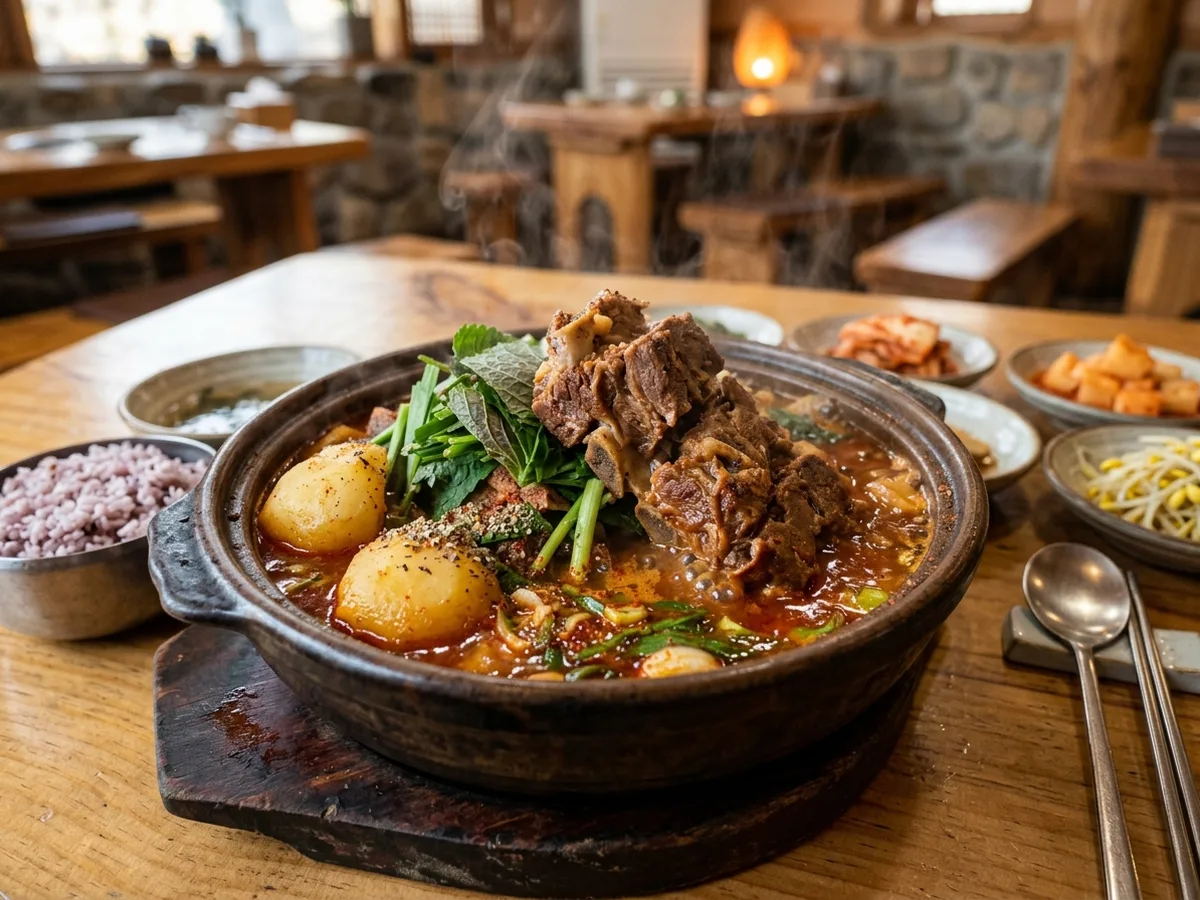 감자탕 · GamjatangOften eaten together Spicy pork backbone stew with potatoes and perilla seeds.
 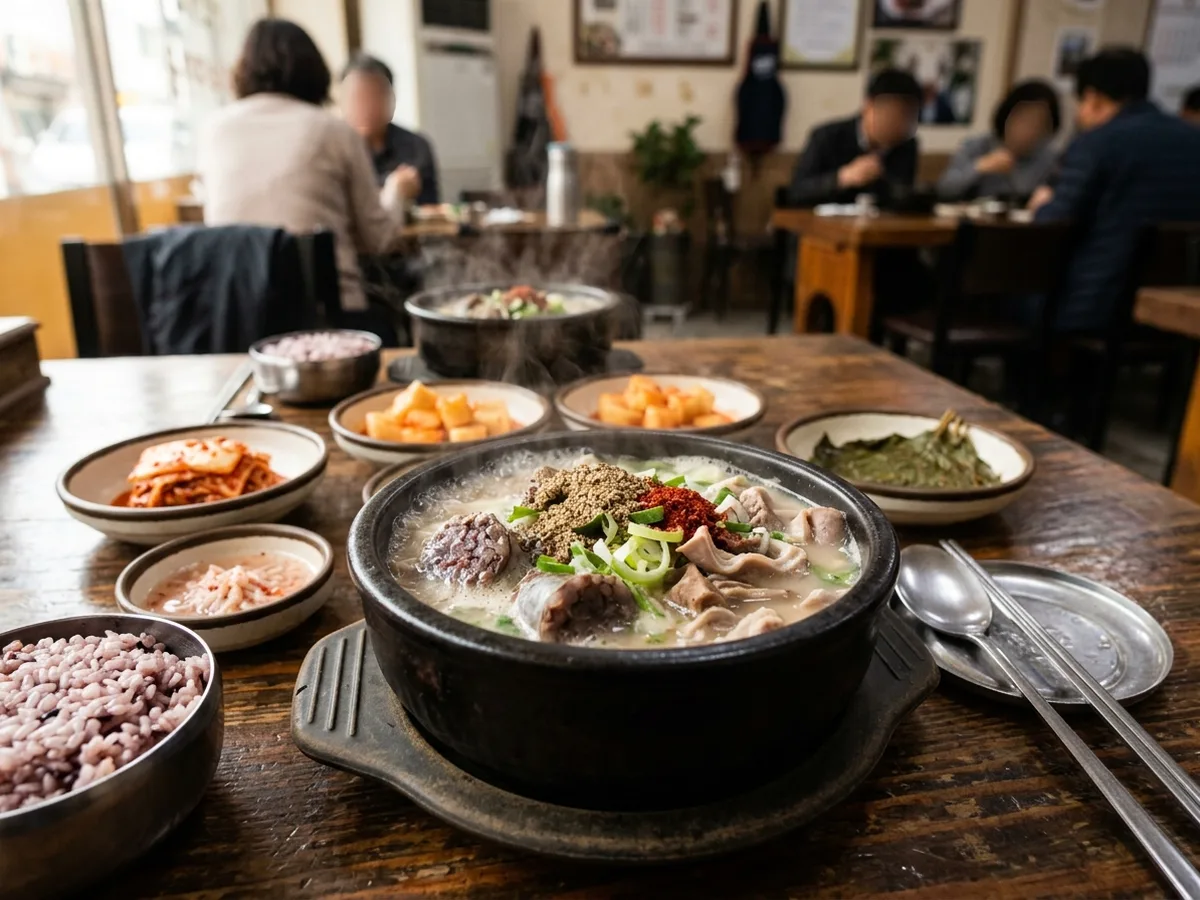 순대국 · Sundae GukOften eaten together Hearty pork broth loaded with Korean blood sausage.
 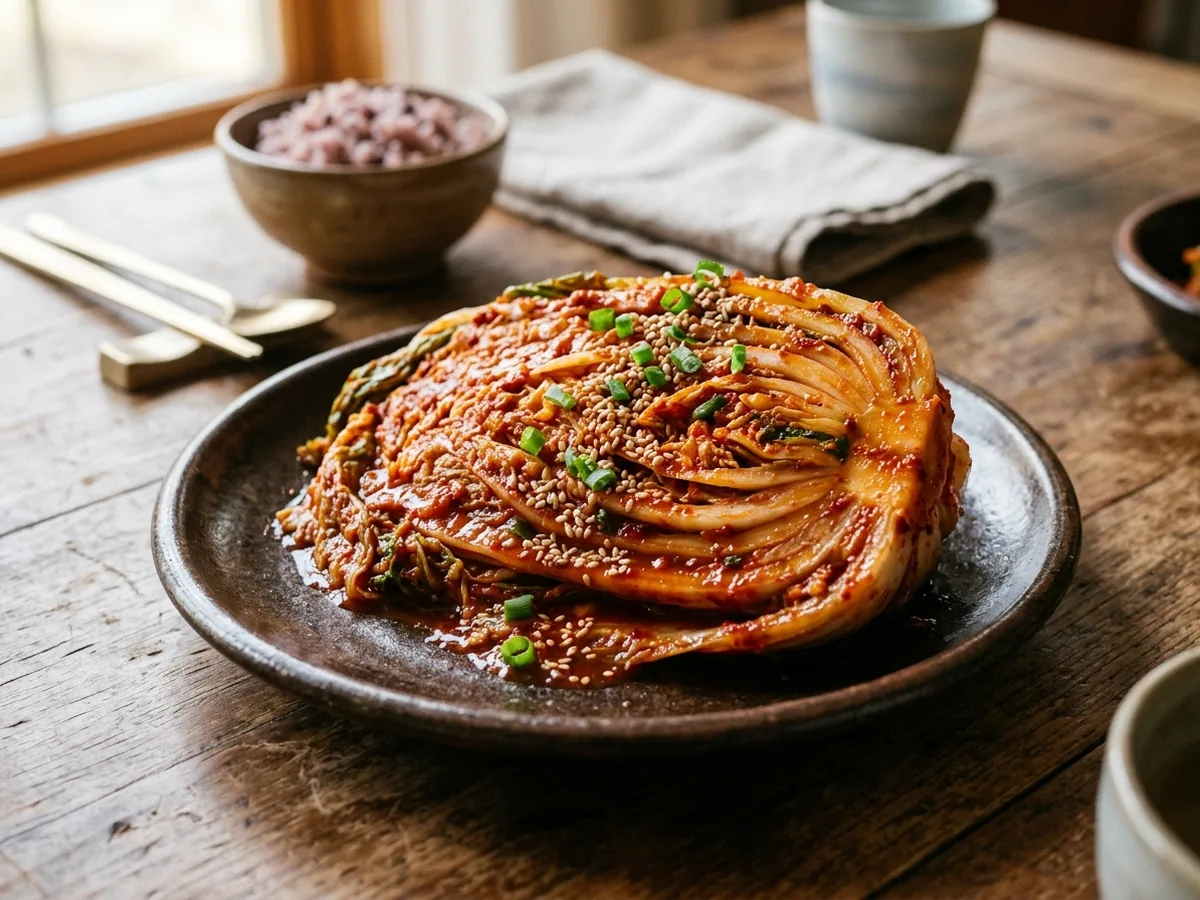 배추김치 · KimchiOften eaten together Fermented napa cabbage — the one dish on every Korean table.
 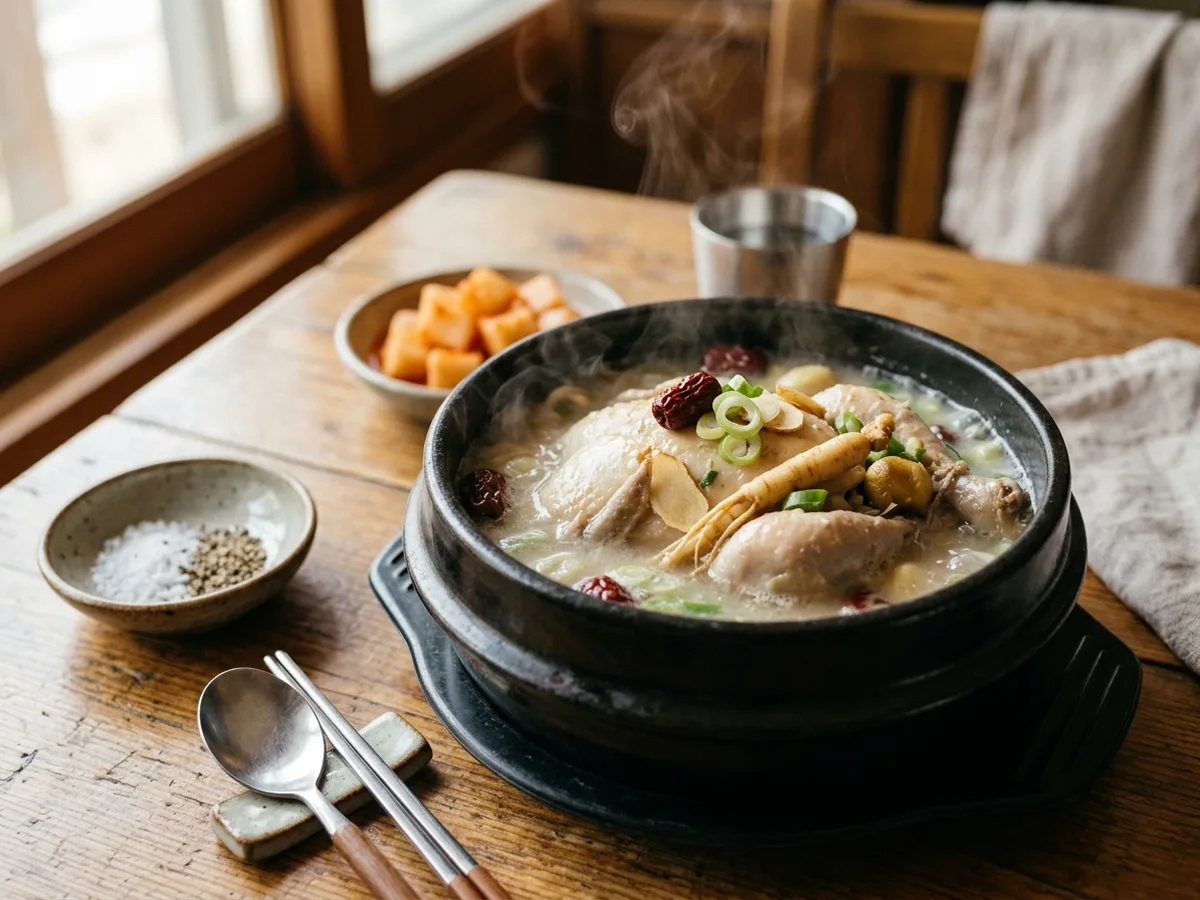 삼계탕 · SamgyetangMilder alternative Whole young chicken stuffed with rice and ginseng — summer stamina food.
 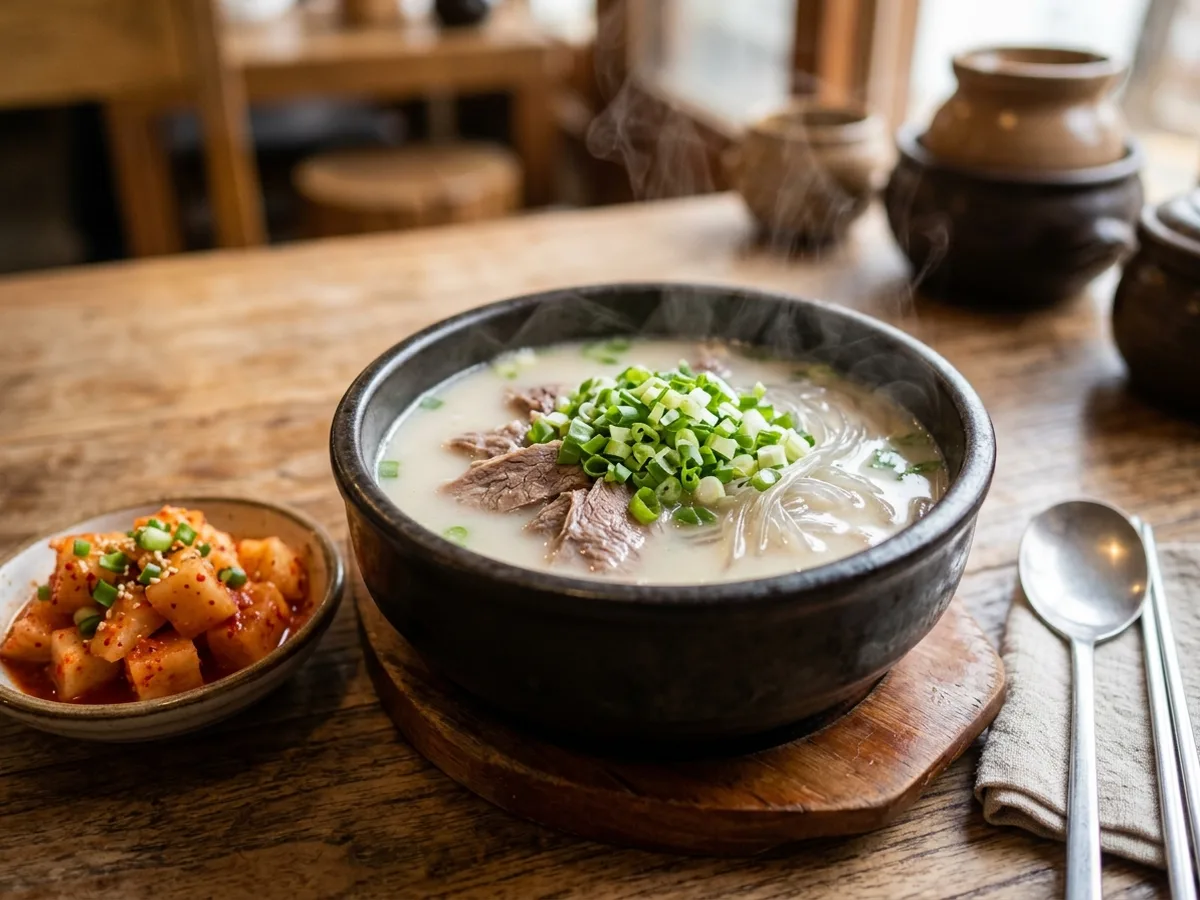 설렁탕 · SeolleongtangMilder alternative Milky ox-bone broth you season yourself with salt and scallions.