Dubu Kimchi (두부김치)
Warm tofu with stir-fried kimchi and pork — a top-tier anju.
- Korean name
- 두부김치
- Spice level
- Medium
- Flavor
- spicy · savory
- Typically contains
- tofu, pork
- Vegetarian / vegan
- Not vegetarian — meat or seafood is core to the dish
- Typical price
- ₩10,000–₩15,000 per dish checked 2026-07 — varies by area
- Good to know
- Beginner-friendly ●●●○○ Solo dining ●●●●● Kid-friendly ●●●○○
- Also written as
- dubu kimchi, tofu kimchi, tofu with stir-fried kimchi
What is Dubu Kimchi?
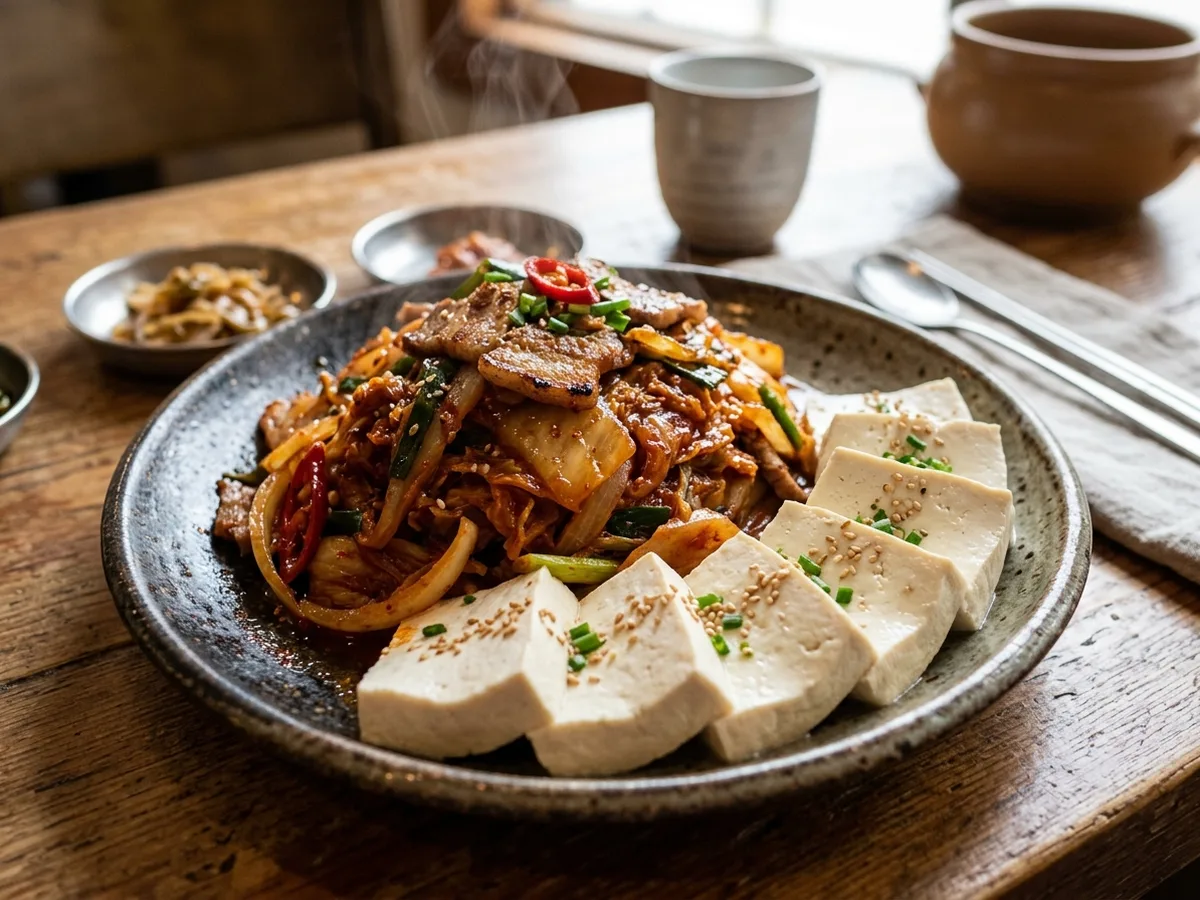
Dubu-kimchi (두부김치) is warm blanched tofu served alongside stir-fried aged kimchi, usually with pork. The tofu is bland and hot on purpose — it is the cushion for the intense kimchi. It is a top-tier anju (drinking food), practically the official partner of makgeolli and soju at Korean pubs.
How to eat it
- Build each bite: tofu first, kimchi on top. Lay a piece of hot tofu on your spoon or plate, top with a chopstick-load of stir-fried kimchi, eat together.
- Do not mix the plate. The dish is served as separate zones (tofu ring, kimchi center) and combined per-bite.
- Eat it while the tofu steams. Warm tofu against hot, oily kimchi is the whole experience; cold tofu flattens it.
Cooking it at home
- Stir-fry sour kimchi with pork belly slices, a little sugar, gochugaru, and sesame oil until glossy and jammy, 8–10 minutes.
- Simmer thick tofu slices in salted water 3–4 minutes until heated through and slightly puffed.
- Drain the tofu, arrange around the kimchi, and top with sesame seeds and scallion.
Good to know
- Restaurant versions almost always include pork; ask for it without meat if needed (the kimchi itself still contains fish sauce).
- Contains soy (tofu) — relevant for soy-allergic diners.
Order it at any makgeolli house or pocha — it is among the most reliably good cheap anju, typically ₩10,000–₩15,000.
Nutrition
| Calories | 115 kcal |
|---|---|
| Carbohydrate | 5.63 g |
| Protein | 7.79 g |
| Fat | 6.85 g |
| Sodium | 396 mg |
Per serving (~250g): ≈288 kcal · sodium ≈990 mg (50% of the WHO daily guideline, 2,000 mg)
Related foods
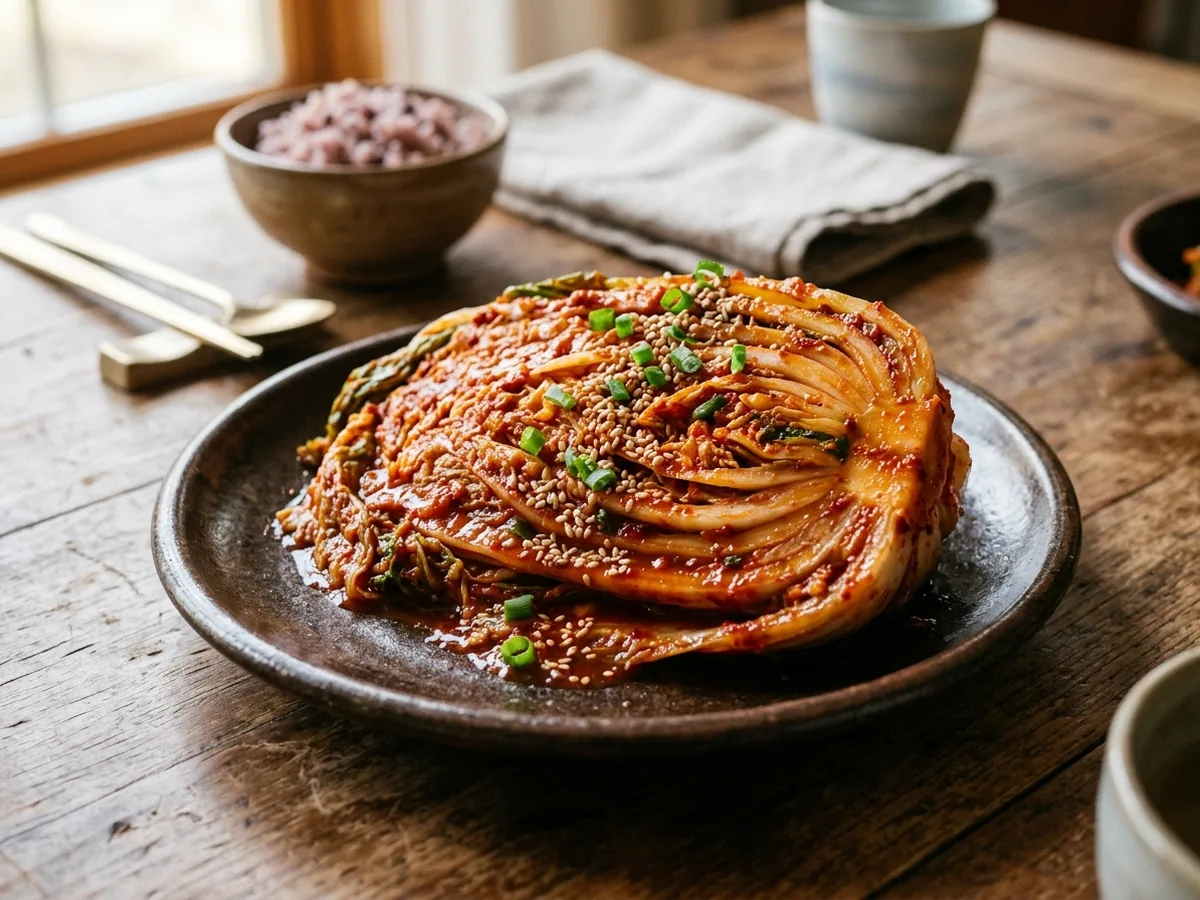 배추김치 · KimchiOften eaten together Fermented napa cabbage — the one dish on every Korean table.
 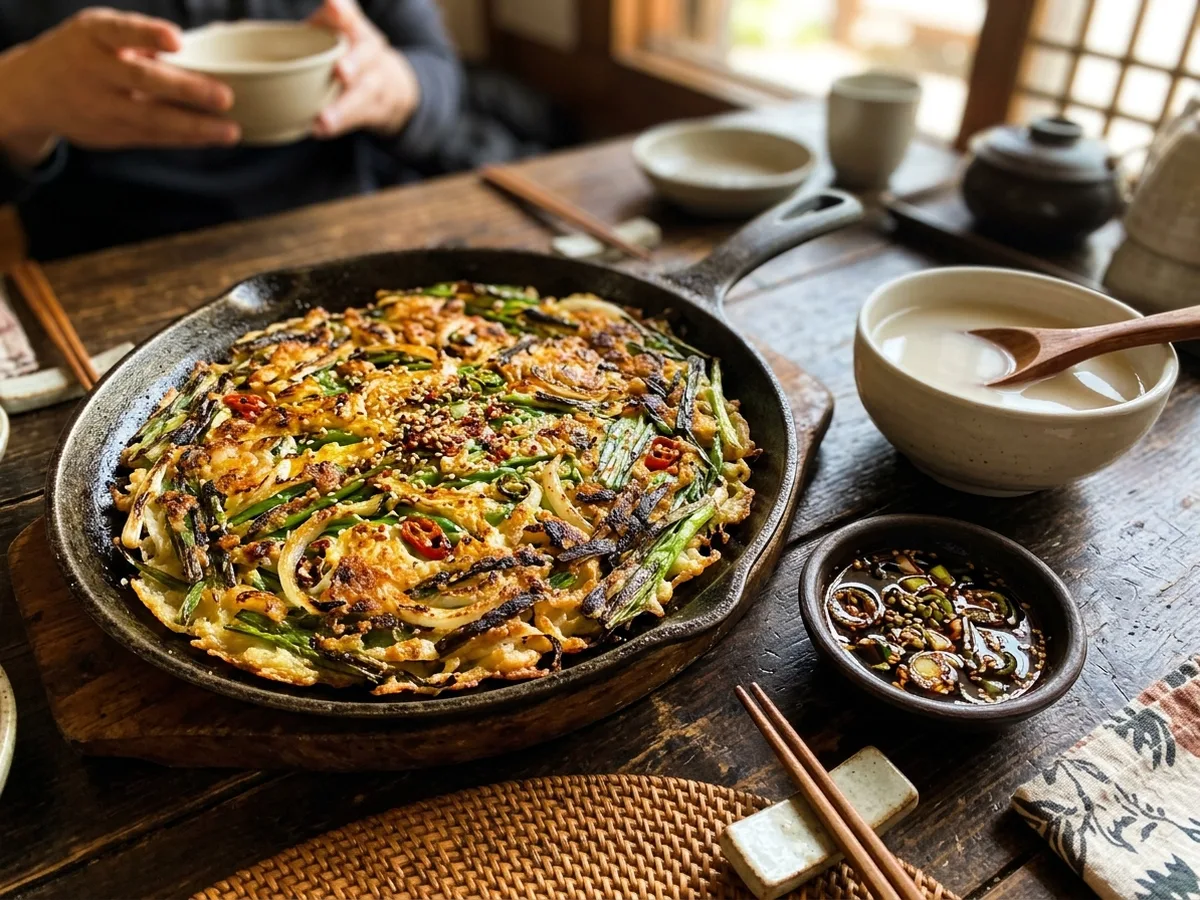 파전 · PajeonOften eaten together Green-onion pancake — the official food of rainy days.
 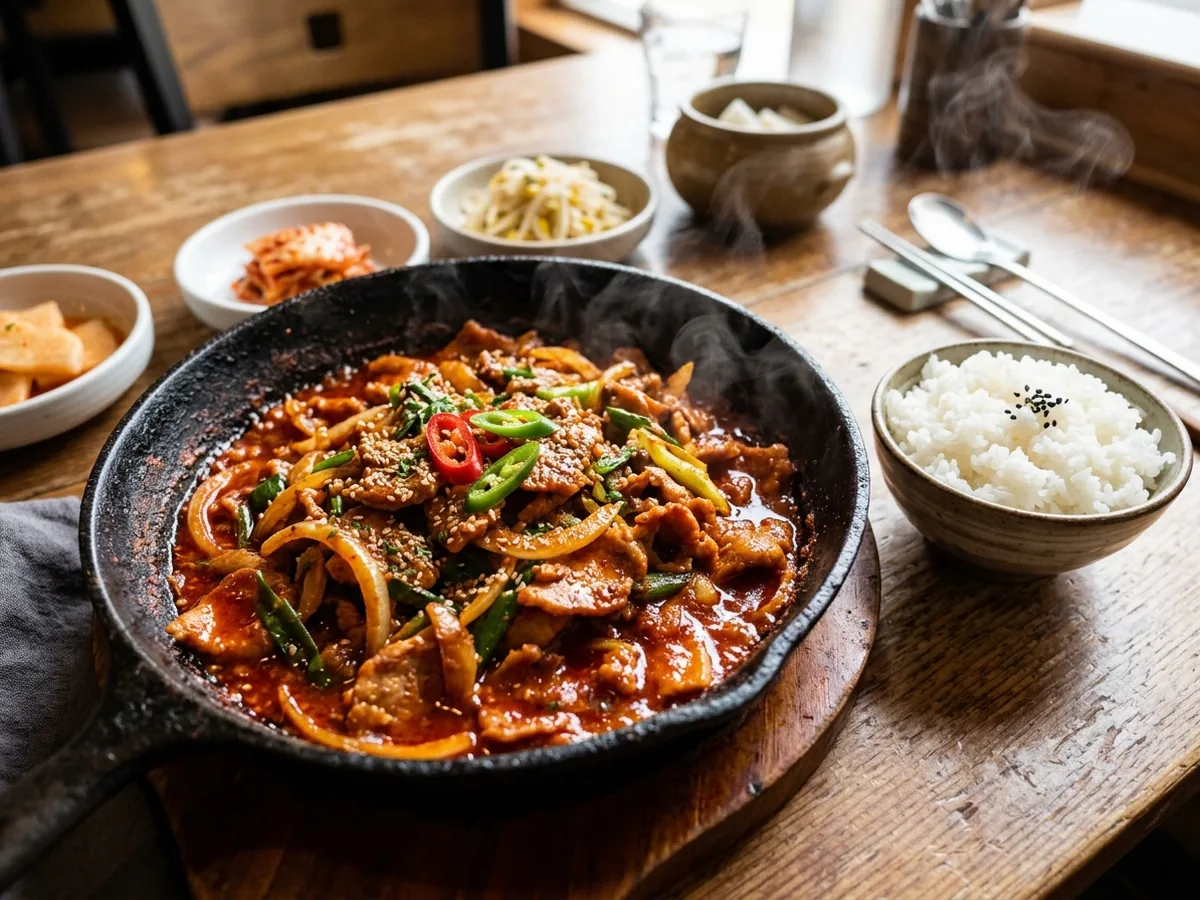 제육볶음 · Jeyuk BokkeumOften eaten together Spicy gochujang pork stir-fry — a lunch-set legend.
 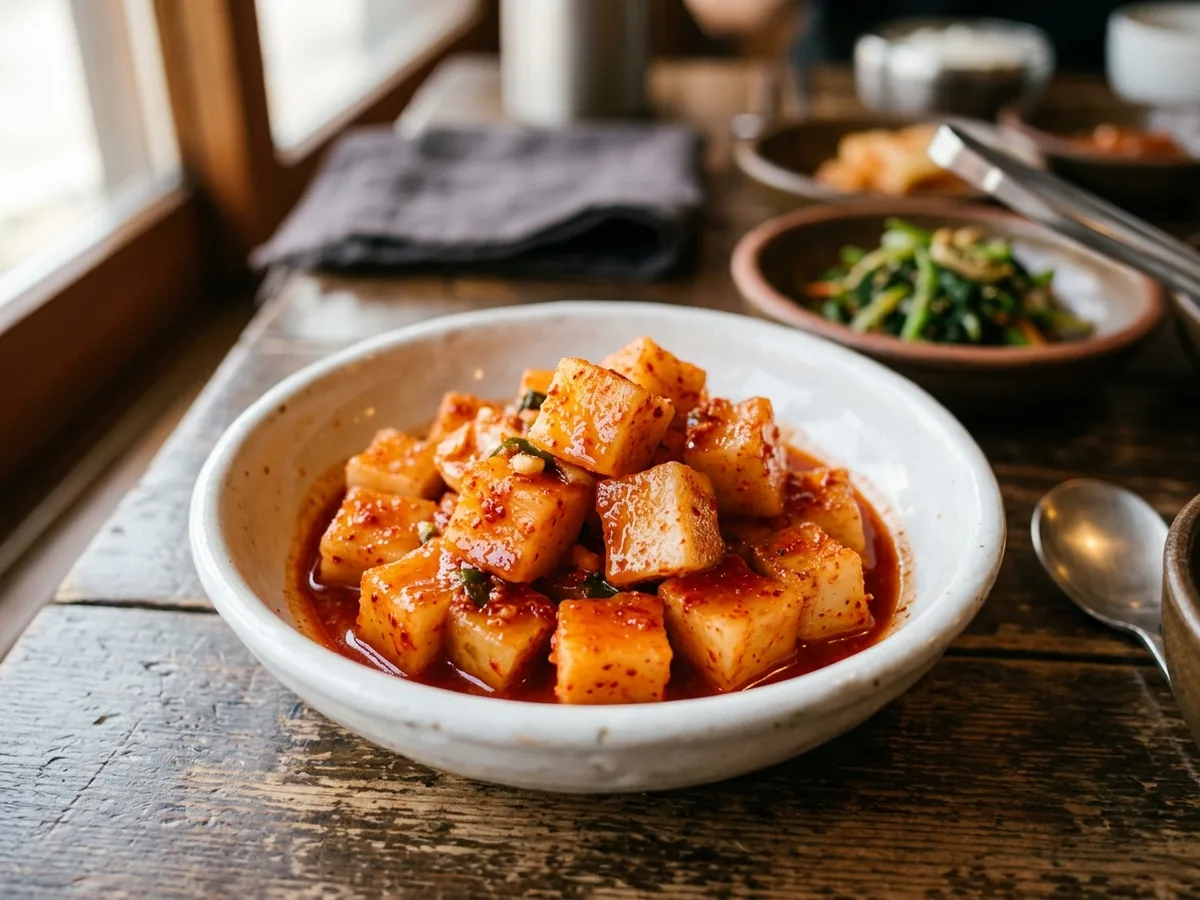 깍두기 · KkakdugiSame family · Kimchi & Banchan Cubed radish kimchi — crunchy, juicy, born for gukbap.
 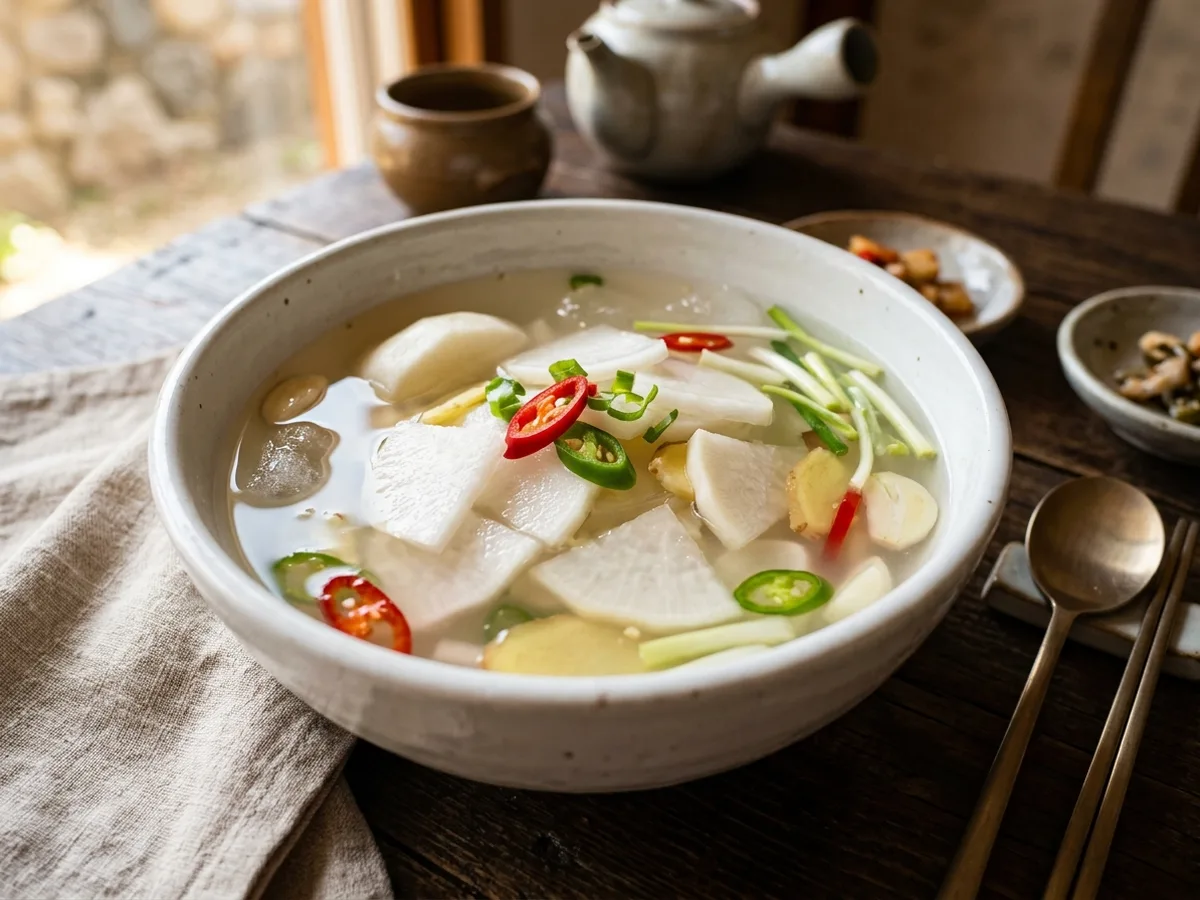 동치미 · DongchimiMilder alternative Icy radish water-kimchi — drink the brine, that's the point.