Kimchi Bokkeumbap (김치볶음밥)
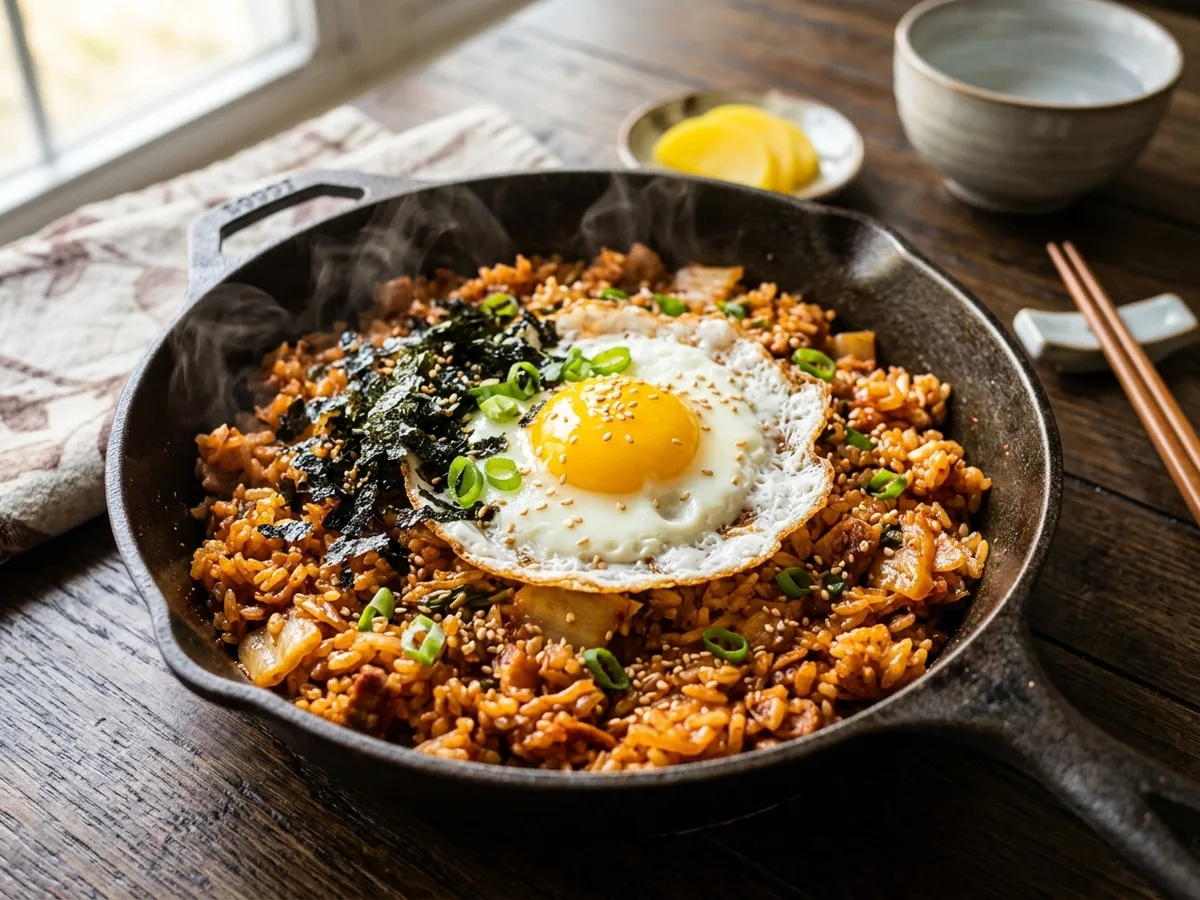
Kimchi fried rice, best with a fried egg on top.
- Korean name
- 김치볶음밥
- Spice level
- Medium
- Flavor
- spicy · savory
- Typically contains
- egg
- Vegetarian / vegan
- Sometimes — vegetable-forward, but anchovy broth, fish sauce or meat garnish is common. Ask first
- Typical price
- ₩7,000–₩10,000 per person checked 2026-07 — varies by area
- Good to know
- Beginner-friendly ●●●●○ Solo dining ●●●●● Kid-friendly ●●●○○
- Also written as
- kimchi fried rice, kimchi bokumbap, kimchi bokkeumbap
What is Kimchi Bokkeumbap?
Kimchi-bokkeumbap is the dish Koreans cook when the fridge is 'empty' — old kimchi, cold rice, whatever protein exists, fried hard and crowned with a runny egg. It's the unofficial final exam of Korean home cooking: three ingredients, no recipe needed, endlessly personal.
How to eat it
- Break the fried egg and mix the yolk through before eating.
- Good versions have slightly crisped rice at the bottom — scrape for it.
- Eat with extra kimchi on the side anyway; that's not redundant, that's Korean.
Cooking it at home
- Fry chopped sour kimchi (and spam/pork if using) in oil first — this step makes or breaks it.
- Add day-old rice, press and fry rather than stir constantly; season with a little kimchi juice and sesame oil.
- Top with a fried egg and crumbled gim.
Good to know
- Fresh kimchi and fresh rice both work against you — sour kimchi, dry rice.
The canonical use of samgyeopsal-pan leftovers: fry the rice in the rendered pork fat.
Nutrition
| Calories | 167 kcal |
|---|---|
| Carbohydrate | 15.74 g |
| Protein | 5.32 g |
| Fat | 9.18 g |
| Sodium | 470 mg |
Per serving (~330g): ≈551 kcal · sodium ≈1,551 mg (78% of the WHO daily guideline, 2,000 mg)
Related foods
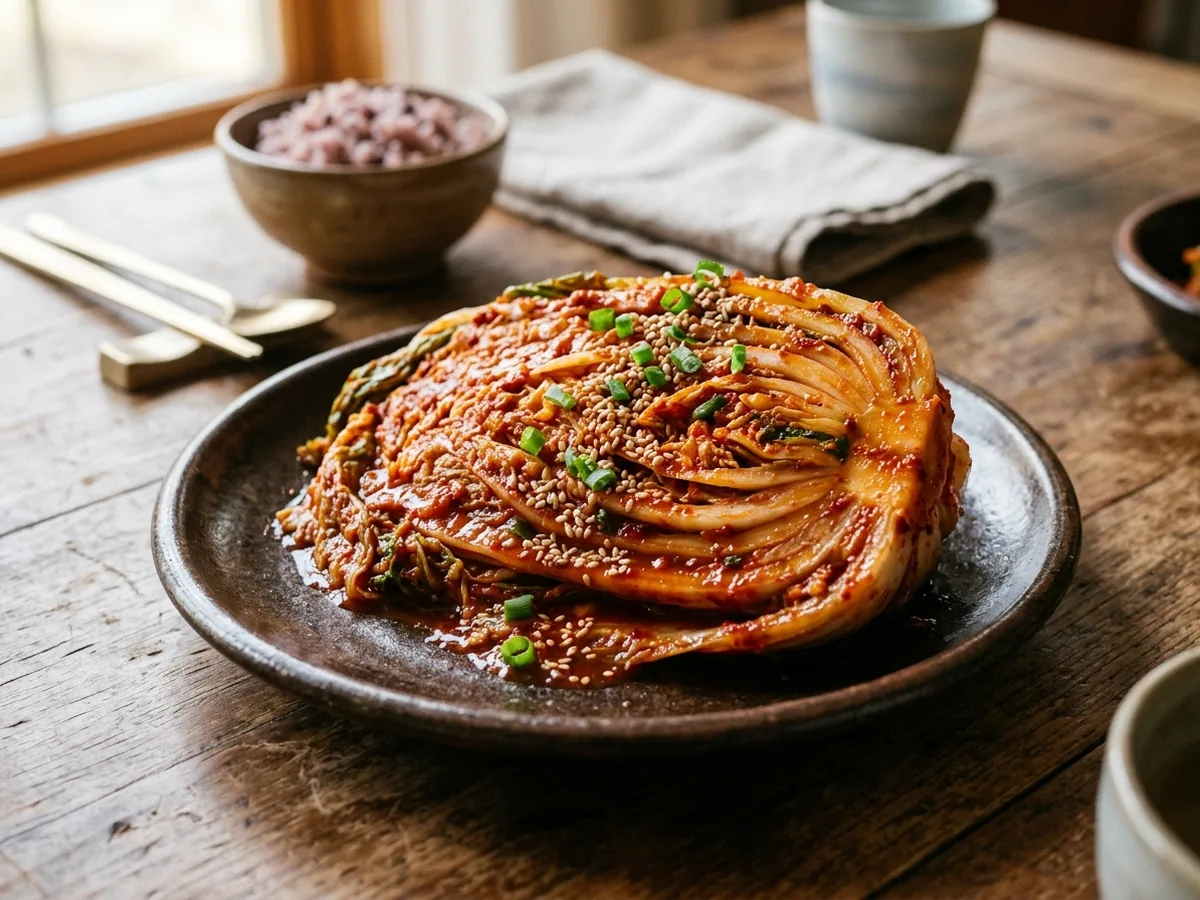 배추김치 · KimchiOften eaten together Fermented napa cabbage — the one dish on every Korean table.
 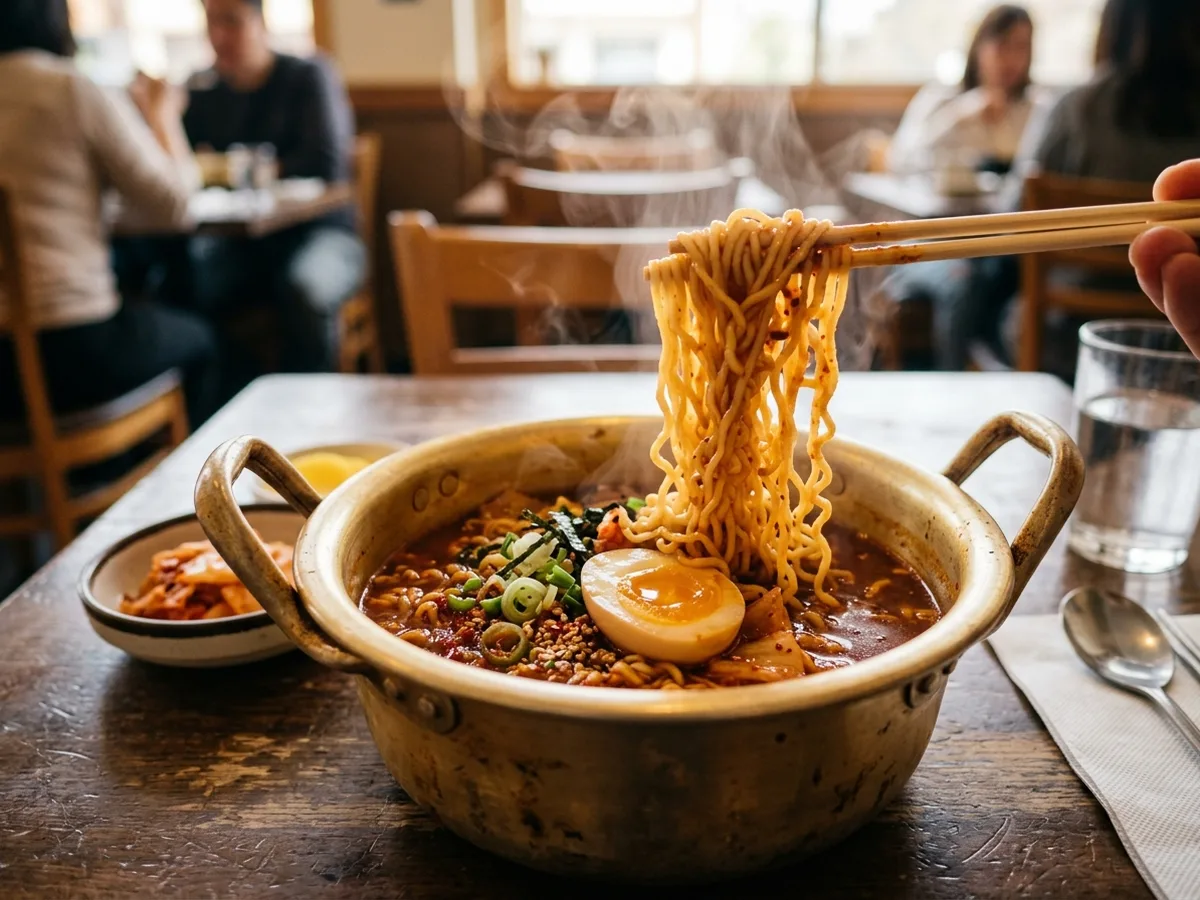 라면 · RamyeonOften eaten together Korean instant noodles — a national institution, not a backup meal.
 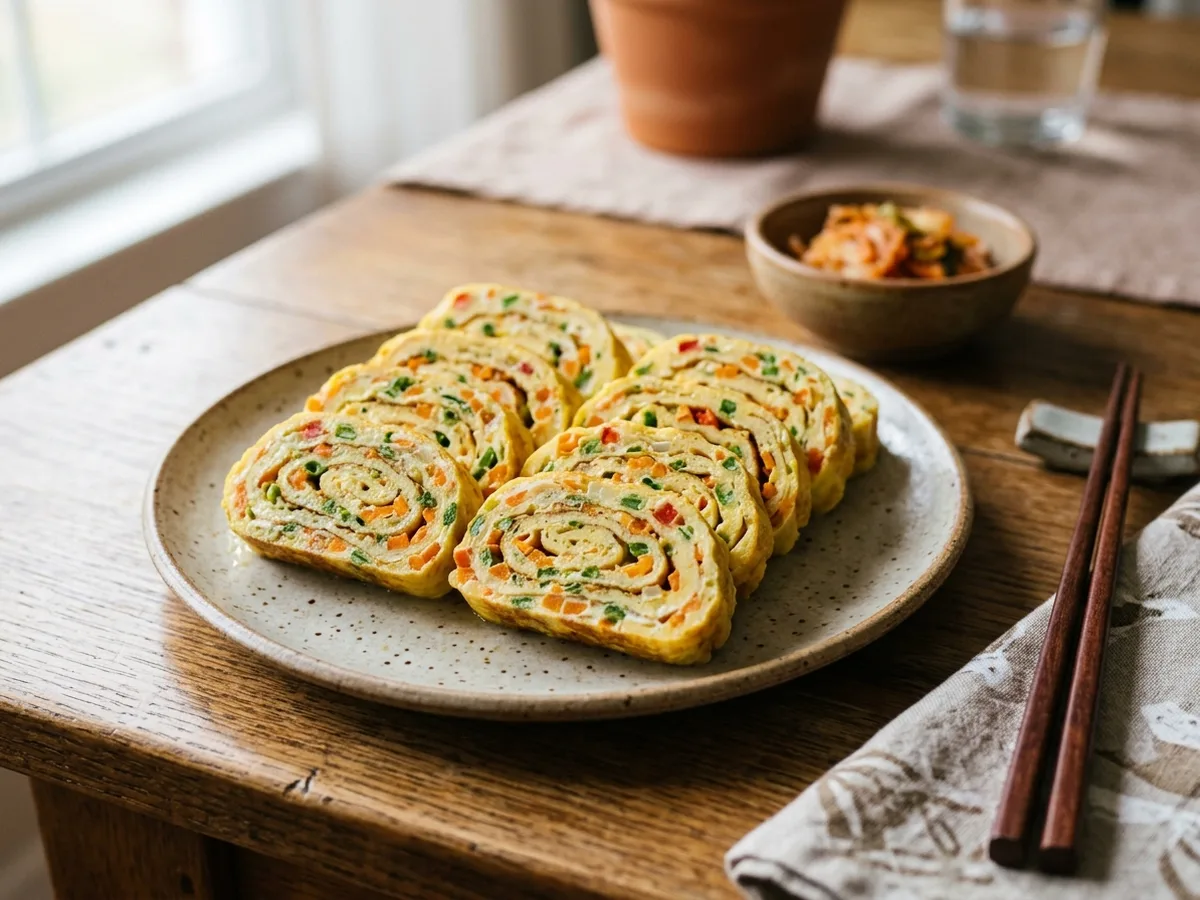 달걀말이 · Gyeran MariOften eaten together Rolled omelette, often with vegetables or gim inside.
 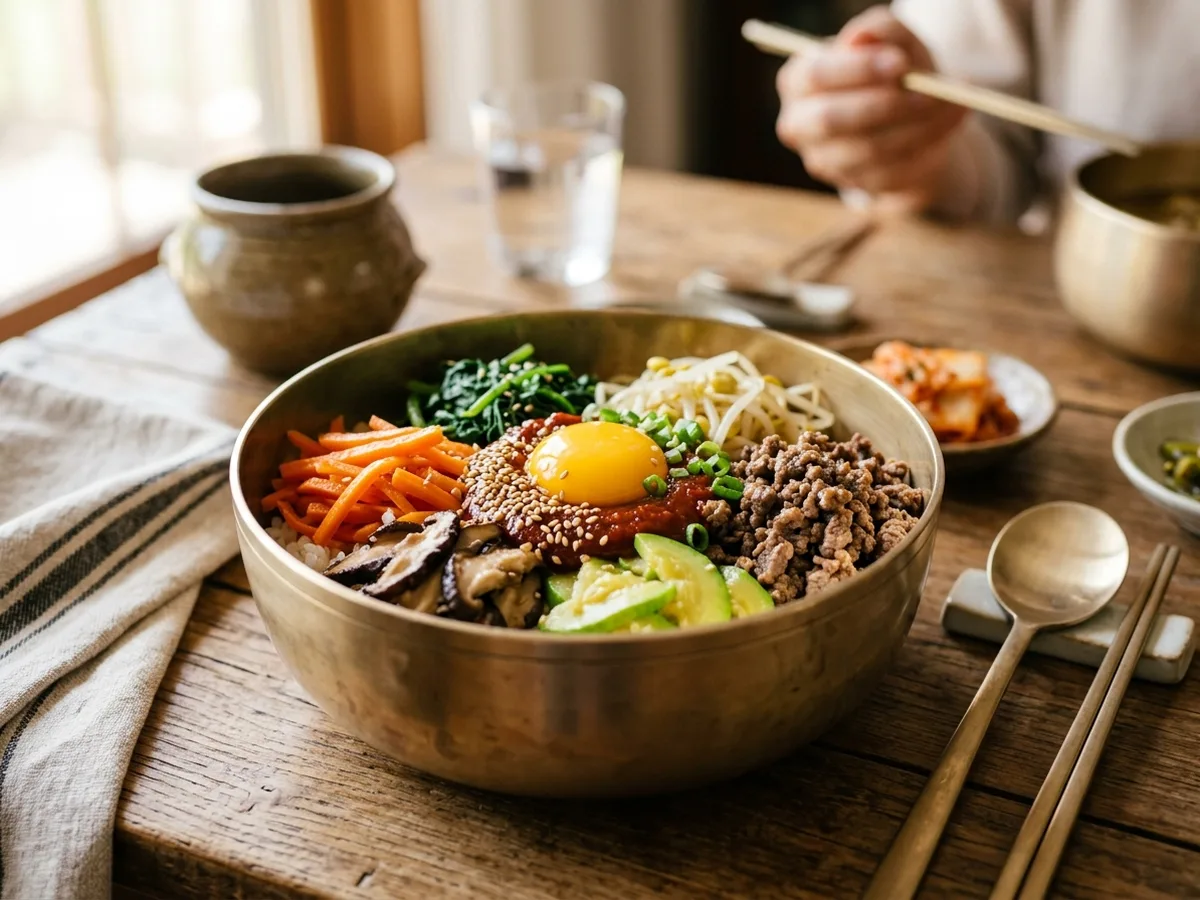 비빔밥 · BibimbapSame family · egg Rice bowl with seasoned vegetables and gochujang — mix hard, then eat.
 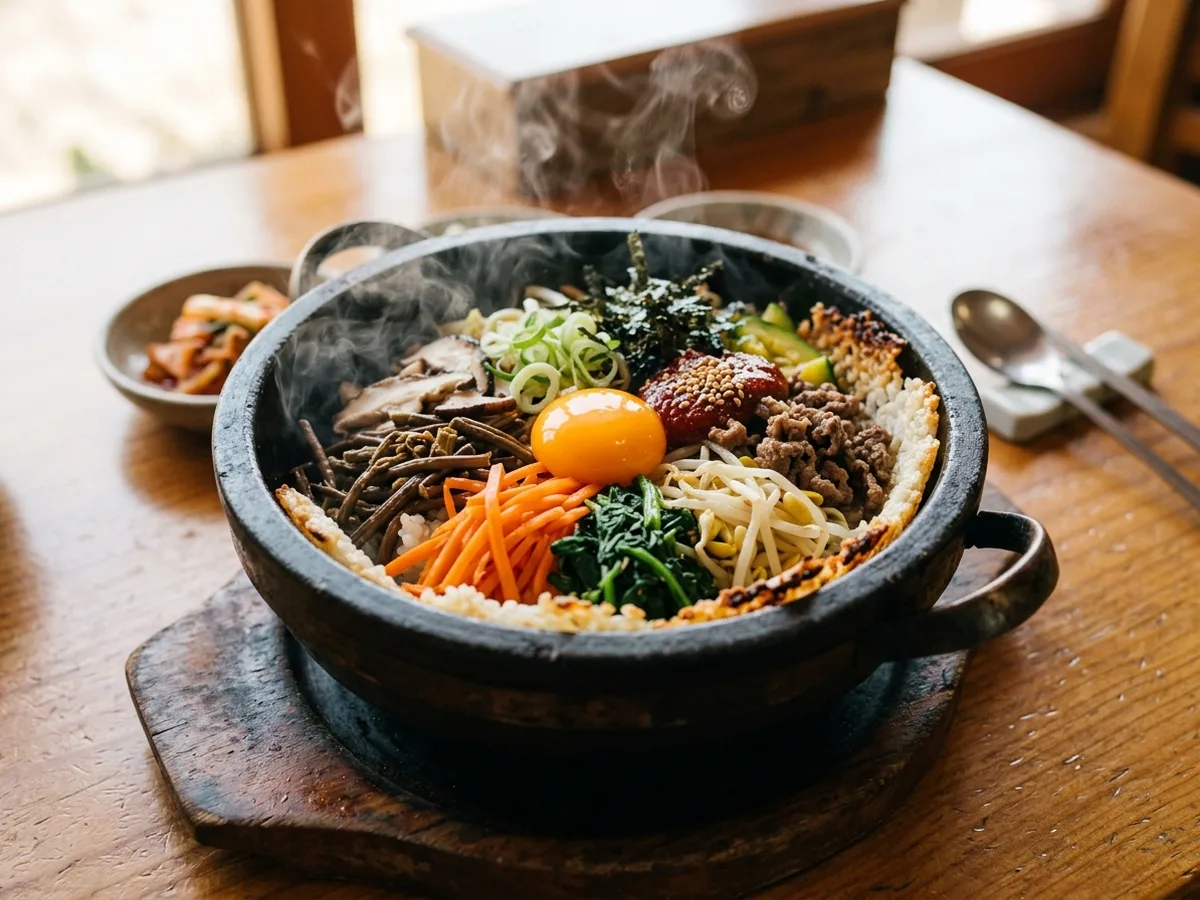 돌솥비빔밥 · Dolsot BibimbapSame family · egg Bibimbap in a sizzling stone pot — the crispy rice is the prize.