Kongnamul Muchim (콩나물무침)
Seasoned soybean sprouts — the most common banchan of all.
- Korean name
- 콩나물무침
- Spice level
- Not spicy
- Flavor
- nutty · light
- Typically contains
- soybean sprouts
- Vegetarian / vegan
- Typically plant-based — one of the safer picks for vegans (still confirm when ordering)
- Good to know
- Beginner-friendly ●●●○○ Solo dining ●●●●● Kid-friendly ●●●●○
- Also written as
- kongnamul, seasoned soybean sprouts, bean sprout banchan
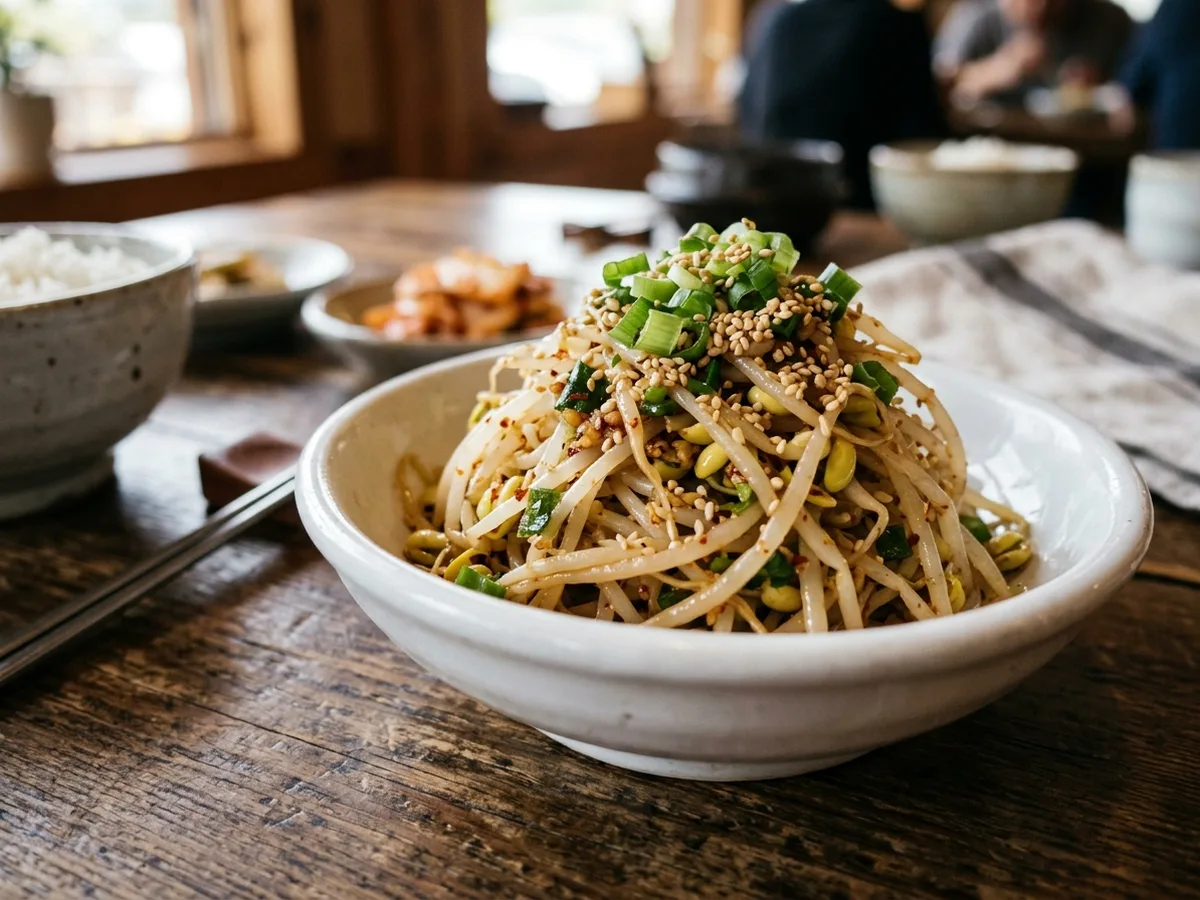
What is Kongnamul Muchim?
Kongnamul-muchim (콩나물무침) is seasoned soybean sprouts — blanched sprouts tossed with sesame oil, garlic, scallion, and either salt or gochugaru. It is one of the most common banchan in existence, the crunchy yellow-tailed sprout that appears beside almost any Korean meal and inside bibimbap.
How to eat it
- Take small chopstick-pinches between bites. Like all namul, it is a rhythm food eaten alongside rice, not a salad course.
- Use it in your bibimbap. If you have a bowl of rice and leftovers, kongnamul is the backbone namul for a home bibimbap.
- Expect two versions. White (salt and sesame) and red (gochugaru) are both standard; restaurants serve either.
Cooking it at home
- Boil soybean sprouts in salted water with the lid either fully on or fully off (Korean cooks insist mixing lid states causes a fishy smell) for 4–5 minutes.
- Drain, cool briefly, and squeeze gently.
- Toss with minced garlic, chopped scallion, sesame oil, toasted sesame seeds, and salt — or add gochugaru for the spicy version.
Good to know
- Vegan as typically made — one of the safest banchan for plant-based eaters (confirm no fish sauce, which is occasionally added).
- Eat refrigerated leftovers within 2–3 days; sprouts sour quickly.
The same sprout stars in kongnamul-guk soup and Jeonju's kongnamul-gukbap — Korea consumes soybean sprouts at a scale unusual anywhere else.
Nutrition
| Calories | 69 kcal |
|---|---|
| Carbohydrate | 3.2 g |
| Protein | 3.86 g |
| Fat | 4.54 g |
| Sodium | 387 mg |
Per serving (~50g): ≈35 kcal · sodium ≈194 mg (10% of the WHO daily guideline, 2,000 mg)
Related foods
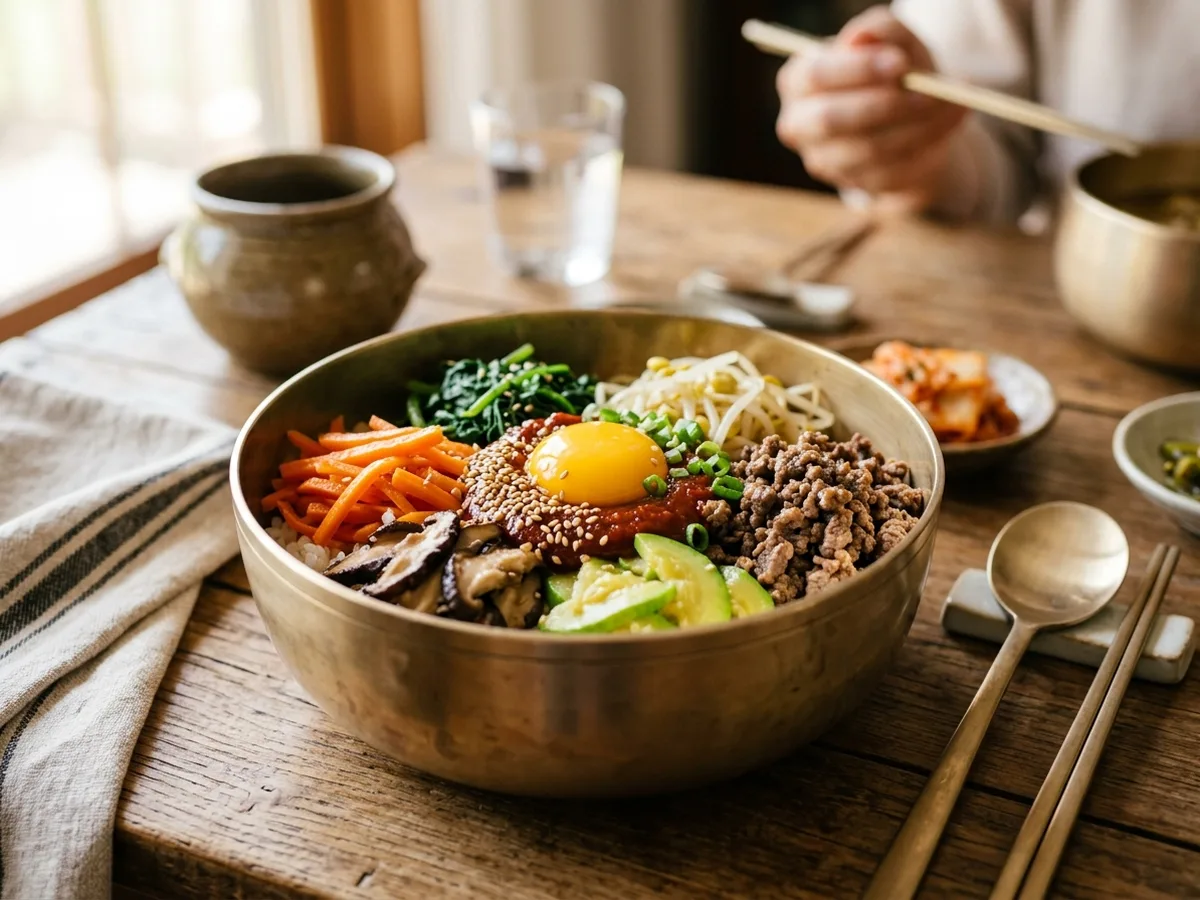 비빔밥 · BibimbapOften eaten together Rice bowl with seasoned vegetables and gochujang — mix hard, then eat.
 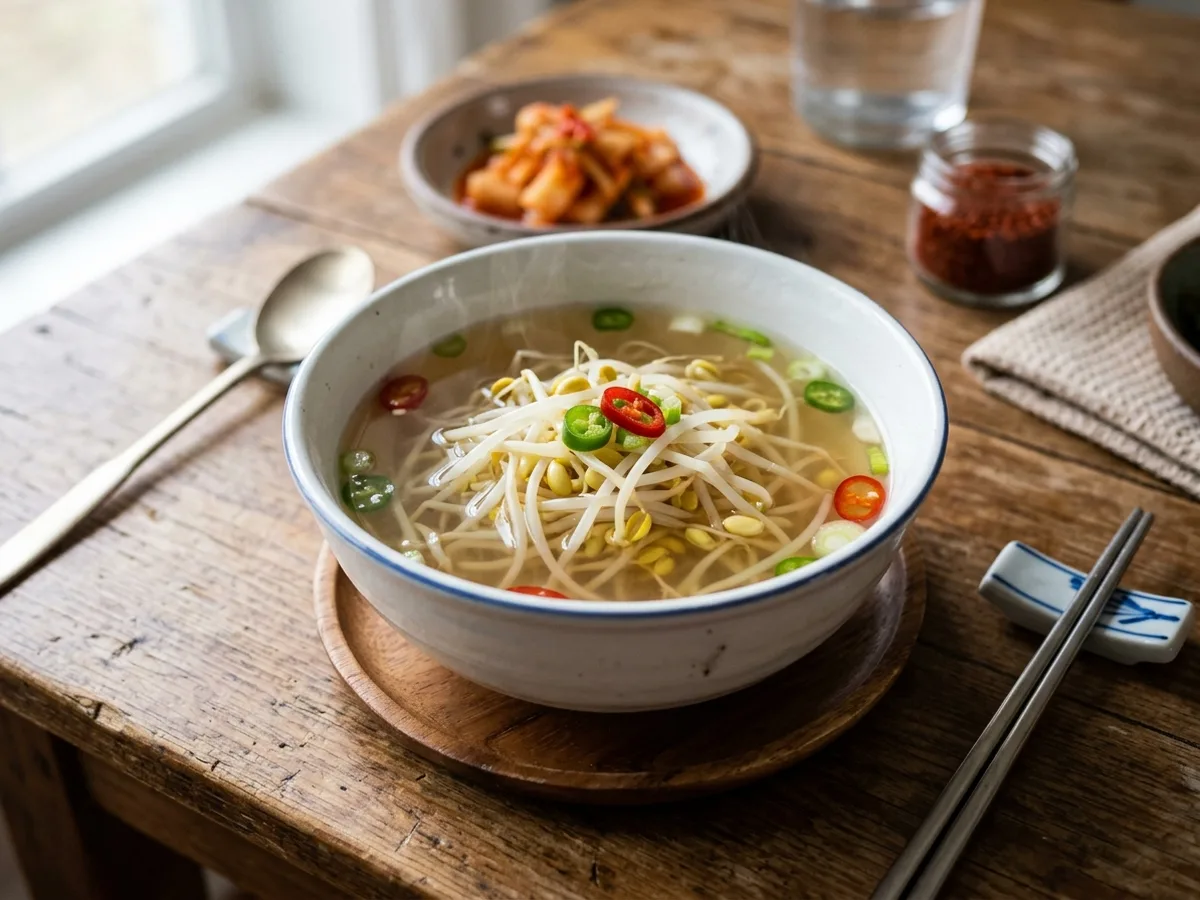 콩나물국 · Kongnamul GukOften eaten together Light soybean-sprout soup, a home-table regular.
 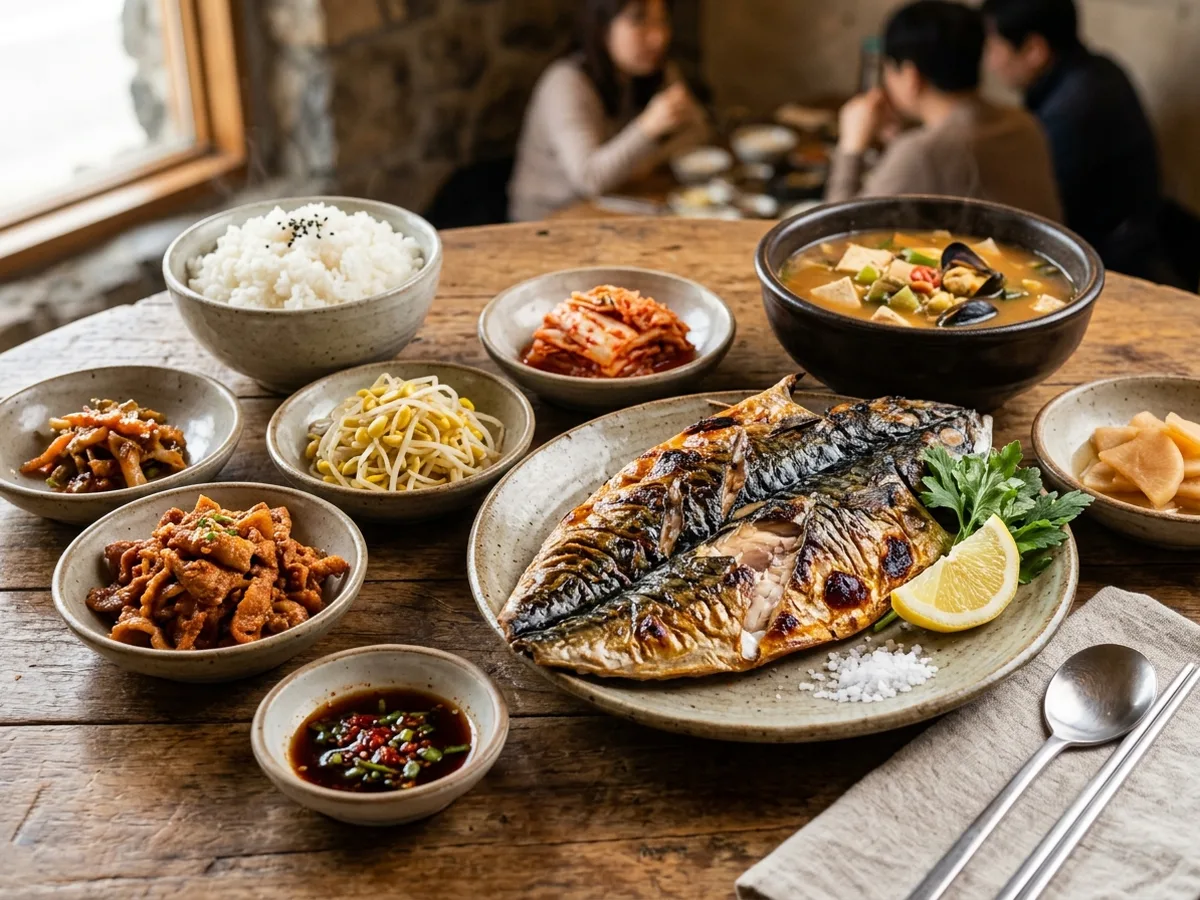 고등어구이 · Godeungeo GuiOften eaten together Grilled mackerel — the backbone of a Korean set meal.
 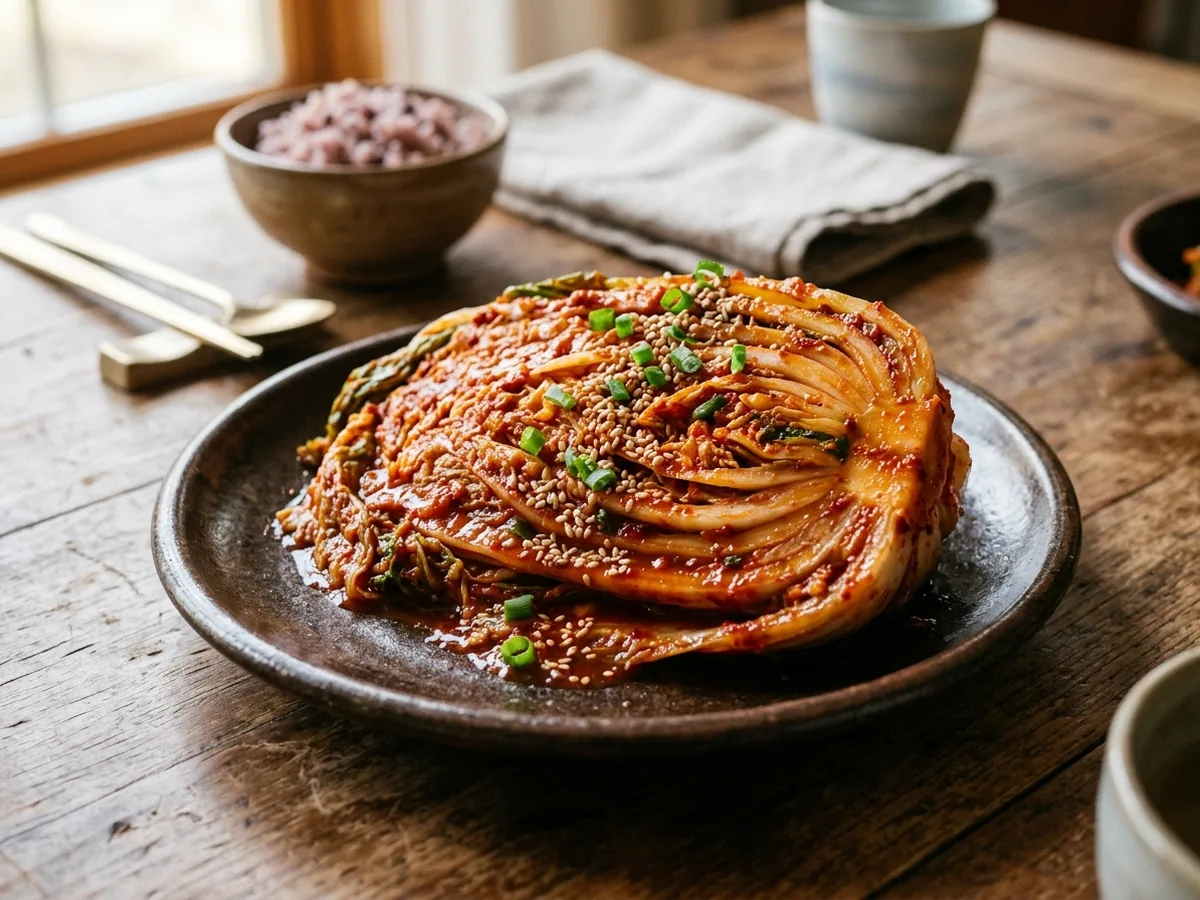 배추김치 · KimchiSpicier alternative Fermented napa cabbage — the one dish on every Korean table.
 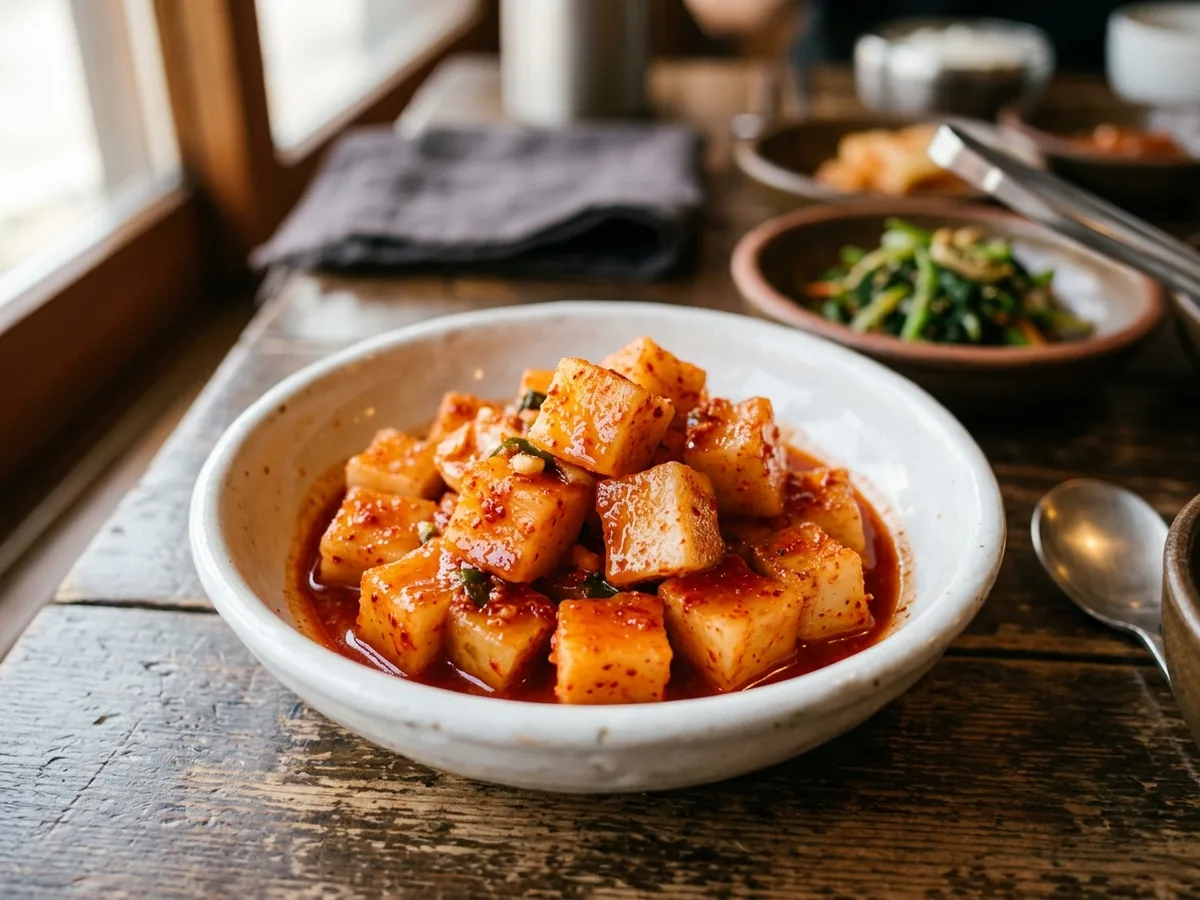 깍두기 · KkakdugiSpicier alternative Cubed radish kimchi — crunchy, juicy, born for gukbap.