Pa Kimchi (파김치)
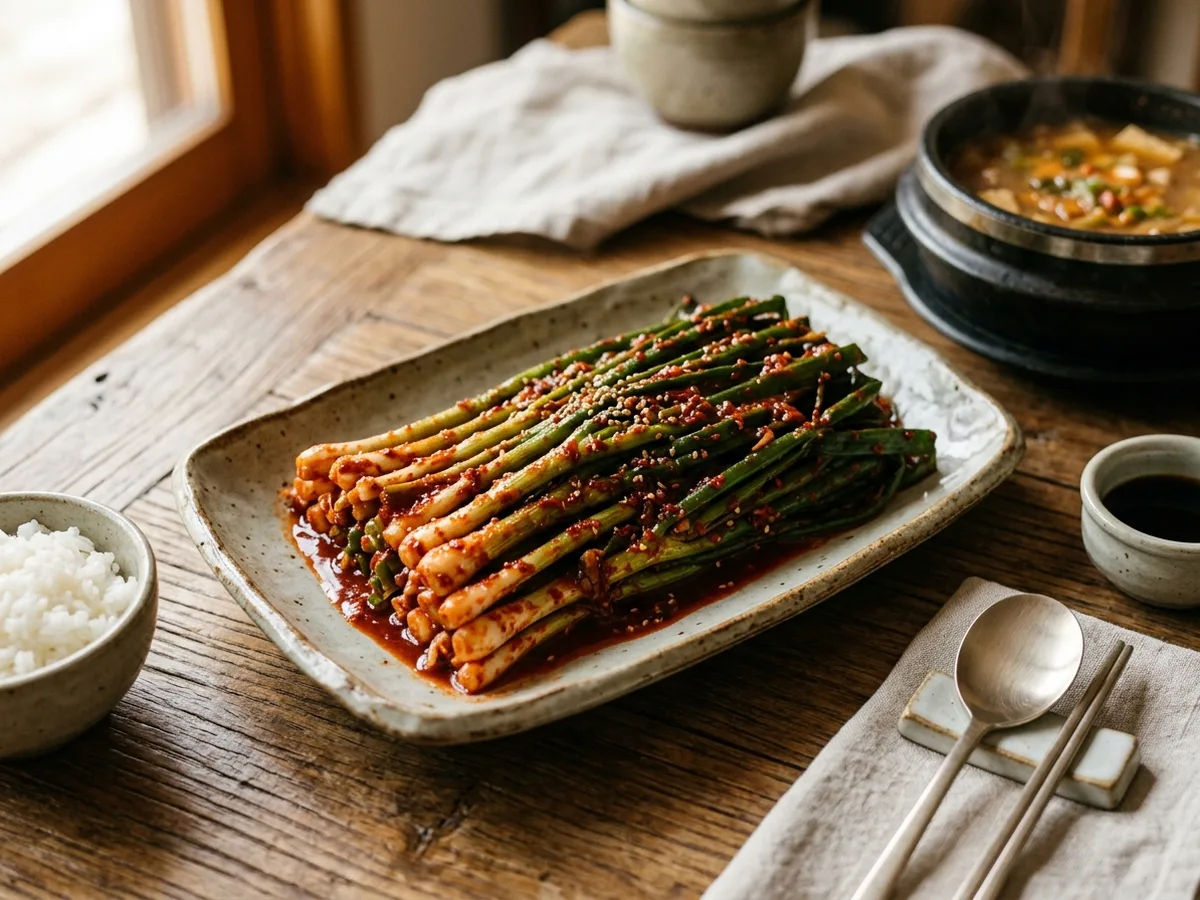
Green-onion kimchi — pungent, addictive, best with samgyeopsal.
- Korean name
- 파김치
- Spice level
- Spicy
- Flavor
- spicy · pungent
- Typically contains
- fermented seafood seasoning
- Vegetarian / vegan
- Sometimes — vegetable-forward, but anchovy broth, fish sauce or meat garnish is common. Ask first
- Good to know
- Beginner-friendly ●●●○○ Solo dining ●●●●● Kid-friendly ●○○○○
- Also written as
- pa kimchi, green onion kimchi, scallion kimchi
What is Pa Kimchi?
Pa-kimchi (파김치) is kimchi made from whole young scallions, tied in bundles and coated thickly in an anchovy-forward chili paste. It is intensely pungent, and famously the kimchi Koreans crave with fatty pork — a strand of soft, sour scallion wrapped around samgyeopsal is a national flavor pairing.
How to eat it
- Pick up a whole strand and fold it. Use chopsticks to fold the long scallion into a bite-sized bundle — do not bite from a dangling strand.
- Pair it with fatty pork. Pa-kimchi cuts through samgyeopsal and jokbal better than cabbage kimchi; lay a strand on the meat or in your ssam wrap.
- Expect it strong. Well-aged pa-kimchi is one of the most pungent banchan; a little goes a long way with plain rice.
Cooking it at home
- Use jjokpa (thin young scallions); wilt them in fish sauce for 30 minutes instead of salting.
- Coat with a paste of gochugaru, the soaking fish sauce, garlic, and a rice-flour porridge for cling.
- Tie a few strands into loose knots for storage, ferment a day at room temperature, then refrigerate; it is best after 1–2 weeks when the harshness mellows.
Good to know
- Very much not vegetarian — the seasoning is anchovy-sauce-heavy by design.
- Fresh pa-kimchi can be sharply oniony; if it tastes harsh, let it ferment longer.
"Ramyeon with pa-kimchi" is a beloved home combination — many Koreans rank it above cabbage kimchi as a ramyeon partner.
Nutrition
| Calories | 49 kcal |
|---|---|
| Carbohydrate | 8.51 g |
| Protein | 2.5 g |
| Fat | 0.58 g |
| Sodium | 655 mg |
Per serving (~100g): ≈49 kcal · sodium ≈655 mg (33% of the WHO daily guideline, 2,000 mg)
Related foods
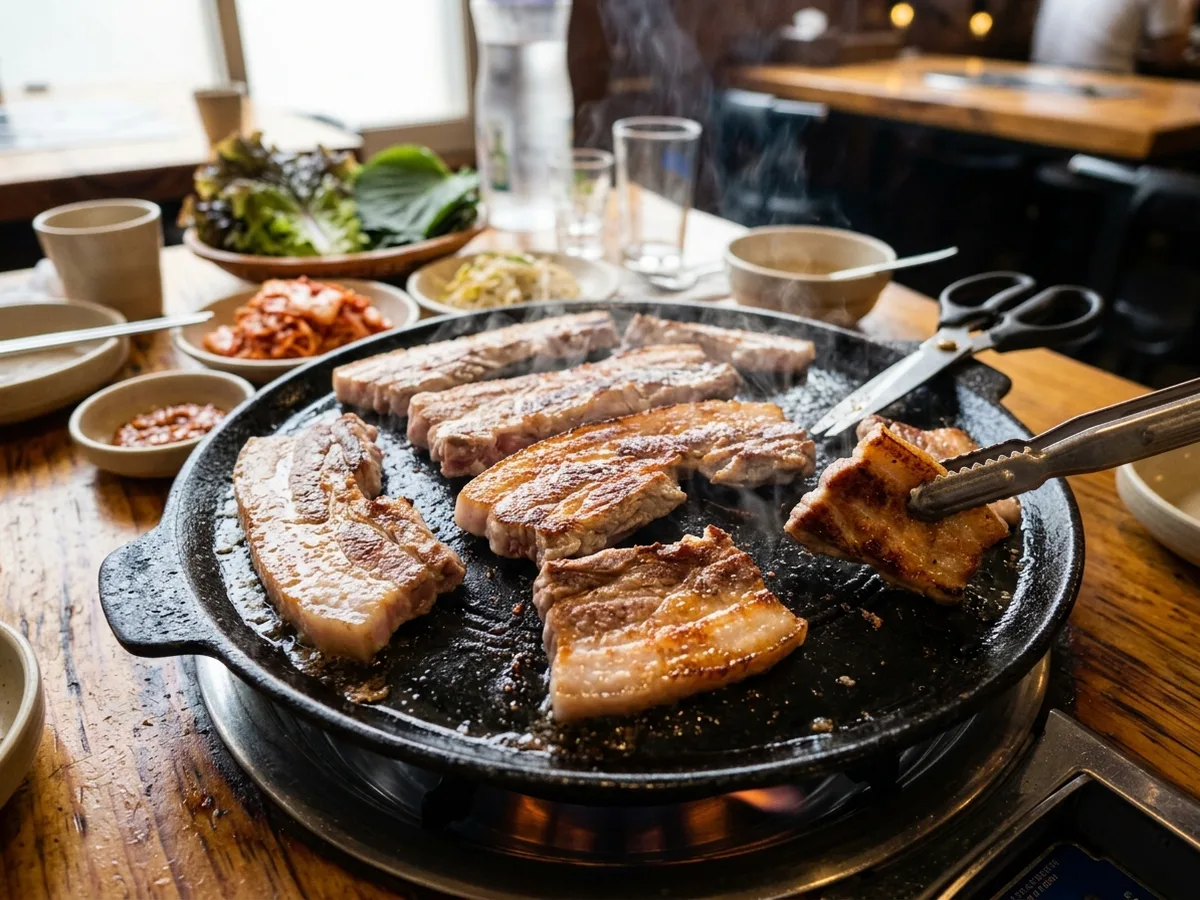 삼겹살 · SamgyeopsalOften eaten together Thick-cut grilled pork belly — Korea's default BBQ night.
 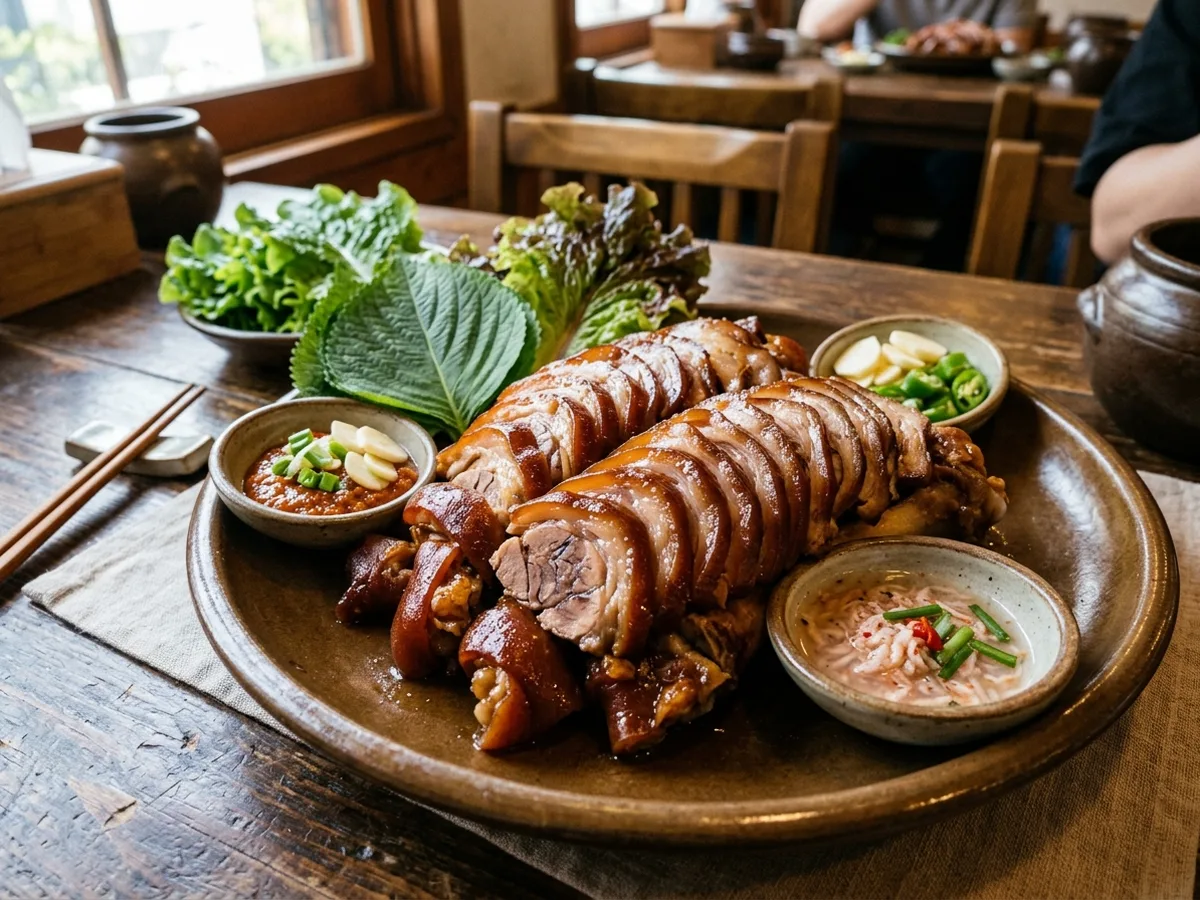 족발 · JokbalOften eaten together Soy-braised pig's trotters, sliced and wrapped in lettuce.
 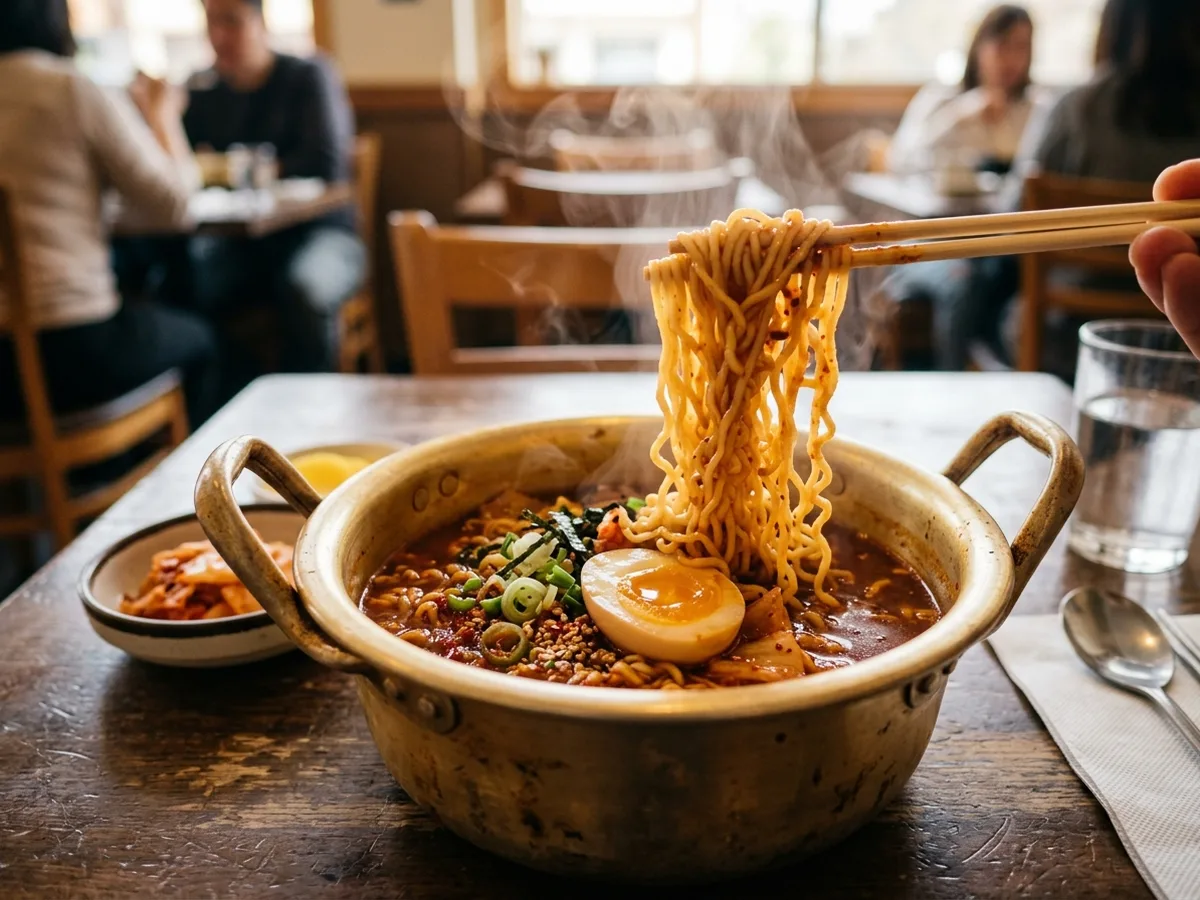 라면 · RamyeonOften eaten together Korean instant noodles — a national institution, not a backup meal.
 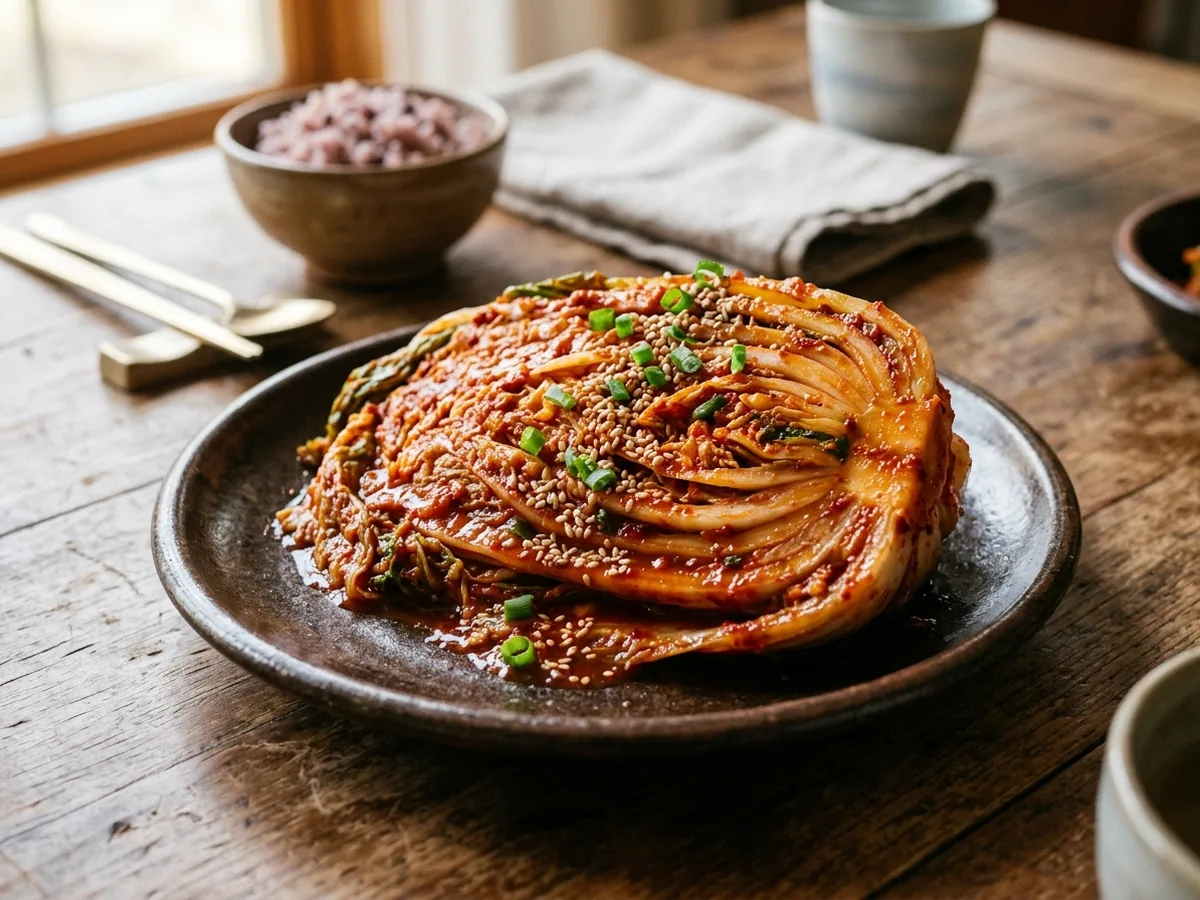 배추김치 · KimchiSame family · fermented seafood seasoning Fermented napa cabbage — the one dish on every Korean table.
 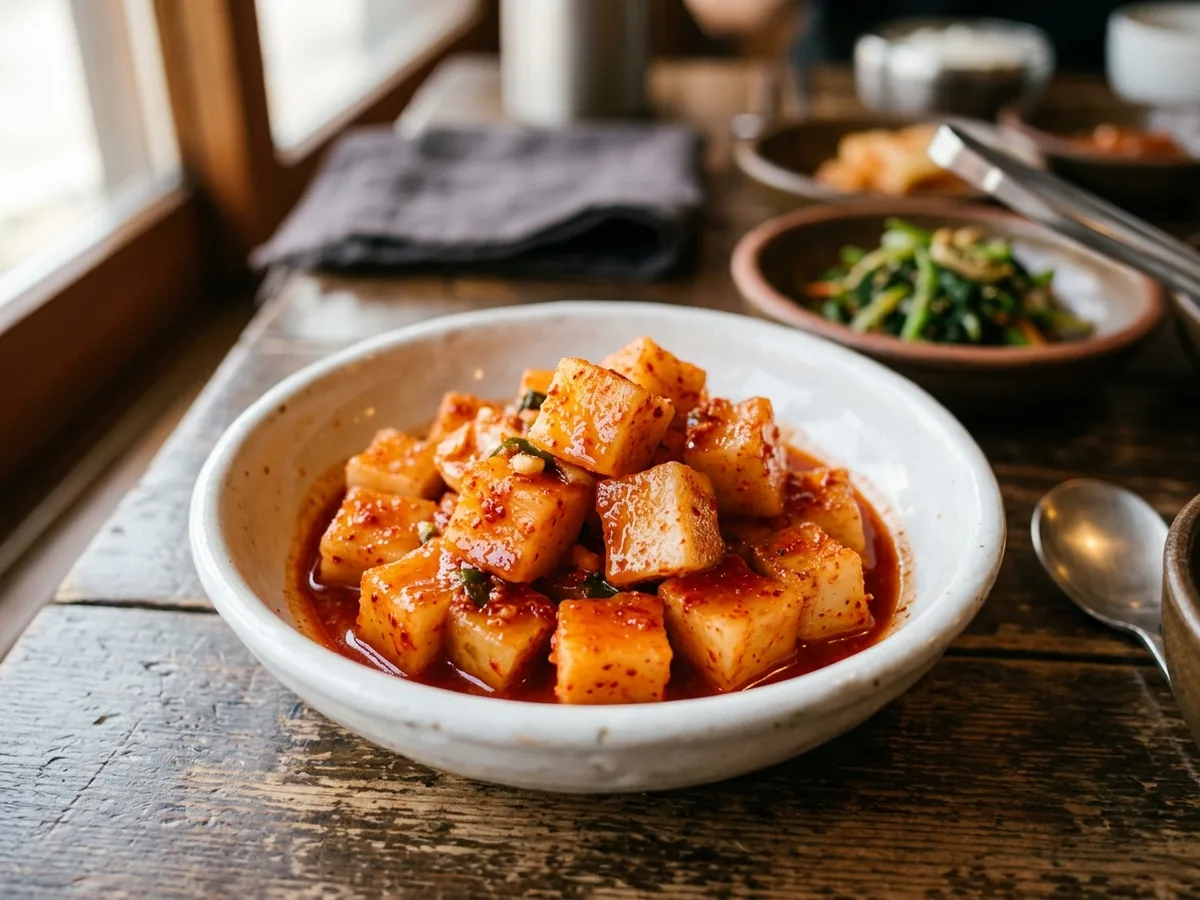 깍두기 · KkakdugiSame family · fermented seafood seasoning Cubed radish kimchi — crunchy, juicy, born for gukbap.