Cheonggukjang (청국장찌개)
Extra-funky fast-fermented soybean stew — smells bold, tastes deep.
- Korean name
- 청국장찌개
- Spice level
- Mild
- Flavor
- fermented · savory
- Typically contains
- soybean paste, tofu
- Vegetarian / vegan
- Sometimes — vegetable-forward, but anchovy broth, fish sauce or meat garnish is common. Ask first
- Typical price
- ₩8,000–₩11,000 per person checked 2026-07 — varies by area
- Good to know
- Beginner-friendly ●○○○○ Solo dining ●●●●○ Kid-friendly ●○○○○
- Also written as
- cheonggukjang, chungkukjang, fast-fermented soybean stew
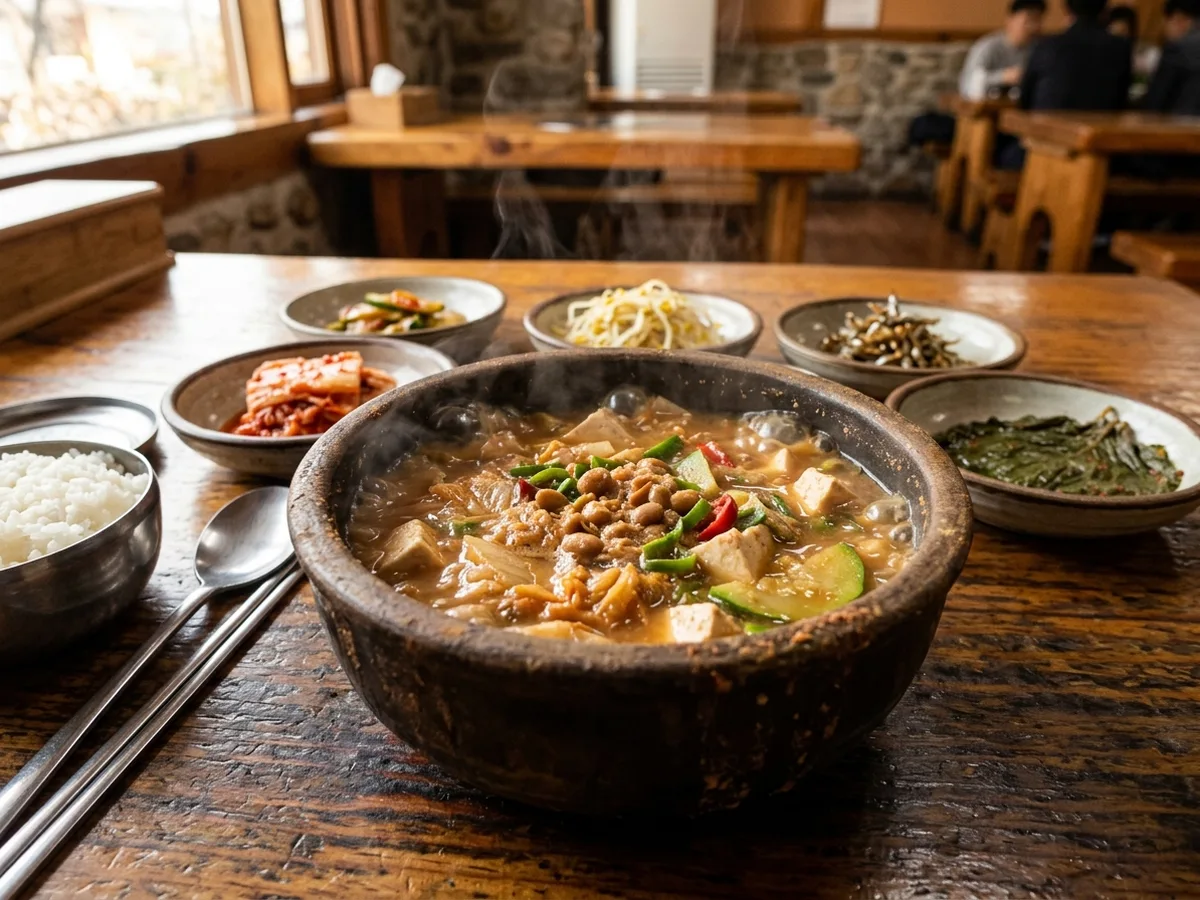
What is Cheonggukjang?
Cheonggukjang-jjigae (청국장찌개) is the stew of fast-fermented soybeans — a rustic, pungent cousin of doenjang whose aroma is famously strong (think aged cheese). The beans ferment only 2–3 days, keeping them whole and probiotic-rich, then simmer with kimchi, tofu, and pork. Koreans call it a "smells terrible, tastes wonderful" dish, and it has a health-food following for its unpasteurized fermentation.
How to eat it
- Brace for the smell before the first spoonful — it's far stronger than doenjang, and that's the point.
- Mix broth and beans thoroughly into rice; it's eaten more 'mixed' than kimchi-jjigae.
- Pair with mild banchan — the stew dominates everything else on the table.
Cooking it at home
- Simmer kimchi, tofu and vegetables in stock, then stir in cheonggukjang paste at the end.
- Boil only briefly after the paste goes in — long boiling kills the aroma and the beneficial bacteria Koreans prize.
- Serve immediately, bubbling.
Good to know
- The fermented smell lingers on clothes — locals joke about not wearing coats you love.
- Very much an acquired taste; try it after you're comfortable with doenjang.
Fast-fermented (2–3 days vs months for doenjang) — often marketed as a probiotic health food, best enjoyed simply as a hearty stew.
Nutrition
| Calories | 47 kcal |
|---|---|
| Carbohydrate | 1.92 g |
| Protein | 5.03 g |
| Fat | 2.11 g |
| Sodium | 242 mg |
Per serving (~200g): ≈94 kcal · sodium ≈484 mg (24% of the WHO daily guideline, 2,000 mg)
Related foods
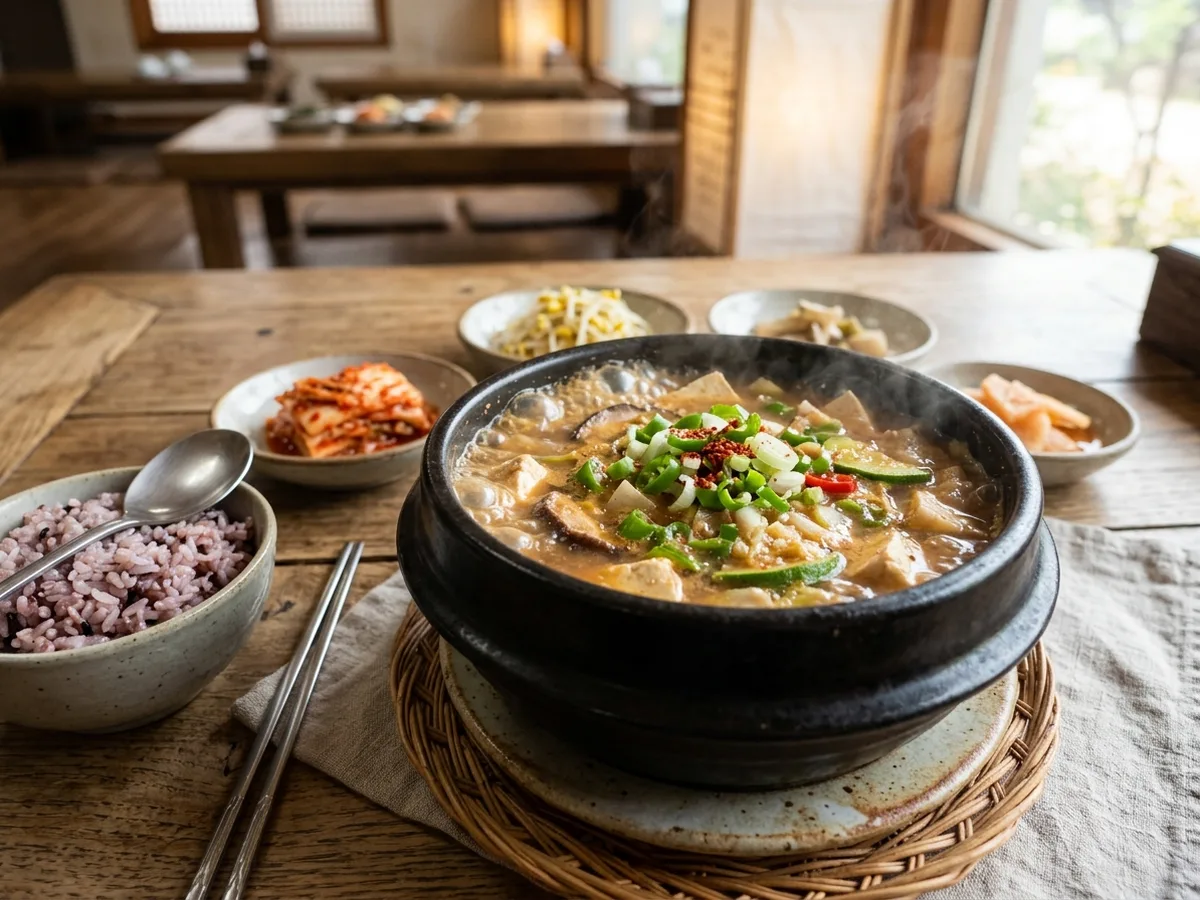 된장찌개 · Doenjang JjigaeOften eaten together Fermented soybean-paste stew with tofu and vegetables.
 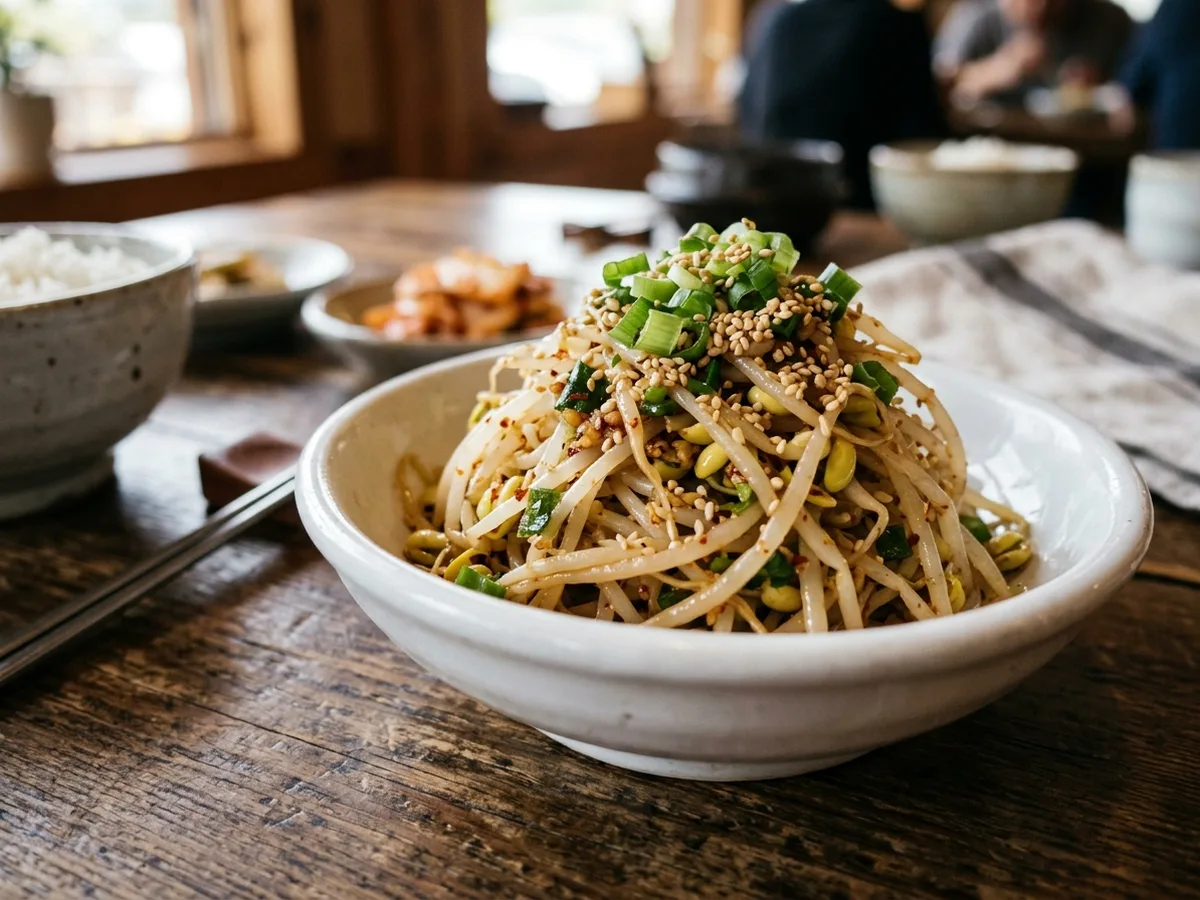 콩나물무침 · Kongnamul MuchimOften eaten together Seasoned soybean sprouts — the most common banchan of all.
 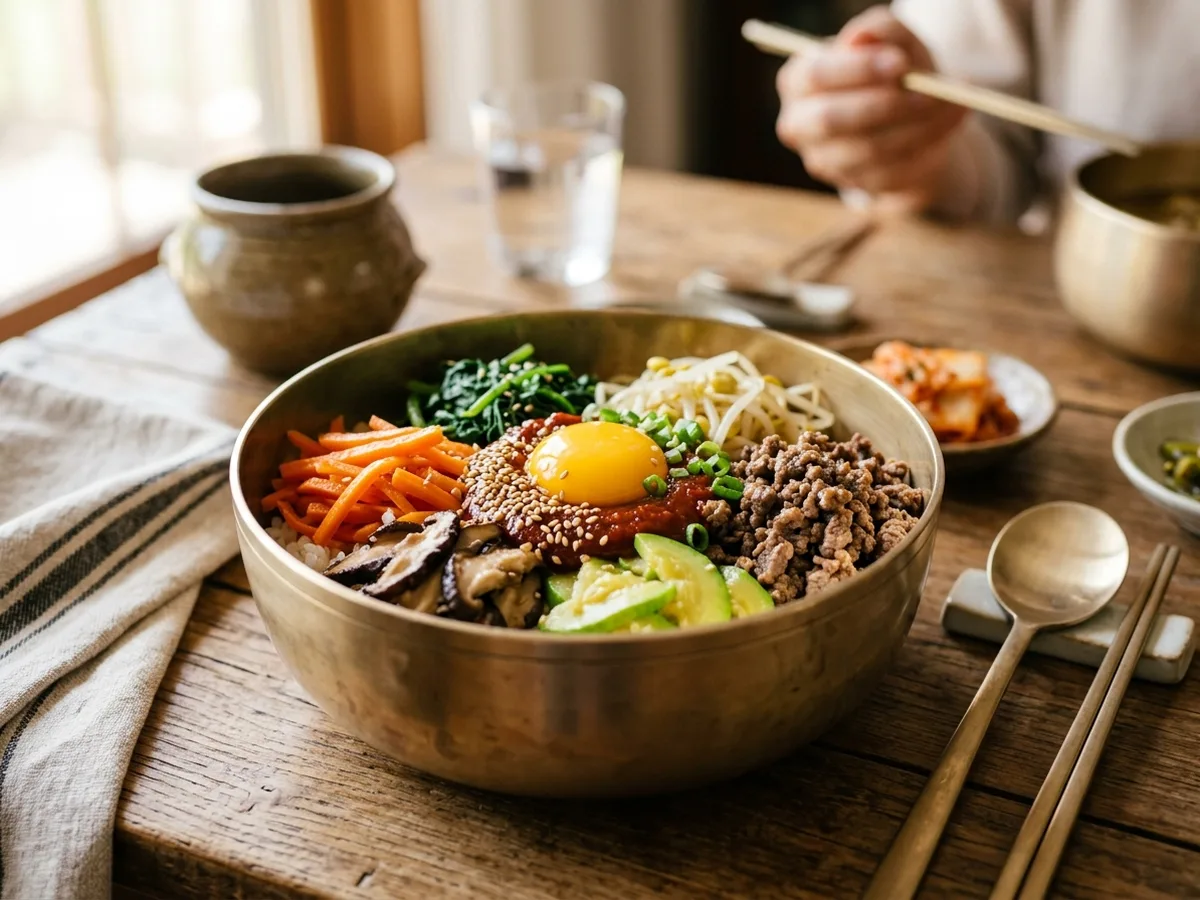 비빔밥 · BibimbapOften eaten together Rice bowl with seasoned vegetables and gochujang — mix hard, then eat.
 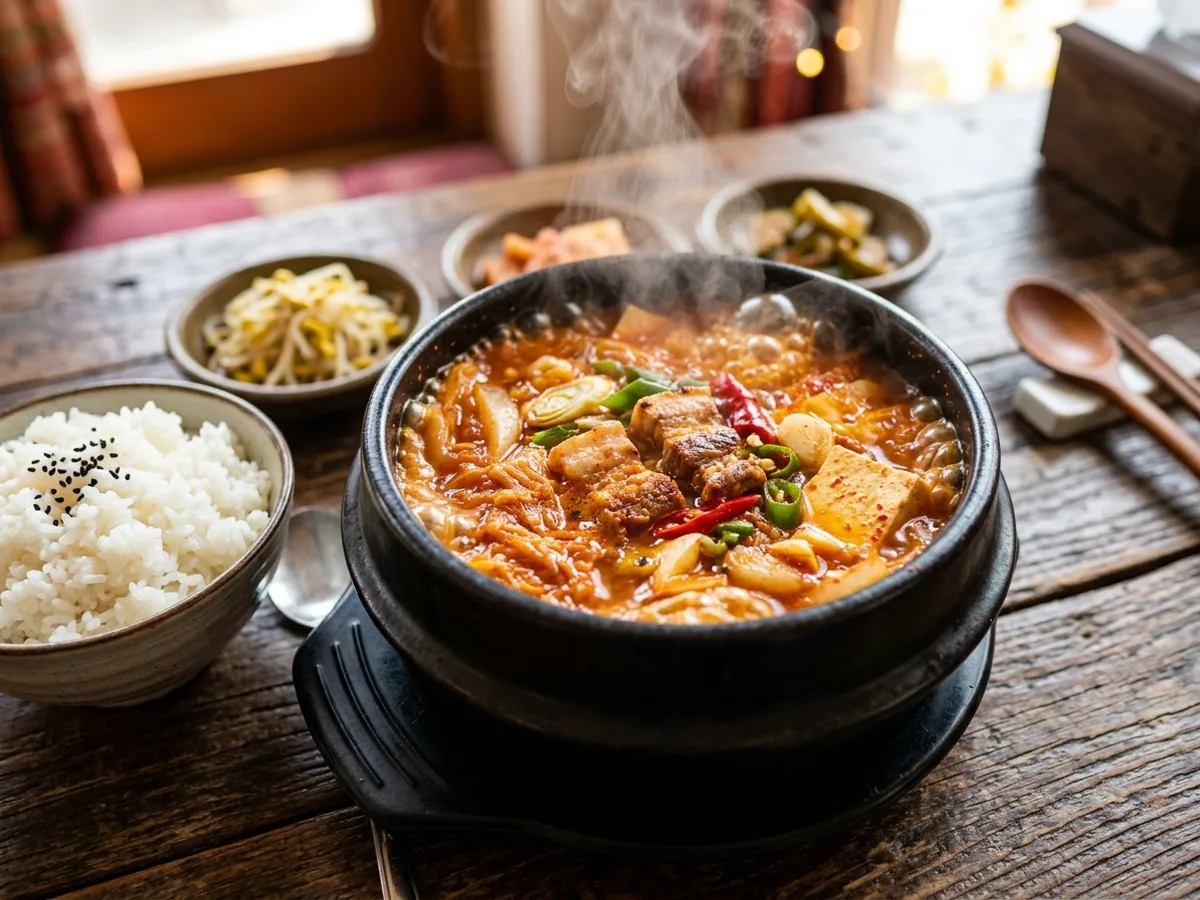 김치찌개 · Kimchi JjigaeSpicier alternative Sour-aged kimchi stew, usually with pork — the national comfort food.
 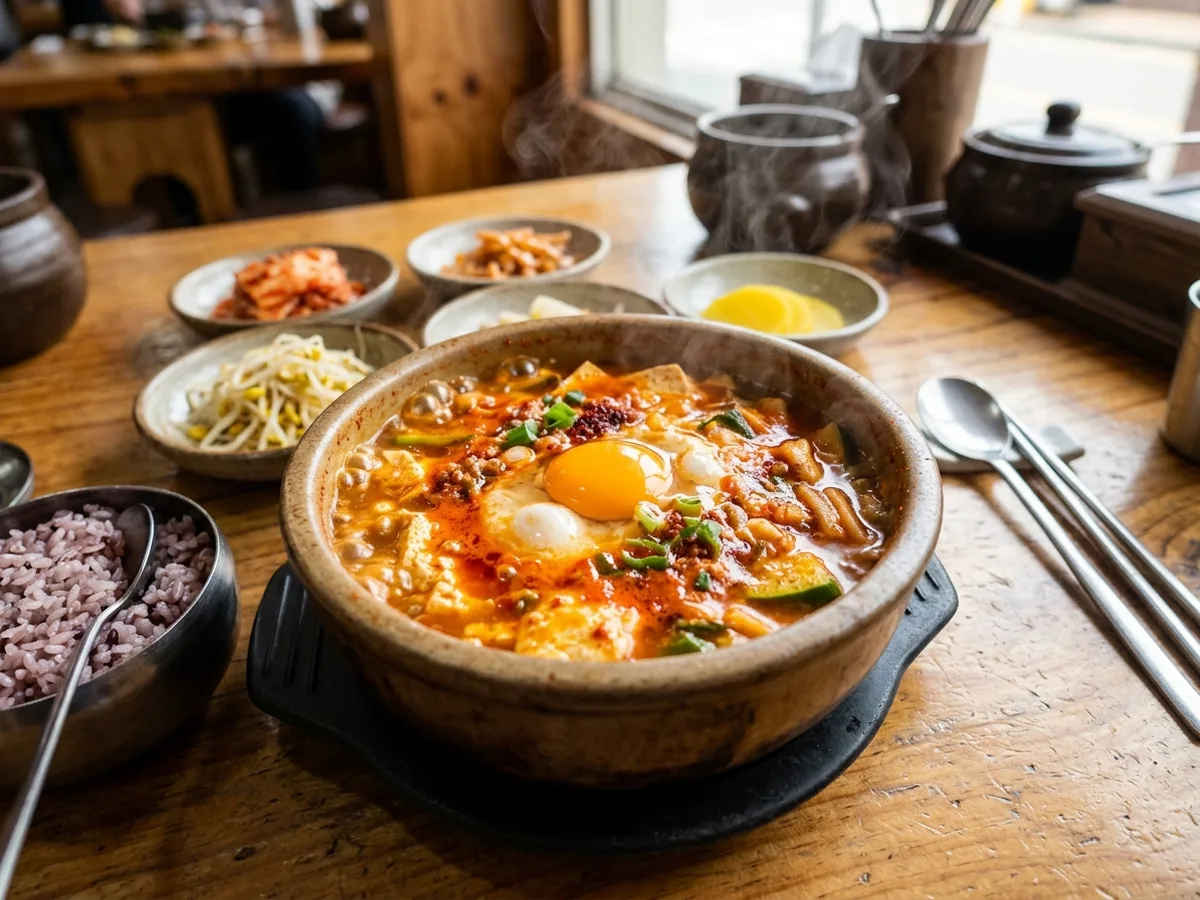 순두부찌개 · Sundubu JjigaeSpicier alternative Bubbling soft-tofu stew, served with a raw egg to crack in.