Kimchi Jjigae (김치찌개)
Sour-aged kimchi stew, usually with pork — the national comfort food.
- Korean name
- 김치찌개
- Spice level
- Spicy
- Flavor
- spicy · sour · savory
- Typically contains
- pork
- Vegetarian / vegan
- Not vegetarian — meat or seafood is core to the dish
- Typical price
- ₩8,000–₩11,000 per person checked 2026-07 — varies by area
- Good to know
- Beginner-friendly ●●●●○ Solo dining ●●●●○ Kid-friendly ●●○○○
- Also written as
- kimchi jigae, kimchi chigae, kimchi stew, kimchichigae
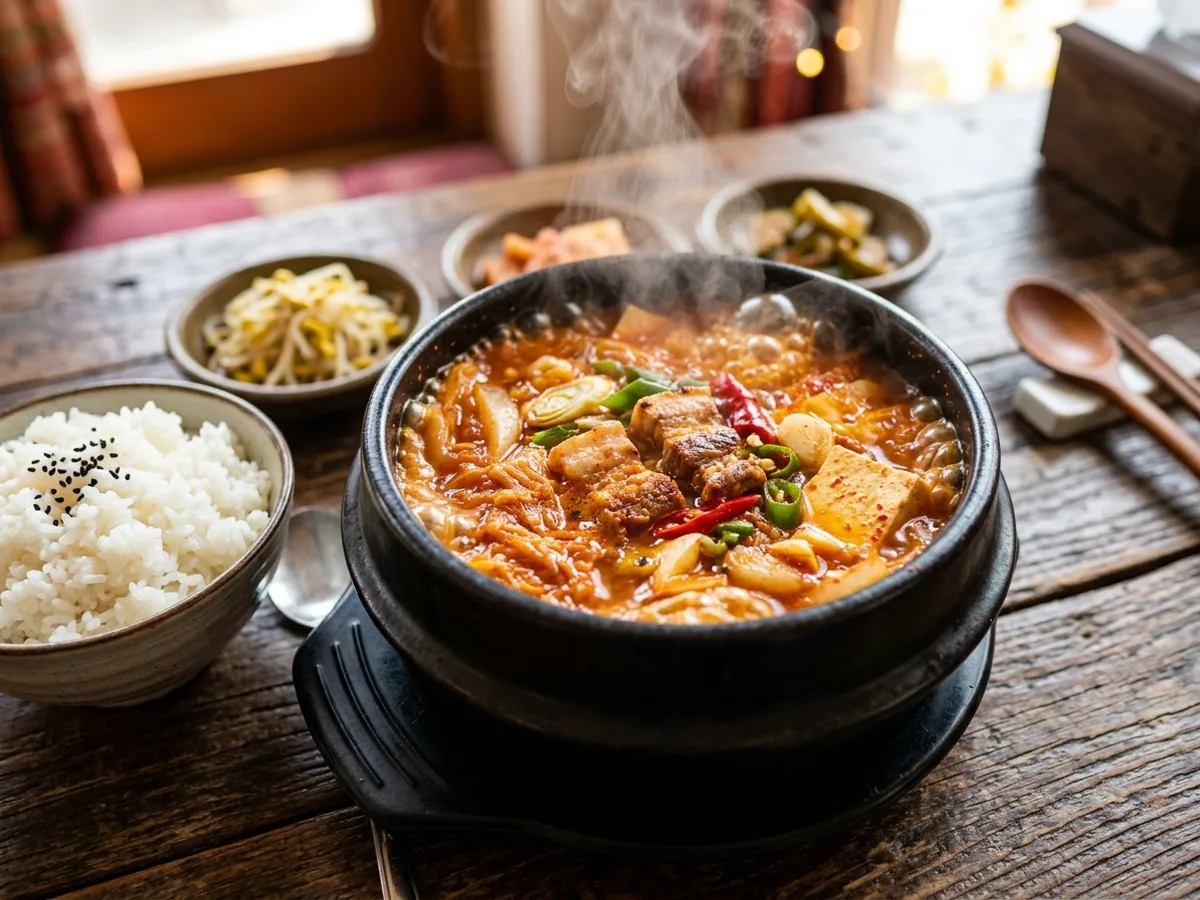
What is Kimchi Jjigae?
Kimchi jjigae is the stew Koreans abroad say they miss first: sour, aged kimchi simmered with pork and tofu until everything collapses into one loud, bubbling pot. It lands on the table still boiling — waiting a minute before the first spoonful is part of the technique.
It's the standard answer to cold weather, hangovers and homesickness alike, almost always eaten with a bowl of rice as the counterweight. Expect real heat and real sourness — this is a step up in intensity from most starter foods.
How to eat it
- Wait a minute — it arrives violently boiling and will burn you if you dive in.
- Ladle broth over your rice, or spoon rice into the stew a bite at a time; both are normal.
- Alternate bites of pork, softened kimchi and tofu with plain rice — the rice is the counterweight to the salt and heat.
Cooking it at home
- Use properly soured kimchi — fresh kimchi makes flat jjigae; stir-fry it in a little oil first.
- Add pork (belly or shoulder), kimchi juice and water; simmer 15–20 minutes.
- Slide in tofu and scallions at the end; season with gochugaru or fish sauce only after tasting.
Good to know
- The ttukbaegi keeps it at a rolling boil at the table — genuinely scalding for the first minutes.
- Saltiness varies wildly between restaurants; taste before adding rice.
Kimchi jjigae made with well-aged mugeunji (묵은지) is considered the top tier — some restaurants advertise the kimchi's age.
Where to eat it
Local classicDecades-old noh-po
A tiny decades-old kimchi-jjigae noh-po in a back alley behind Sejong Center — one menu, aged kimchi and pork, the way office workers have eaten it for 40+ years.
Known for: Kimchi Jjigae
Open as of our last check (2026-07-17) · Sources: Siksin · DiningCode — hours, prices and status can change; check the map link before visiting.
Nutrition
| Calories | 61 kcal |
|---|---|
| Carbohydrate | 2.98 g |
| Protein | 3.77 g |
| Fat | 3.75 g |
| Sodium | 491 mg |
Per serving (~400g): ≈244 kcal · sodium ≈1,964 mg (98% of the WHO daily guideline, 2,000 mg)
Related foods
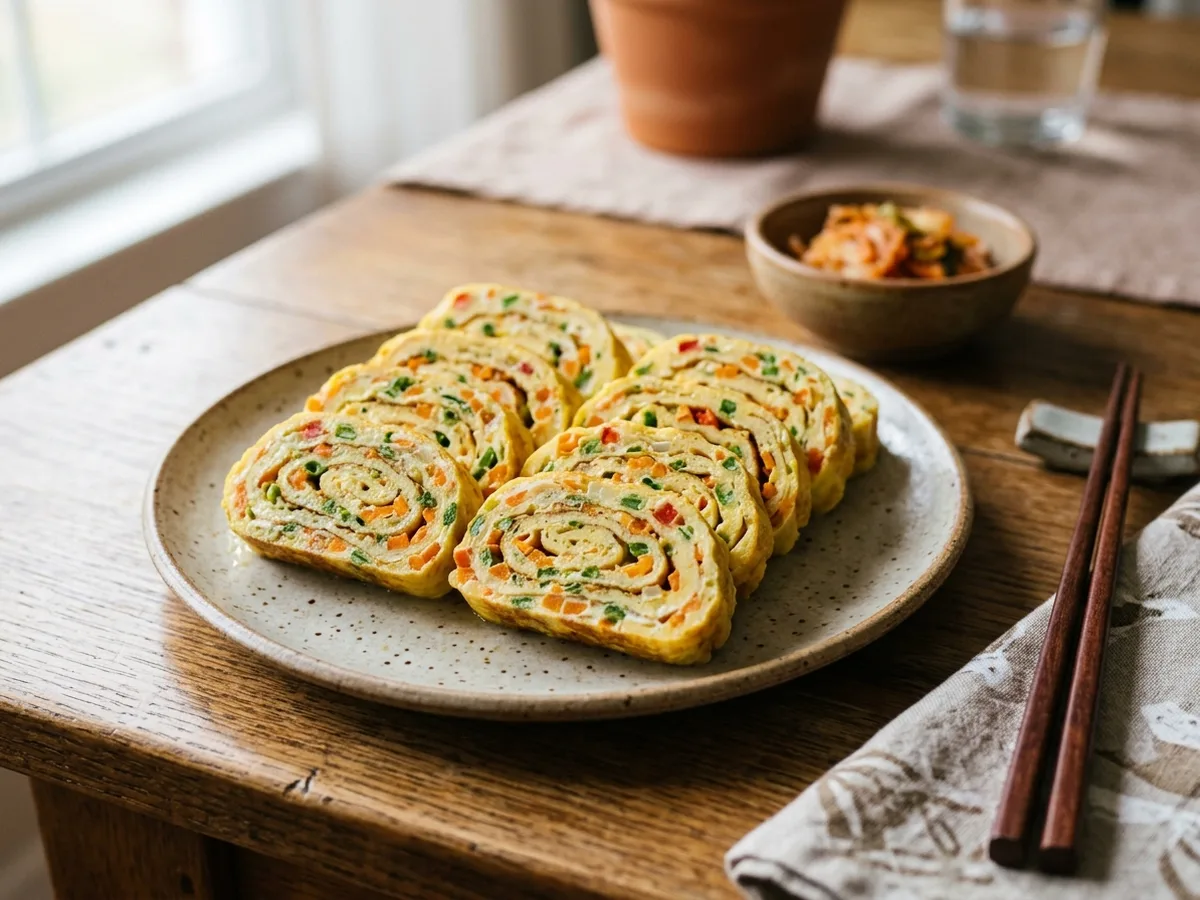 달걀말이 · Gyeran MariOften eaten together Rolled omelette, often with vegetables or gim inside.
 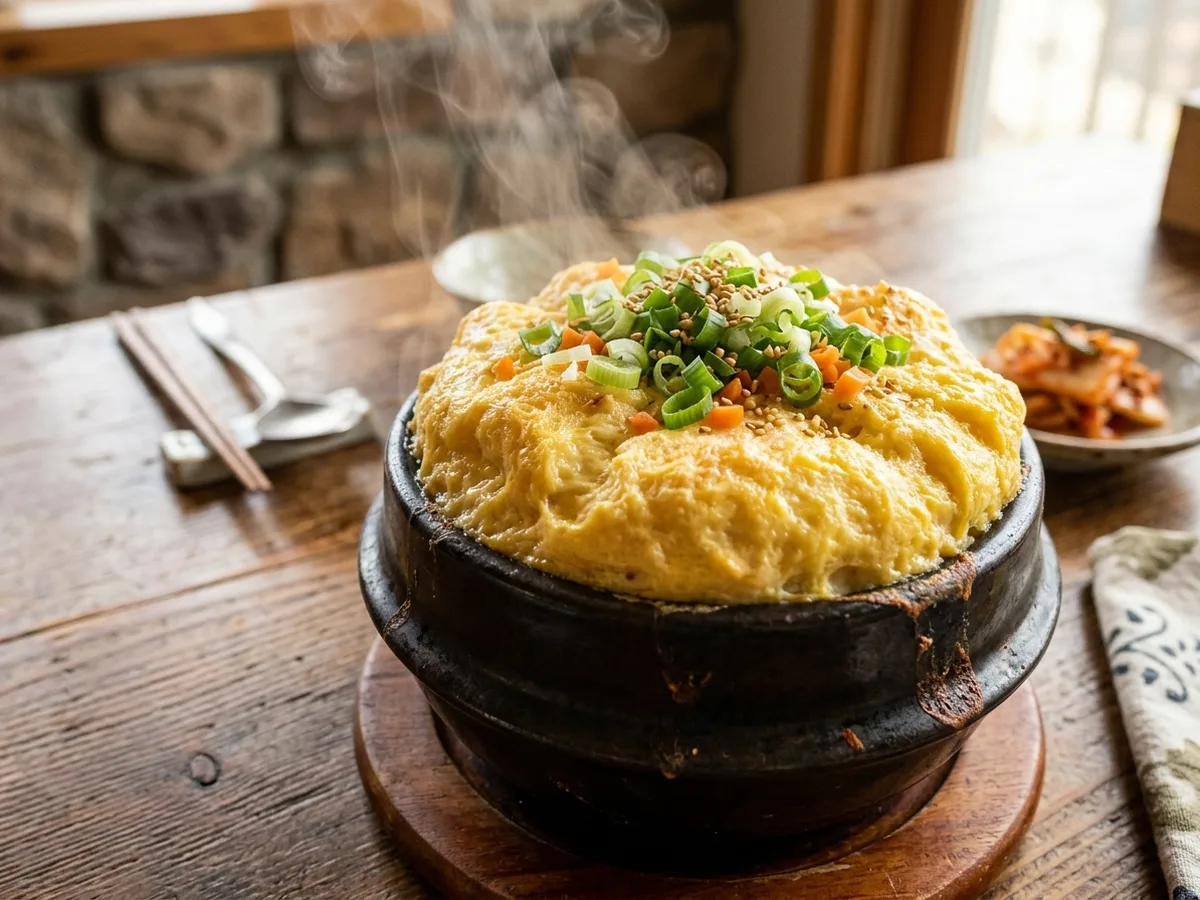 계란찜 · Gyeran JjimOften eaten together Fluffy steamed egg in a hot ttukbaegi — the BBQ-house side hero.
 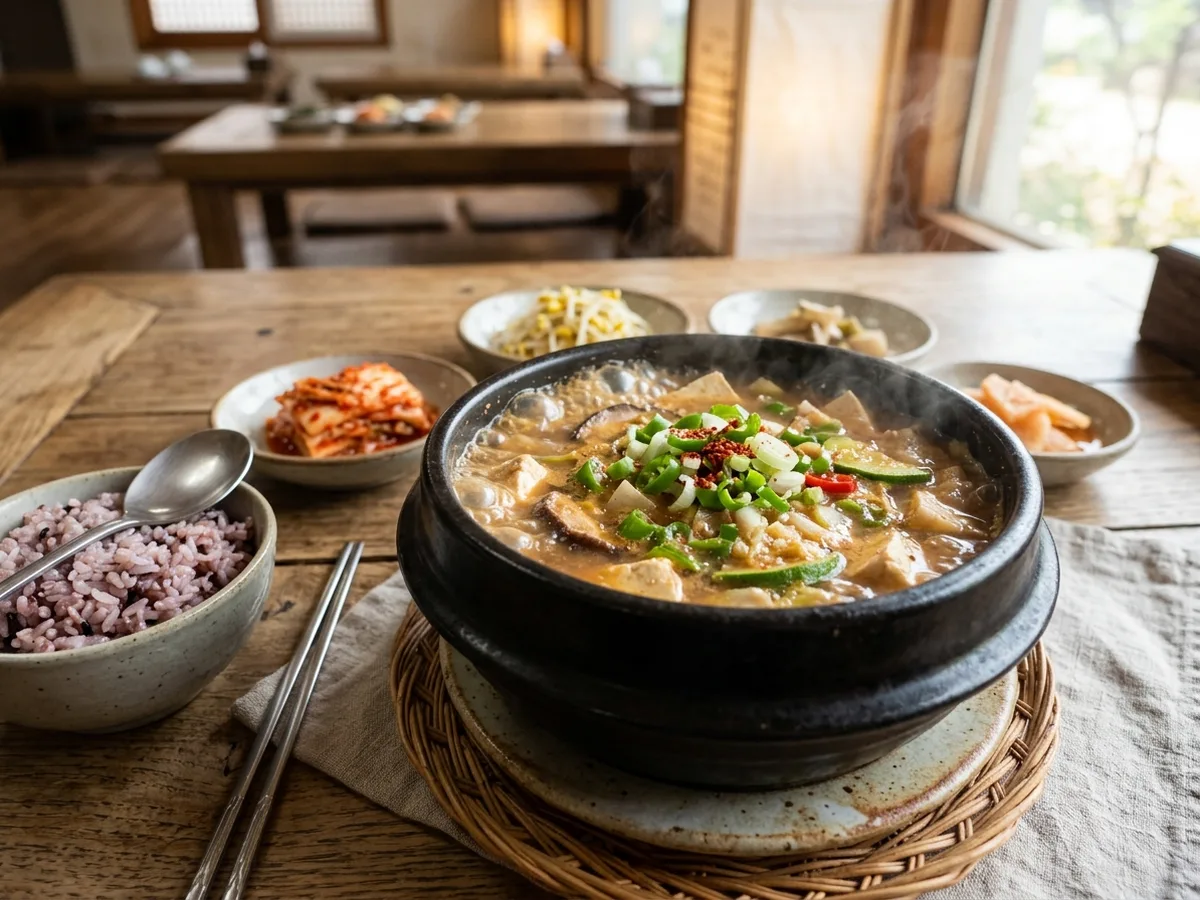 된장찌개 · Doenjang JjigaeMilder alternative Fermented soybean-paste stew with tofu and vegetables.
 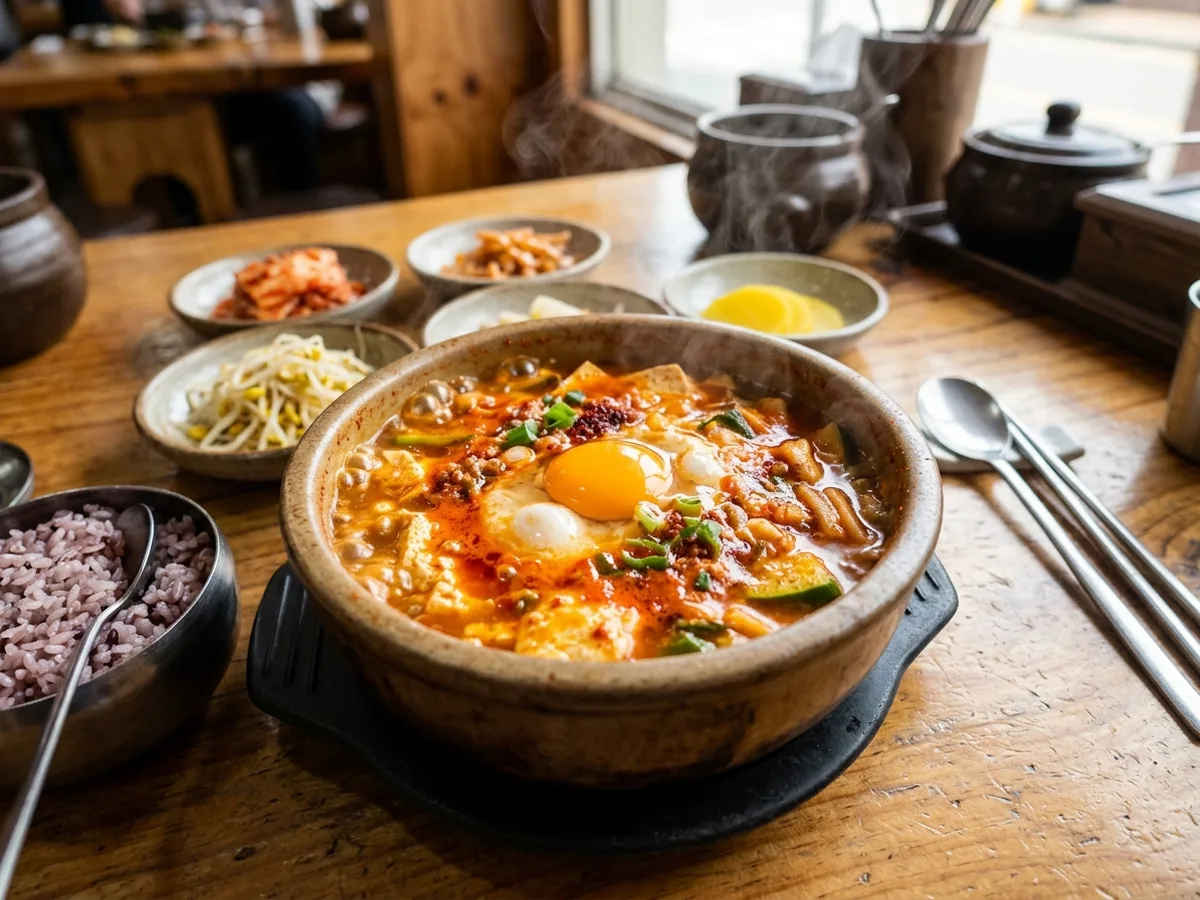 순두부찌개 · Sundubu JjigaeSimilar flavor · spicy, savory Bubbling soft-tofu stew, served with a raw egg to crack in.
 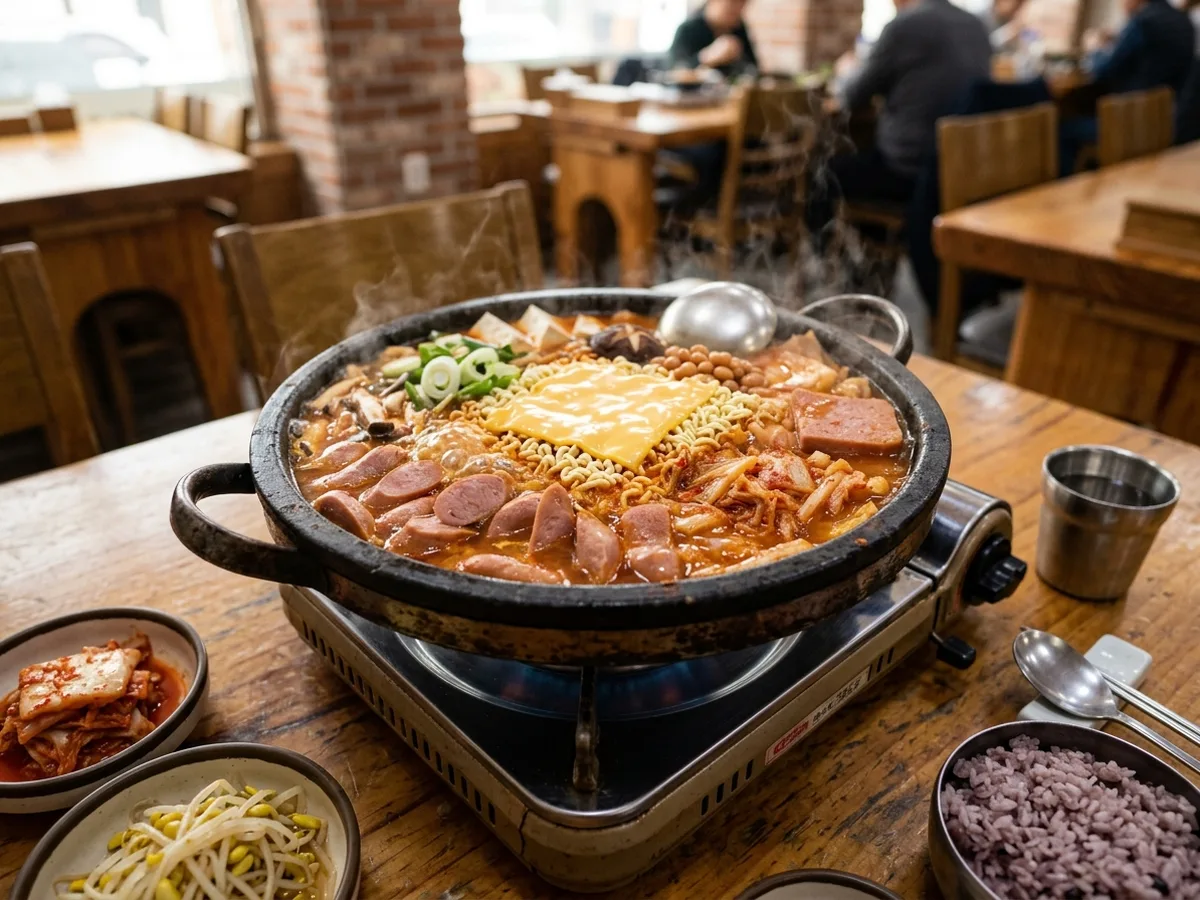 부대찌개 · Budae JjigaeSame family · pork 'Army stew' — sausage, spam, ramyeon and kimchi in one pot.