Doenjang Jjigae (된장찌개)
Fermented soybean-paste stew with tofu and vegetables.
- Korean name
- 된장찌개
- Spice level
- Mild
- Flavor
- savory · fermented
- Typically contains
- soybean paste, tofu
- Vegetarian / vegan
- Sometimes — vegetable-forward, but anchovy broth, fish sauce or meat garnish is common. Ask first
- Typical price
- ₩8,000–₩11,000 per person checked 2026-07 — varies by area
- Good to know
- Beginner-friendly ●●●○○ Solo dining ●●●●○ Kid-friendly ●●●○○
- Also written as
- dwenjang jjigae, doenjang chigae, soybean paste stew, denjang
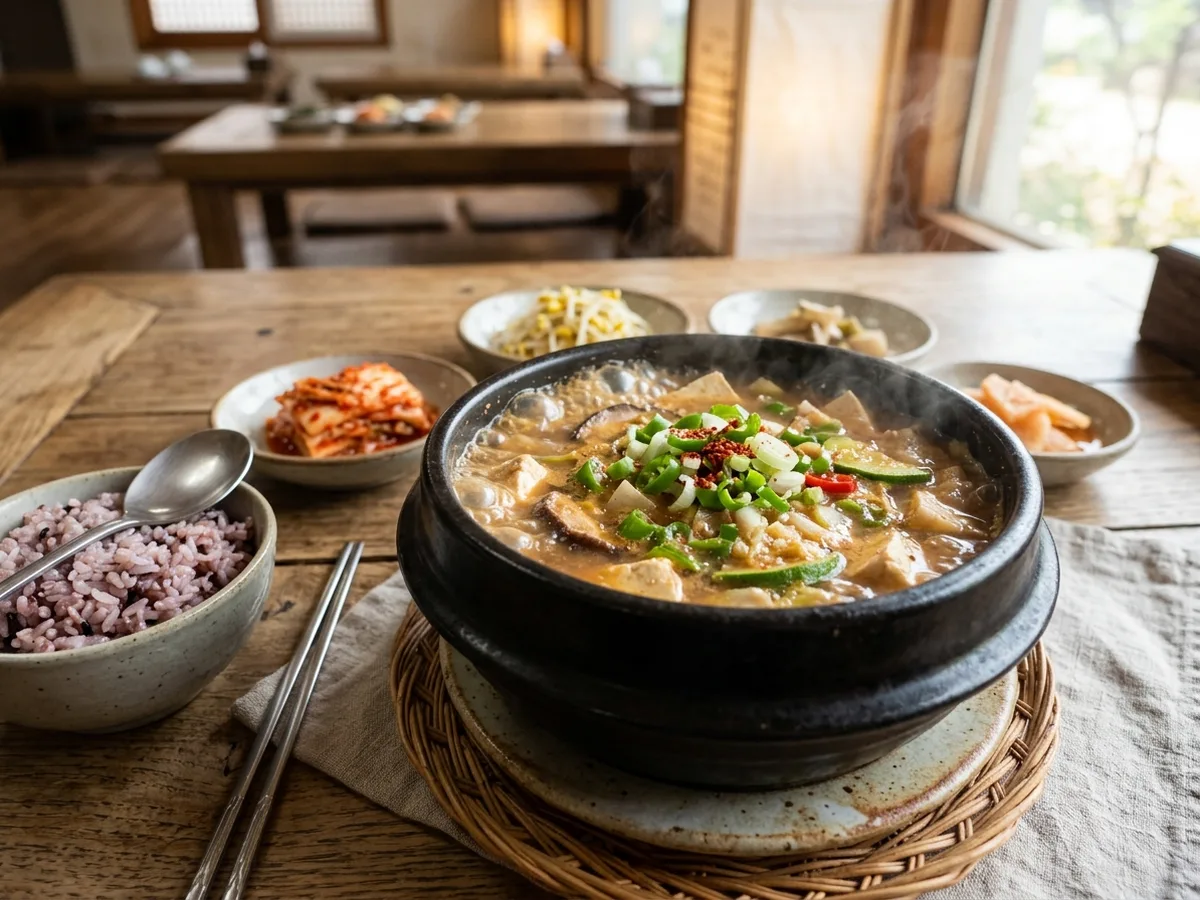
What is Doenjang Jjigae?
Doenjang-jjigae (된장찌개) is the everyday stew of fermented soybean paste — doenjang simmered with tofu, zucchini, onion, mushrooms, and often clams or beef in an earthenware pot. Funky, savory, and deeply comforting, it is the stew Koreans eat most often at home, and the default companion to grilled meat at barbecue restaurants, where it closes the meal alongside rice.
How to eat it
- Treat it as the table's shared pot at a BBQ meal, or as your personal stew with rice at lunch.
- Spoon broth over rice first, then chase the tofu, zucchini and mushrooms.
- Expect it saltier and funkier than miso soup — it's a rice partner, not a starter soup.
Cooking it at home
- Start anchovy-kelp stock; whisk in doenjang (2 spoons per 2 servings) — don't boil it to death before the vegetables go in.
- Add potato, onion and zucchini first, tofu and chili last.
- A half-spoon of gochujang rounds the flavor; no salt until you taste.
Good to know
- Doenjang brands vary hugely in salt — taste before seasoning.
The default 'mom food' of Korea — most homes eat some version weekly.
Seen on Screen
Tastefully Yours (입맛대로 하는 연애, 2025) — Fermented-paste home cooking is the backbone of the regional hansik the series celebrates. (Theme connection.)
Theme connection — not a specific-scene claim
Nutrition
| Calories | 46 kcal |
|---|---|
| Carbohydrate | 4.44 g |
| Protein | 3.38 g |
| Fat | 1.63 g |
| Sodium | 318 mg |
Per serving (~200g): ≈92 kcal · sodium ≈636 mg (32% of the WHO daily guideline, 2,000 mg)
Related foods
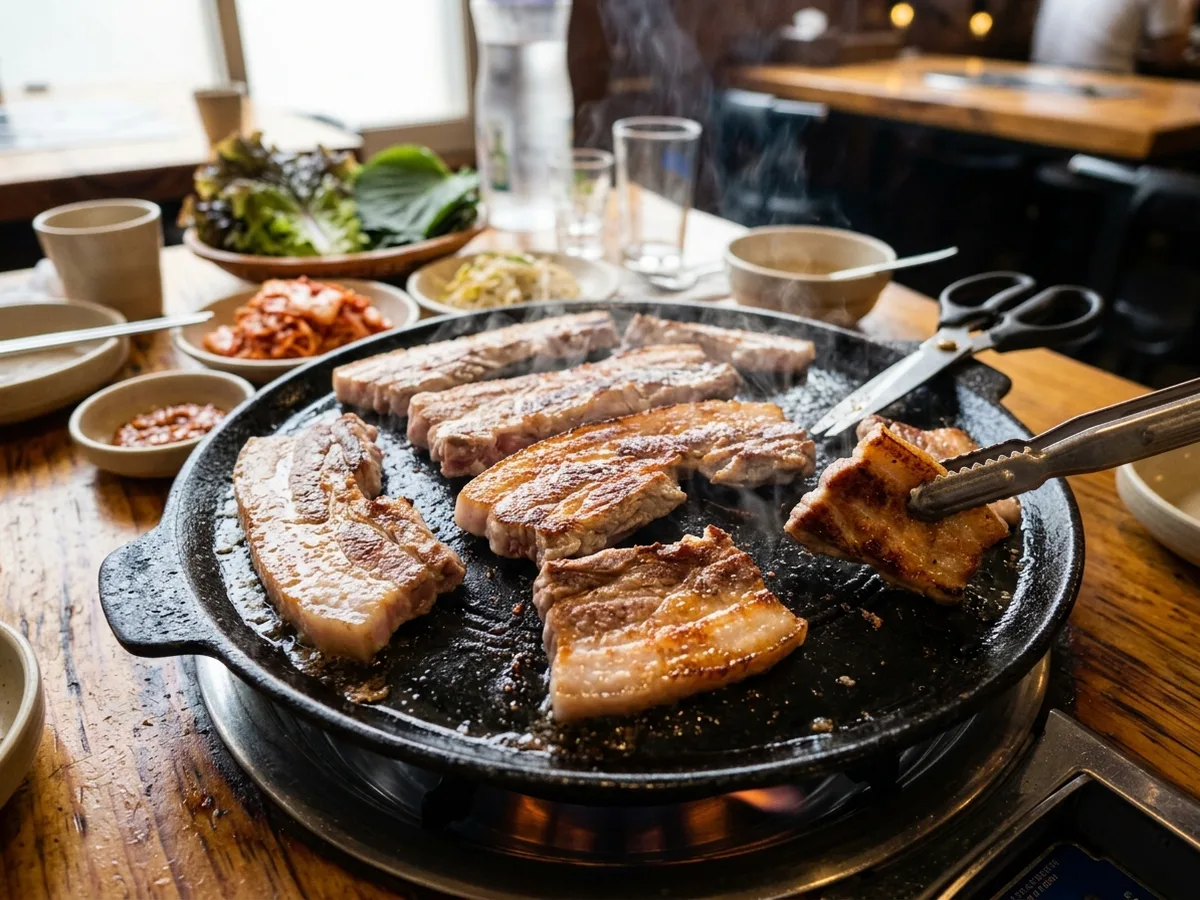 삼겹살 · SamgyeopsalOften eaten together Thick-cut grilled pork belly — Korea's default BBQ night.
 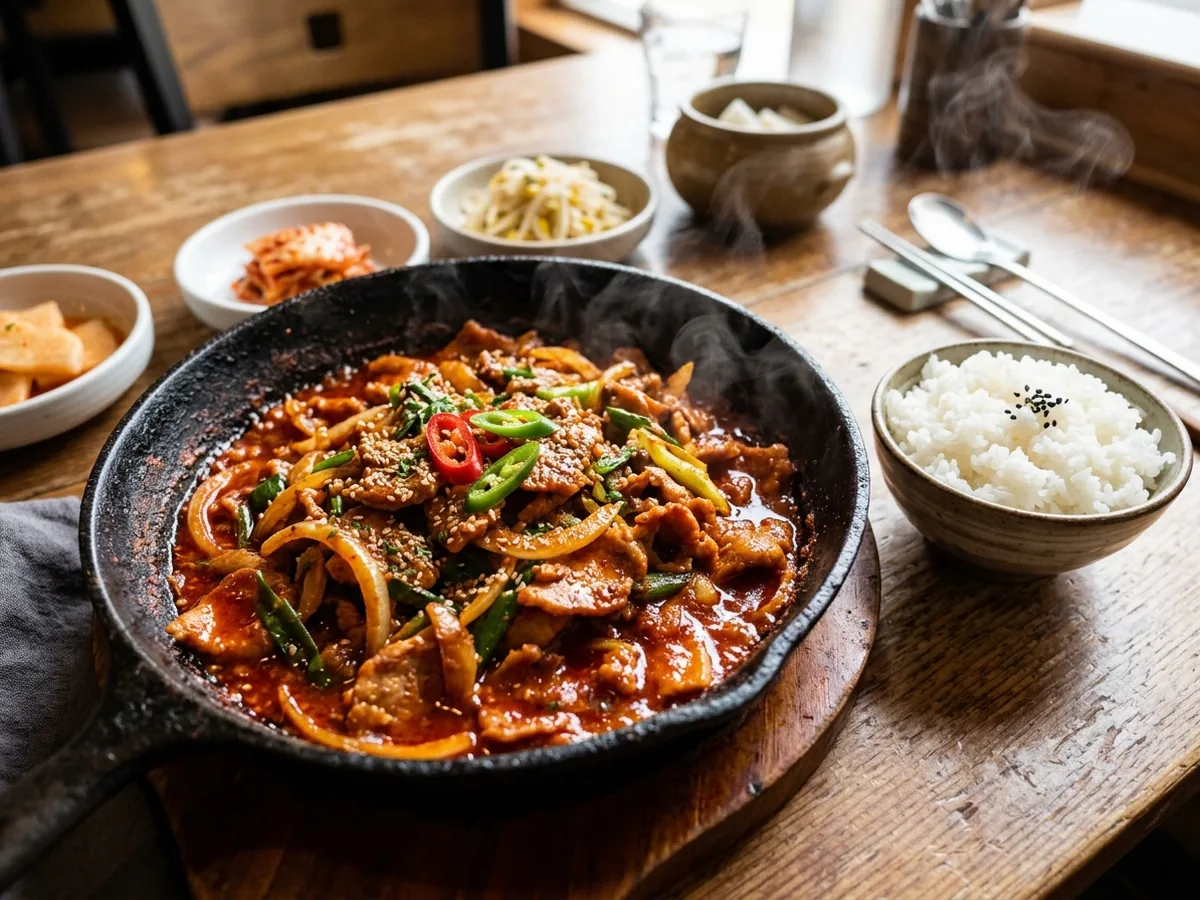 제육볶음 · Jeyuk BokkeumOften eaten together Spicy gochujang pork stir-fry — a lunch-set legend.
 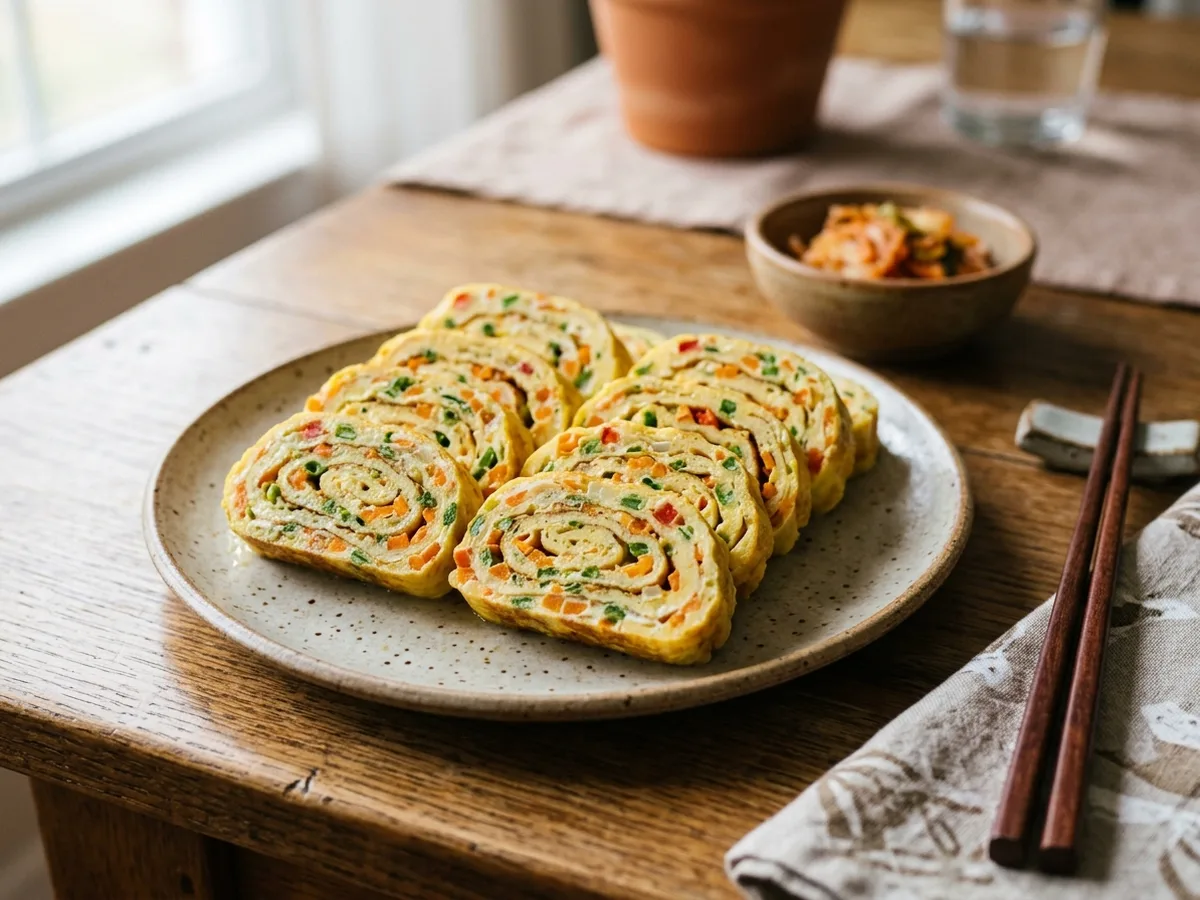 달걀말이 · Gyeran MariOften eaten together Rolled omelette, often with vegetables or gim inside.
 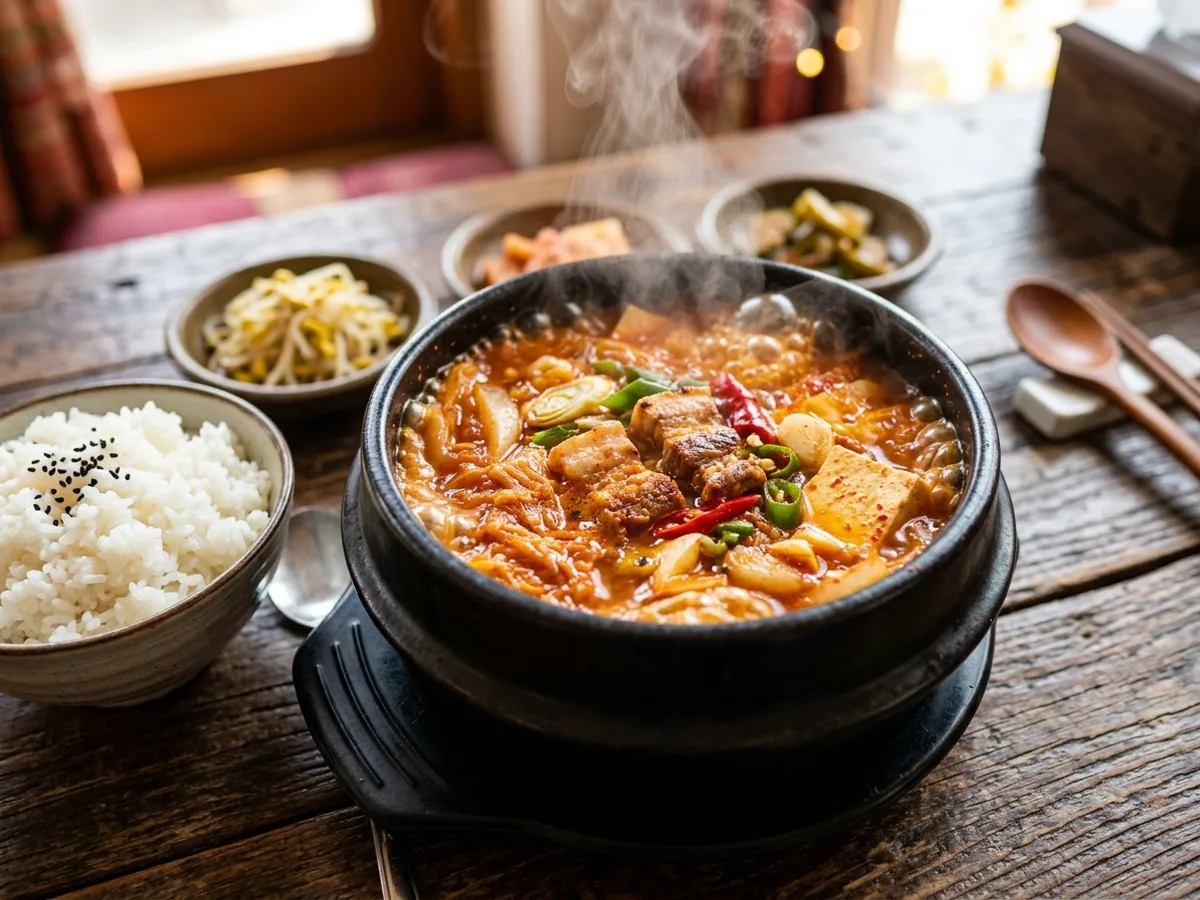 김치찌개 · Kimchi JjigaeSpicier alternative Sour-aged kimchi stew, usually with pork — the national comfort food.
 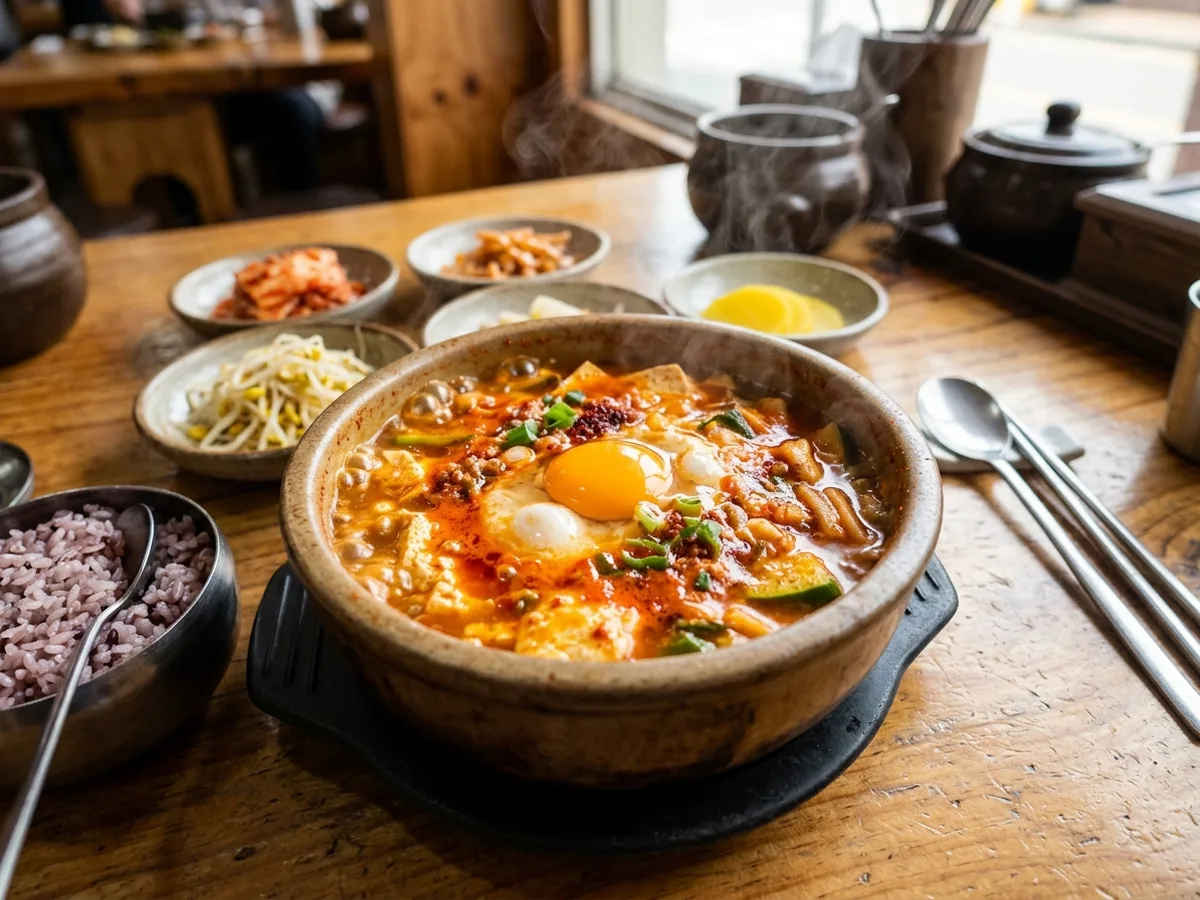 순두부찌개 · Sundubu JjigaeSpicier alternative Bubbling soft-tofu stew, served with a raw egg to crack in.