Donkatsu (돈가스)
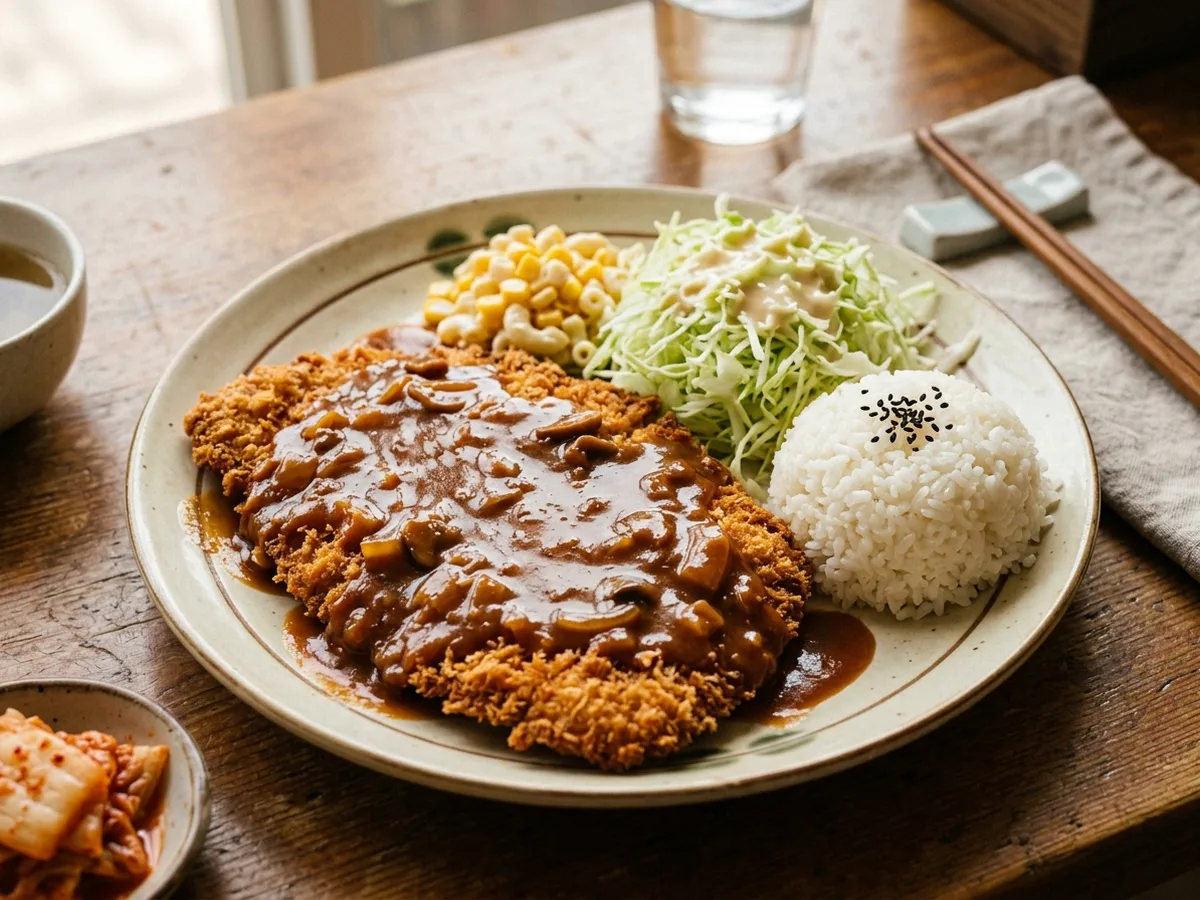
Korean-style pork cutlet — thin, wide, and smothered in brown sauce.
- Korean name
- 돈가스
- Spice level
- Not spicy
- Flavor
- savory · crispy
- Typically contains
- pork, wheat flour
- Vegetarian / vegan
- Not vegetarian — meat or seafood is core to the dish
- Typical price
- ₩8,000–₩12,000 per person checked 2026-07 — varies by area
- Good to know
- Beginner-friendly ●●●●● Solo dining ●●●●● Kid-friendly ●●●●●
- Also written as
- donkkaseu, donkas, don-gas, korean pork cutlet
What is Donkatsu?
Korean donkatsu is its own genre, not a tonkatsu clone: pork pounded plate-wide and thin, breaded, fried, then blanketed in brown demi-glace-style sauce with rice, shredded cabbage, corn salad — and soup — on one nostalgic platter. It's 'gyeongyangsik' (Korean-Western) diner food from the 80s that never left.
How to eat it
- Old-style kits arrive pre-sauced with knife and fork — cut and eat Western-style; that was the original point.
- Alternate with the sweet corn salad and shredded cabbage.
- Kimchi on the side still applies; this is Korean-Western, emphasis Korean.
Cooking it at home
- Pound pork loin thin and wide; salt, flour, egg, breadcrumbs.
- Fry golden; rest briefly.
- Douse with a brown sauce of demi-glace lineage (ketchup-Worcestershire shortcut at home).
Good to know
- Kimbap-shop donkatsu vs Japanese-style thick tonkatsu are different dishes — set expectations by venue.
- Wheat, egg, pork — the full breading allergen set.
Namsan's 'donkatsu alley' fame came from taxi drivers — big portions, fast, cheap, view included.
Nutrition
| Calories | 280 kcal |
|---|---|
| Carbohydrate | 15.89 g |
| Protein | 13.85 g |
| Fat | 17.94 g |
| Sodium | 343 mg |
Per serving (~100g): ≈280 kcal · sodium ≈343 mg (17% of the WHO daily guideline, 2,000 mg)
Related foods
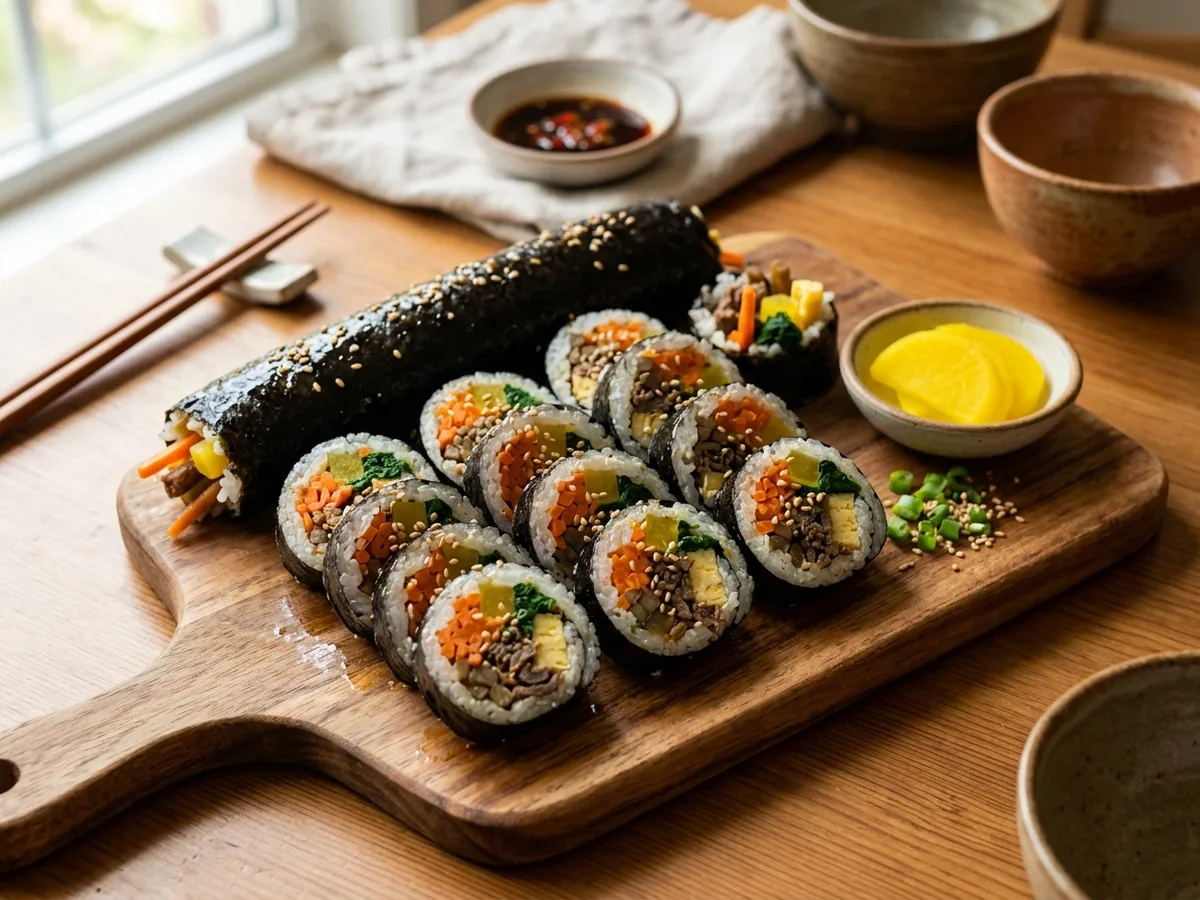 김밥 · GimbapOften eaten together Seaweed rice rolls — Korea's picnic and lunchbox default.
 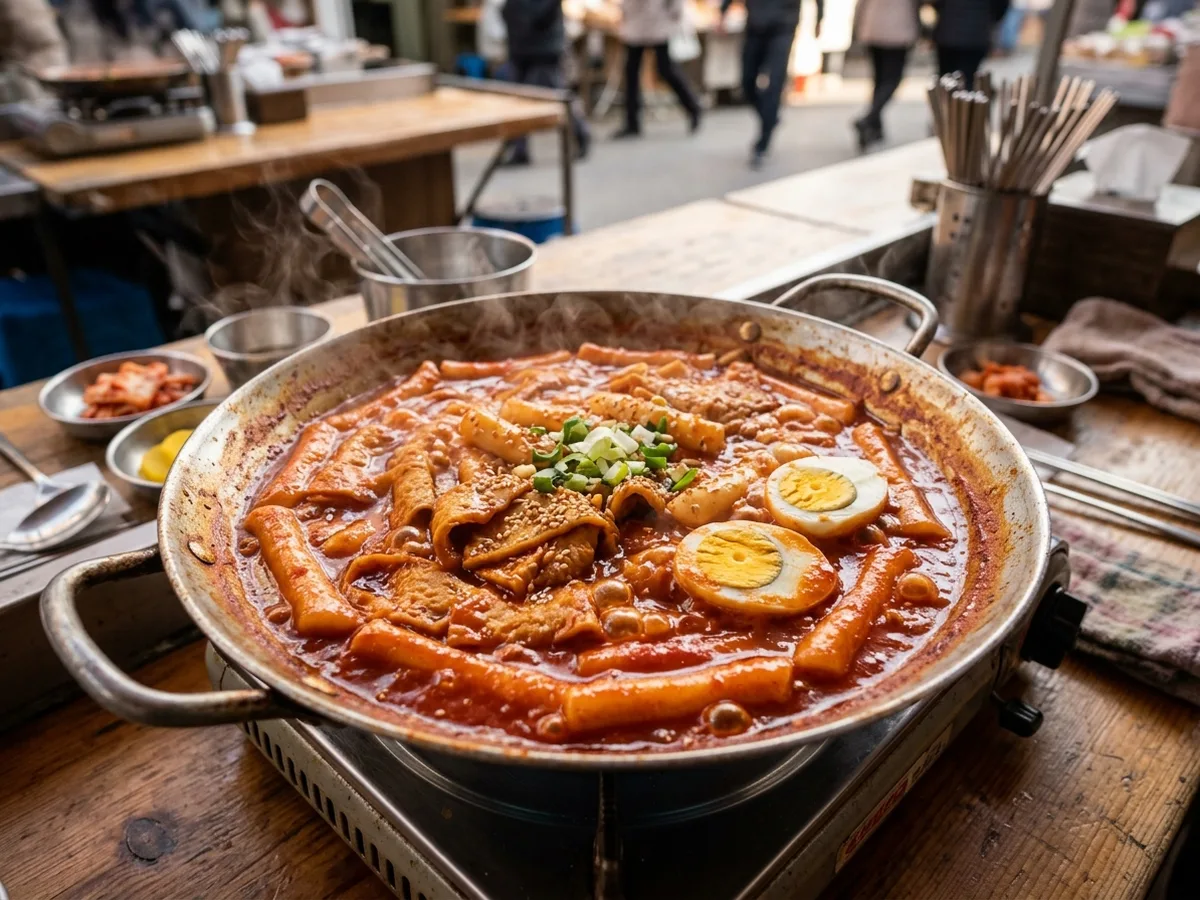 떡볶이 · TteokbokkiOften eaten together Chewy rice cakes in sweet-spicy gochujang sauce.
 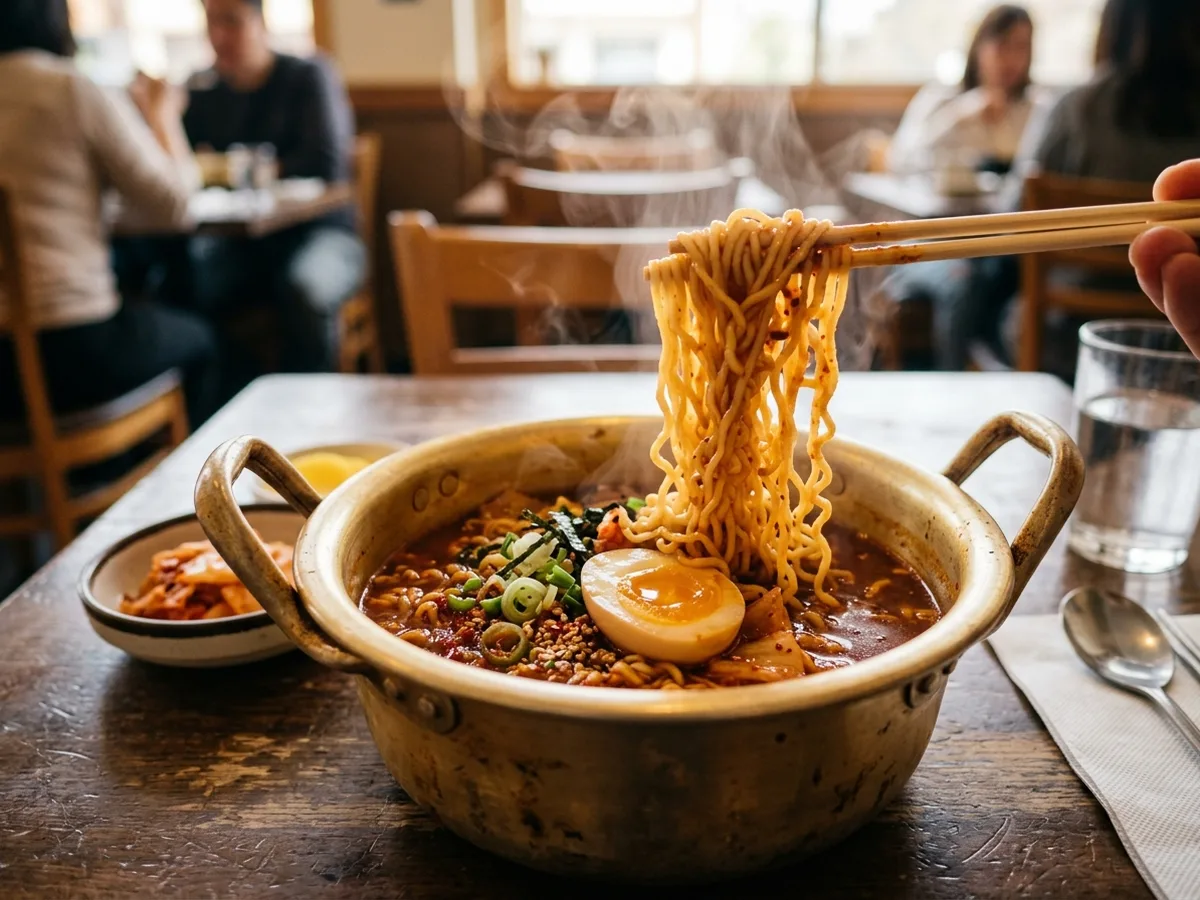 라면 · RamyeonOften eaten together Korean instant noodles — a national institution, not a backup meal.
 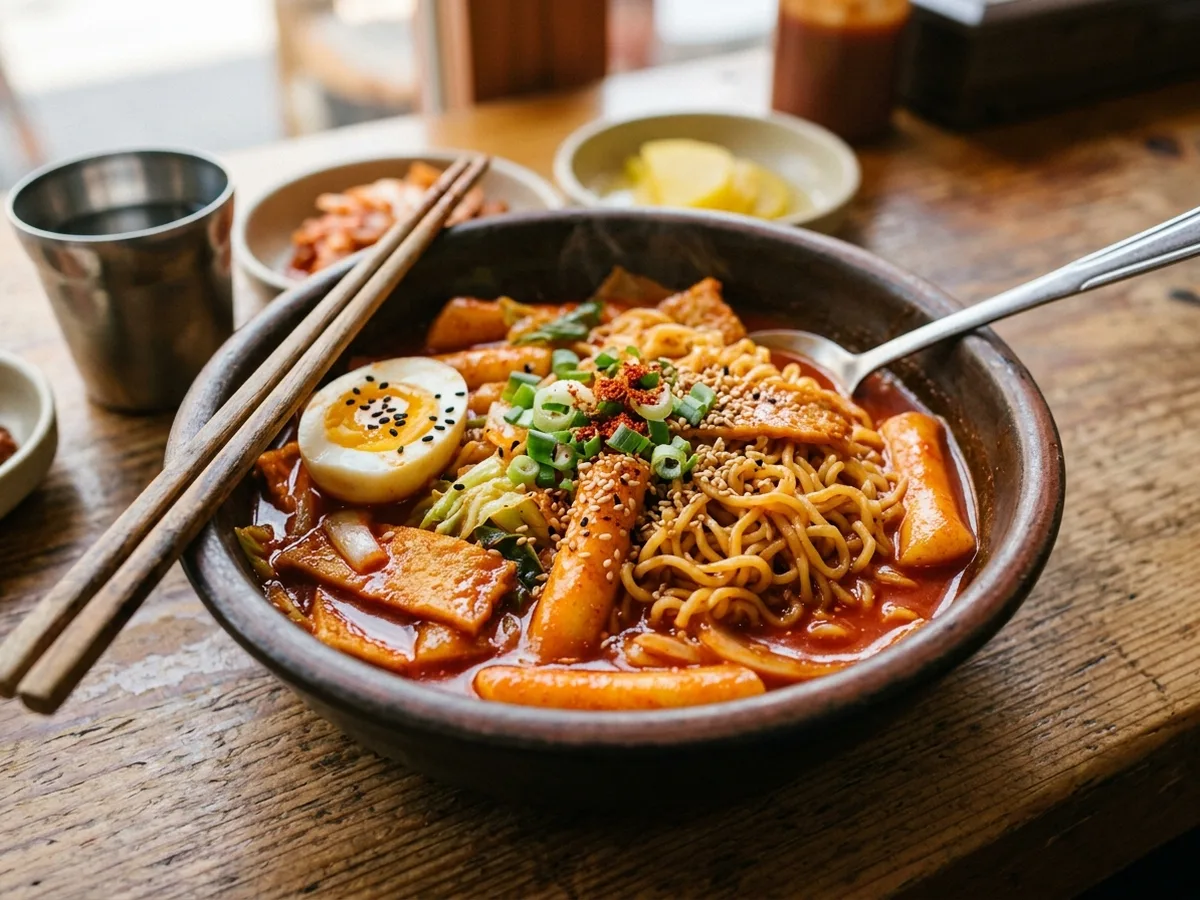 라볶이 · RabokkiSpicier alternative Tteokbokki plus ramyeon noodles — the best of both.
 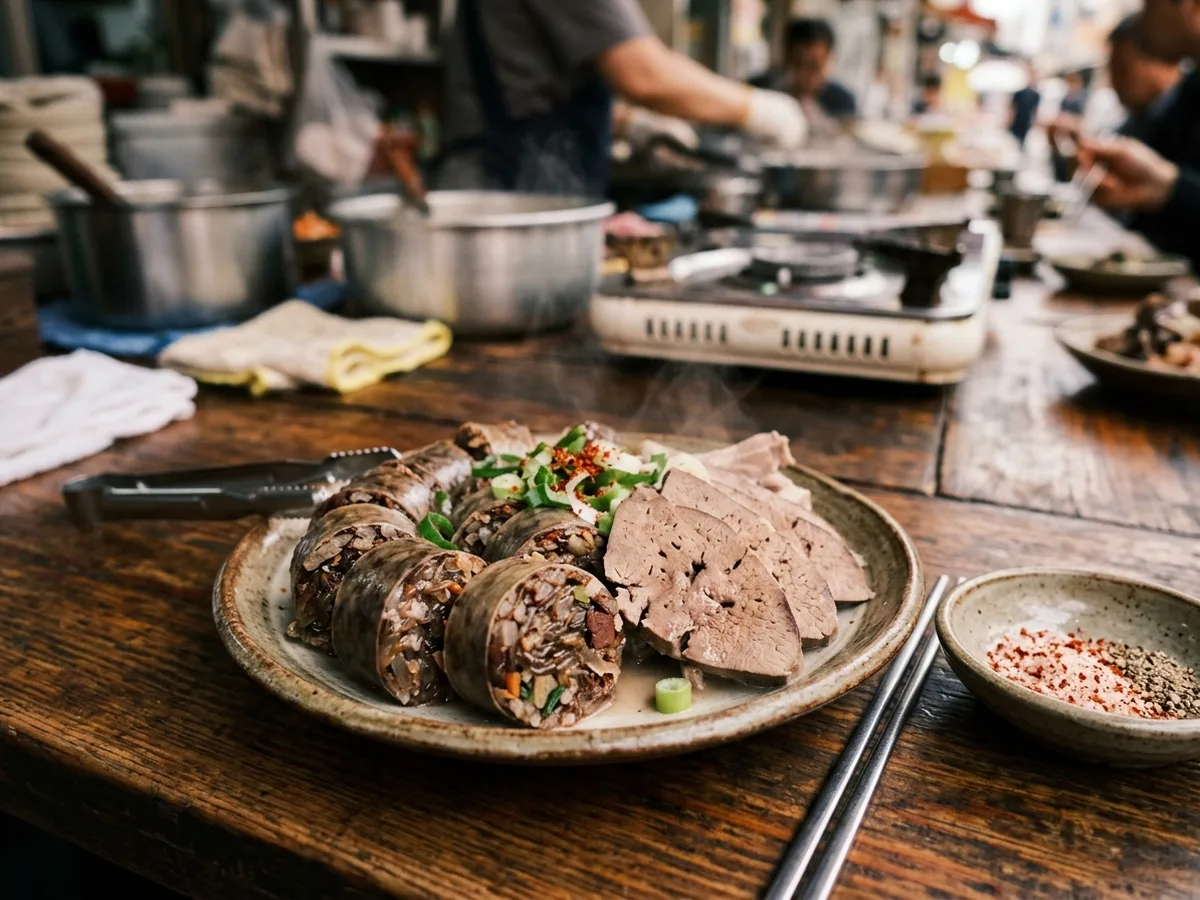 순대 · SundaeSame family · pork Korean blood sausage with glass noodles — dip it in seasoned salt.