Korean Food You Can Eat Alone: The Honsik Guide
Korean dining is famously communal, and some restaurants really do turn away solo diners at BBQ or hot-pot tables. But a whole category of Korean food — gukbap culture — is built precisely for one person, one bowl, ten minutes. Eating alone (honbap) is now completely normal in Korea. These are the dishes where a table for one is the standard, not the exception.
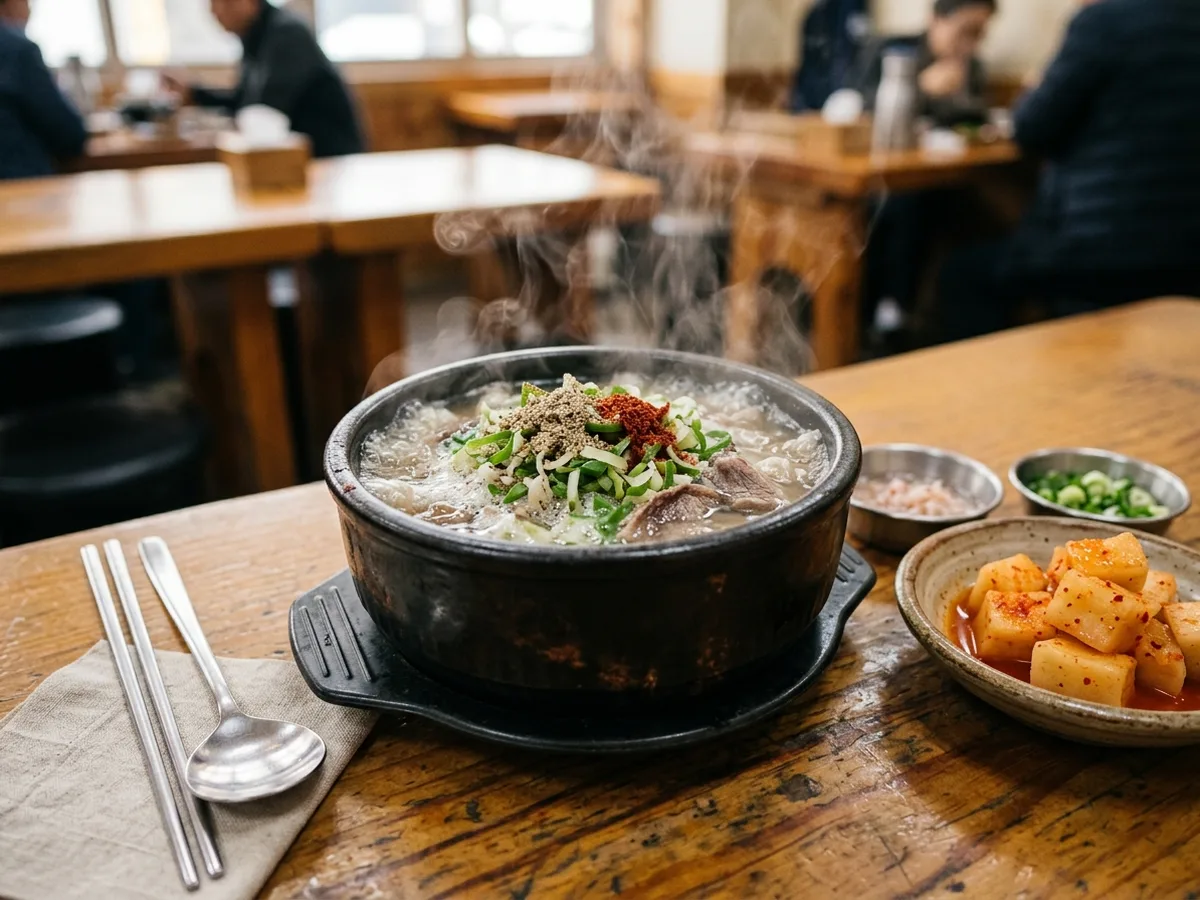 국밥 · Gukbap Rice in hot soup — fast, cheap, and deeply Korean.
 Literally 'soup-rice' — the original single-diner format; counter seating is normal.
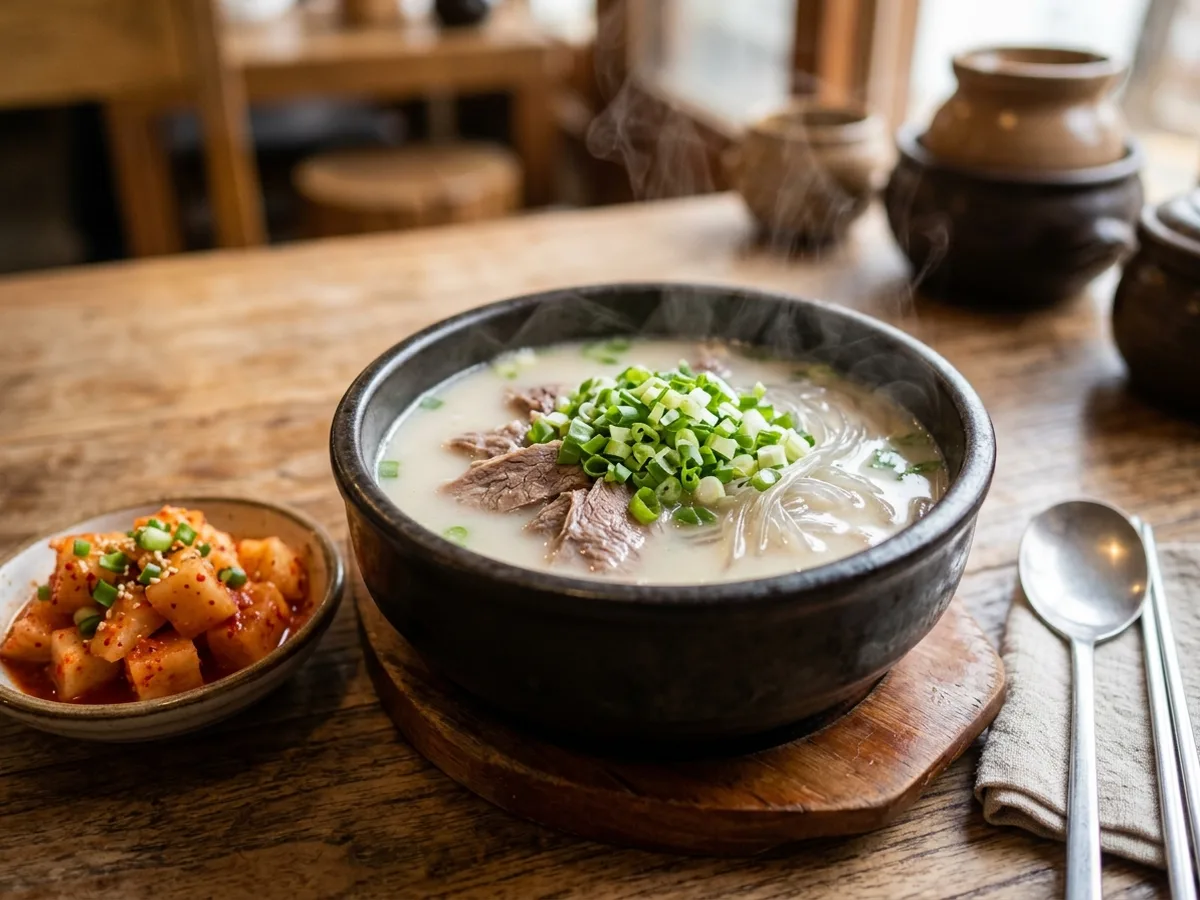 설렁탕 · Seolleongtang Milky ox-bone broth you season yourself with salt and scallions.
 Century-old soup houses serve a constant stream of solo diners from dawn.
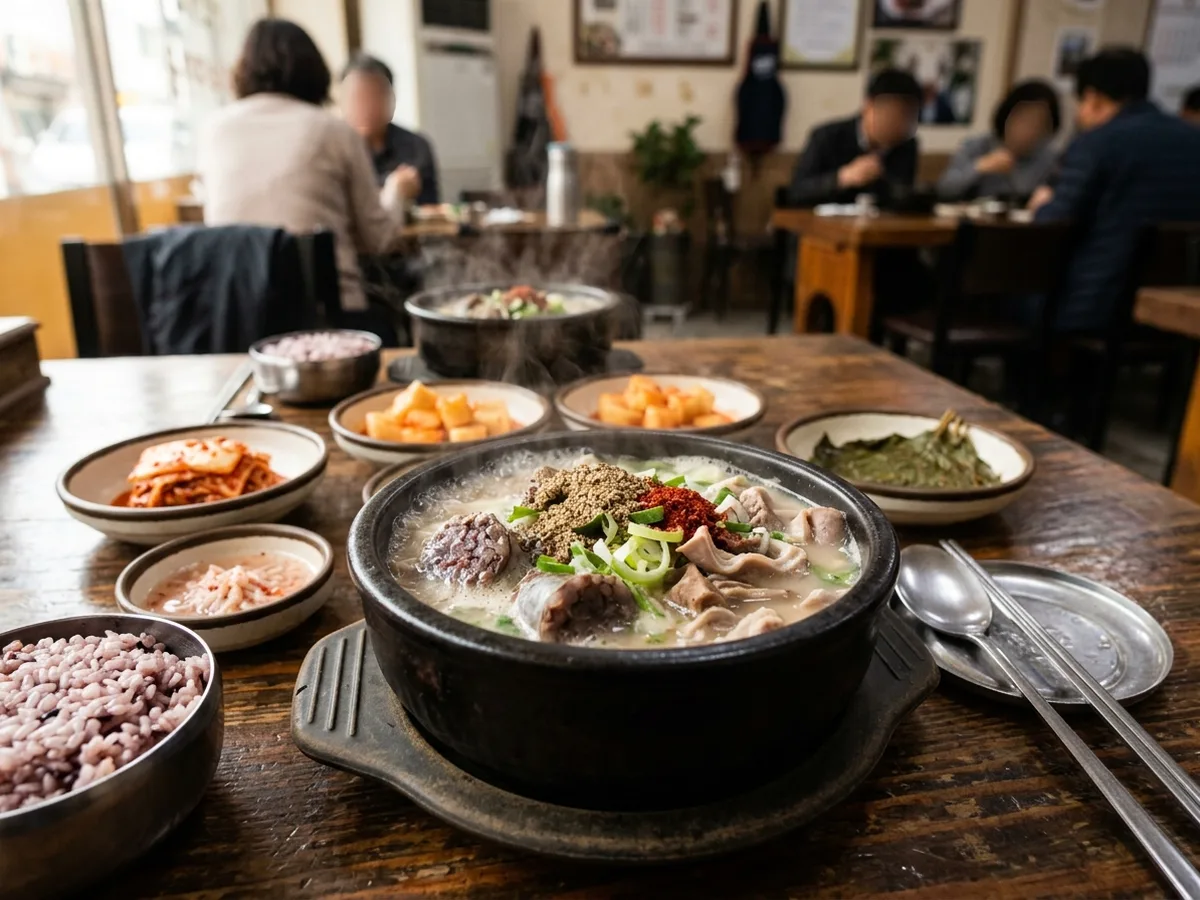 순대국 · Sundae Guk Hearty pork broth loaded with Korean blood sausage.
 The workman's solo lunch — cheap, fast, filling, open late.
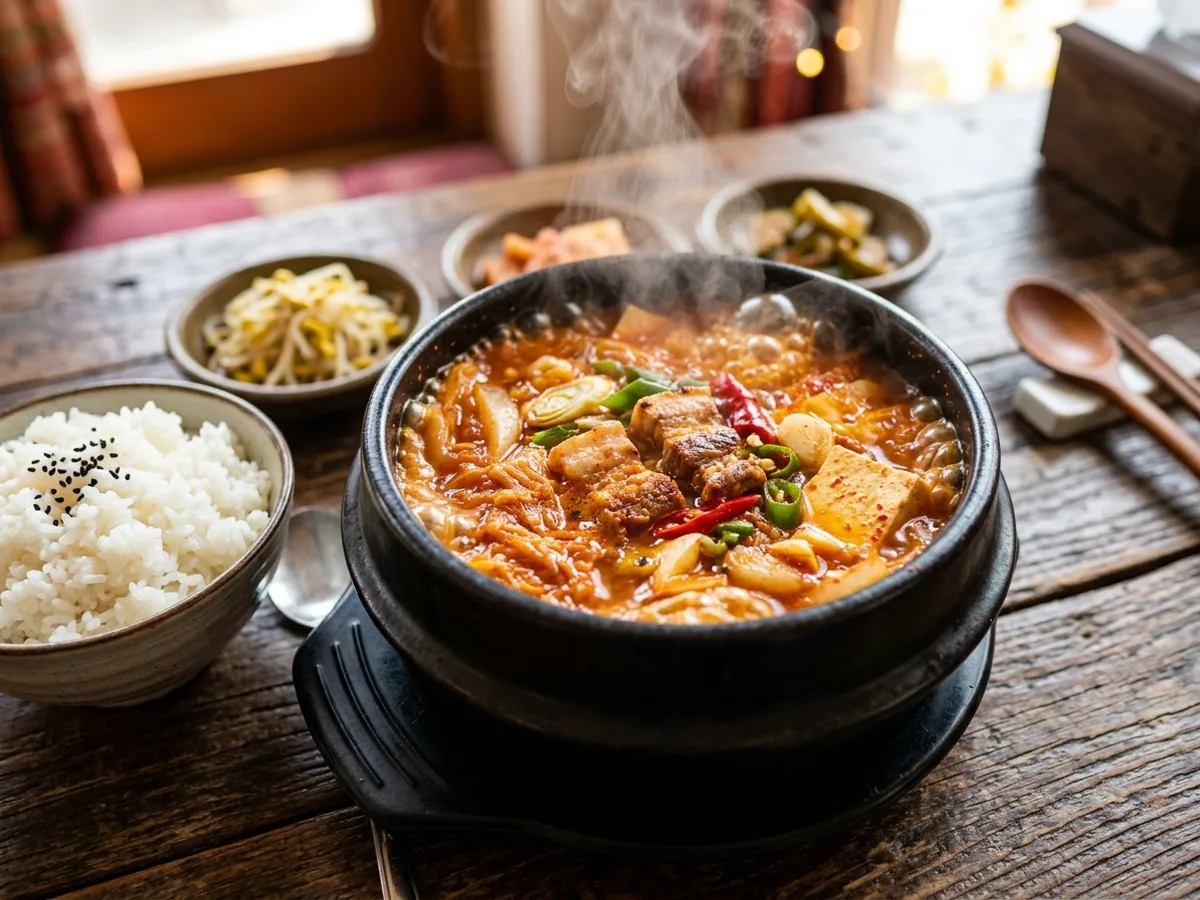 김치찌개 · Kimchi Jjigae Sour-aged kimchi stew, usually with pork — the national comfort food.
 The standard office-worker solo lunch set, served bubbling with rice and banchan.
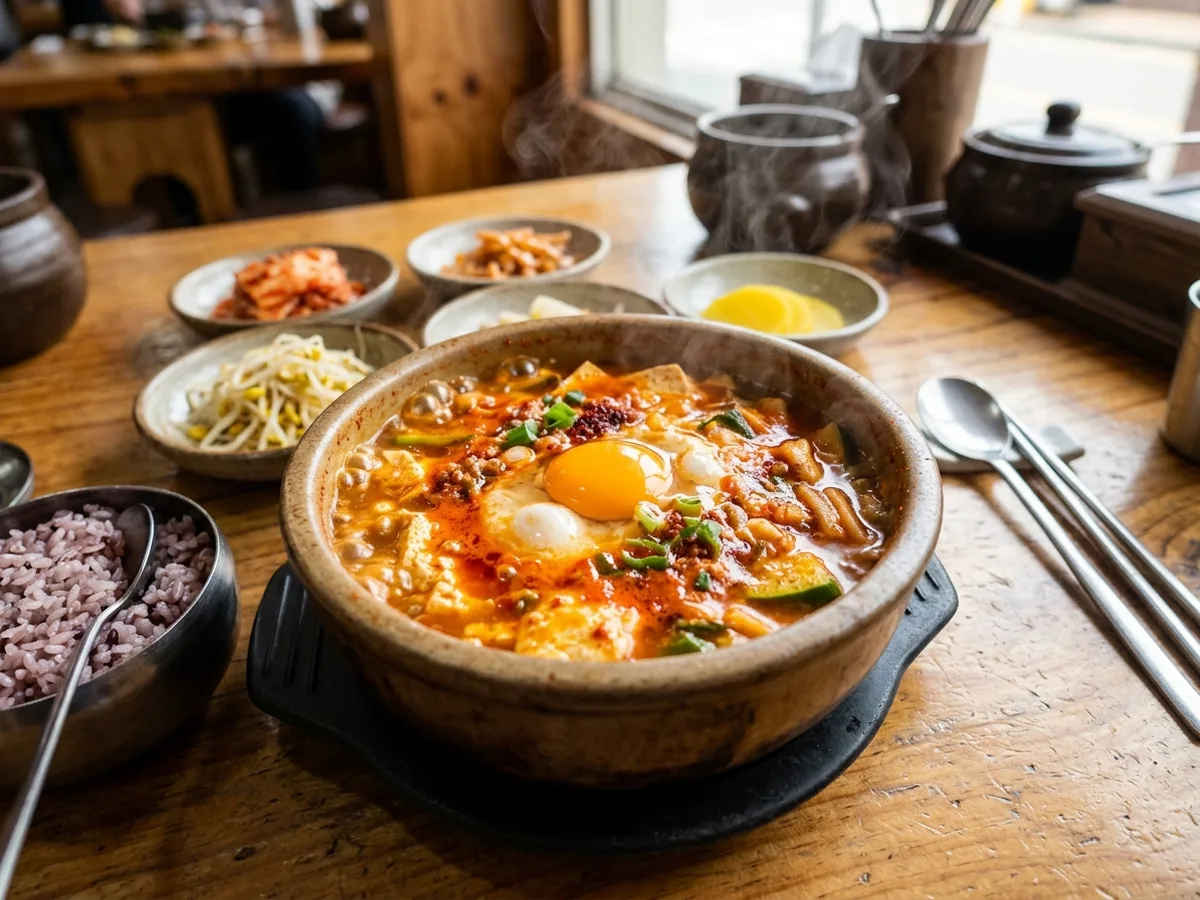 순두부찌개 · Sundubu Jjigae Bubbling soft-tofu stew, served with a raw egg to crack in.
 Soft tofu stew arrives as a complete one-person set with rice and egg.
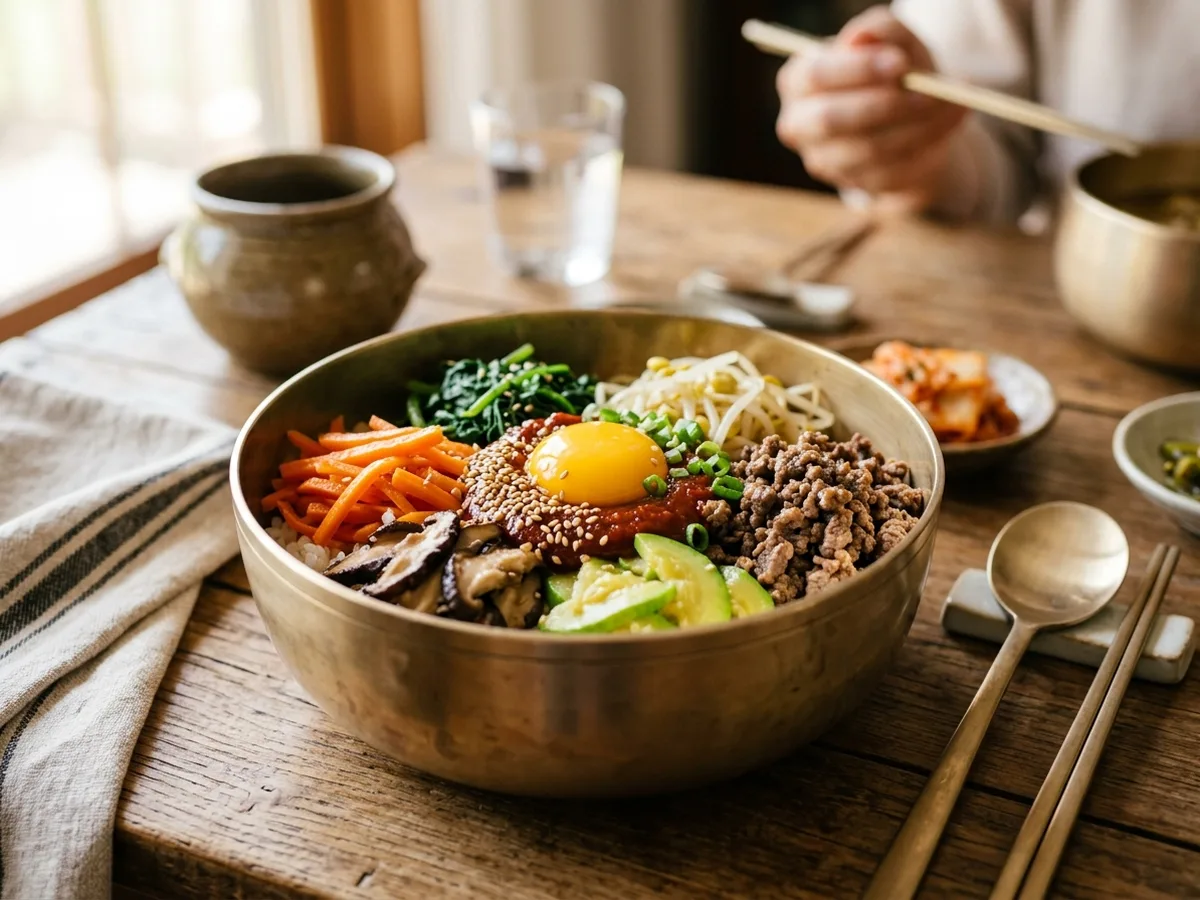 비빔밥 · Bibimbap Rice bowl with seasoned vegetables and gochujang — mix hard, then eat.
 A complete meal in one bowl by design.
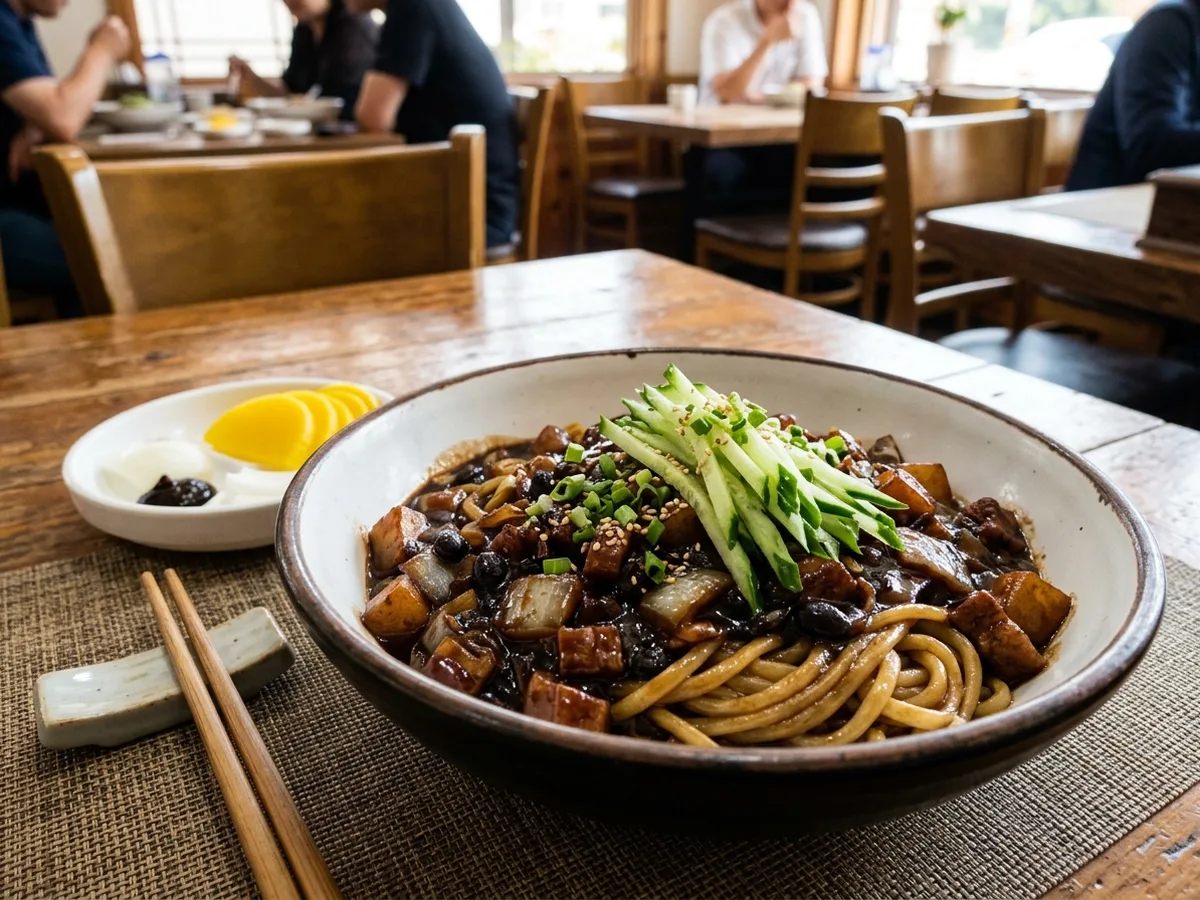 짜장면 · Jjajangmyeon Black-bean sauce noodles — moving-day and delivery royalty.
 Korean-Chinese restaurants and delivery are entirely solo-friendly.
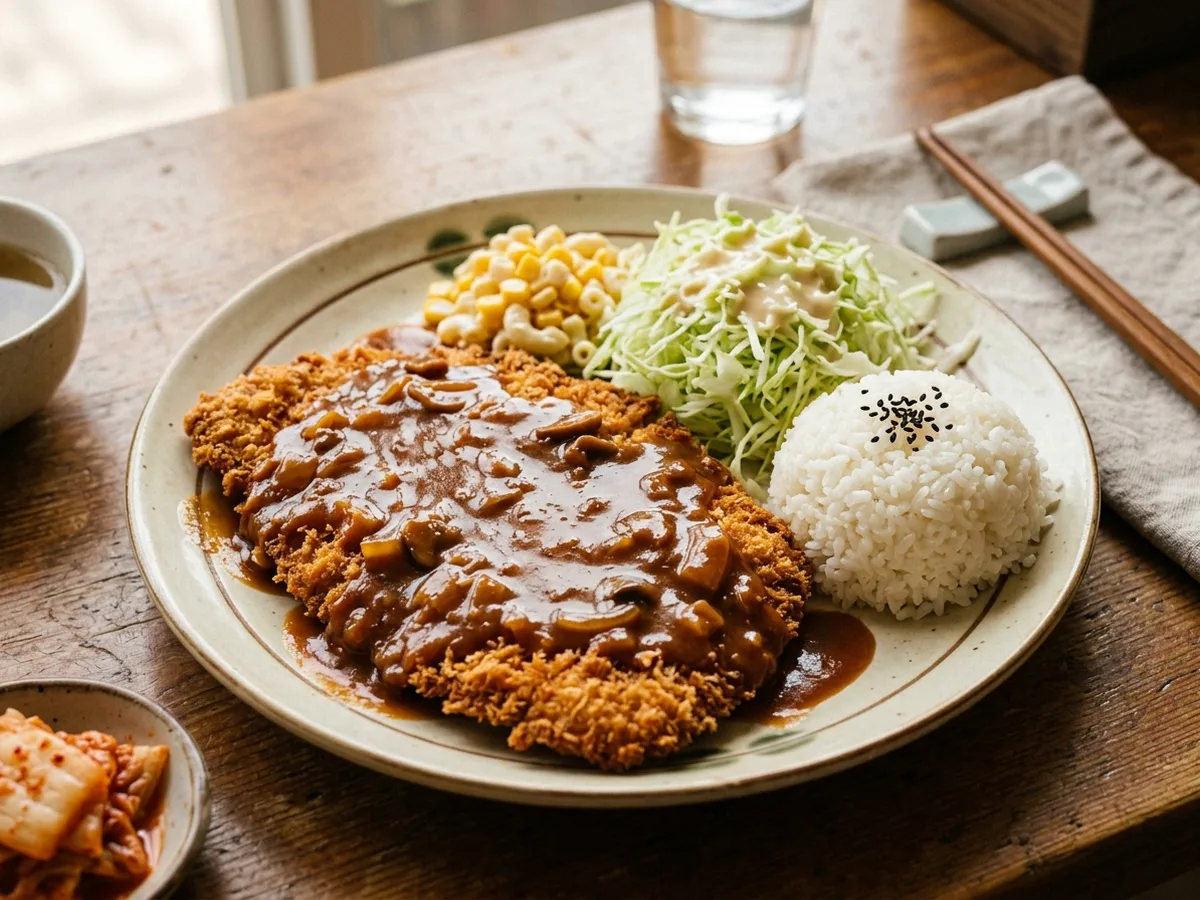 돈가스 · Donkatsu Korean-style pork cutlet — thin, wide, and smothered in brown sauce.
 Cutlet houses are built around single set meals.
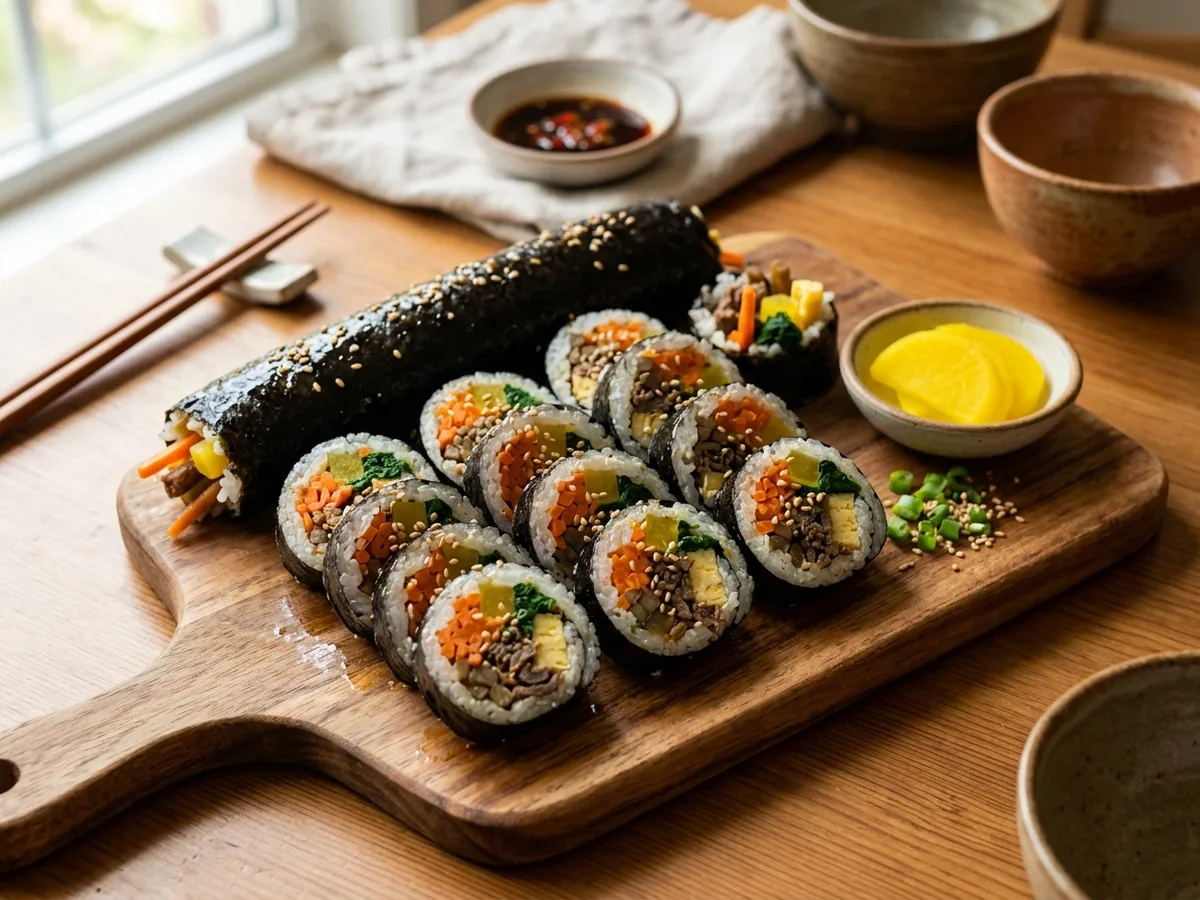 김밥 · Gimbap Seaweed rice rolls — Korea's picnic and lunchbox default.
 Kimbap shops are the definitive eat-alone (or take-away) format.
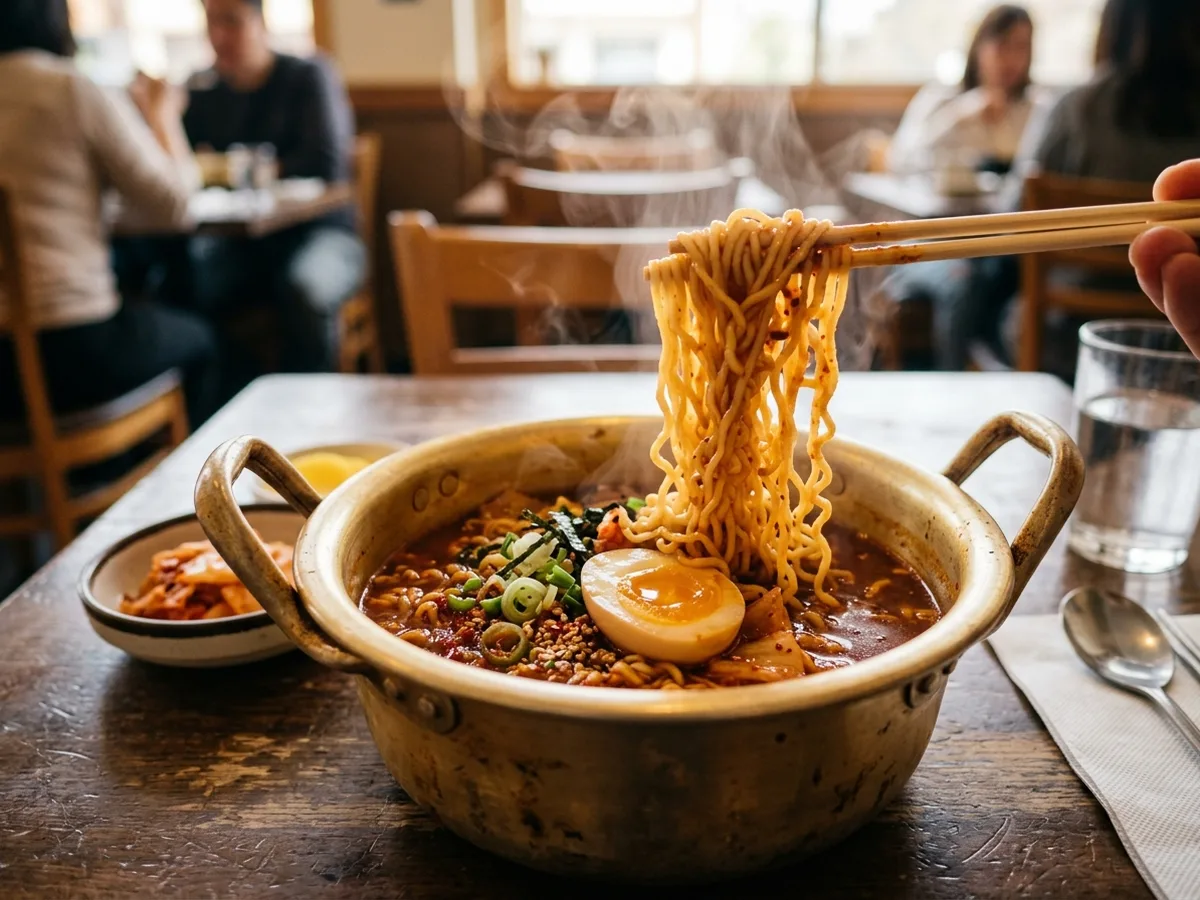 라면 · Ramyeon Korean instant noodles — a national institution, not a backup meal.
 The convenience-store ramyeon counter is Korea's most beloved solo-dining institution.
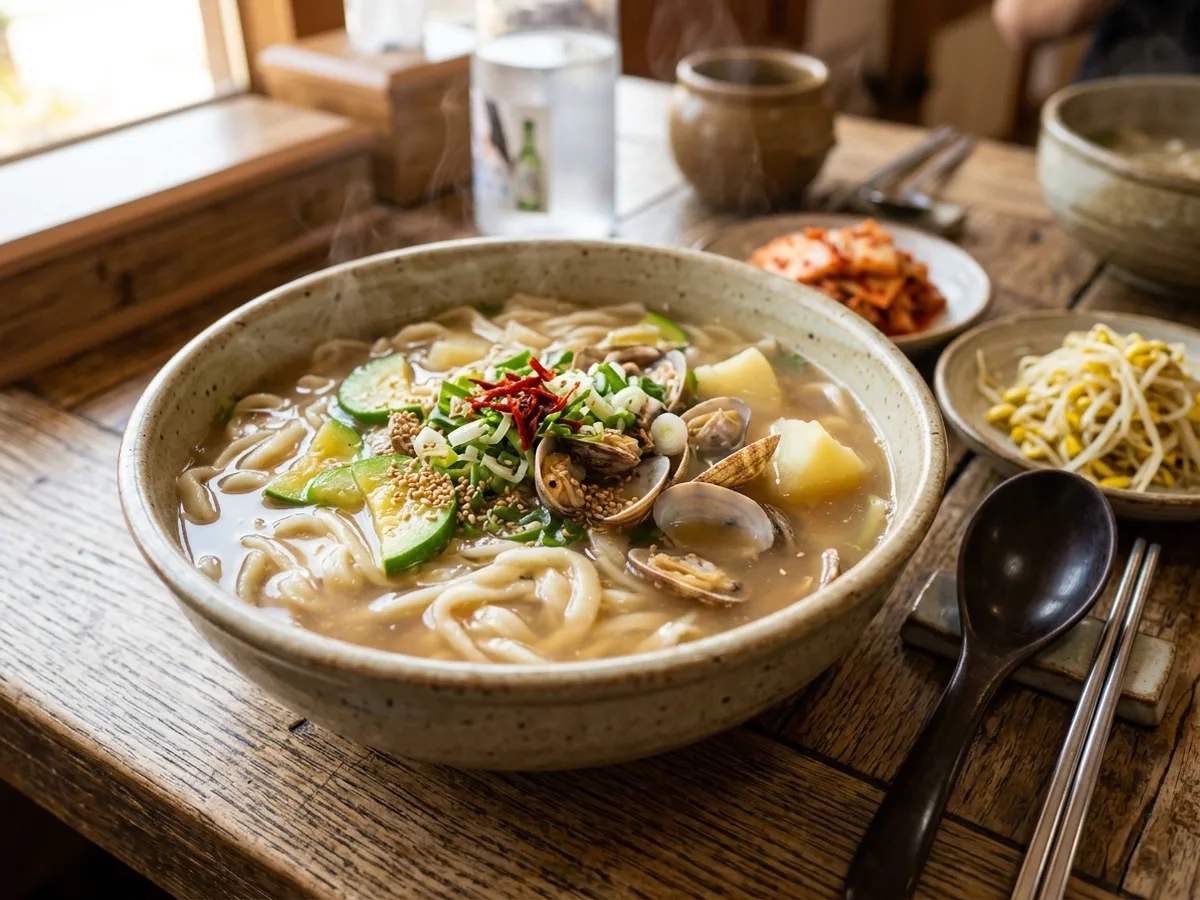 칼국수 · Kalguksu Knife-cut wheat noodles in anchovy or clam broth.
 Knife-cut noodle shops serve fast single bowls, especially at markets.