Haemultang (해물탕)
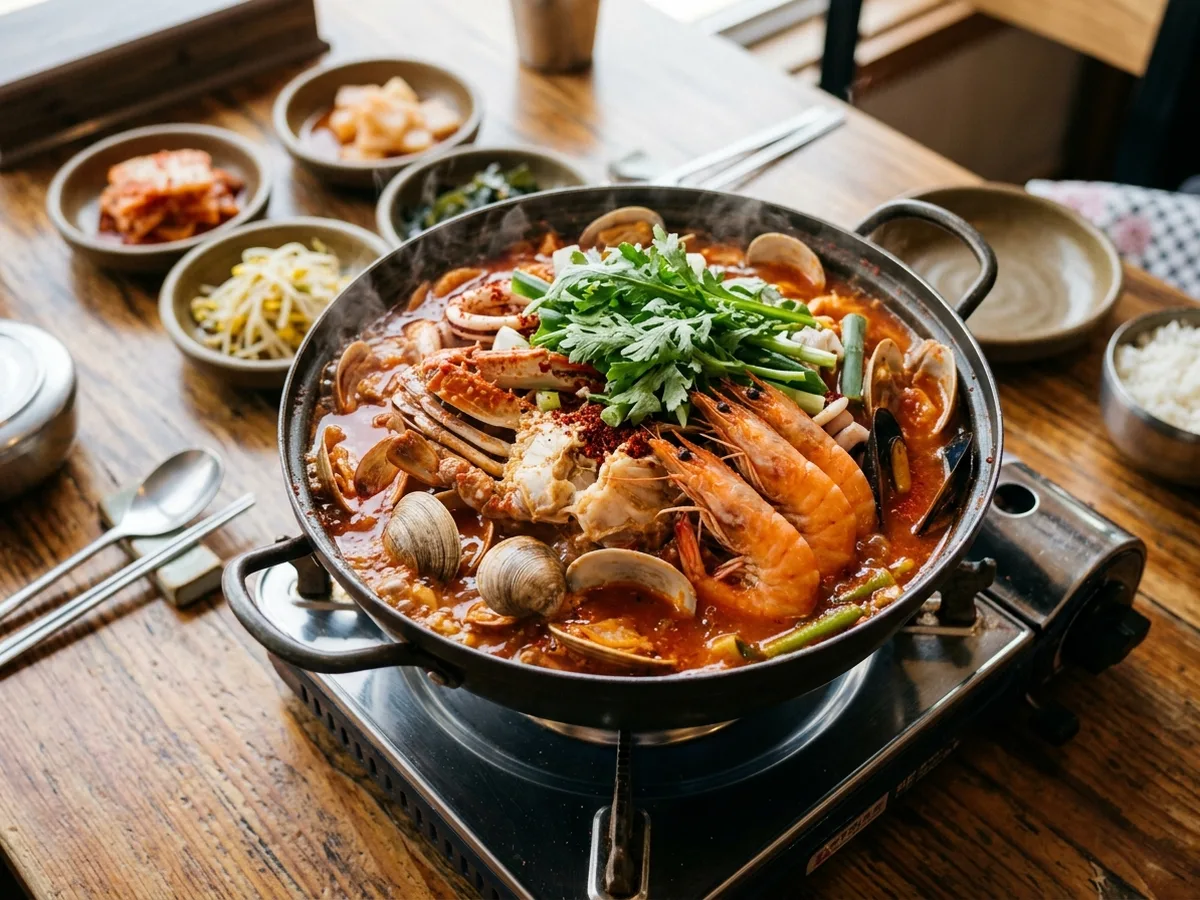
Spicy seafood hot pot loaded with crab, shrimp and clams.
- Korean name
- 해물탕
- Spice level
- Spicy
- Flavor
- spicy · briny
- Typically contains
- seafood
- Vegetarian / vegan
- Not vegetarian — meat or seafood is core to the dish
- Typical price
- ₩40,000–₩60,000 per dish checked 2026-07 — varies by area
- Good to know
- Beginner-friendly ●●○○○ Solo dining ●●○○○ Kid-friendly ●●○○○
- Also written as
- haemul tang, seafood hot pot, spicy seafood stew
What is Haemultang?
Haemultang is the seafood kitchen sink set to boil: crab, shrimp, clams, mussels and half the tide pool stacked in a wide pot of chili broth, crowned with crown daisy, reducing at your table burner. It's a group event with gloves and shell bowls — the broth at the end is the trophy.
How to eat it
- Let it boil down properly before serving — early haemultang is watery haemultang.
- Work shellfish with hands and the provided tools; the shell bowl fills fast.
- The reduced broth finale — with noodles or rice — is what everyone actually came for.
Good to know
- A total shellfish gauntlet for allergies.
- Crab shells turn edges razor-sharp when cooked — glove up.
Judge a haemultang house by broth depth, not seafood tower height — height is theater.
Nutrition
| Calories | 45 kcal |
|---|---|
| Carbohydrate | 2.77 g |
| Protein | 6.63 g |
| Fat | 0.78 g |
| Sodium | 341 mg |
Per serving (~600g): ≈270 kcal · sodium ≈2,046 mg (102% of the WHO daily guideline, 2,000 mg)
Related foods
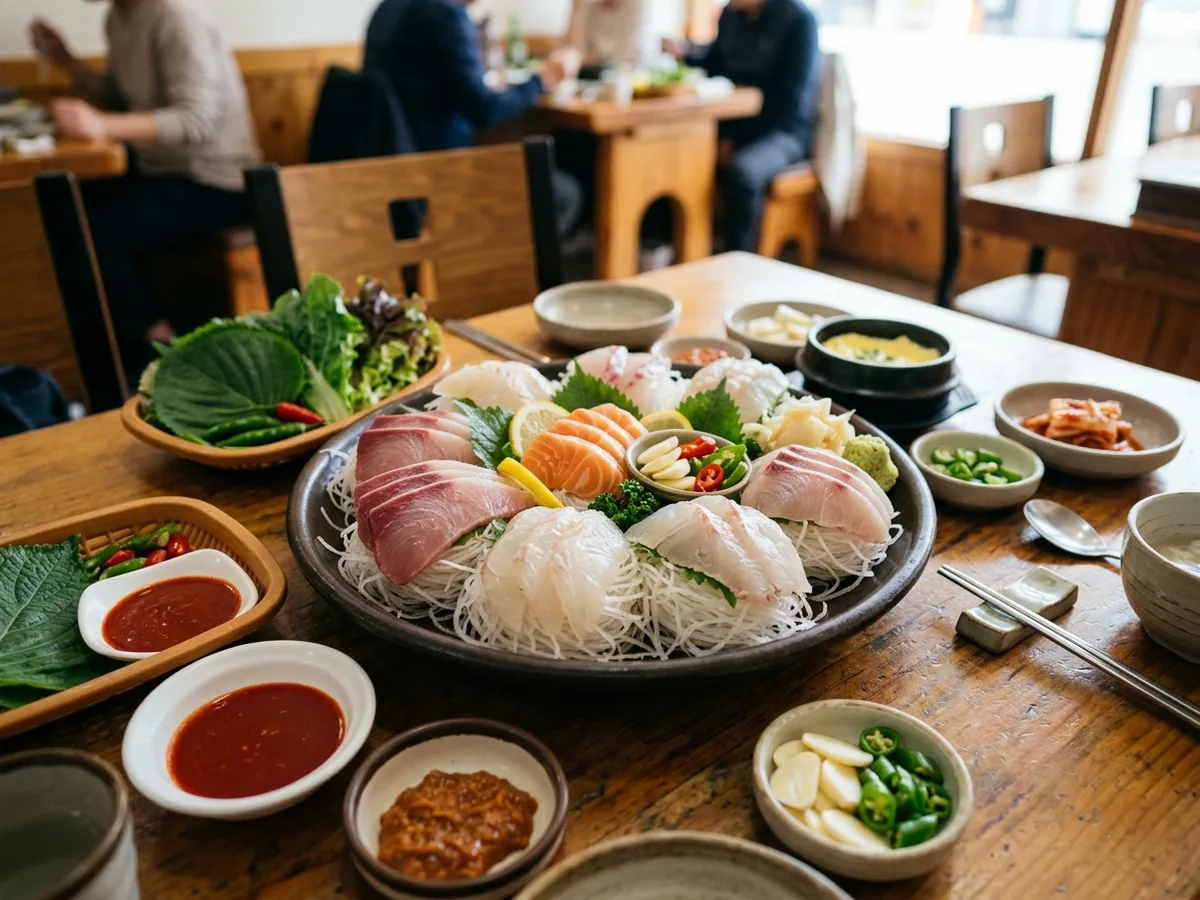 모듬회 · Hoe (Sashimi Platter)Often eaten together Korean-style raw fish platter — eaten with ssamjang and lettuce wraps.
 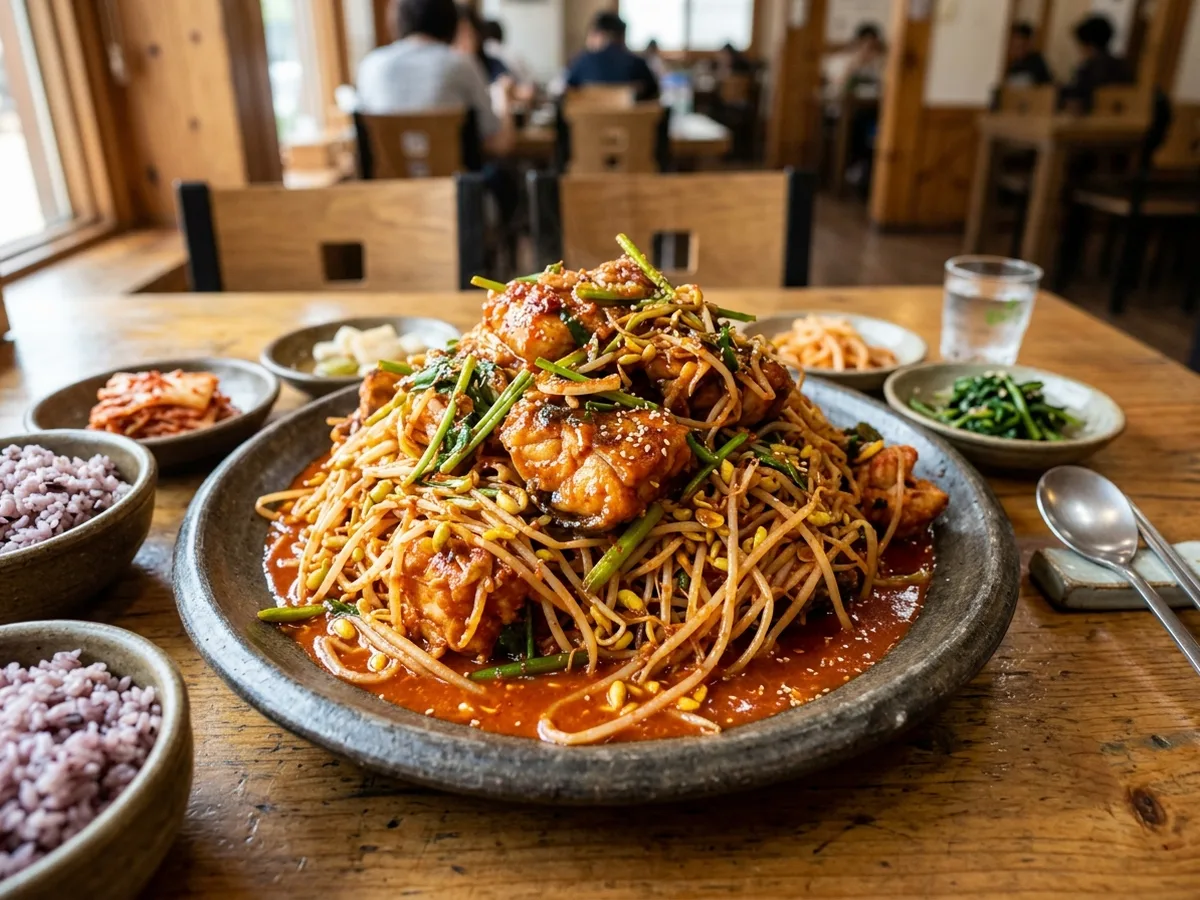 아귀찜 · AgwijjimOften eaten together Spicy braised monkfish piled with crunchy bean sprouts.
 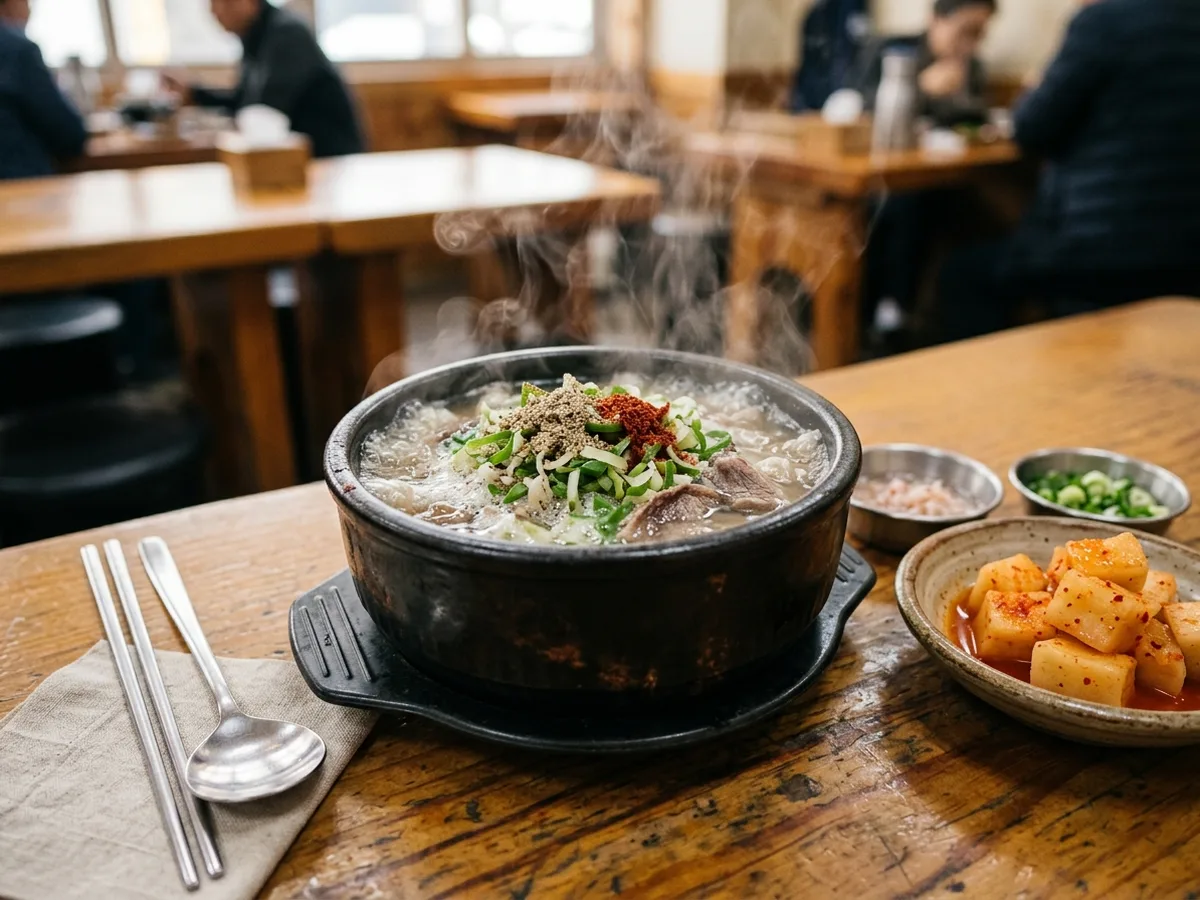 국밥 · GukbapOften eaten together Rice in hot soup — fast, cheap, and deeply Korean.
 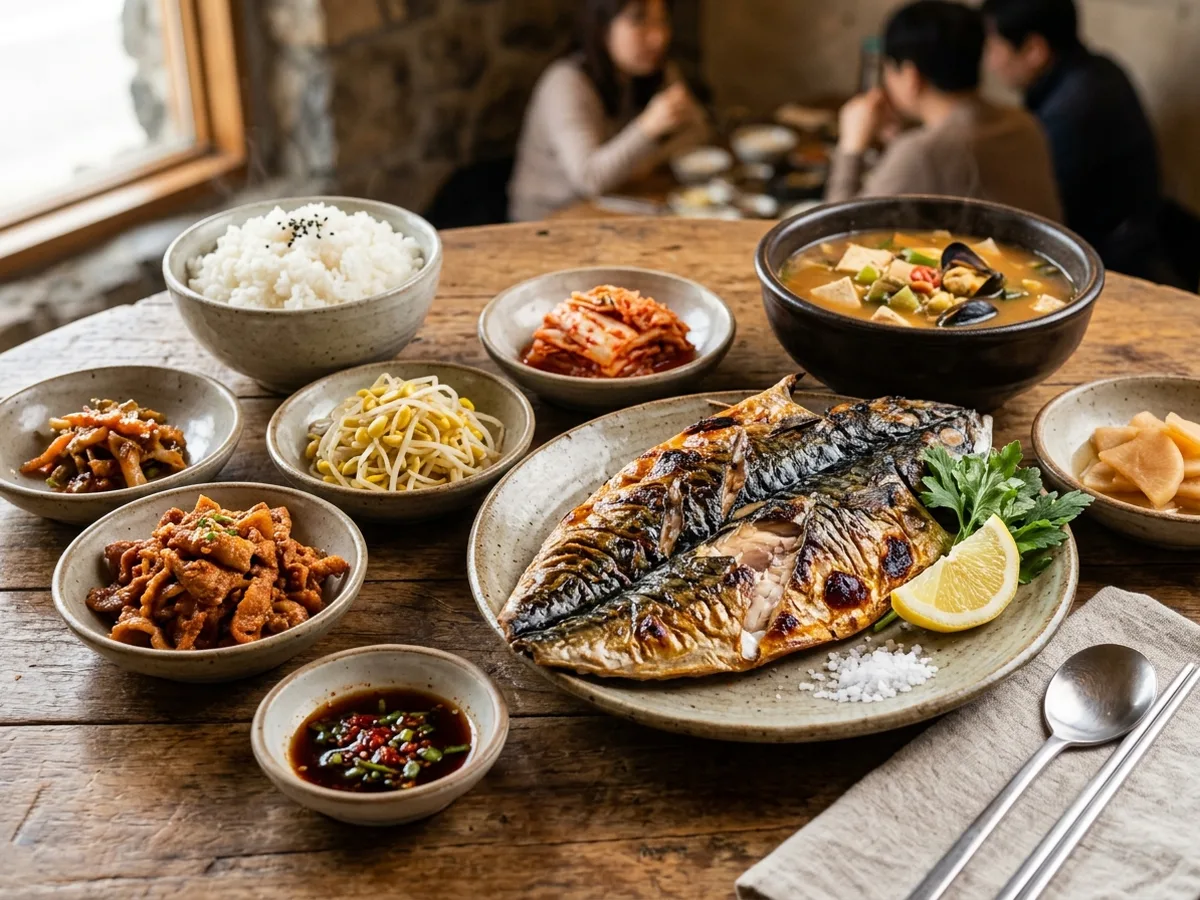 고등어구이 · Godeungeo GuiMilder alternative Grilled mackerel — the backbone of a Korean set meal.
 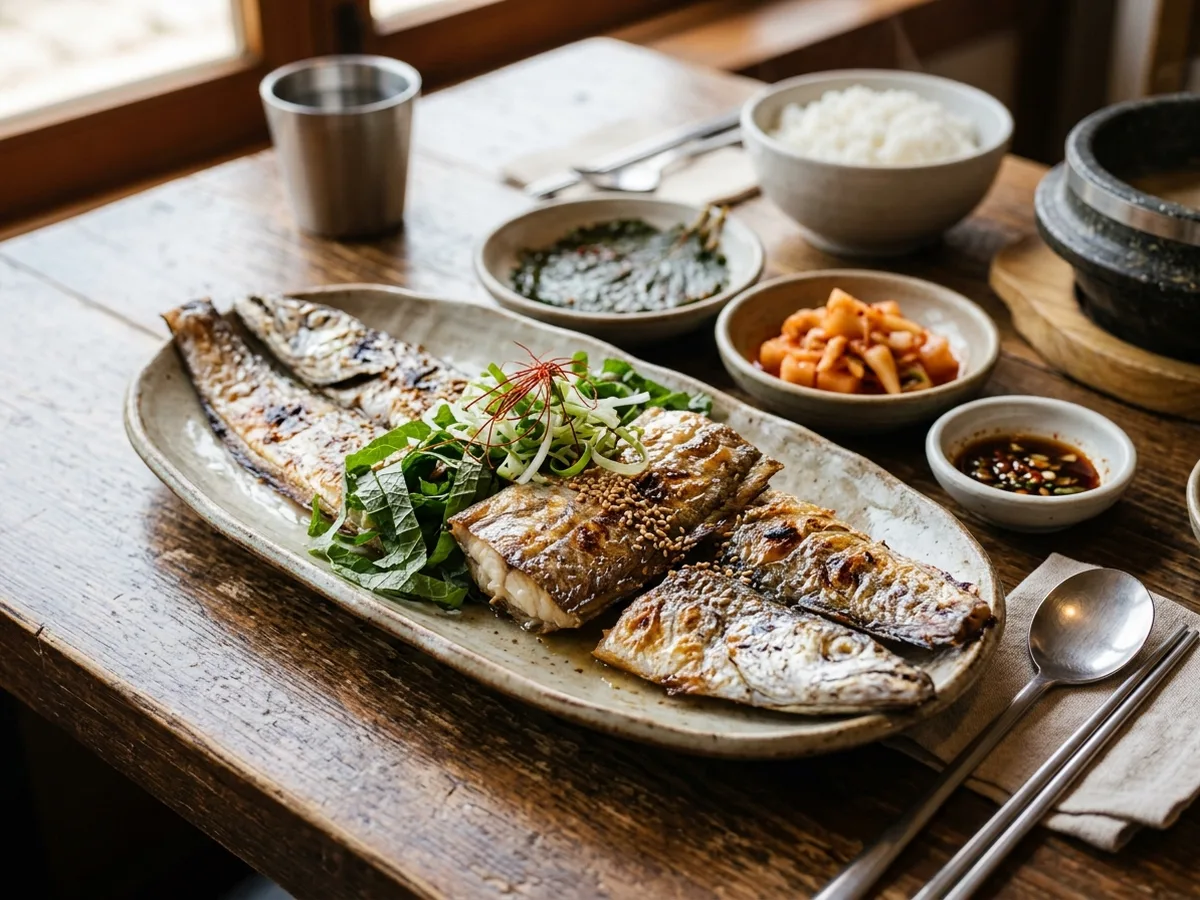 갈치구이 · Galchi GuiMilder alternative Grilled hairtail — silver-skinned, delicate, a Jeju favorite.