Hoe (Sashimi Platter) (모듬회)
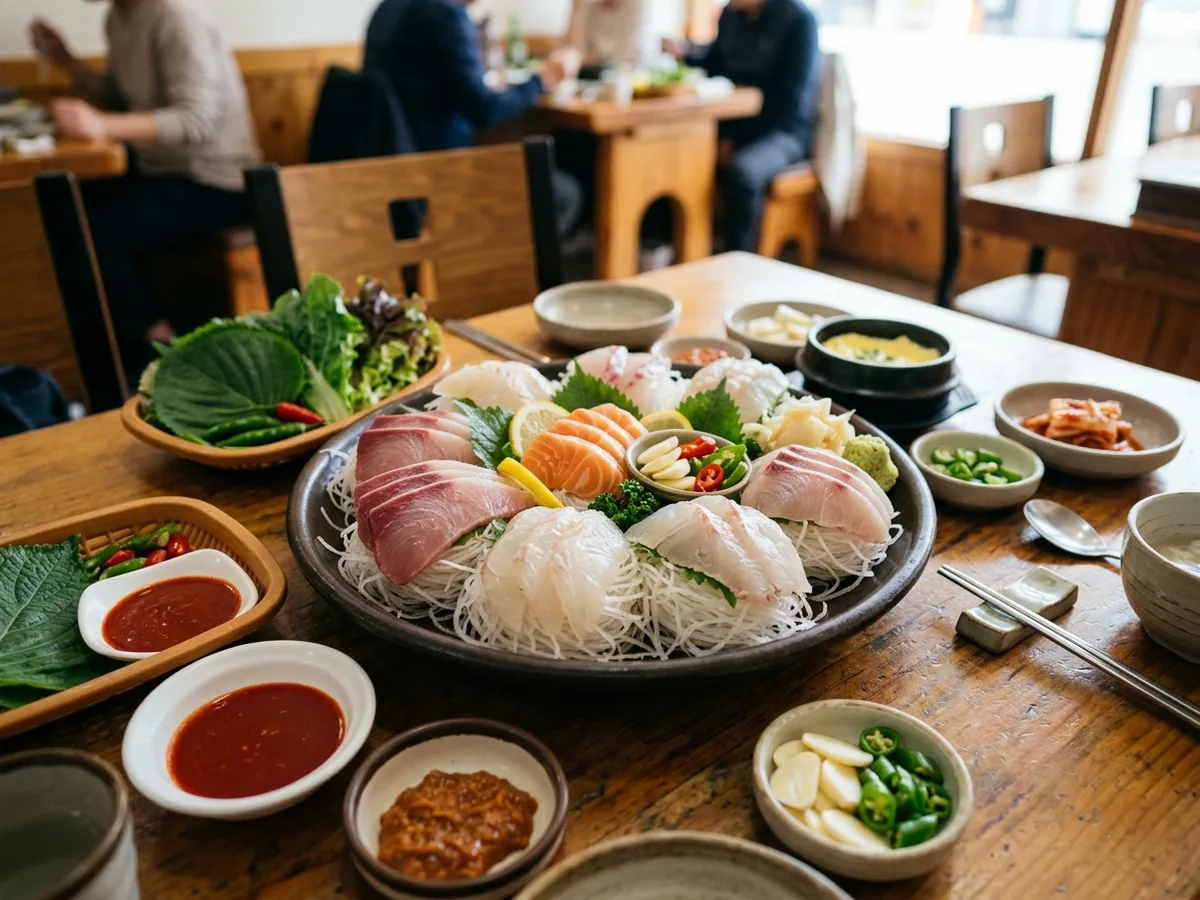
Korean-style raw fish platter — eaten with ssamjang and lettuce wraps.
- Korean name
- 모듬회
- Spice level
- Not spicy
- Flavor
- fresh · delicate
- Typically contains
- raw fish
- Vegetarian / vegan
- Not vegetarian — meat or seafood is core to the dish
- Typical price
- ₩40,000–₩80,000 per dish checked 2026-07 — varies by area
- Good to know
- Beginner-friendly ●●○○○ Solo dining ●●○○○ Kid-friendly ●●○○○
- Also written as
- hwe, hui, korean sashimi, modum hoe
What is Hoe (Sashimi Platter)?
Hoe is Korean raw fish culture — same knife-work family as sashimi, completely different table: thick-cut slices over shredded radish, eaten wrapped in lettuce or perilla with ssamjang, garlic, chili and a dab of chojang or wasabi-soy. The fish opens the meal; the spicy maeuntang stew made from its bones closes it.
How to eat it
- Build a ssam: leaf, fish slice, chojang or ssamjang, garlic — one bite.
- Purists eat the first slices plain in wasabi-soy before wrapping begins; both modes coexist.
- Always finish with maeuntang — the bones become the stew; leaving without it is leaving early.
Good to know
- 'Hwal-eo' (live-tank) hoe prizes bounce over tenderness — texture-forward, unlike aged sashimi; adjust expectations.
- Coastal 'natural' (자연산) vs farmed pricing differs wildly — confirm before ordering.
Wrapping raw fish in leaves with fermented paste is the distinctly Korean move — don't look for it in Tokyo.
Nutrition
| Calories | 133 kcal |
|---|---|
| Carbohydrate | 5.15 g |
| Protein | 22.5 g |
| Fat | 2.31 g |
| Sodium | 493 mg |
Per serving (~150ml): ≈200 kcal · sodium ≈740 mg (37% of the WHO daily guideline, 2,000 mg)
Related foods
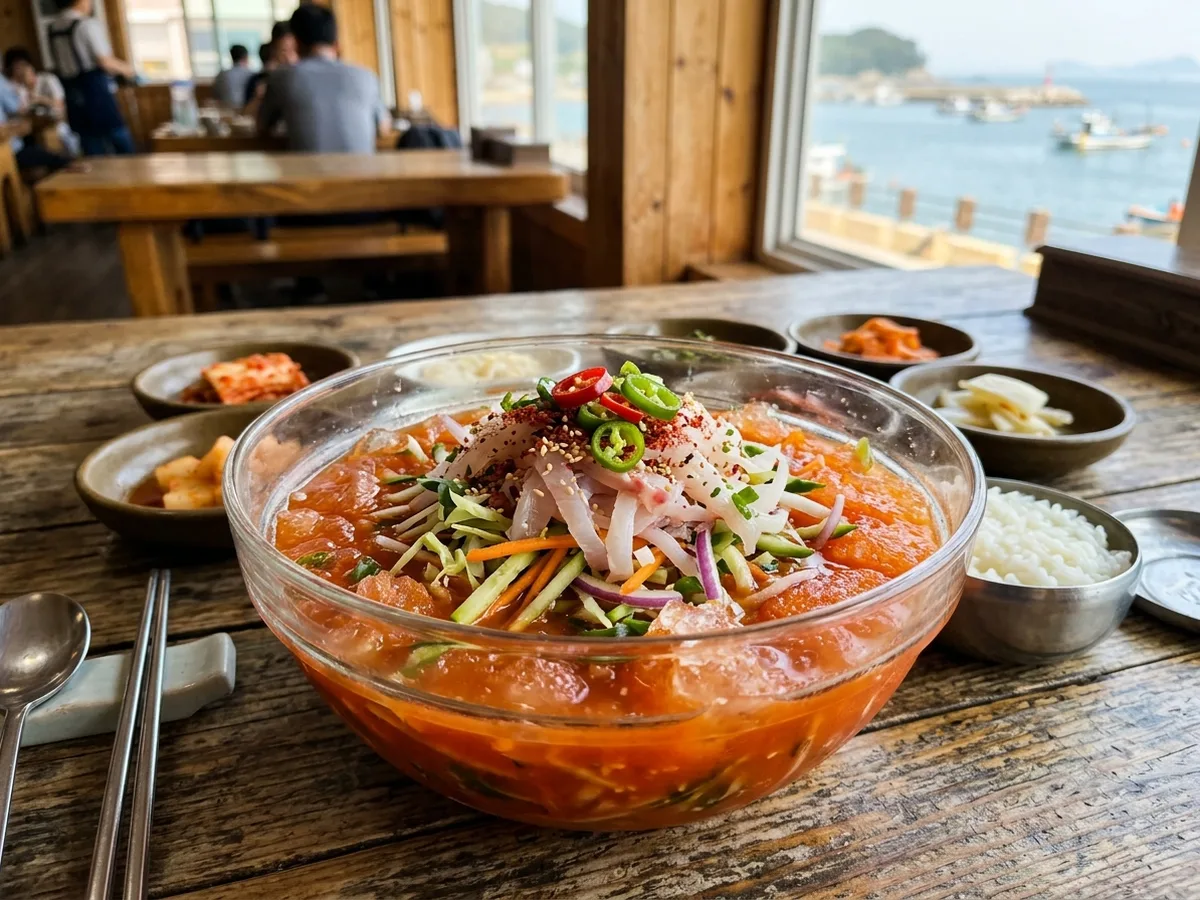 물회 · MulhoeOften eaten together Chilled raw-fish soup in tangy broth — a coastal summer dish.
 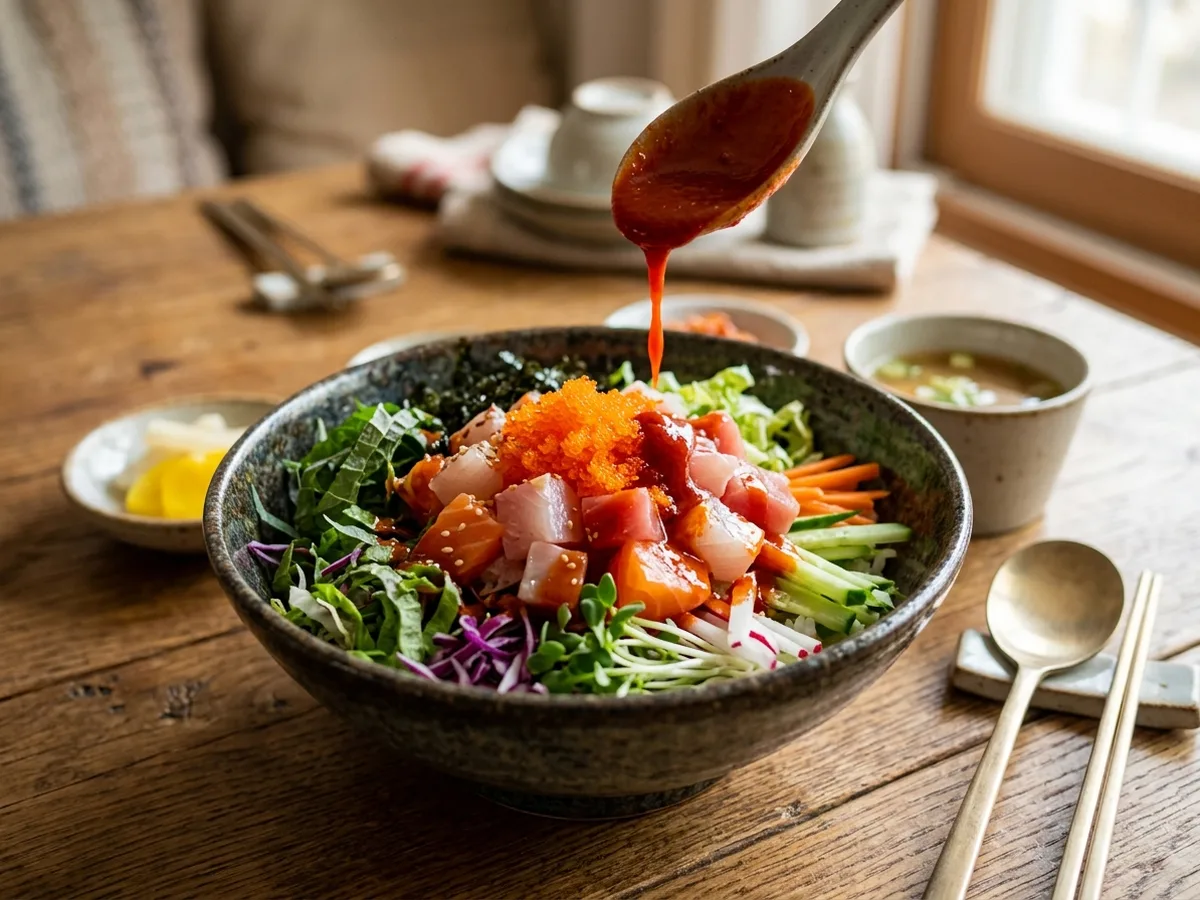 회덮밥 · HoedeopbapOften eaten together Raw fish over rice and greens, mixed with chili-vinegar sauce.
 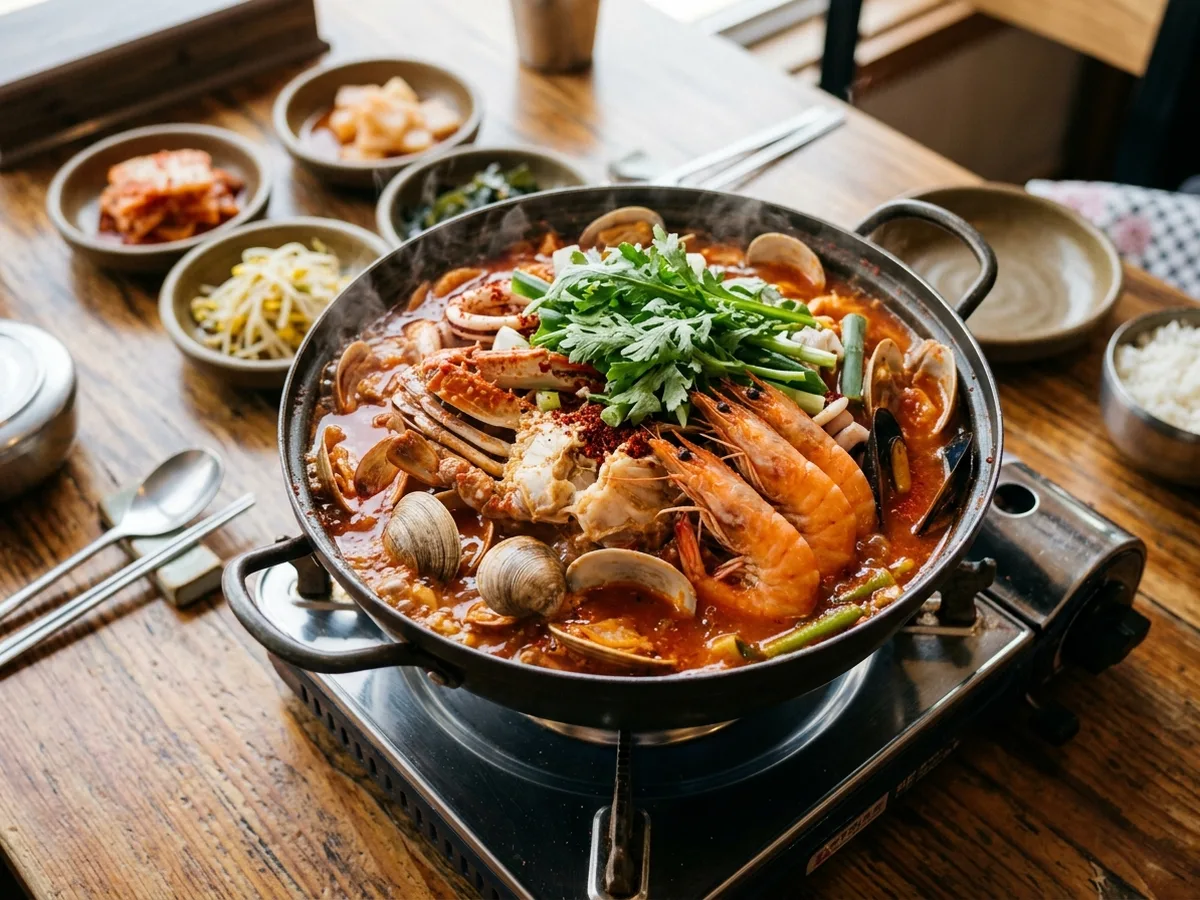 해물탕 · HaemultangOften eaten together Spicy seafood hot pot loaded with crab, shrimp and clams.
 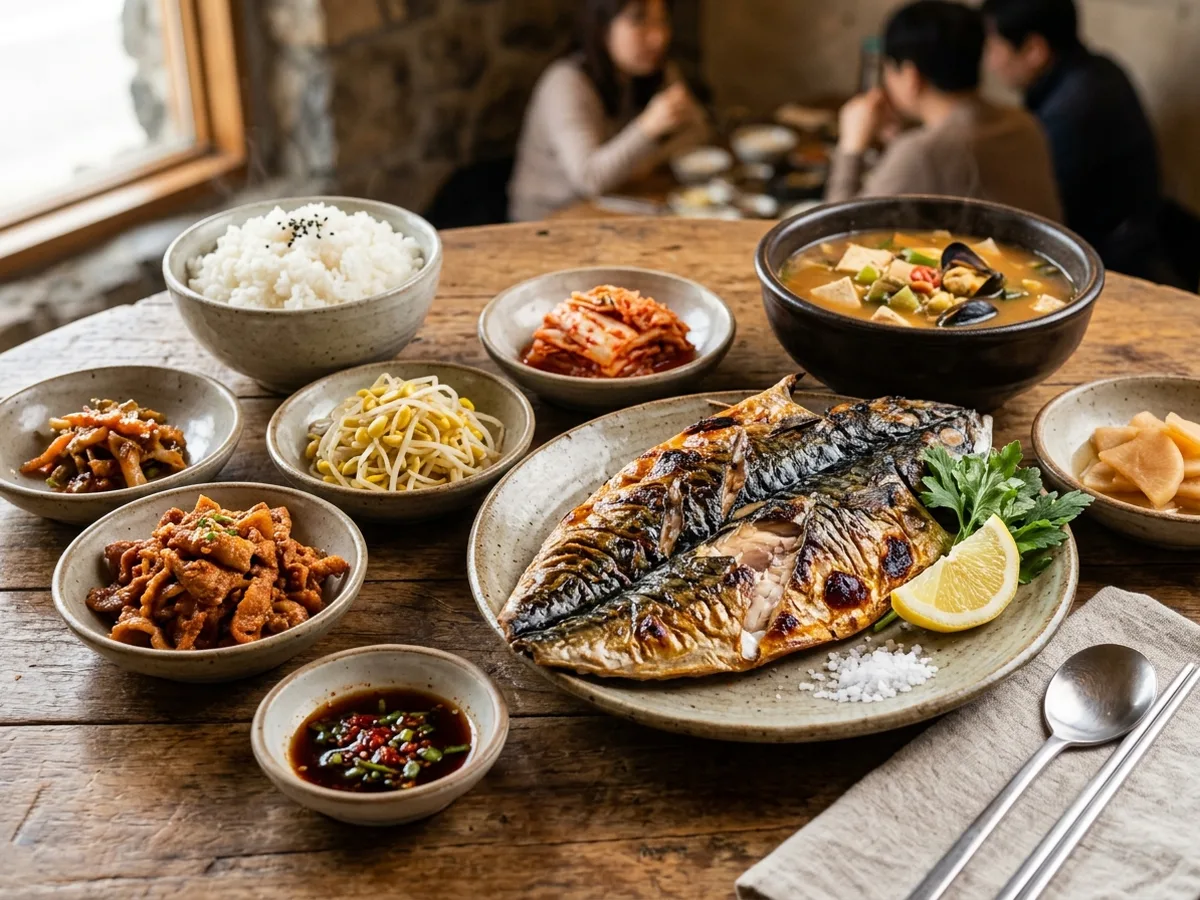 고등어구이 · Godeungeo GuiSame family · Seafood Grilled mackerel — the backbone of a Korean set meal.
 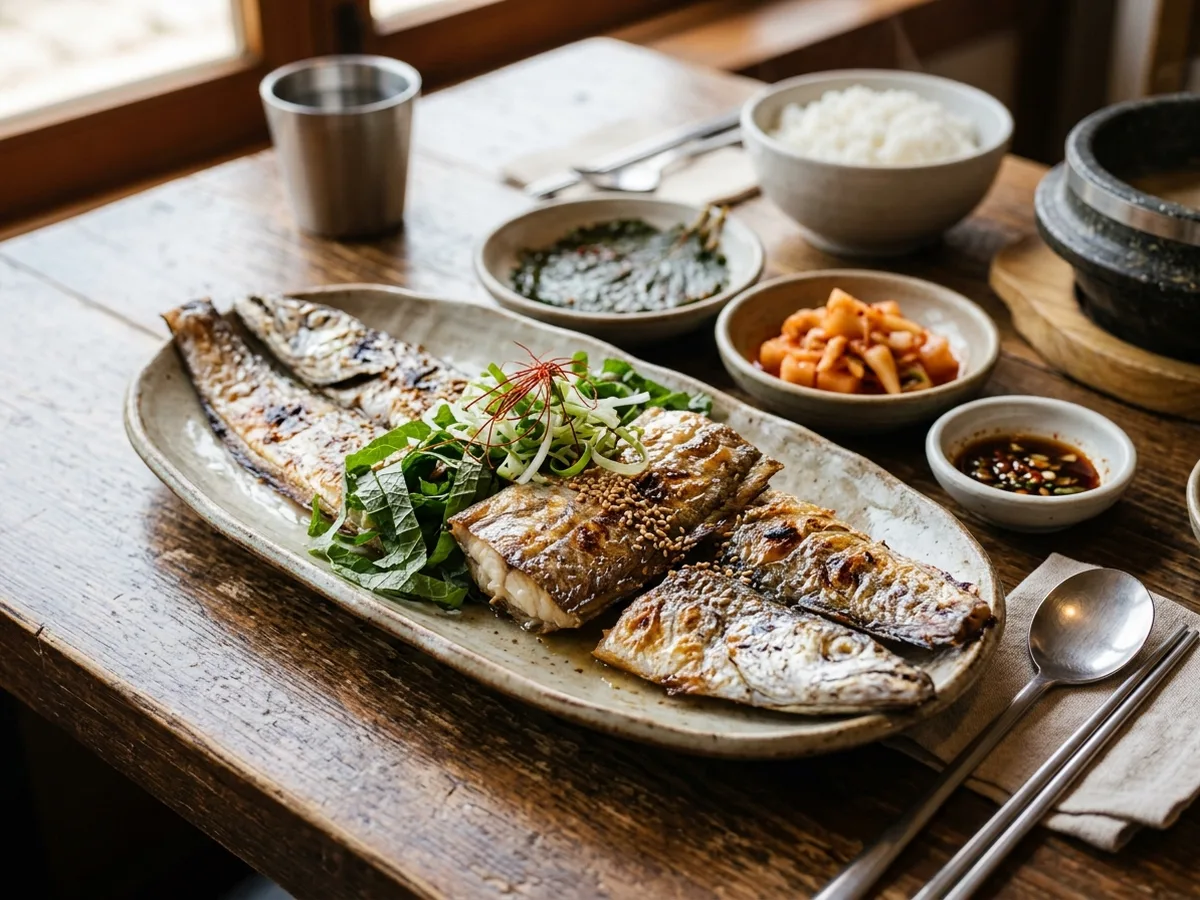 갈치구이 · Galchi GuiOften eaten together Grilled hairtail — silver-skinned, delicate, a Jeju favorite.