Agwijjim (아귀찜)
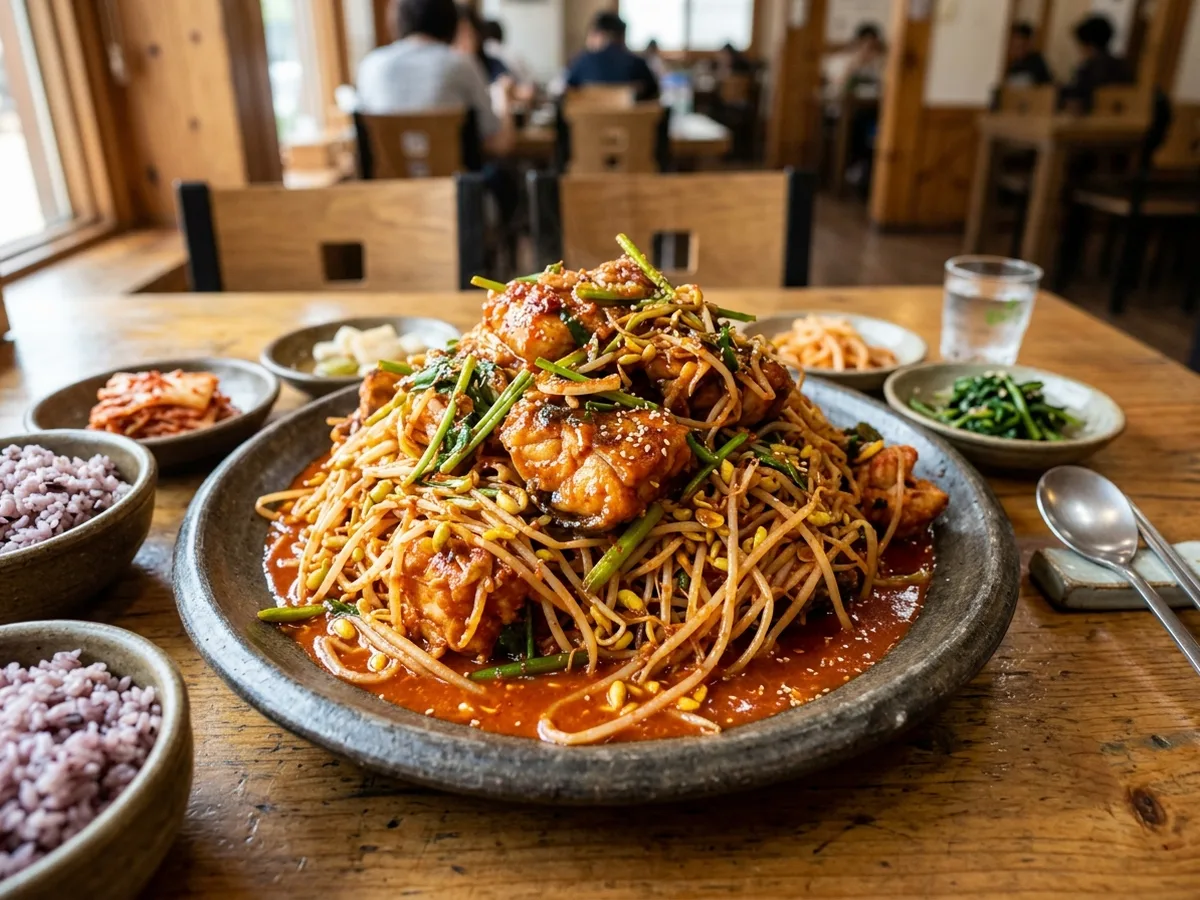
Spicy braised monkfish piled with crunchy bean sprouts.
- Korean name
- 아귀찜
- Spice level
- Very spicy
- Flavor
- spicy · savory
- Typically contains
- fish, soybean sprouts
- Vegetarian / vegan
- Not vegetarian — meat or seafood is core to the dish
- Typical price
- ₩40,000–₩60,000 per dish checked 2026-07 — varies by area
- Good to know
- Beginner-friendly ●●○○○ Solo dining ●●○○○ Kid-friendly ●○○○○
- Also written as
- agujjim, agu jjim, agwi jjim, braised spicy monkfish
What is Agwijjim?
Agwijjim is monkfish transformed: an ugly deep-sea fish braised under a mountain of soybean sprouts and minari in a fierce gochugaru sauce thickened to cling. Masan claims the original; every version delivers the same drama — bouncy fish, crunchy sprouts, sauce that demands rice and dares you to keep eating.
How to eat it
- Take fish, sprouts and sauce in one chopstick load — the trio is the dish.
- Watch for the soft bones and gelatinous skin: prized textures, not defects.
- Finish with bokkeumbap in the leftover sauce, always.
Good to know
- Firmly in the spicy tier — 'less spicy' requests are respected at most houses.
- Monkfish bones are cartilaginous and sneaky.
Masan (now Changwon) is the pilgrimage town; dried-monkfish versions there are the old style.
Nutrition
| Calories | 84 kcal |
|---|---|
| Carbohydrate | 7.26 g |
| Protein | 6.72 g |
| Fat | 3.13 g |
| Sodium | 392 mg |
Per serving (~200g): ≈168 kcal · sodium ≈784 mg (39% of the WHO daily guideline, 2,000 mg)
Related foods
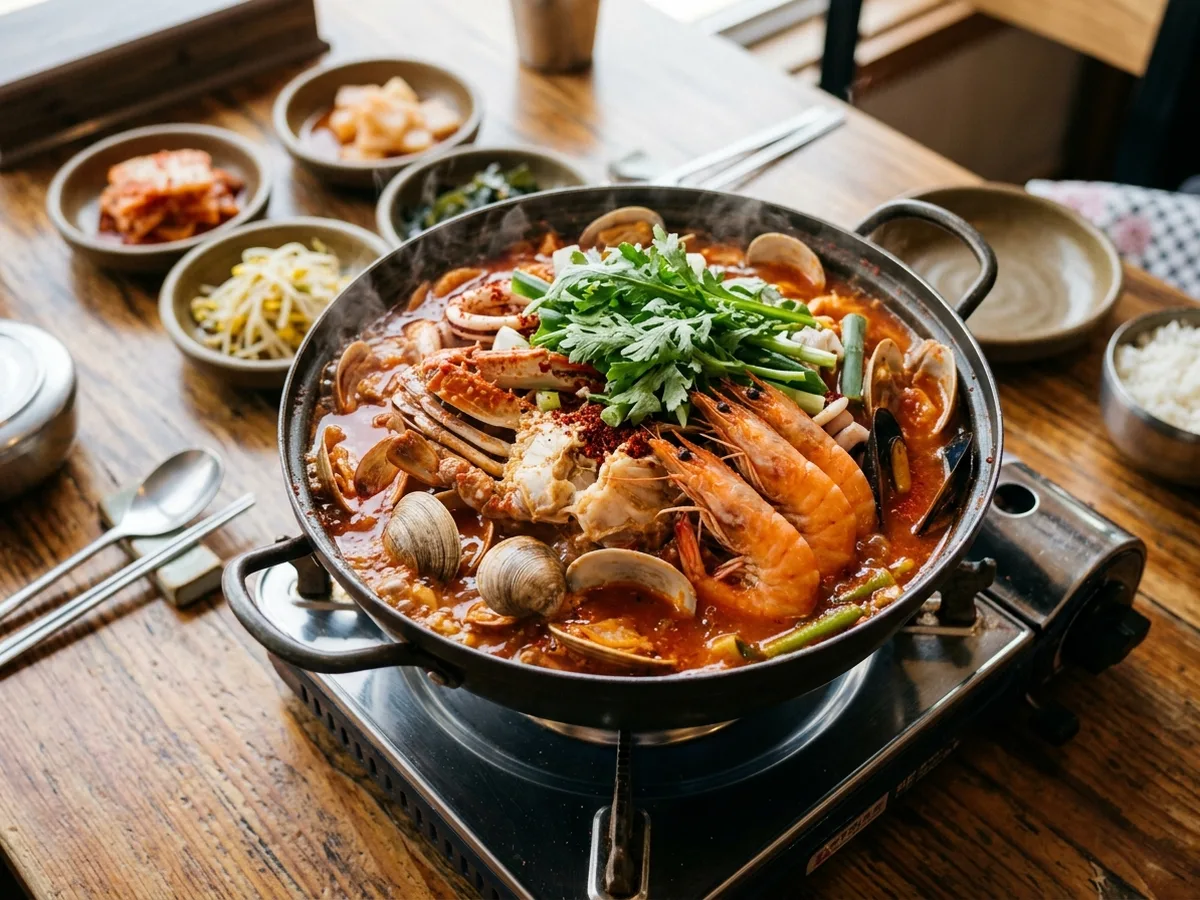 해물탕 · HaemultangOften eaten together Spicy seafood hot pot loaded with crab, shrimp and clams.
 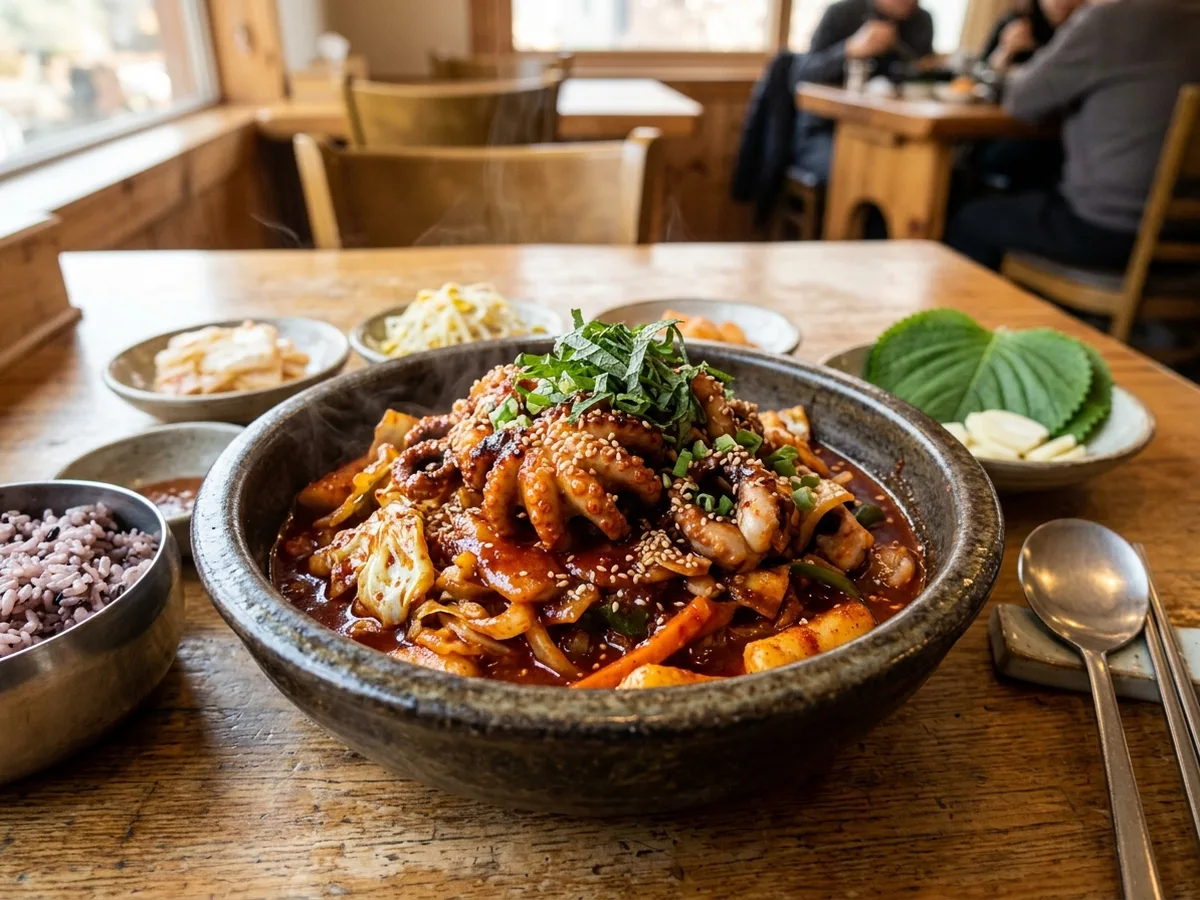 주꾸미볶음 · Jjukkumi BokkeumOften eaten together Spicy webfoot octopus stir-fry — spring's spiciest craving.
 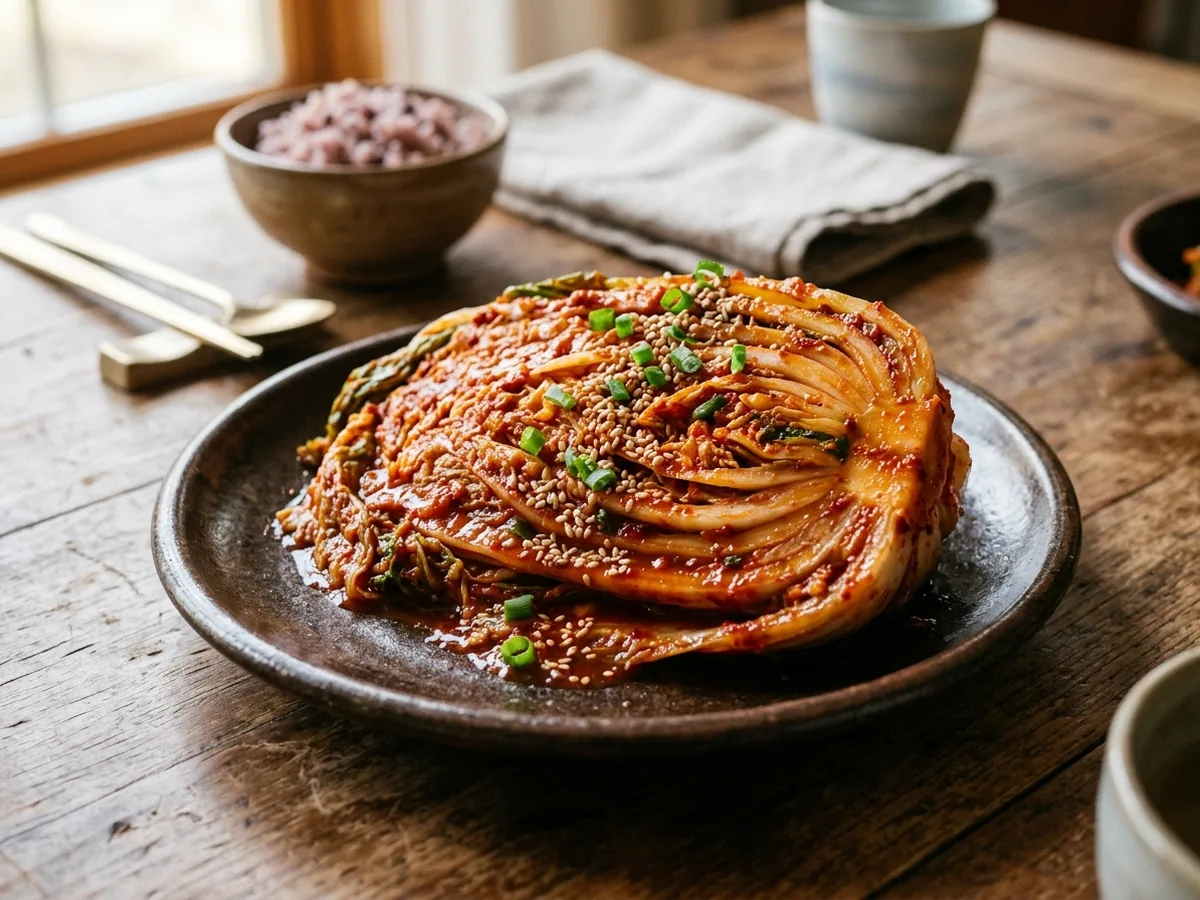 배추김치 · KimchiOften eaten together Fermented napa cabbage — the one dish on every Korean table.
 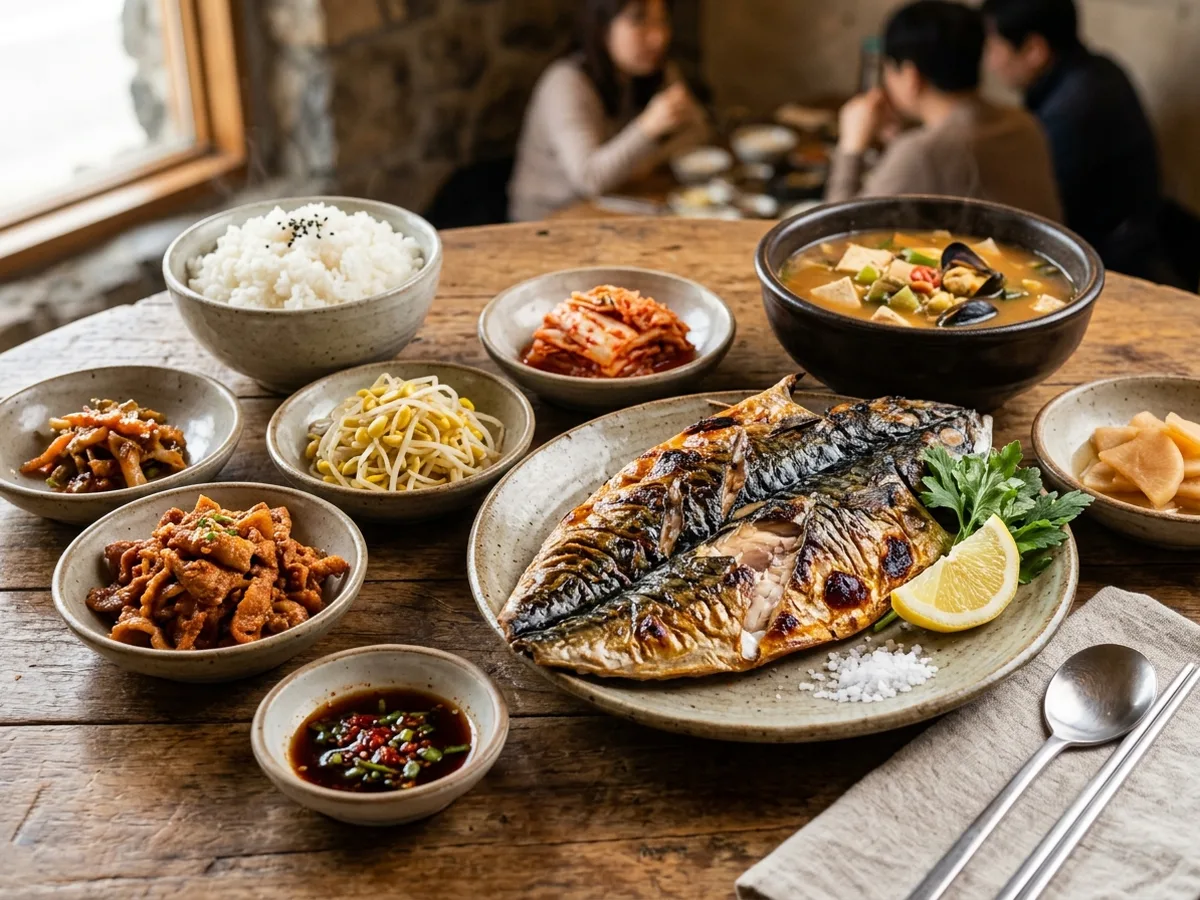 고등어구이 · Godeungeo GuiMilder alternative Grilled mackerel — the backbone of a Korean set meal.
 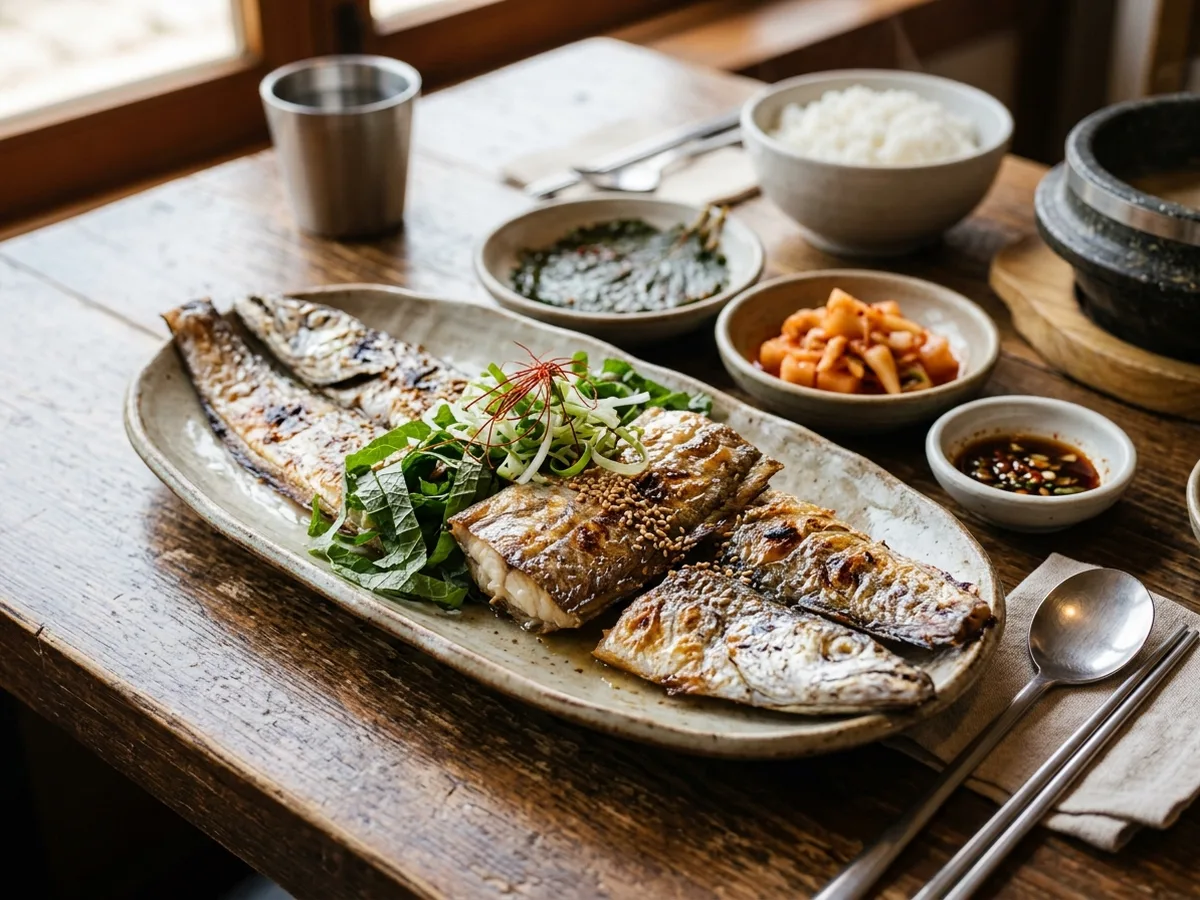 갈치구이 · Galchi GuiMilder alternative Grilled hairtail — silver-skinned, delicate, a Jeju favorite.