Mulhoe (물회)
Chilled raw-fish soup in tangy broth — a coastal summer dish.
- Korean name
- 물회
- Spice level
- Medium
- Flavor
- tangy · refreshing
- Typically contains
- raw fish
- Vegetarian / vegan
- Not vegetarian — meat or seafood is core to the dish
- Typical price
- ₩15,000–₩30,000 per person checked 2026-07 — varies by area
- Good to know
- Beginner-friendly ●●○○○ Solo dining ●●○○○ Kid-friendly ●●○○○
- Also written as
- mul hoe, mulhwe, cold raw fish soup
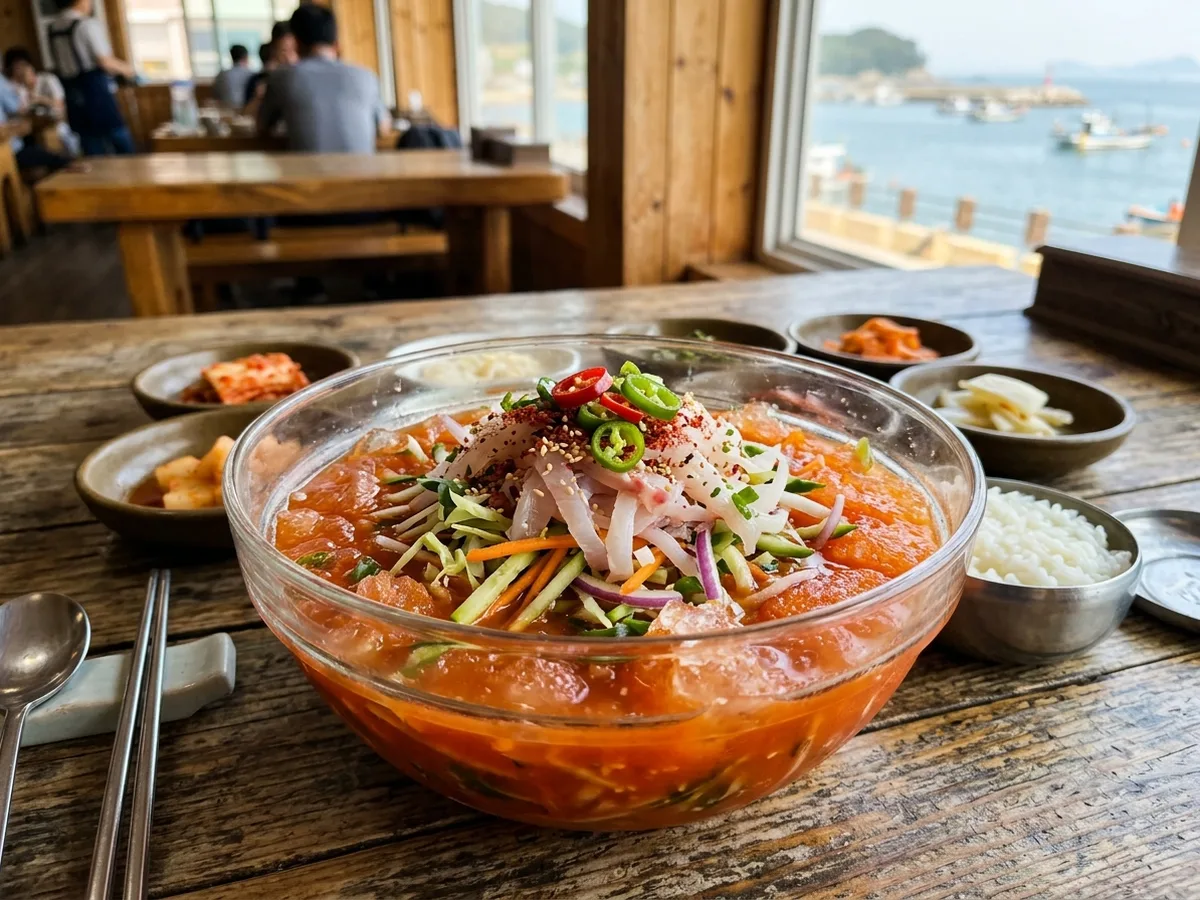
What is Mulhoe?
Mulhoe is raw fish as cold soup: sashimi strips, crisp vegetables and ice cubes in a sweet-tangy gochujang broth you drink as much as eat. Born as a fisherman's deck meal on the east coast, it's now the definitive Korean beach-town summer lunch — Pohang, Sokcho and Jeju all claim the best bowl.
How to eat it
- Stir well, eat the fish and vegetables first, then pour in rice or somyeon for round two.
- Drink the broth from the bowl — it's designed as a drinkable dish.
- Eat it fast while the ice holds; warm mulhoe is a sad thing.
Good to know
- Raw fish rules apply despite the soup format.
- Sweetness varies by region — Jeju style (doenjang-based) reads totally different from mainland gochujang style.
Originally fishermen dumping water on leftover sashimi — necessity that became a genre.
Seen on Screen
When Life Gives You Tangerines (폭싹 속았수다, 2025) — The haenyeo divers' cold raw-fish soup belongs to the same Jeju coast the story inhabits. (Theme connection.)
Theme connection — not a specific-scene claim
Nutrition
| Calories | 76 kcal |
|---|---|
| Carbohydrate | 7.9 g |
| Protein | 4.91 g |
| Fat | 2.7 g |
| Sodium | 299 mg |
Per serving (~700g): ≈532 kcal · sodium ≈2,093 mg (105% of the WHO daily guideline, 2,000 mg)
Related foods
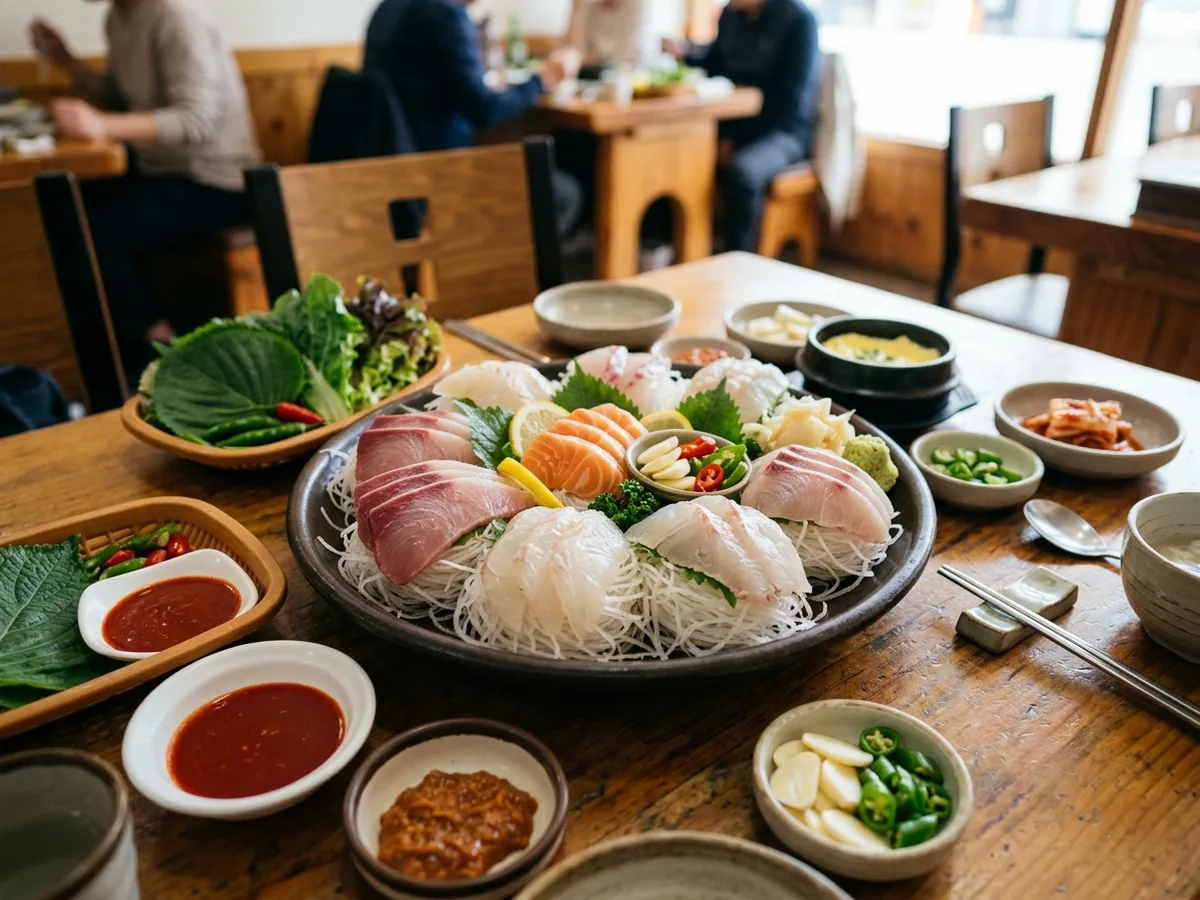 모듬회 · Hoe (Sashimi Platter)Often eaten together Korean-style raw fish platter — eaten with ssamjang and lettuce wraps.
 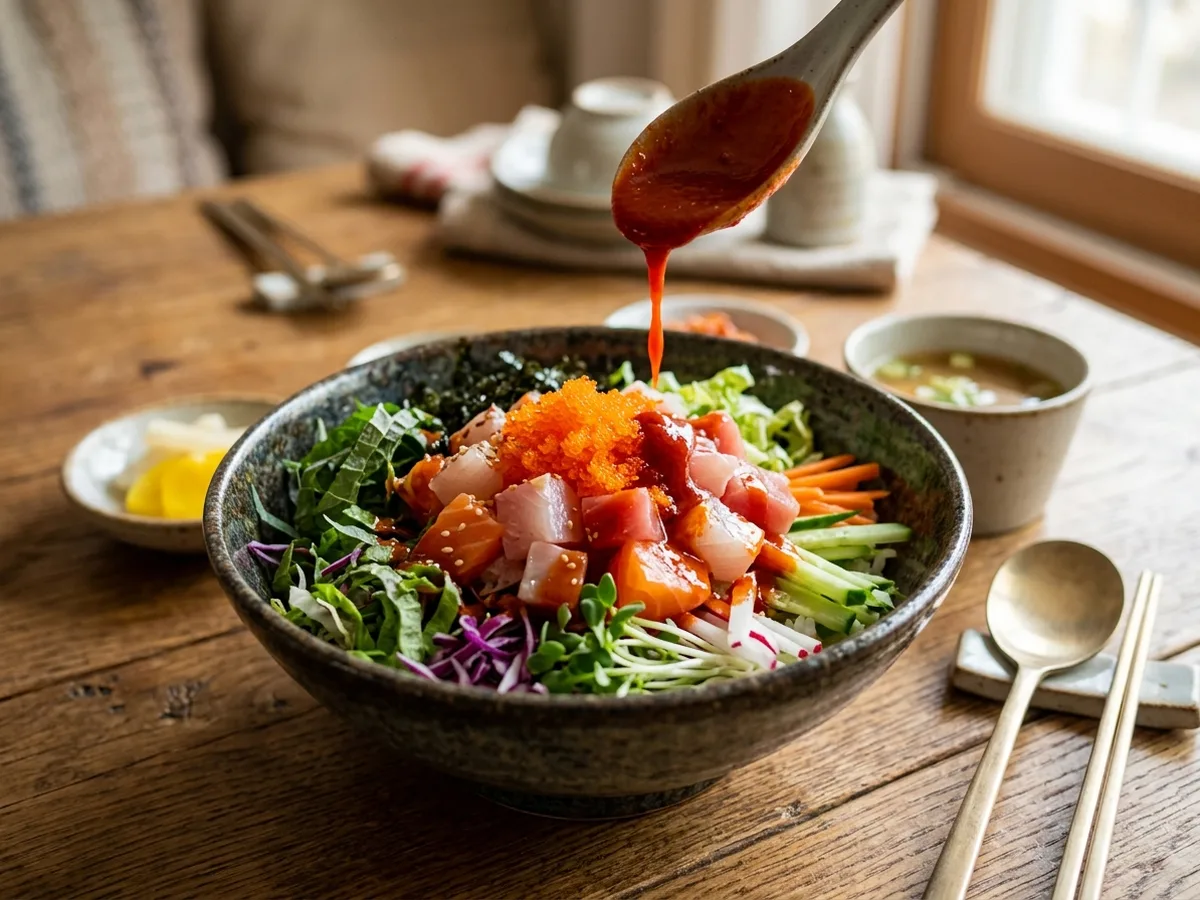 회덮밥 · HoedeopbapOften eaten together Raw fish over rice and greens, mixed with chili-vinegar sauce.
 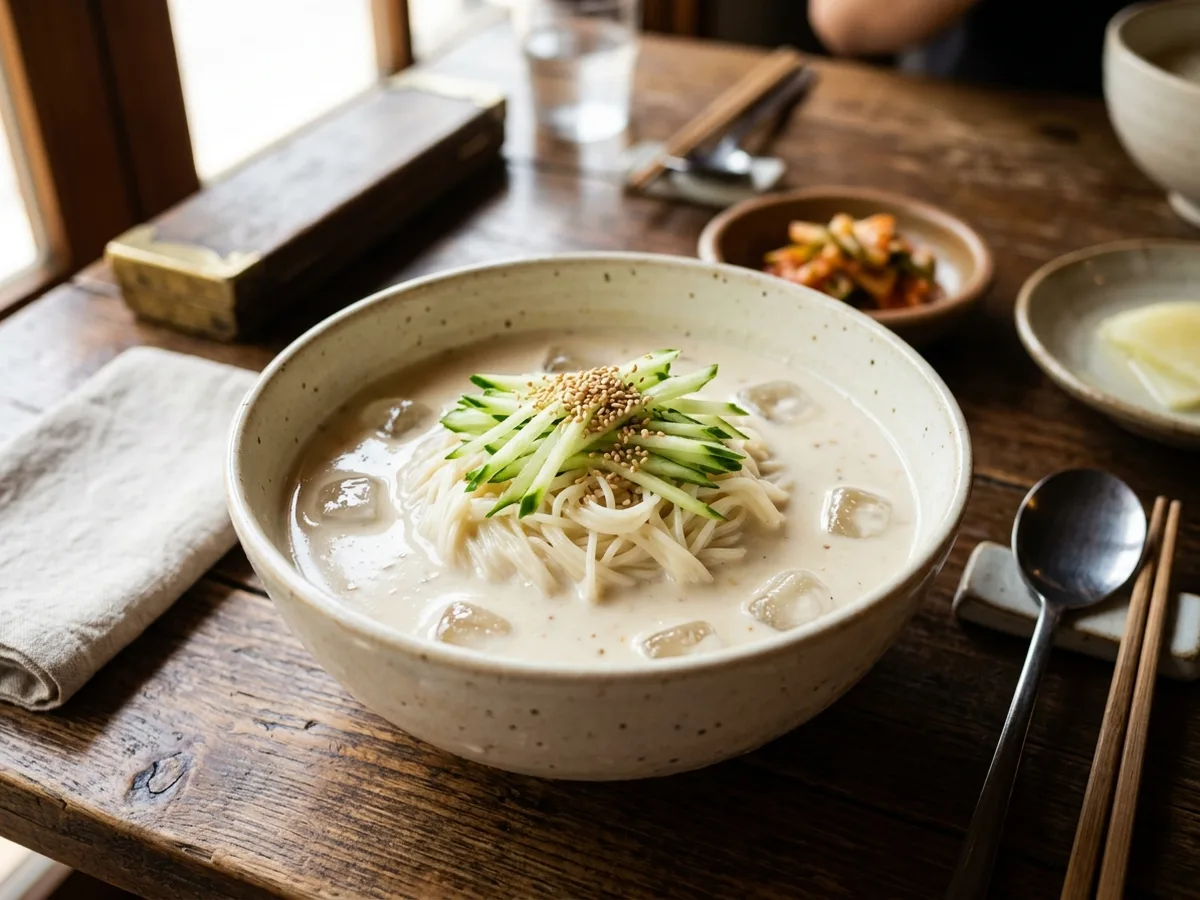 콩국수 · KongguksuOften eaten together Noodles in chilled soy-milk broth — a summer-only obsession.
 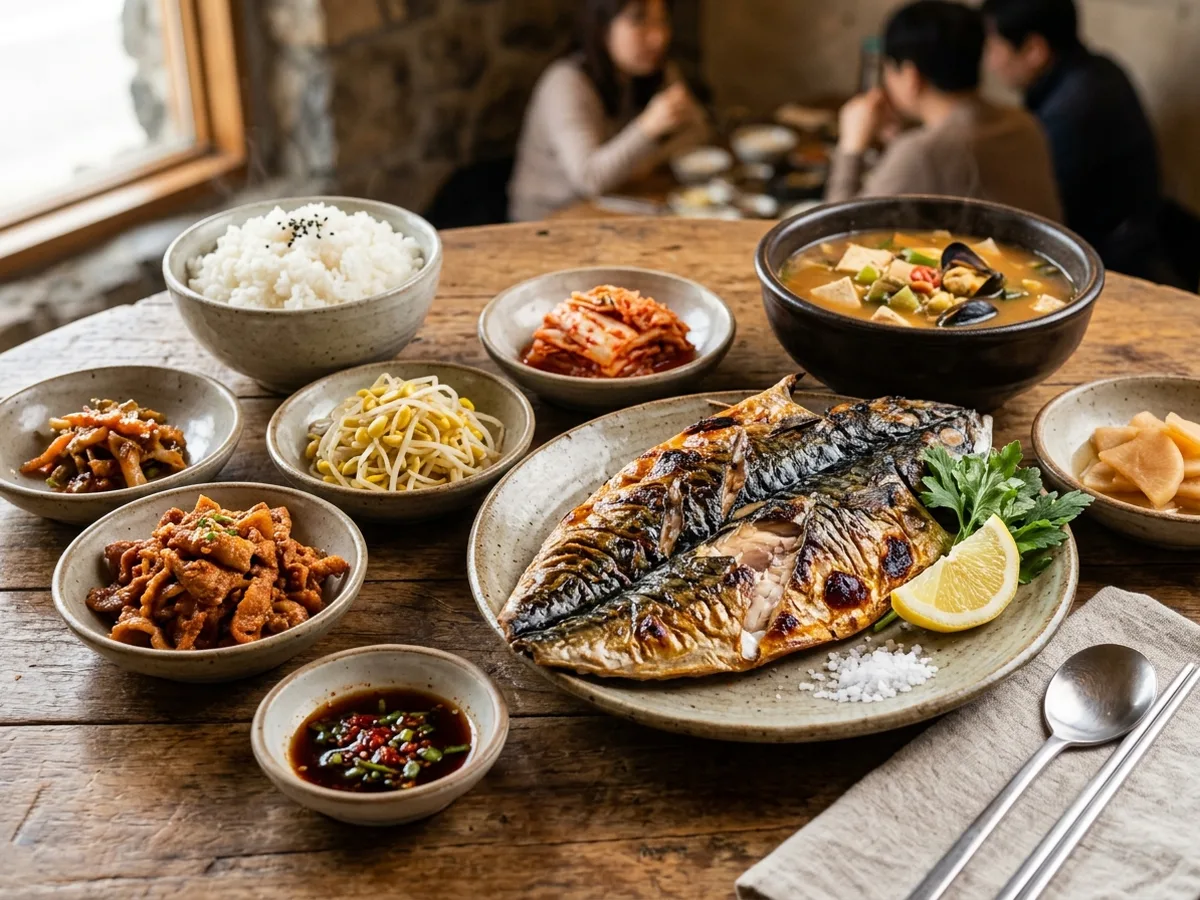 고등어구이 · Godeungeo GuiMilder alternative Grilled mackerel — the backbone of a Korean set meal.
 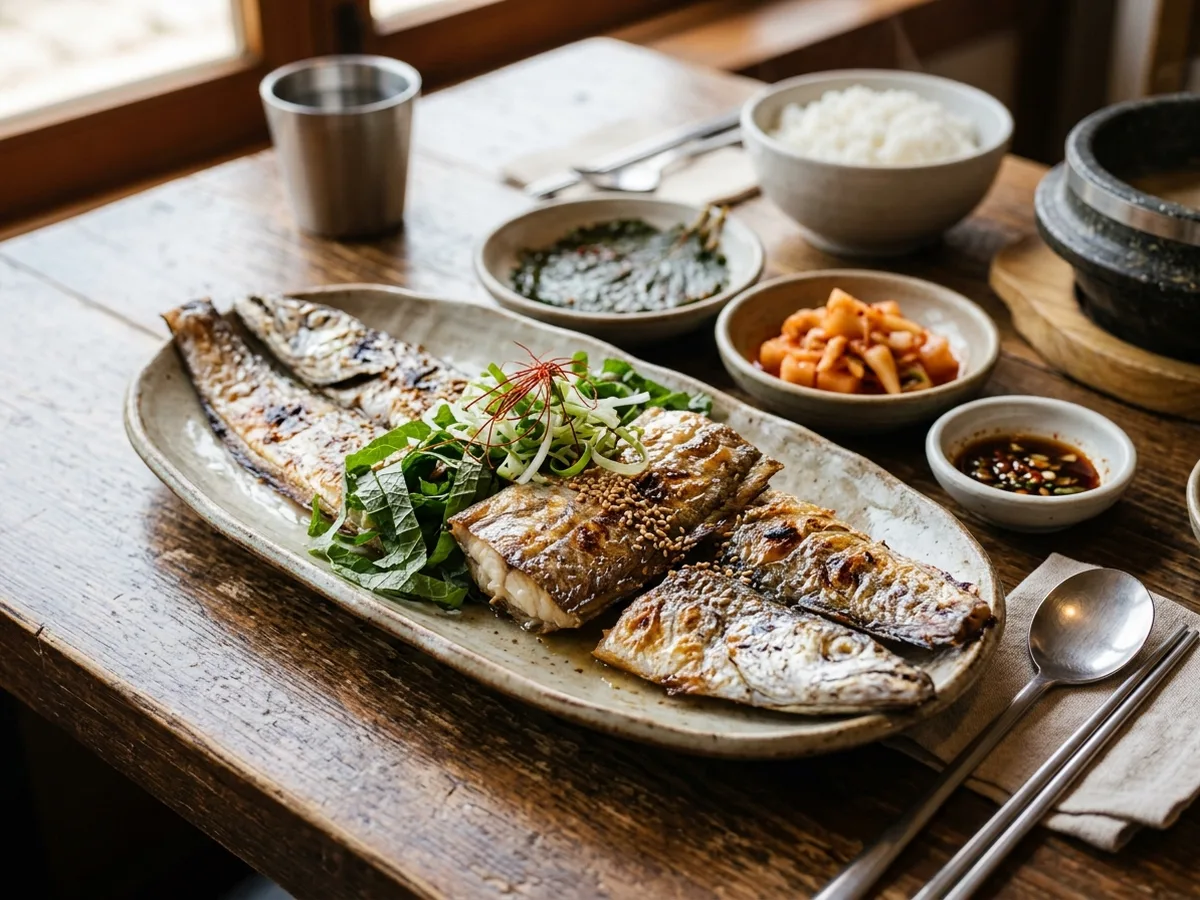 갈치구이 · Galchi GuiMilder alternative Grilled hairtail — silver-skinned, delicate, a Jeju favorite.