Jangeo Gui (장어구이)
Glazed grilled eel — Korea's classic stamina food.
- Korean name
- 장어구이
- Spice level
- Mild
- Flavor
- savory · sweet
- Typically contains
- fish
- Vegetarian / vegan
- Not vegetarian — meat or seafood is core to the dish
- Typical price
- ₩30,000–₩50,000 per person checked 2026-07 — varies by area
- Good to know
- Beginner-friendly ●●●○○ Solo dining ●●○○○ Kid-friendly ●●●○○
- Also written as
- jangeo, grilled eel korean, jangeo gui
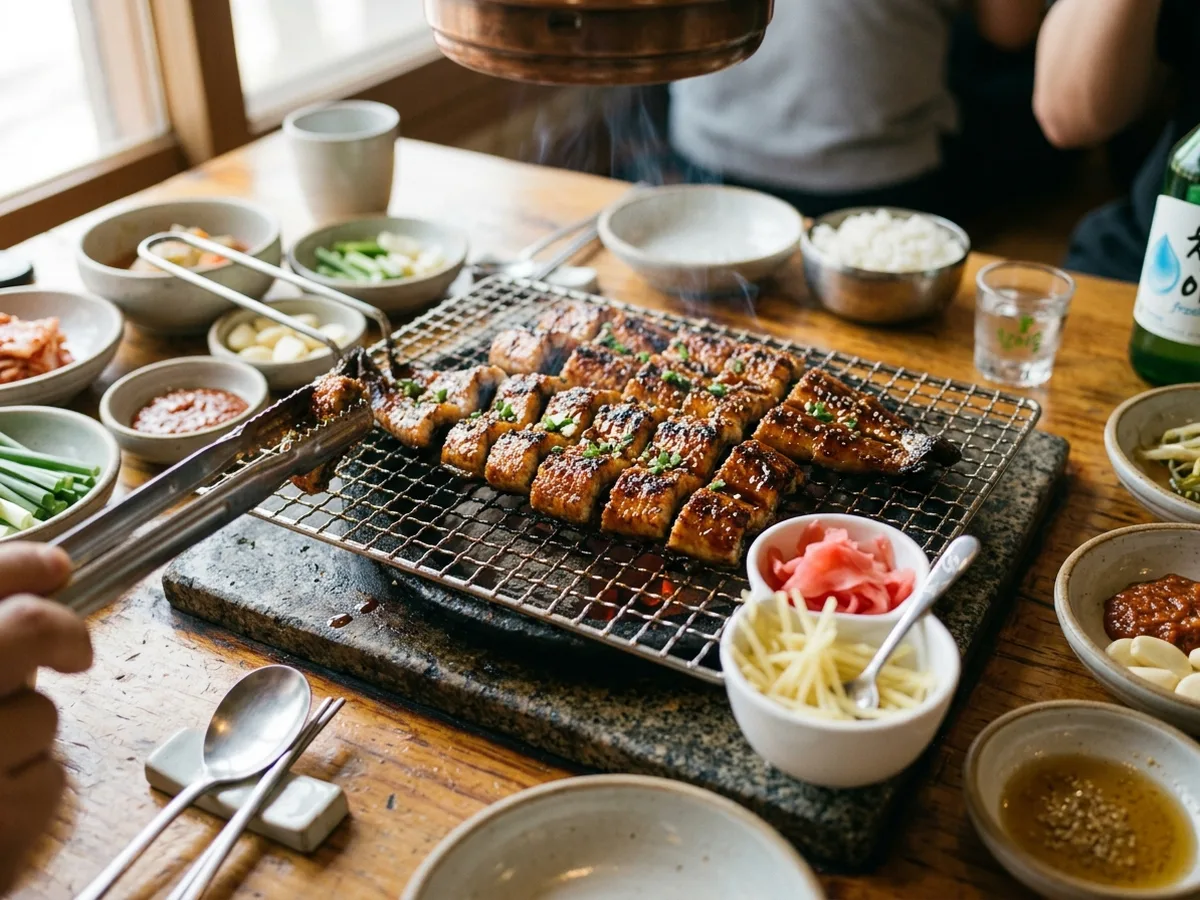
What is Jangeo Gui?
Jangeo-gui — grilled freshwater eel — is Korea's stamina food par excellence: rich fillets grilled over charcoal, first plain, then lacquered with sweet-soy glaze, eaten wrapped with ginger slivers. Summer boknal days and riverside eel towns keep the tradition thriving; the ginger isn't garnish, it's doctrine.
How to eat it
- Eat the first pieces un-sauced to taste the fat, then the glazed rounds.
- Wrap in perilla or lettuce with a pinch of julienned ginger — the ginger cuts the richness and is considered essential.
- Finish with the fried rice or soup that eel houses customarily offer.
Good to know
- Eel blood is mildly toxic raw — which is why eel is never sashimi; always fully grilled (restaurants handle this).
- Rich enough that overordering is the rookie error.
Pungcheon (Gochang) eel with bokbunja (black raspberry wine) is the canonical stamina pairing.
Nutrition
| Calories | 331 kcal |
|---|---|
| Carbohydrate | 16.91 g |
| Protein | 16.5 g |
| Fat | 21.42 g |
| Sodium | 775 mg |
Per serving (~68.9ml): ≈228 kcal · sodium ≈534 mg (27% of the WHO daily guideline, 2,000 mg)
Related foods
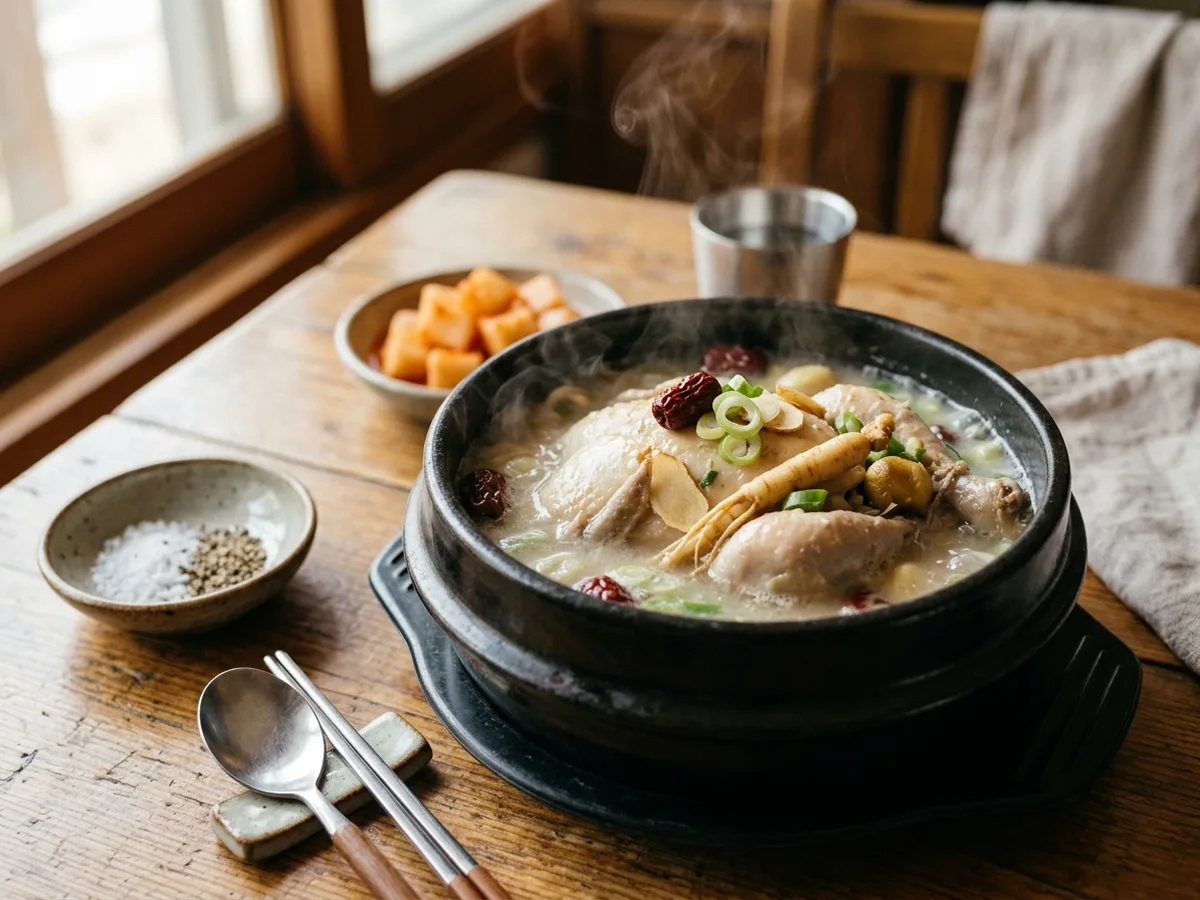 삼계탕 · SamgyetangOften eaten together Whole young chicken stuffed with rice and ginseng — summer stamina food.
 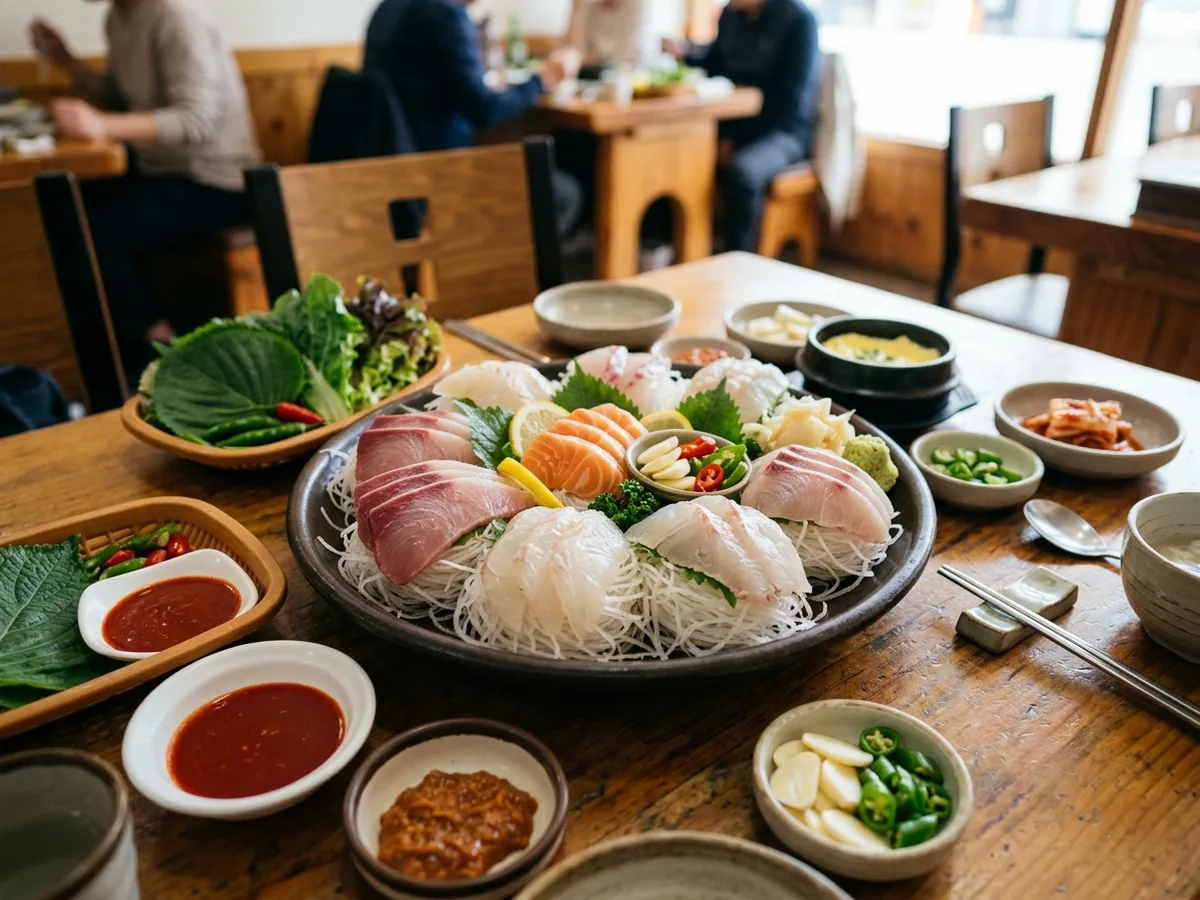 모듬회 · Hoe (Sashimi Platter)Often eaten together Korean-style raw fish platter — eaten with ssamjang and lettuce wraps.
 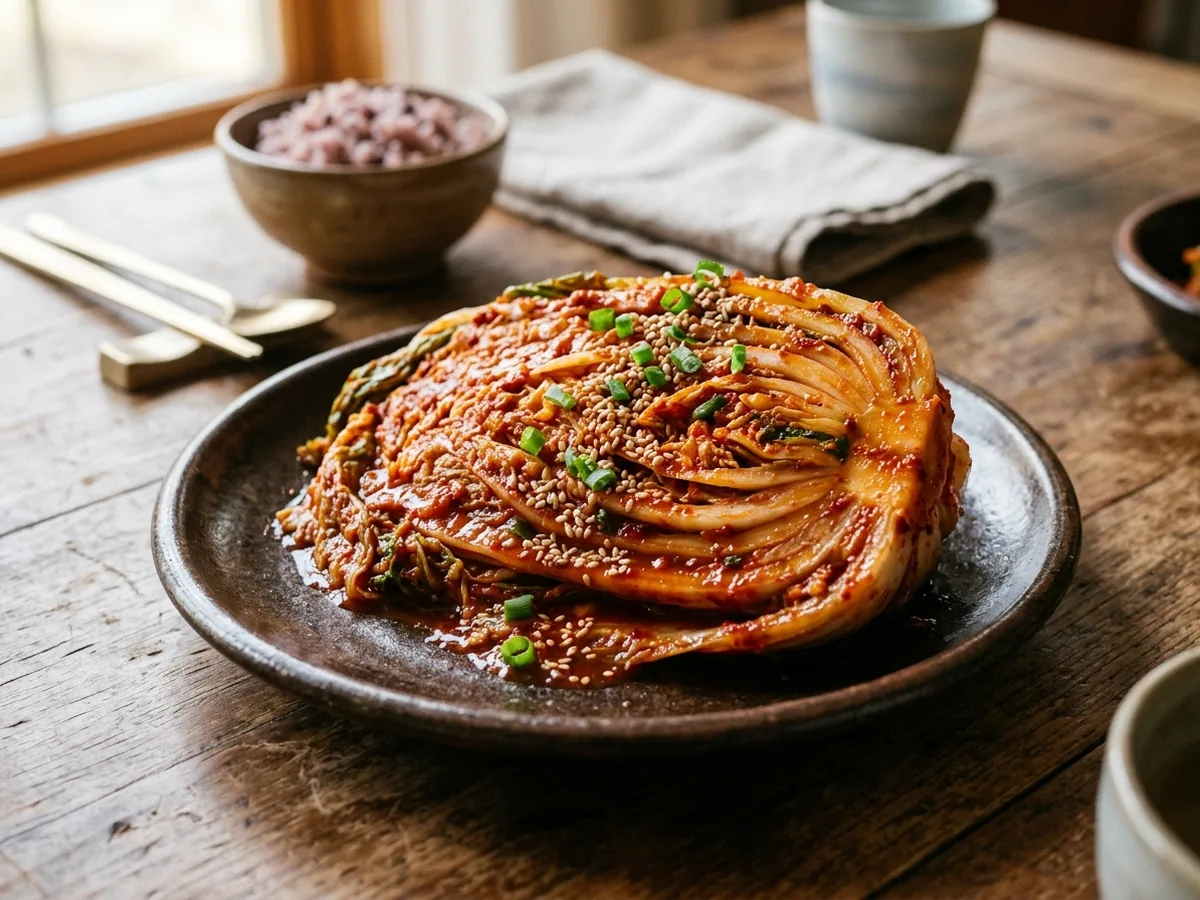 배추김치 · KimchiOften eaten together Fermented napa cabbage — the one dish on every Korean table.
 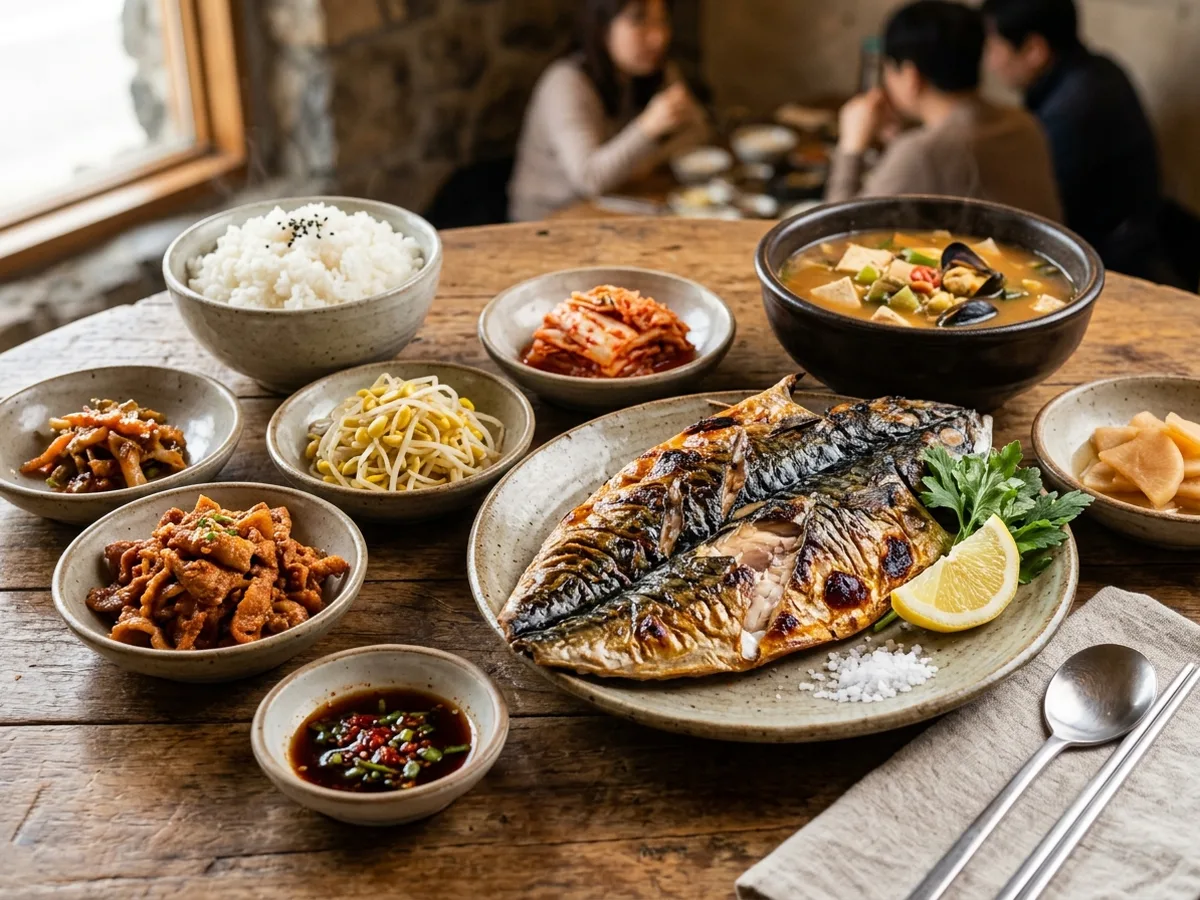 고등어구이 · Godeungeo GuiSame family · fish Grilled mackerel — the backbone of a Korean set meal.
 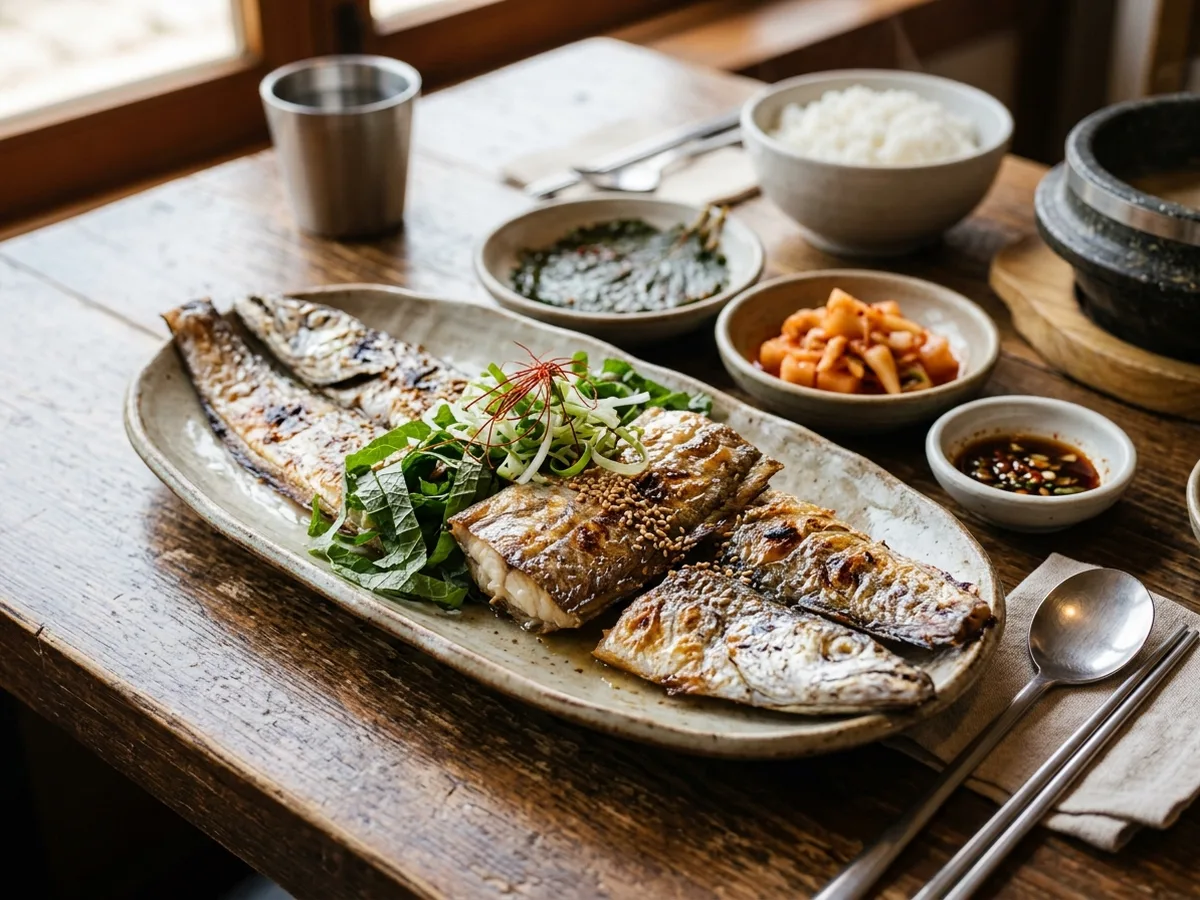 갈치구이 · Galchi GuiSame family · fish Grilled hairtail — silver-skinned, delicate, a Jeju favorite.