Jeonbokjuk (전복죽)
Abalone rice porridge — the get-well-soon luxury.
- Korean name
- 전복죽
- Spice level
- Not spicy
- Flavor
- savory · mild
- Typically contains
- shellfish
- Vegetarian / vegan
- Not vegetarian — meat or seafood is core to the dish
- Typical price
- ₩12,000–₩18,000 per person checked 2026-07 — varies by area
- Good to know
- Beginner-friendly ●●●●○ Solo dining ●●●●○ Kid-friendly ●●●●●
- Also written as
- jeonbok juk, abalone porridge, jeonbokjook
What is Jeonbokjuk?
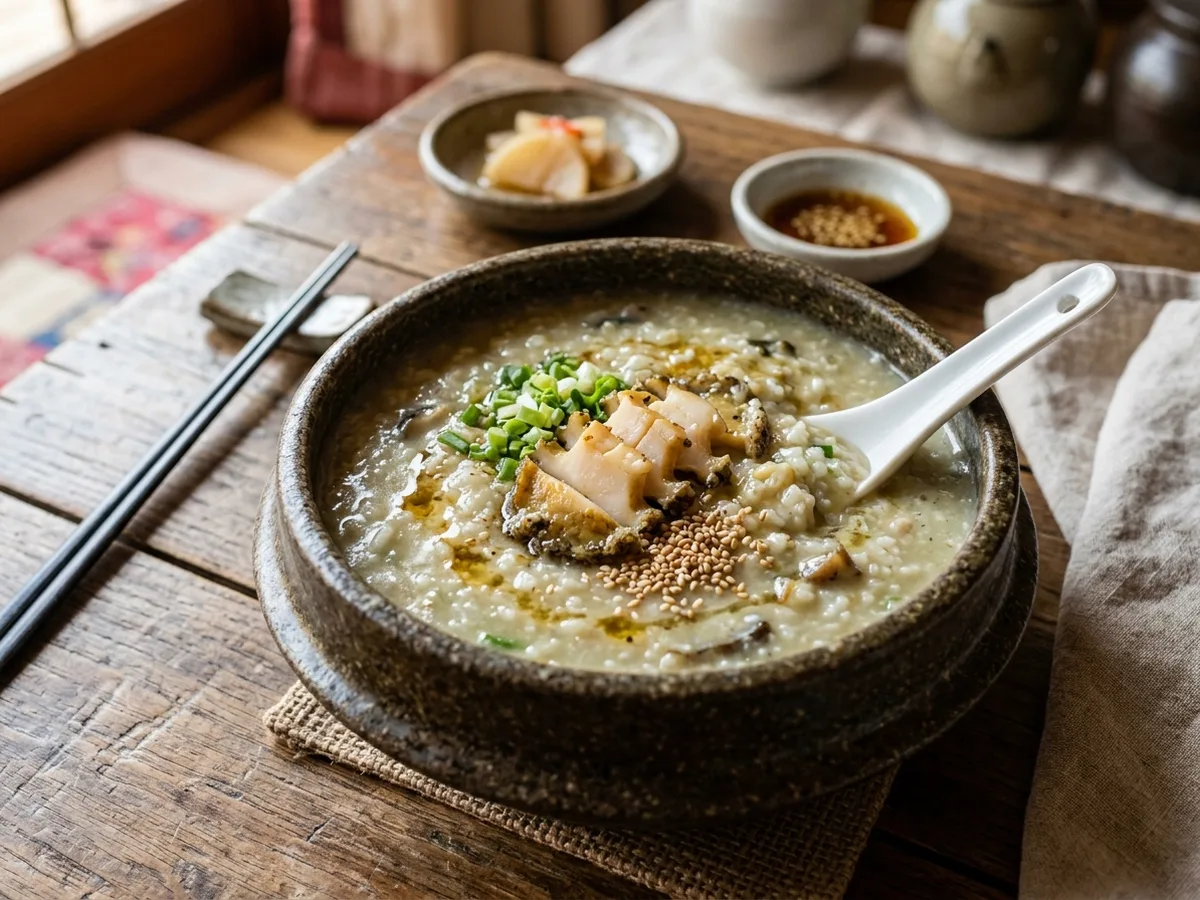
Jeonbokjuk — abalone rice porridge — is the dish Koreans bring to hospital rooms and grandmothers' tables: rice slow-cooked in sesame oil with sliced abalone until silky, tinted faint green when the prized innards are worked in. It's Jeju's signature luxury made gentle, the universal 'get well soon' in a bowl.
How to eat it
- Stir before eating — the abalone liver (the green) may be swirled in or served on top.
- Season with a little soy or salt to taste; it comes mild by design.
- Eat it slowly with the side kimchi cutting the richness.
Cooking it at home
- Sauté soaked rice and sliced abalone in sesame oil until the rice turns translucent.
- Add water gradually, simmering and stirring like risotto until thick.
- Blend in the abalone innards for color and depth (optional but traditional); salt at the end.
Good to know
- Shellfish allergy applies fully — including the innards that color the porridge.
Green jeonbokjuk (innards in) is the connoisseur's version; white versions skip them for milder flavor.
Nutrition
| Calories | 79 kcal |
|---|---|
| Carbohydrate | 9.62 g |
| Protein | 1.82 g |
| Fat | 3.73 g |
| Sodium | 158 mg |
Per serving (~400g): ≈316 kcal · sodium ≈632 mg (32% of the WHO daily guideline, 2,000 mg)
Related foods
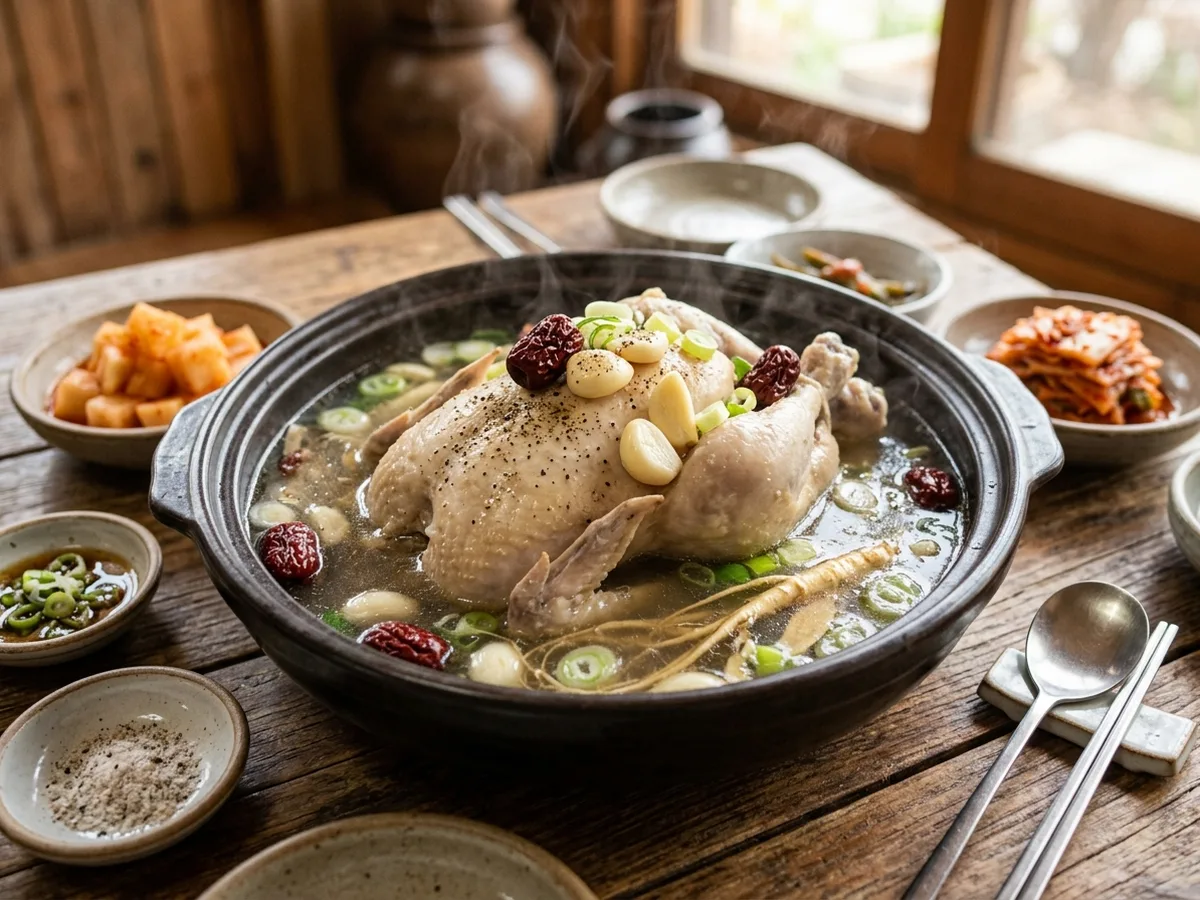 닭백숙 · Dak BaeksukOften eaten together Whole chicken gently boiled with garlic — samgyetang's plainer sibling.
 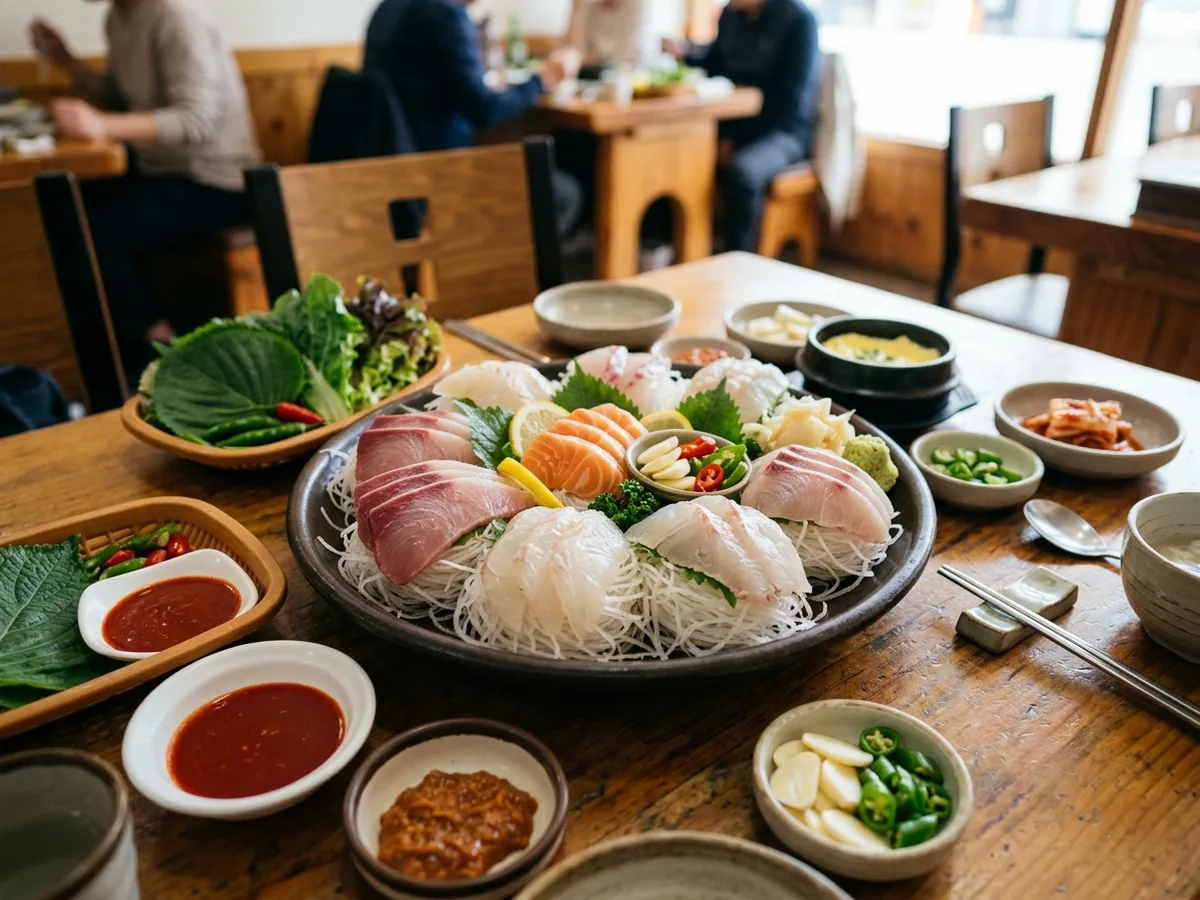 모듬회 · Hoe (Sashimi Platter)Often eaten together Korean-style raw fish platter — eaten with ssamjang and lettuce wraps.
 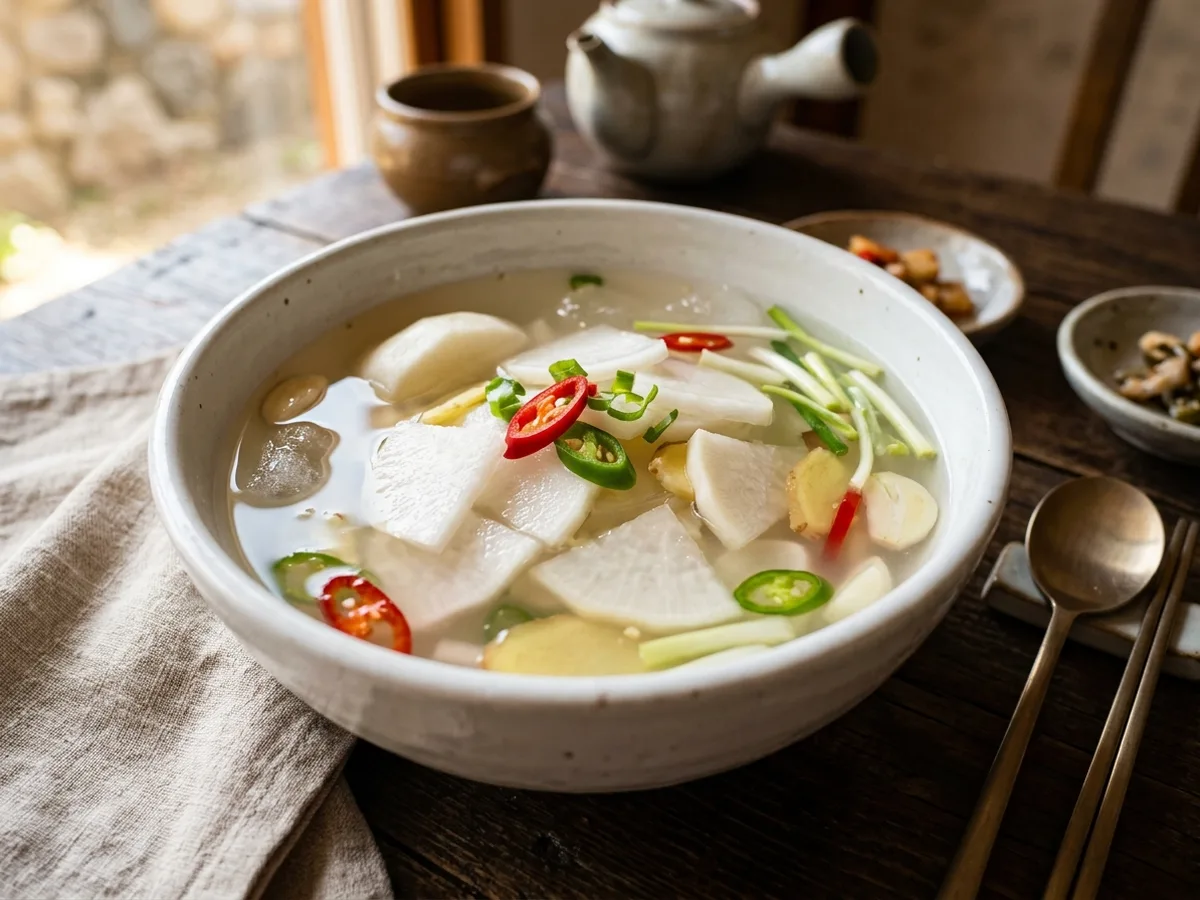 동치미 · DongchimiOften eaten together Icy radish water-kimchi — drink the brine, that's the point.
 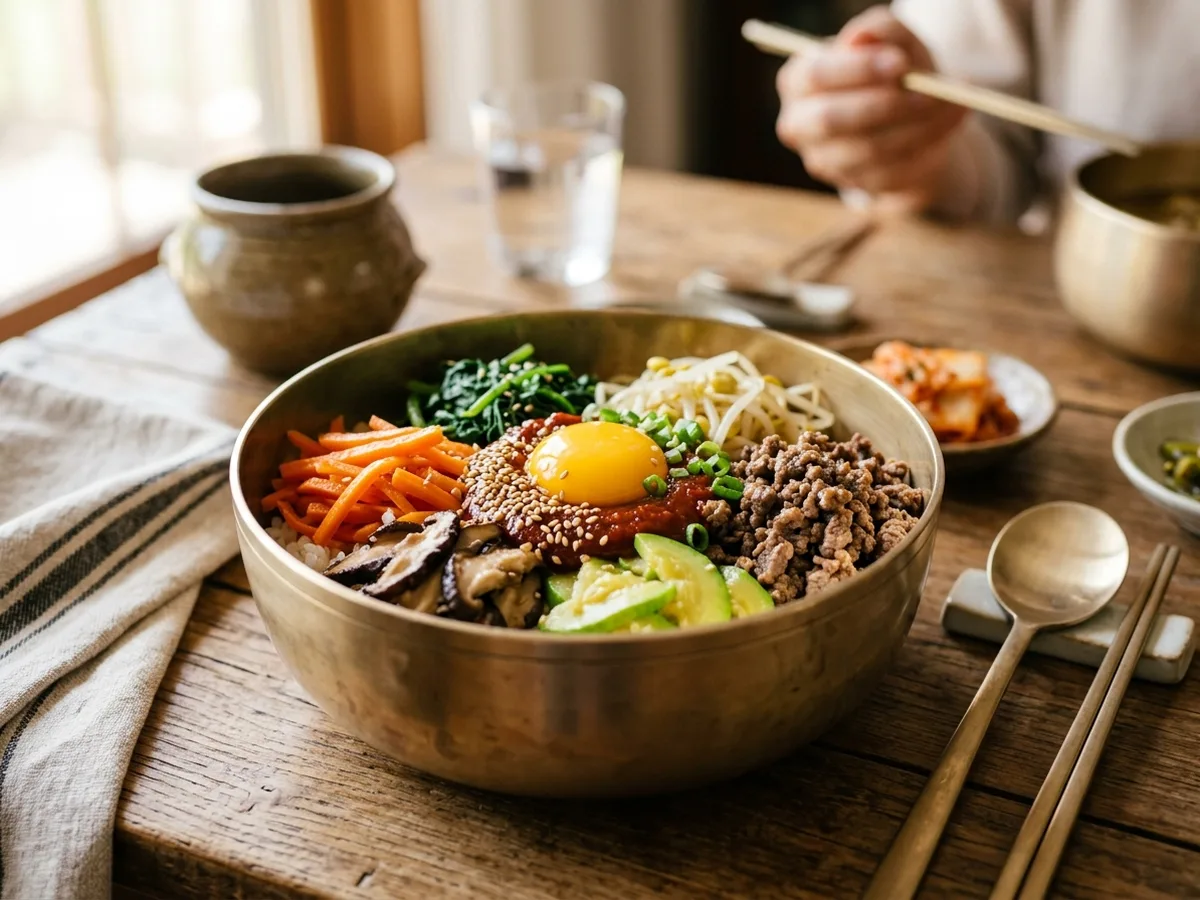 비빔밥 · BibimbapSame family · Rice & Porridge Rice bowl with seasoned vegetables and gochujang — mix hard, then eat.
 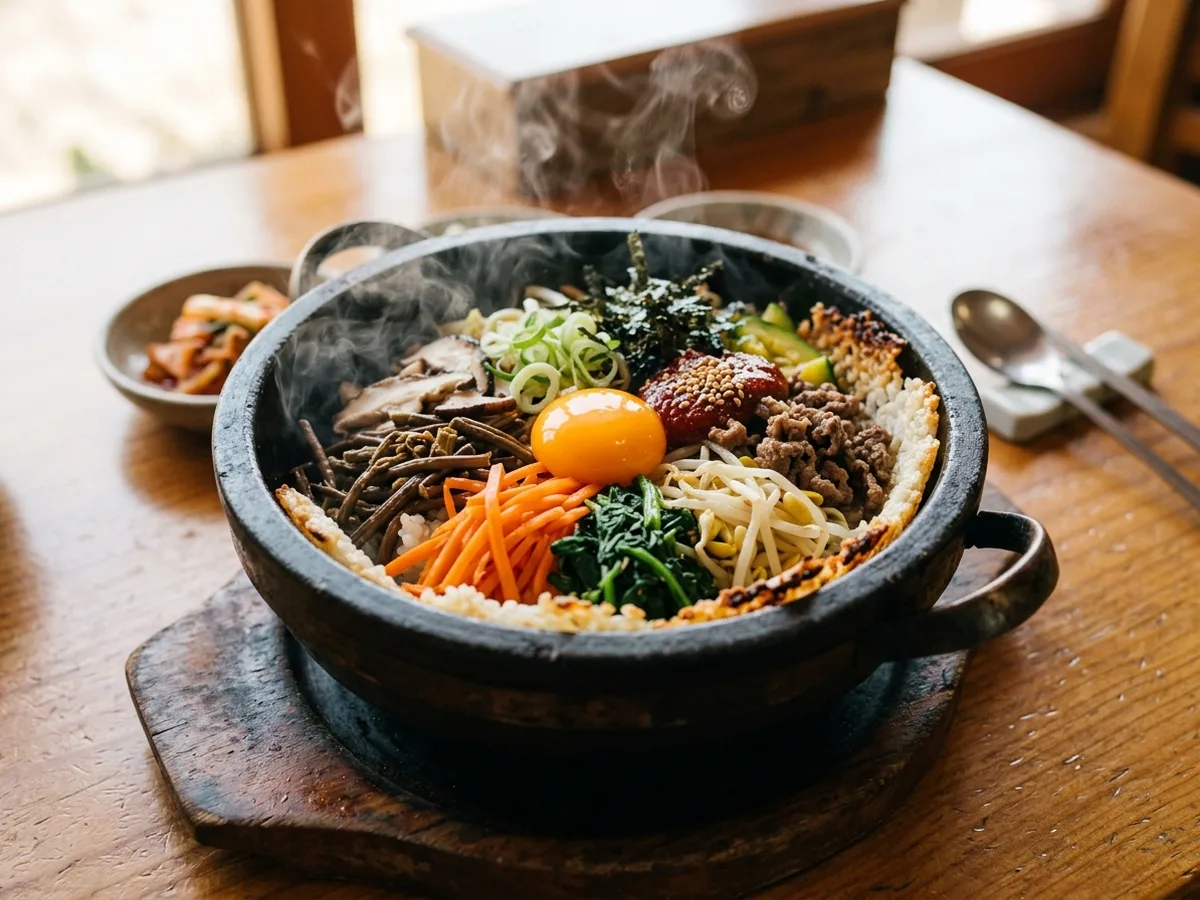 돌솥비빔밥 · Dolsot BibimbapSame family · Rice & Porridge Bibimbap in a sizzling stone pot — the crispy rice is the prize.