What Koreans Actually Eat for Breakfast
Korea does not do pancakes-and-bacon. The traditional breakfast is simply a smaller dinner — rice, soup, banchan — and the modern city version is a gukbap house at 7 a.m., a bowl of porridge, or a convenience-store triangle gimbap eaten standing. Several of Seoul's century-old soup houses do their best business before 9 a.m. Here is what a real Korean morning tastes like.
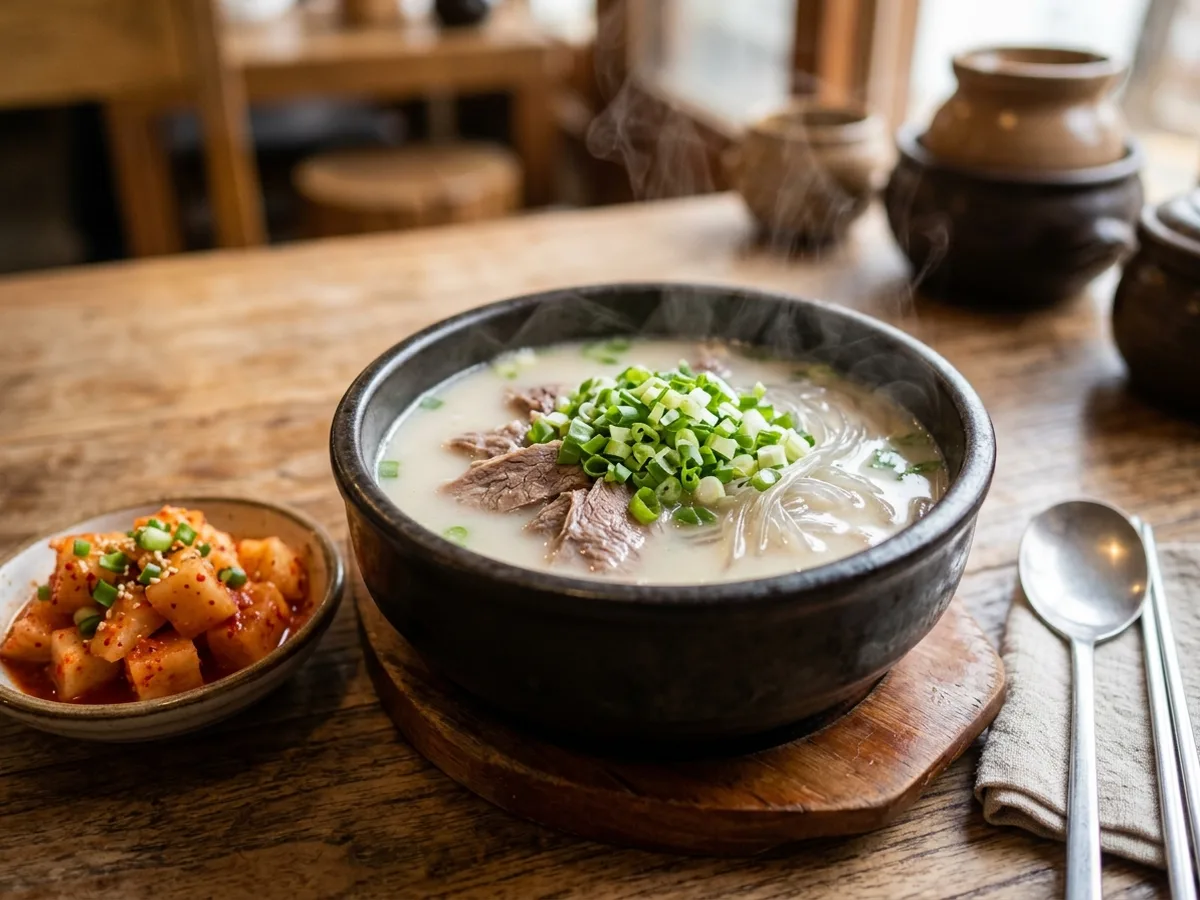 설렁탕 · Seolleongtang Milky ox-bone broth you season yourself with salt and scallions.
 The definitive Seoul breakfast — century-old houses fill with office workers from dawn.
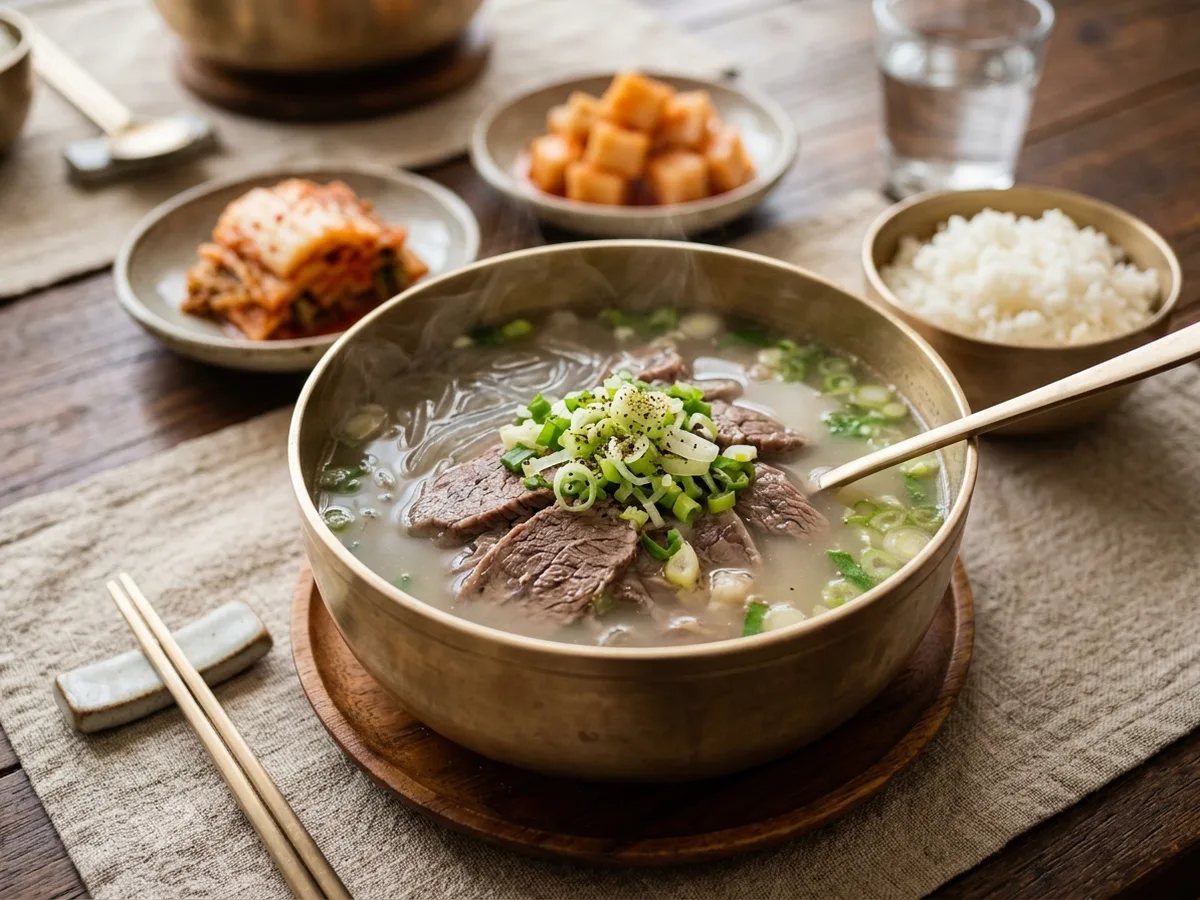 곰탕 · Gomtang Slow-simmered beef soup, clearer cousin of seolleongtang.
 The clearer morning soup, same self-seasoning ritual.
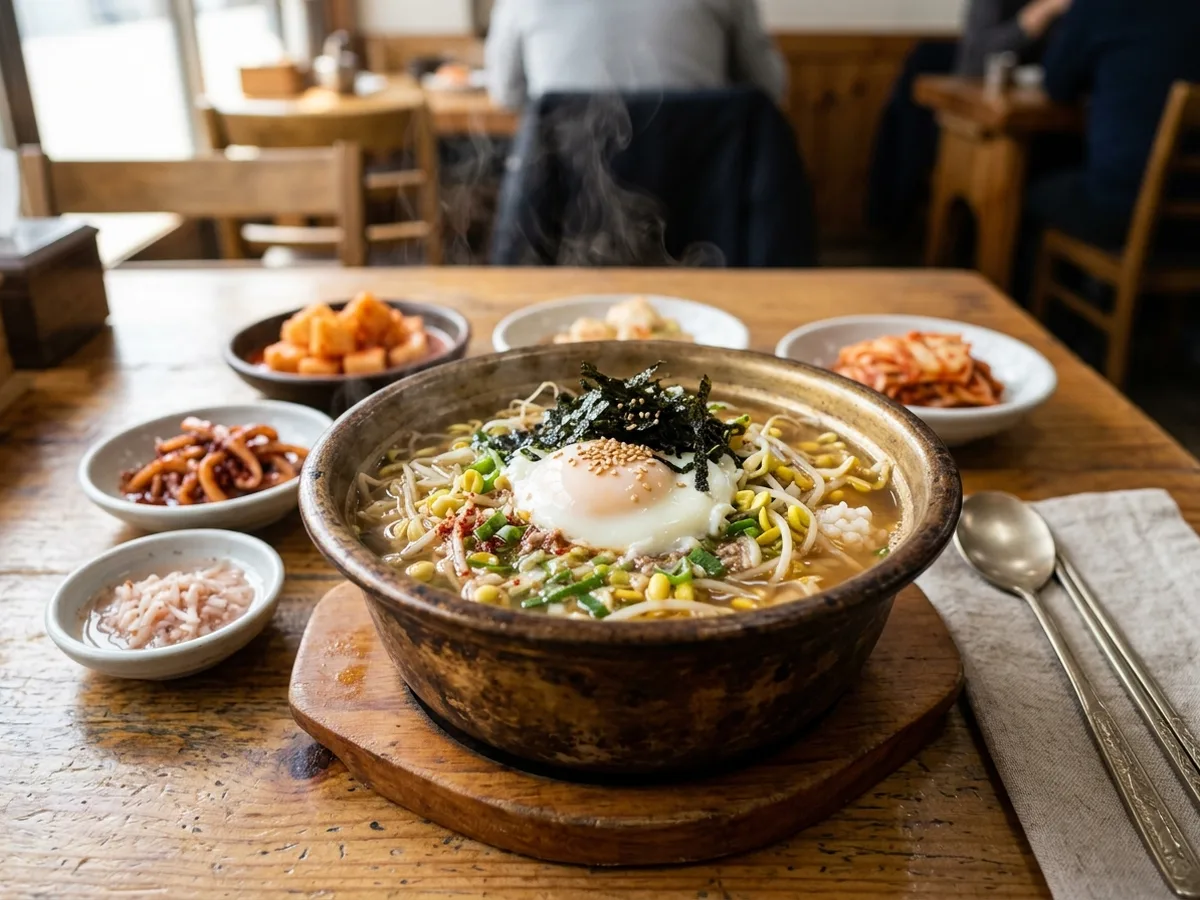 콩나물국밥 · Kongnamul Gukbap Jeonju's bean-sprout soup-rice, famous as a morning reset.
 Jeonju's sprout-soup-over-rice — famously gentle on the morning after.
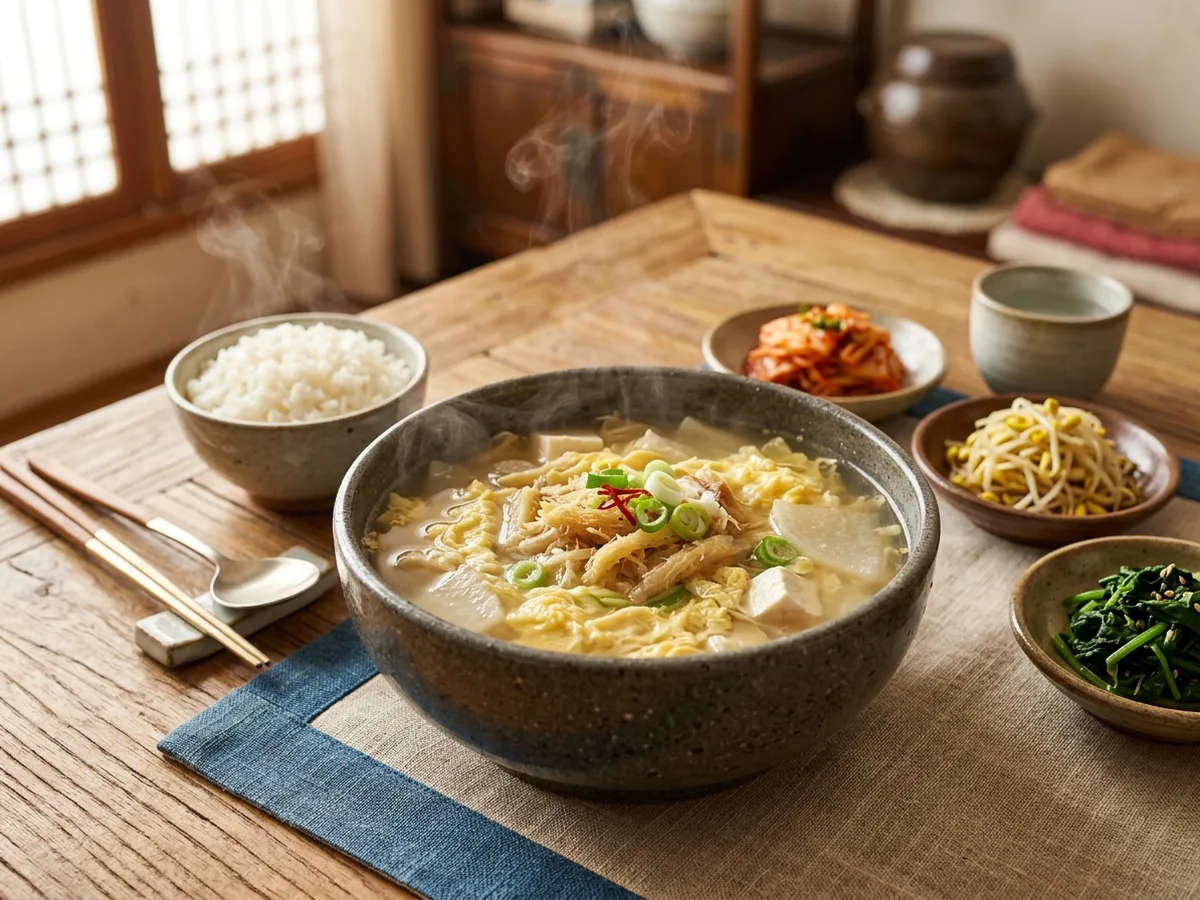 북어국 · Bugeoguk Dried-pollock soup — Korea's gentle hangover cure.
 Dried-pollack soup: the classic home breakfast (and hangover) bowl.
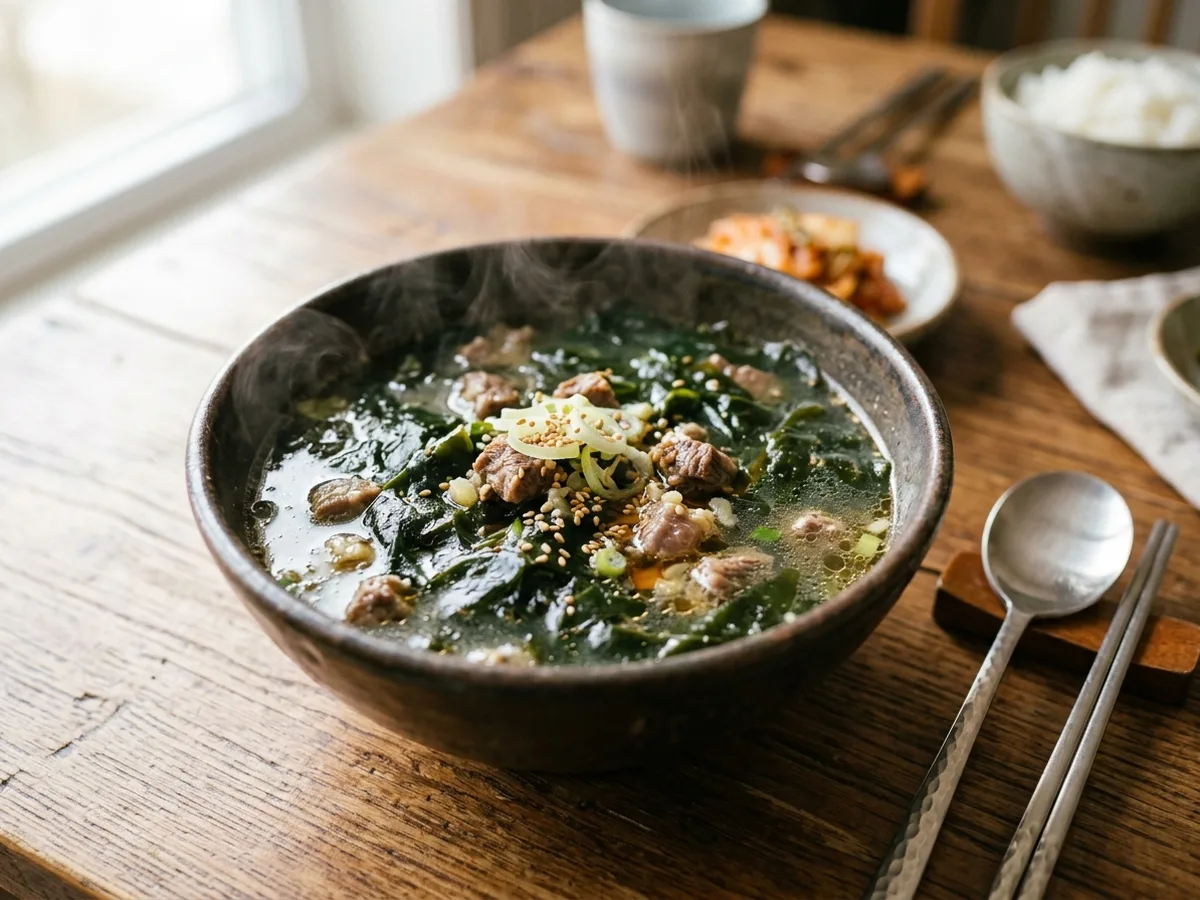 미역국 · Miyeokguk Seaweed soup — what every Korean eats on their birthday.
 Seaweed soup — the everyday (and every-birthday) morning soup of Korean homes.
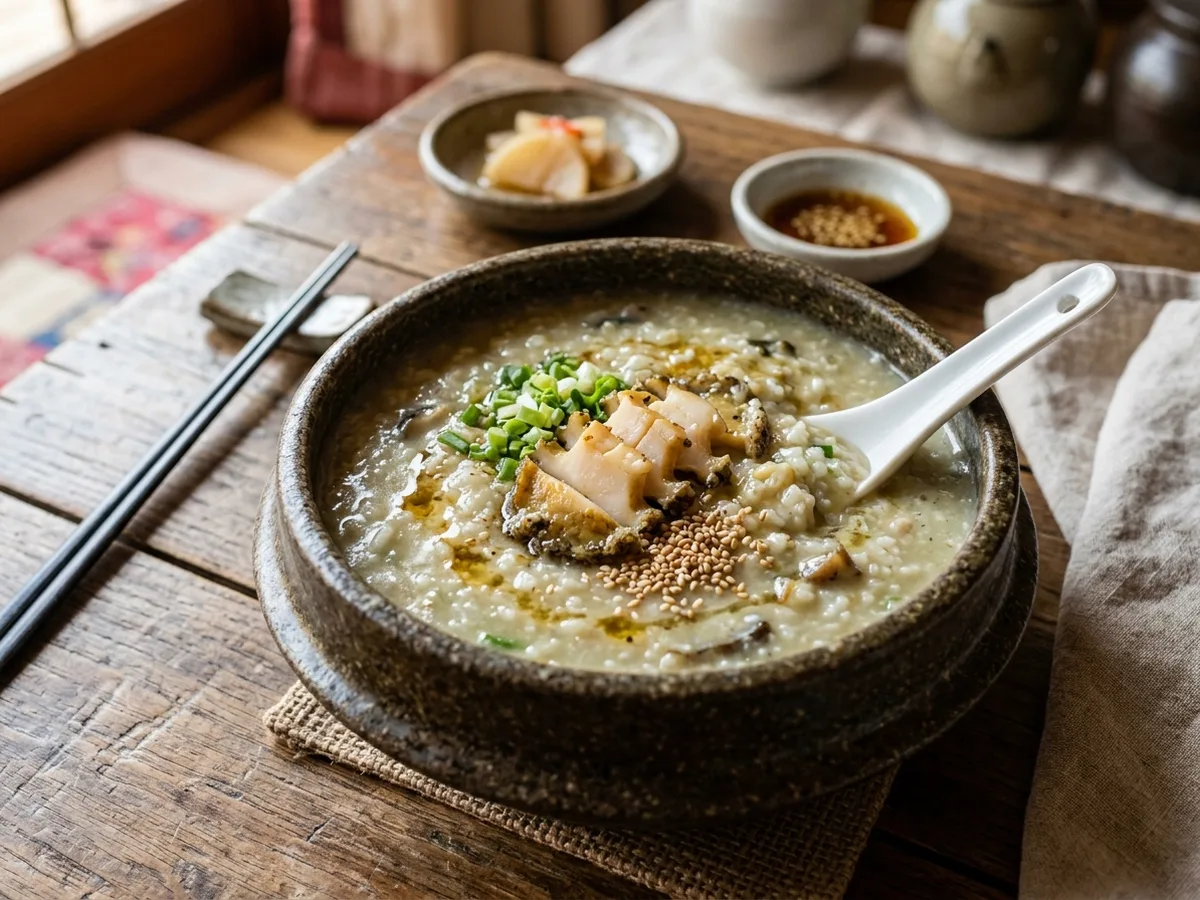 전복죽 · Jeonbokjuk Abalone rice porridge — the get-well-soon luxury.
 Abalone rice porridge — the premium breakfast, and what Koreans feed the recovering.
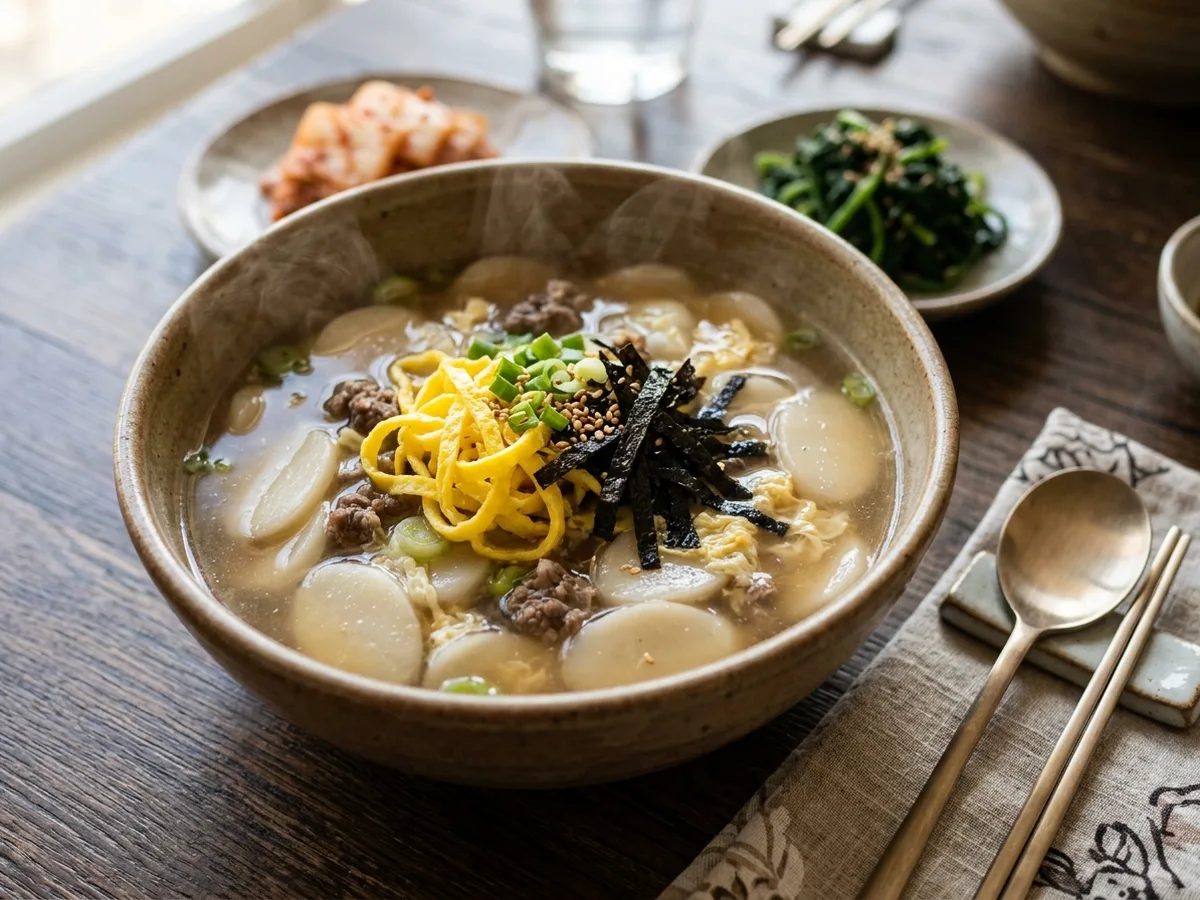 떡국 · Tteokguk Sliced rice-cake soup — eat a bowl, turn a year older (New Year).
 Rice-cake soup: ceremonial on New Year's, a clean light breakfast the rest of the year.
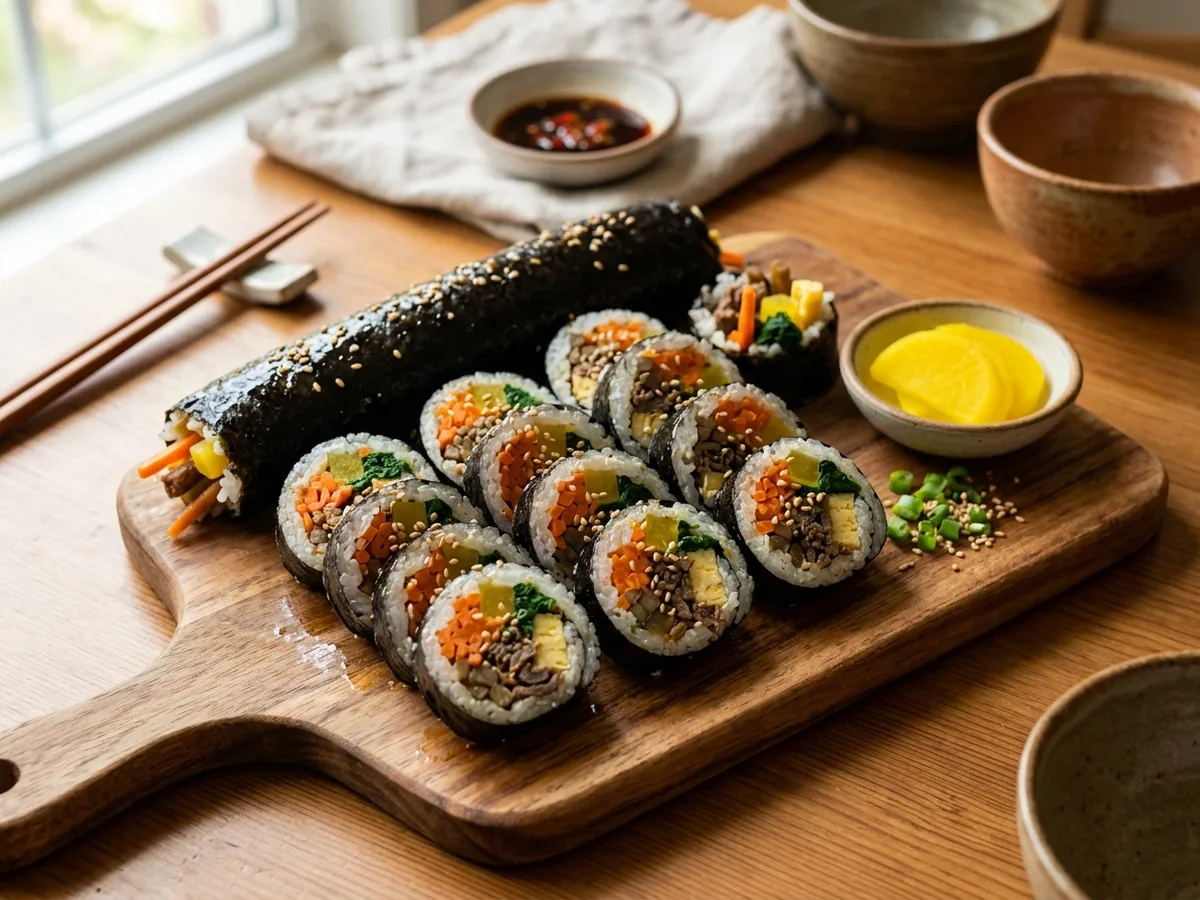 김밥 · Gimbap Seaweed rice rolls — Korea's picnic and lunchbox default.
 The grab-and-go morning: kimbap shops open early, triangle versions live at every convenience store.
 계란빵 · Gyeranppang Warm mini bread with a whole egg baked on top.
 Street-cart egg bread — winter's walking breakfast.