Jjolmyeon (쫄면)
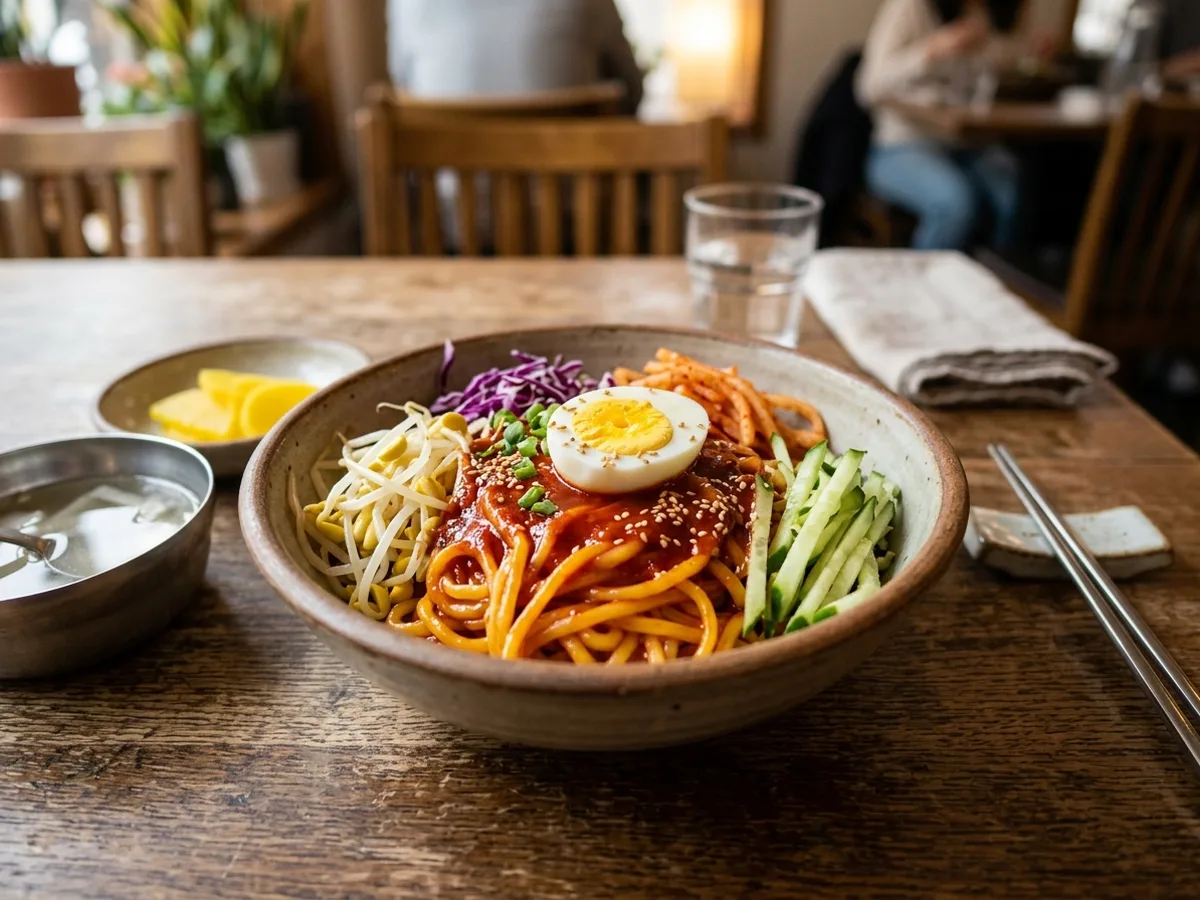
Extra-chewy noodles in sweet-spicy sauce — a bunsik-shop staple.
- Korean name
- 쫄면
- Spice level
- Spicy
- Flavor
- spicy · sweet · chewy
- Typically contains
- wheat noodles
- Vegetarian / vegan
- Sometimes — vegetable-forward, but anchovy broth, fish sauce or meat garnish is common. Ask first
- Typical price
- ₩7,000–₩10,000 per person checked 2026-07 — varies by area
- Good to know
- Beginner-friendly ●●●○○ Solo dining ●●●●○ Kid-friendly ●●○○○
- Also written as
- jjol myeon, jolmyeon, chewy spicy noodles
What is Jjolmyeon?
Jjolmyeon is the chewiest noodle in the bunsik universe — springy strands born from a factory accident in 1970s Incheon, drowned in sweet-spicy gochujang sauce with crunchy vegetables. It's teenage-taste-bud food that Koreans never outgrow: aggressive, bouncy, borderline defiant.
How to eat it
- Mix hard, holding the bean sprouts and cucumber through the sauce.
- Pace yourself — the chew is a genuine jaw workout and the spice compounds.
- Pair with steamed egg or mandu to buffer the heat; that's the standard combo.
Good to know
- Among the spicier default-setting noodle dishes — 'mild' requests are wise for first-timers.
Born in Incheon when a naengmyeon factory extruded noodles too thick — the mistake became a category.
Nutrition
| Calories | 129 kcal |
|---|---|
| Carbohydrate | 23.26 g |
| Protein | 3.21 g |
| Fat | 2.52 g |
| Sodium | 250 mg |
Per serving (~550g): ≈710 kcal · sodium ≈1,375 mg (69% of the WHO daily guideline, 2,000 mg)
Related foods
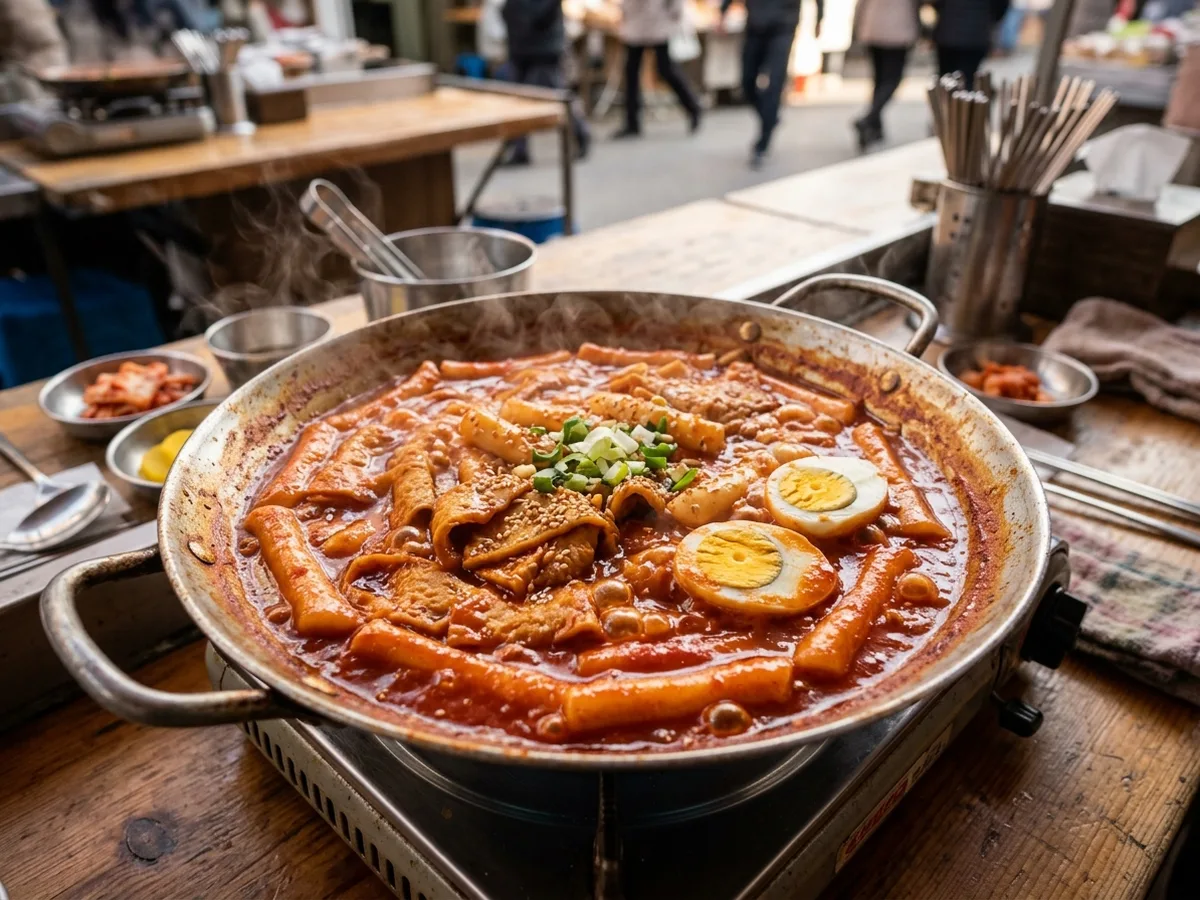 떡볶이 · TteokbokkiOften eaten together Chewy rice cakes in sweet-spicy gochujang sauce.
 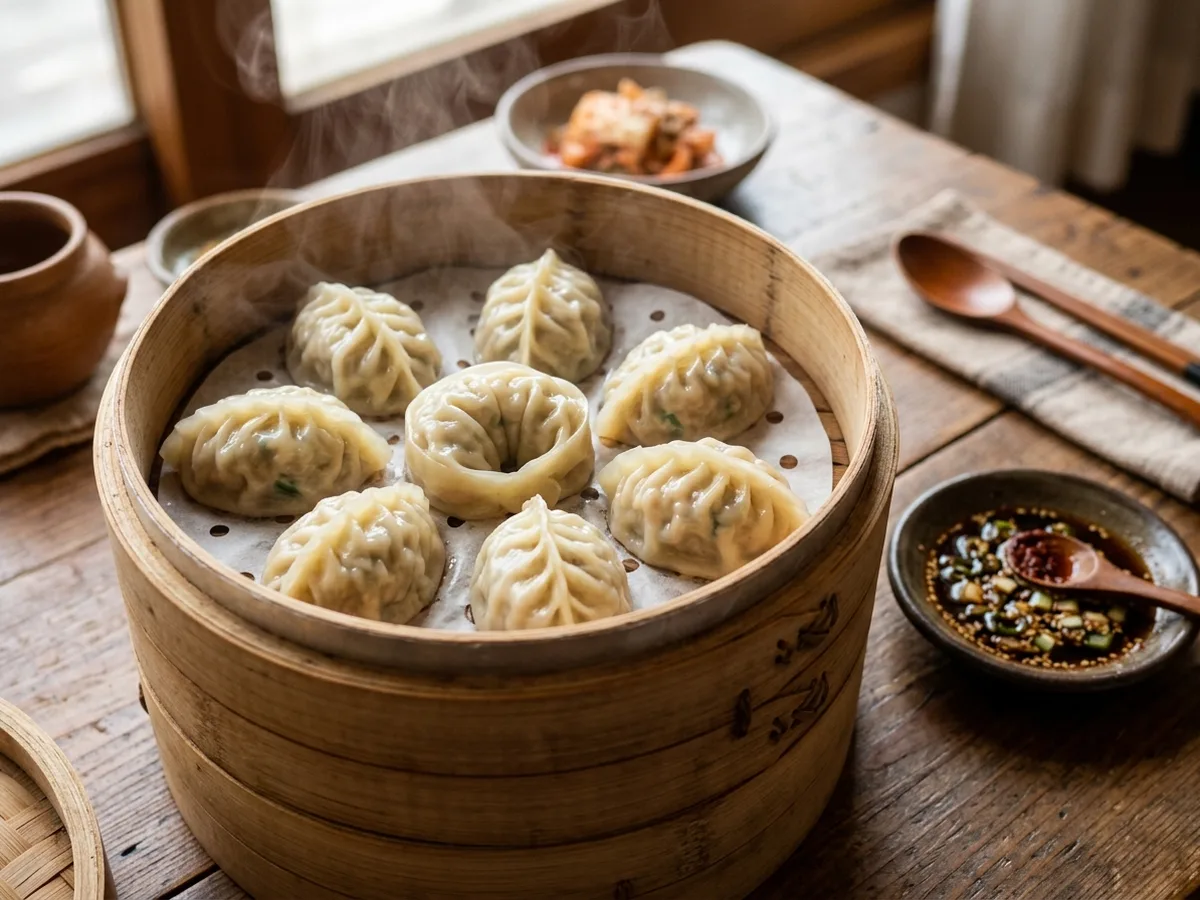 고기만두 · ManduOften eaten together Korean dumplings — steamed, fried or floated in soup.
 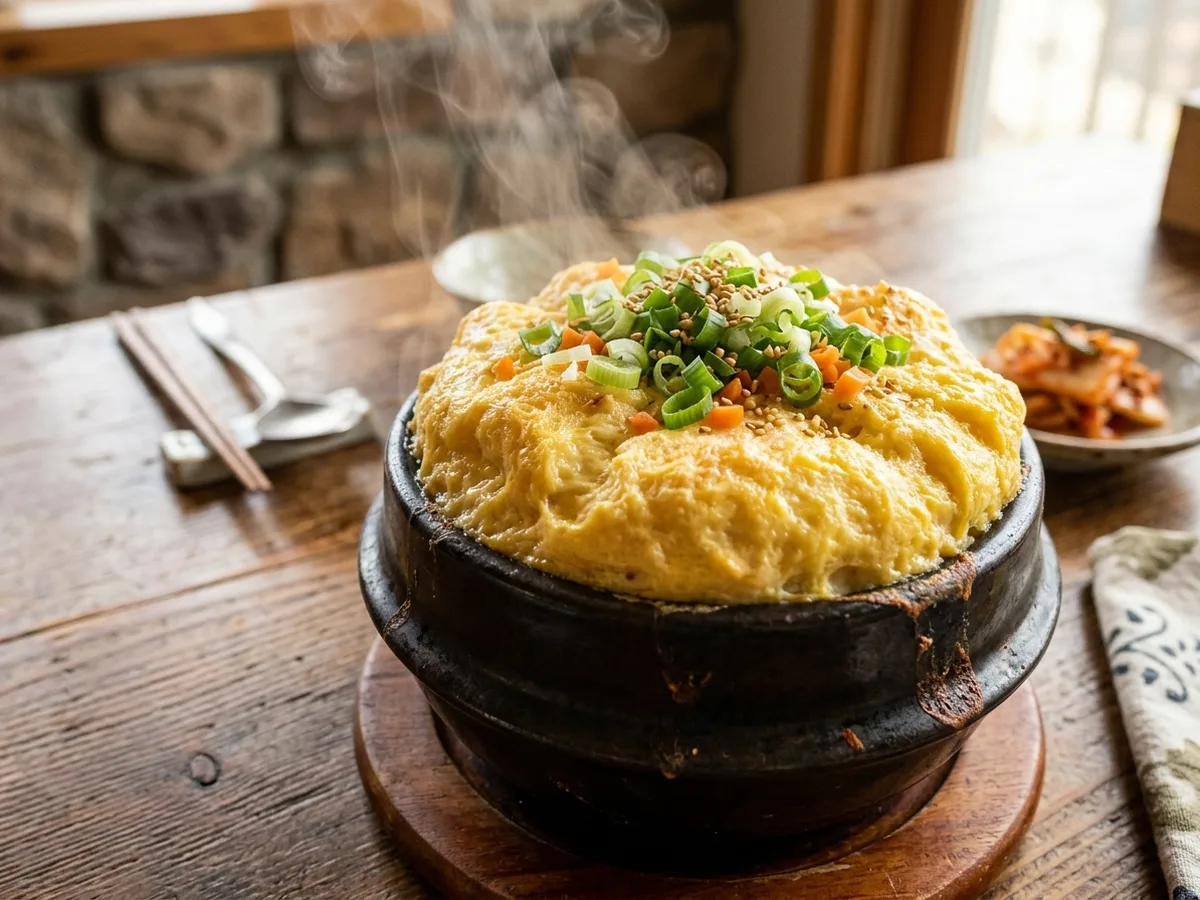 계란찜 · Gyeran JjimOften eaten together Fluffy steamed egg in a hot ttukbaegi — the BBQ-house side hero.
 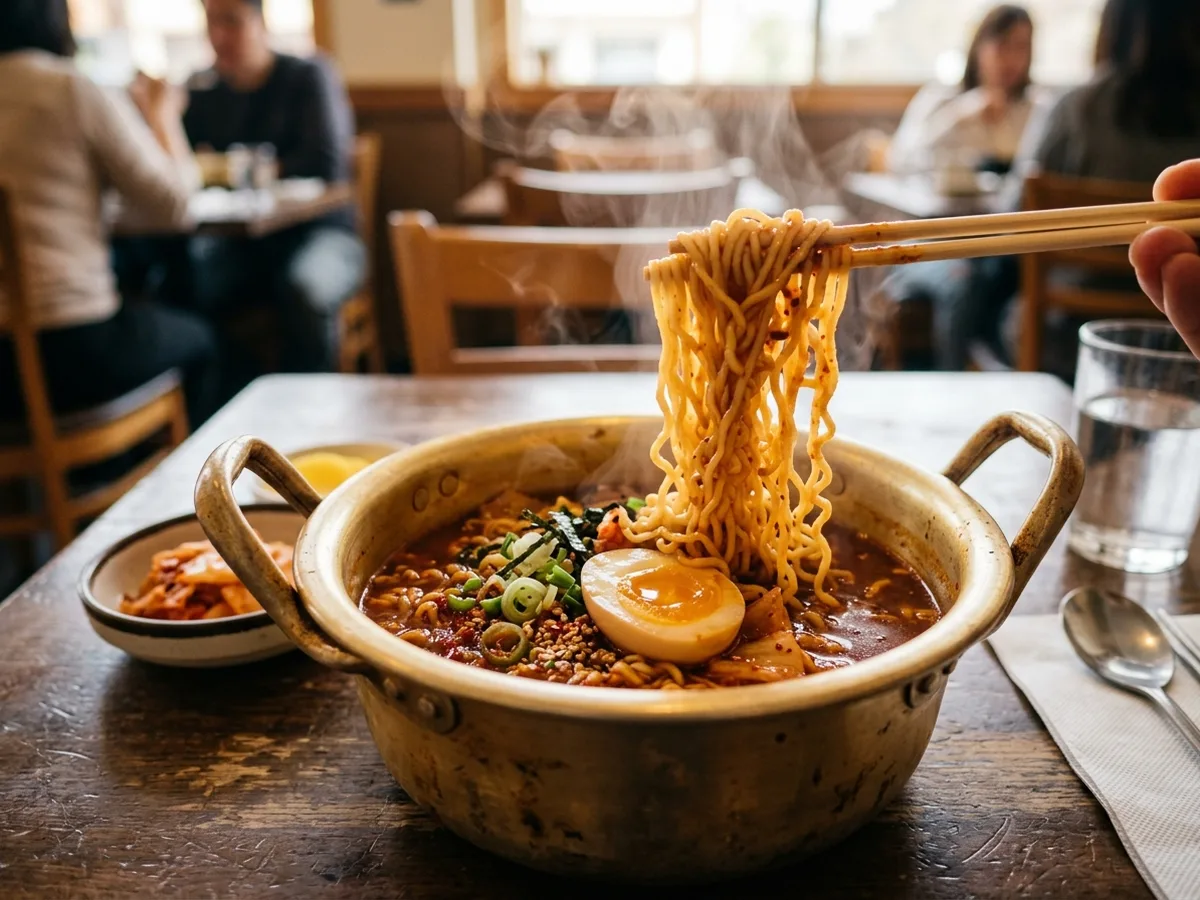 라면 · RamyeonSame family · wheat noodles Korean instant noodles — a national institution, not a backup meal.
 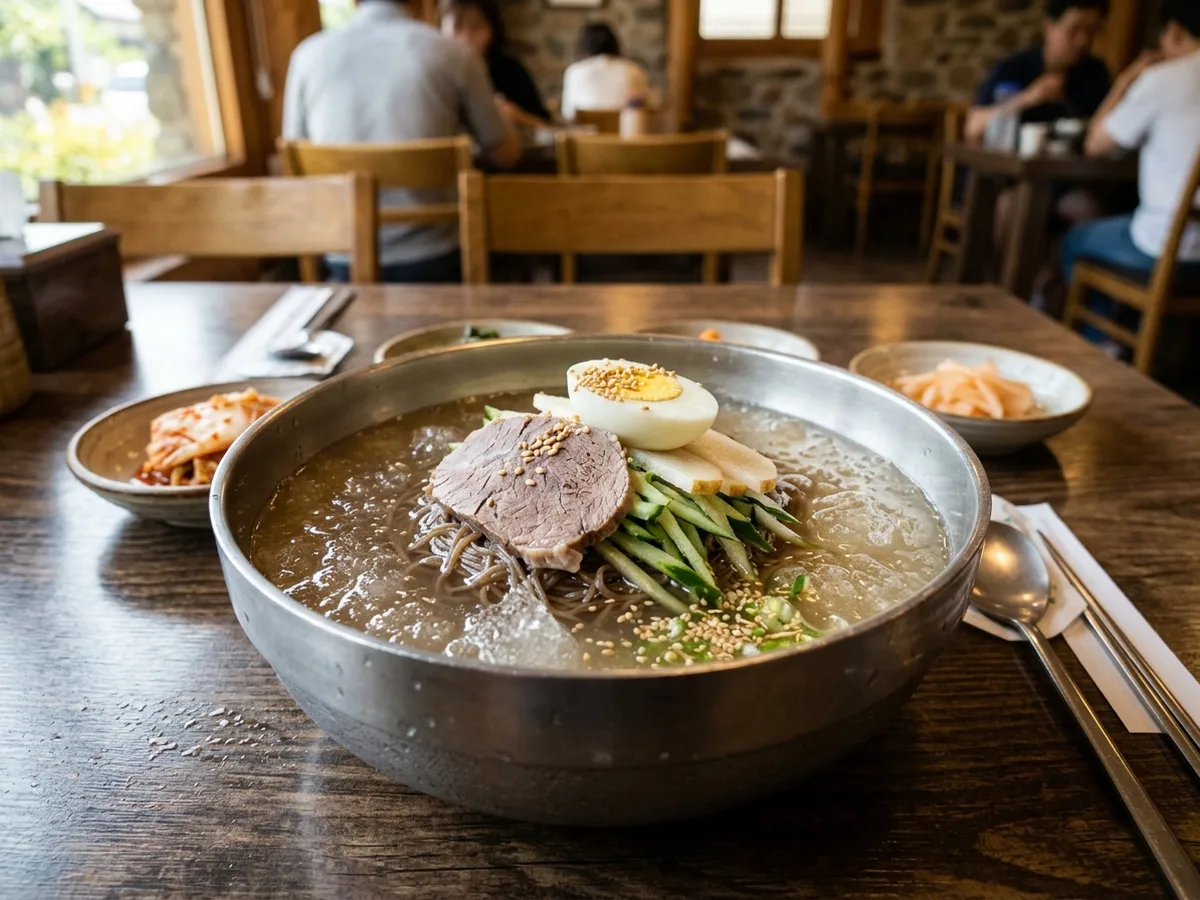 물냉면 · Mul NaengmyeonMilder alternative Buckwheat noodles in icy beef broth — the post-BBQ finisher.