Mandu (고기만두)
Korean dumplings — steamed, fried or floated in soup.
- Korean name
- 고기만두
- Spice level
- Not spicy
- Flavor
- savory
- Typically contains
- pork, wheat flour
- Vegetarian / vegan
- Not vegetarian — meat or seafood is core to the dish
- Typical price
- ₩6,000–₩9,000 per portion checked 2026-07 — varies by area
- Good to know
- Beginner-friendly ●●●●● Solo dining ●●●●○ Kid-friendly ●●●●●
- Also written as
- mandoo, korean dumplings, gun mandu, jjin mandu
What is Mandu?
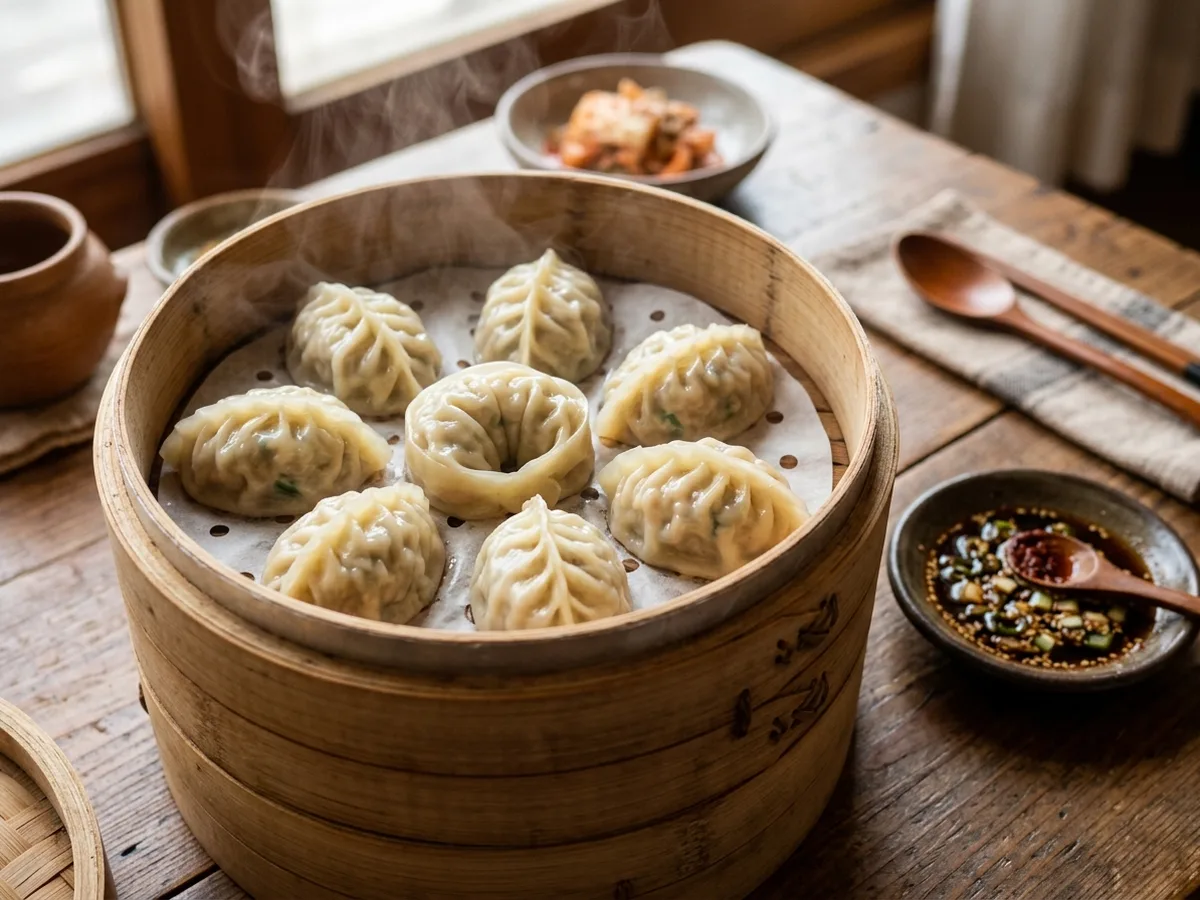
Mandu is Korea's dumpling in every possible state: steamed plump in bamboo (jjin-mandu), pan-crisped (gun-mandu), floated in soup (manduguk), or king-sized (wang-mandu) from street steamers. North-Korean-rooted mandu houses — big, pale, packed with tofu and mung-bean sprouts — are considered the deepest school.
How to eat it
- Dip in soy-vinegar (add chili to taste) — one dip, not a soak.
- Bite a corner of big mandu first to vent steam; the filling is lava.
- Order half-steamed half-fried (ban-ban) where offered.
Cooking it at home
- Mix pork with pressed tofu, chopped kimchi or chives, glass noodles and garlic.
- Fill wrappers, seal with water, pleat.
- Steam 10 minutes, or pan-fry then steam in the same pan for crispy-bottomed gun-mandu.
Good to know
- Frozen mandu straight to hot oil splatters — thaw or steam first at home.
Lunar New Year manduguk (often merged with tteokguk) is the northern-family tradition.
Where to eat it
Best for first-time visitorsSince 1966MICHELIN Guide listed
The kalguksu institution that defined 'Myeongdong kalguksu' since 1966 — thick garlic-kimchi, plump mandu, and one of the fastest-moving queues in Seoul.
Open as of our last check (2026-07-20) · Sources: MICHELIN Guide — hours, prices and status can change; check the map link before visiting.
Best known for this dishMICHELIN Bib Gourmand
Kaesong-style handmade mandu in Insa-dong, run by the same family for generations — big, clean-flavored dumplings on the Bib Gourmand list.
Known for: Mandu
Open as of our last check (2026-07-20) · Sources: 공식 사이트 — hours, prices and status can change; check the map link before visiting.
Nutrition
| Calories | 105 kcal |
|---|---|
| Carbohydrate | 13.15 g |
| Protein | 6.6 g |
| Fat | 2.51 g |
| Sodium | 322 mg |
Per serving (~315ml): ≈331 kcal · sodium ≈1,014 mg (51% of the WHO daily guideline, 2,000 mg)
Related foods
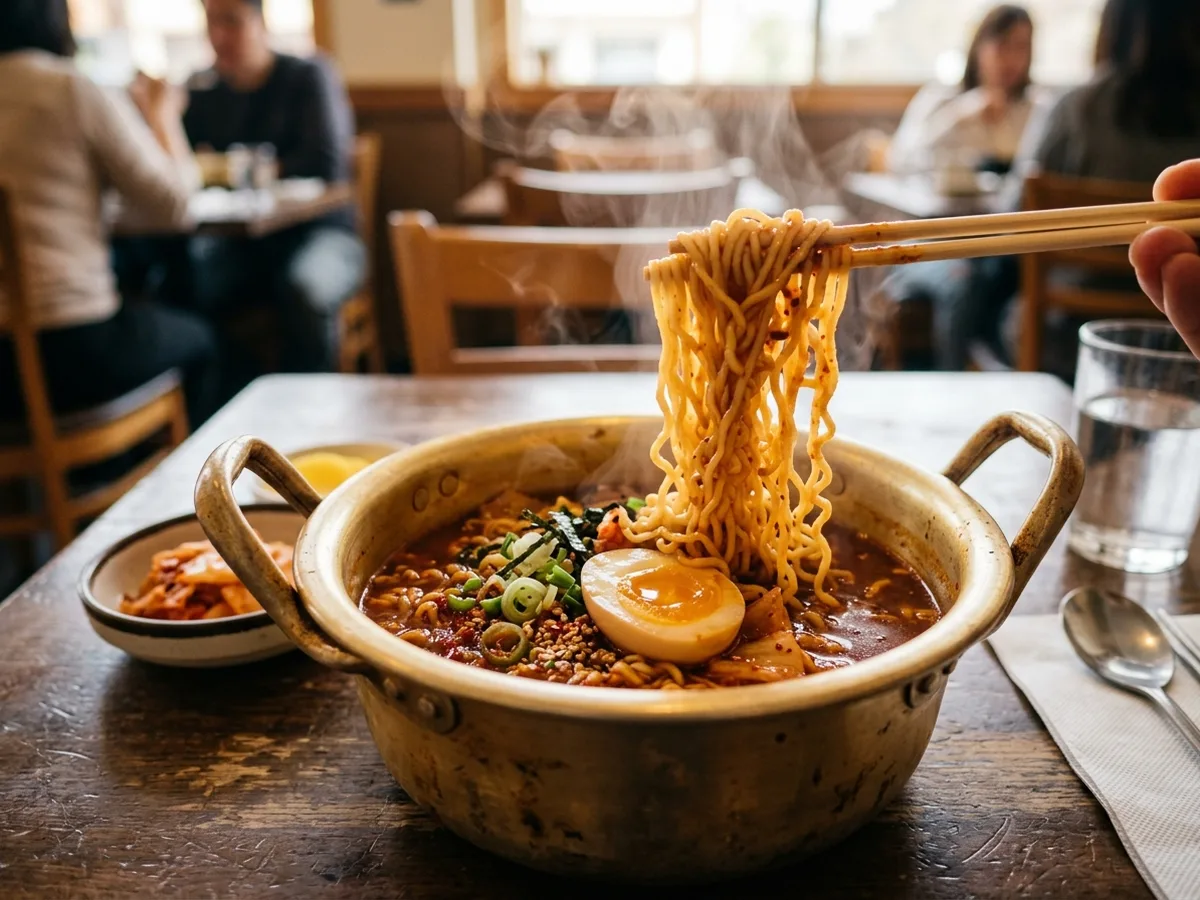 라면 · RamyeonSpicier alternative Korean instant noodles — a national institution, not a backup meal.
 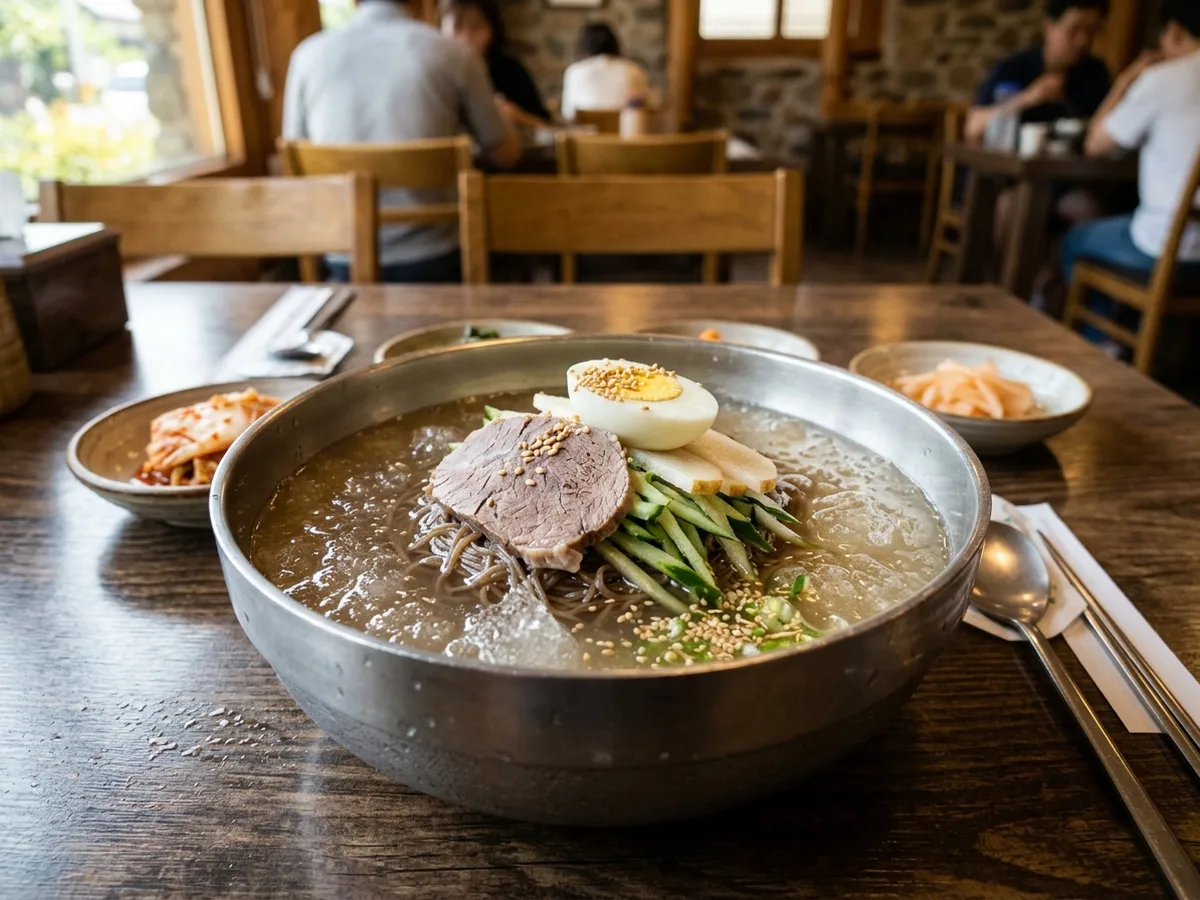 물냉면 · Mul NaengmyeonSame family · Noodles & Dumplings Buckwheat noodles in icy beef broth — the post-BBQ finisher.
 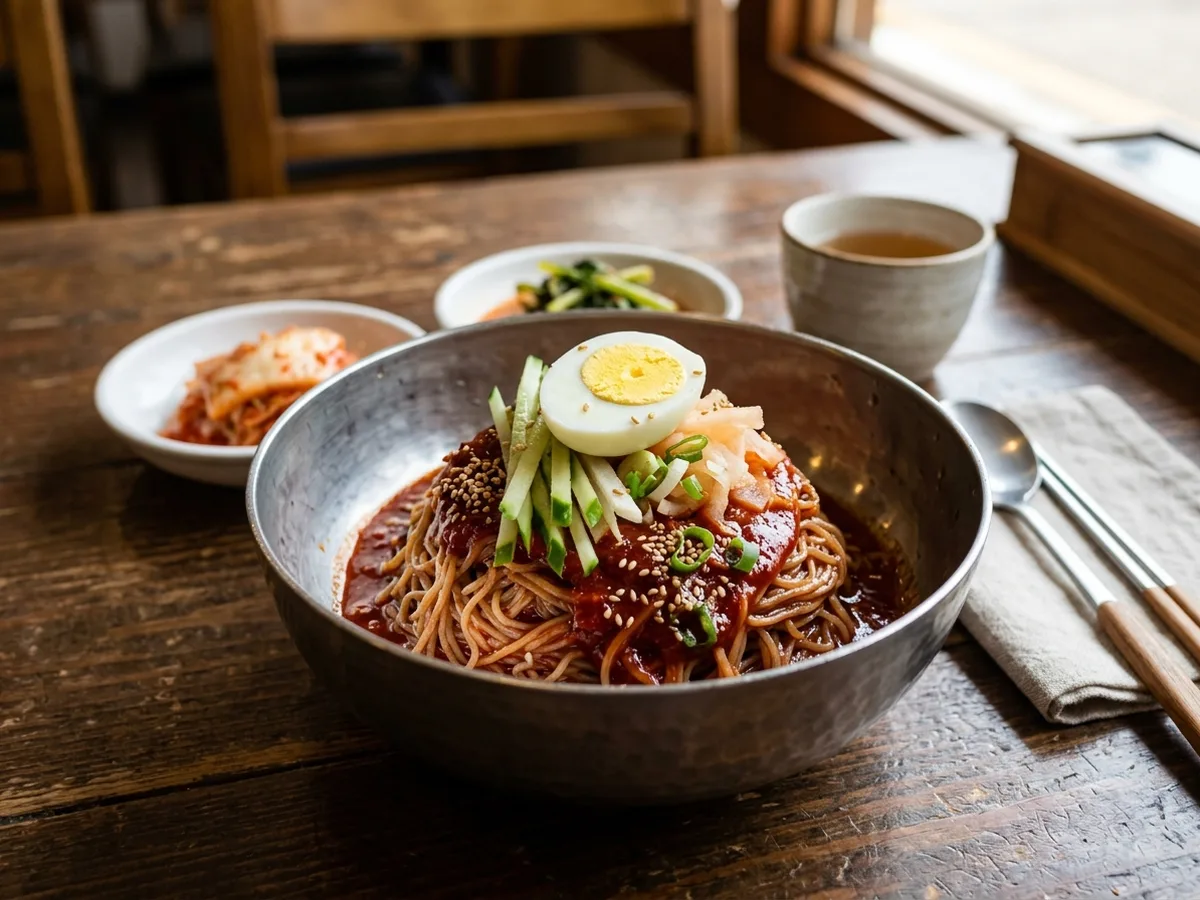 비빔냉면 · Bibim NaengmyeonOften eaten together Cold chewy noodles in sweet-spicy sauce — naengmyeon's fiery twin.
 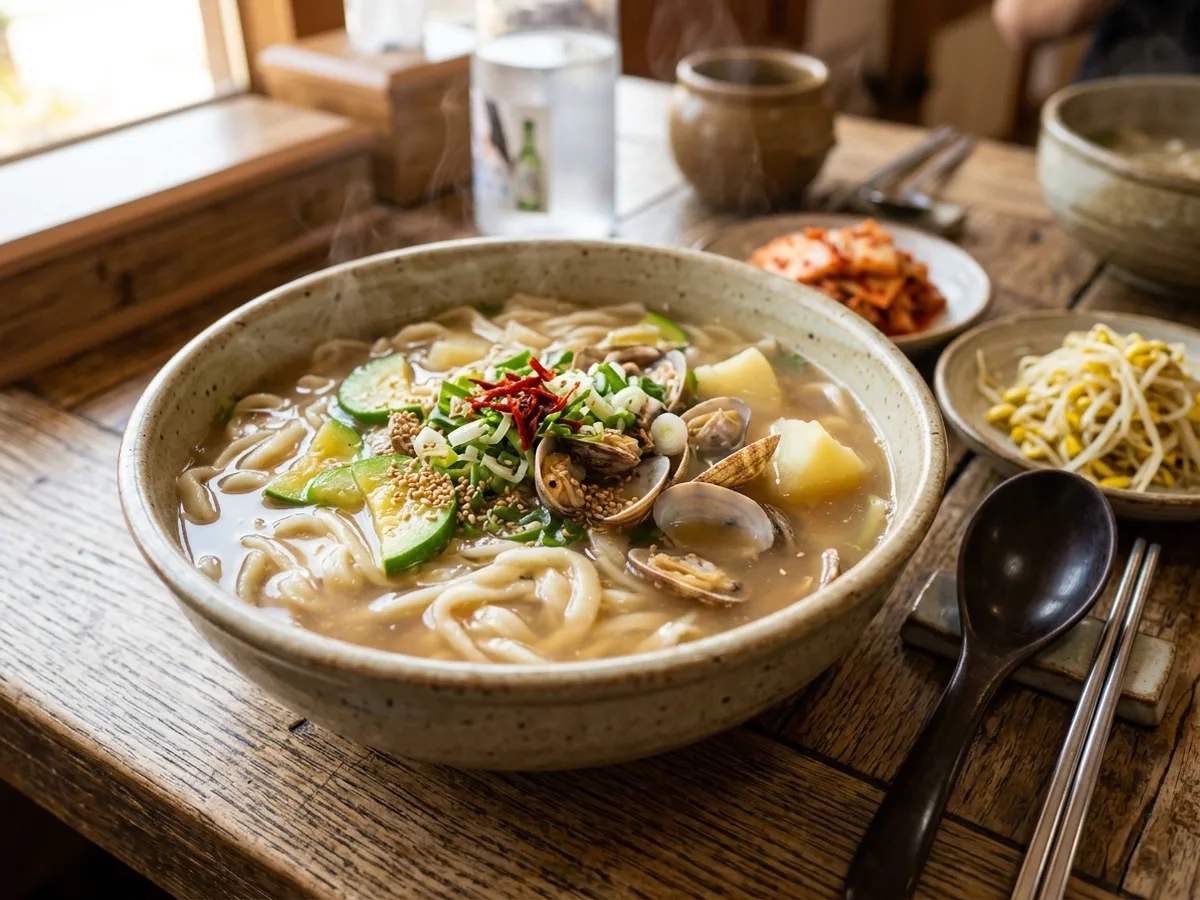 칼국수 · KalguksuSame family · Noodles & Dumplings Knife-cut wheat noodles in anchovy or clam broth.
 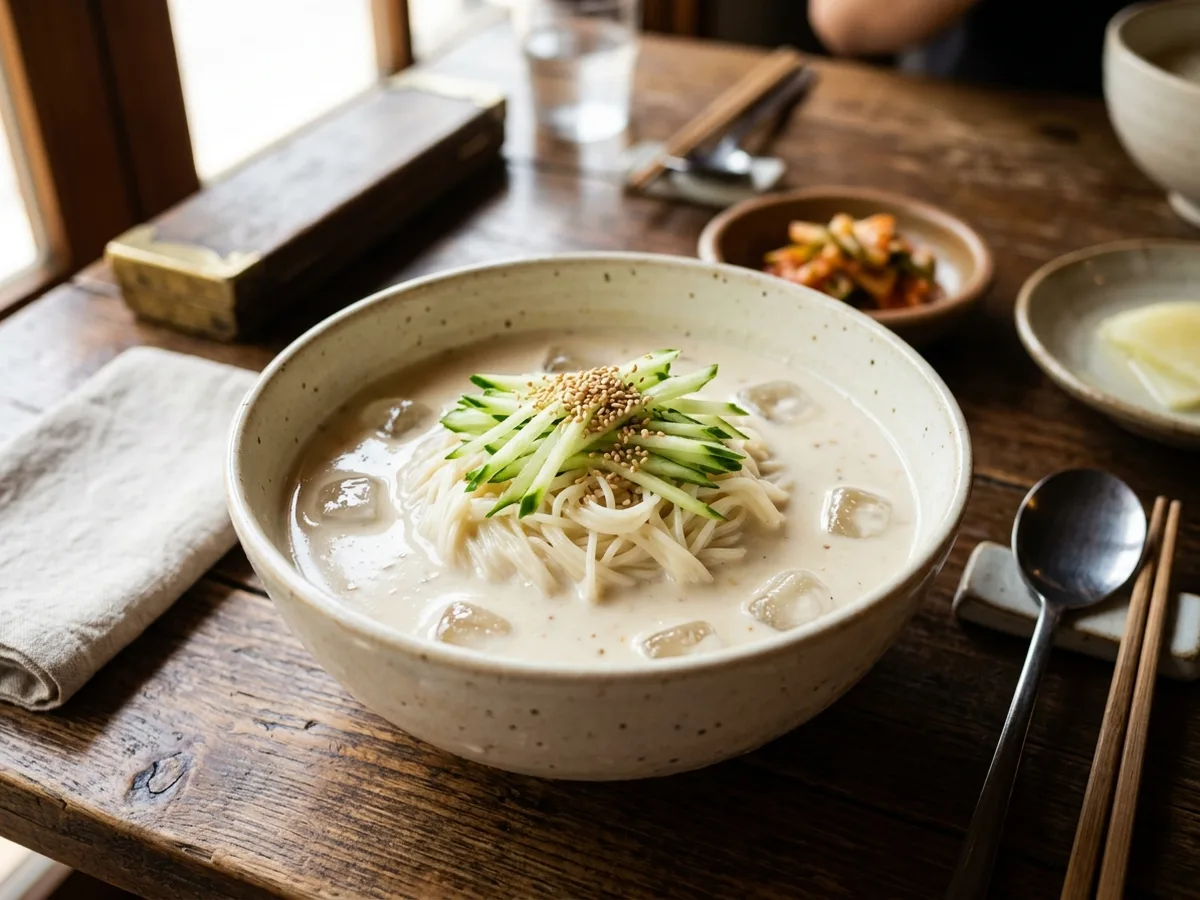 콩국수 · KongguksuSame family · Noodles & Dumplings Noodles in chilled soy-milk broth — a summer-only obsession.