Myeolchi Bokkeum (멸치볶음)
Sweet-savory stir-fried baby anchovies — a lunchbox regular.
- Korean name
- 멸치볶음
- Spice level
- Mild
- Flavor
- sweet · savory
- Typically contains
- fish
- Vegetarian / vegan
- Not vegetarian — meat or seafood is core to the dish
- Good to know
- Beginner-friendly ●●●○○ Solo dining ●●●●● Kid-friendly ●●●○○
- Also written as
- myulchi bokkeum, myeolchi, stir-fried anchovies, anchovy banchan
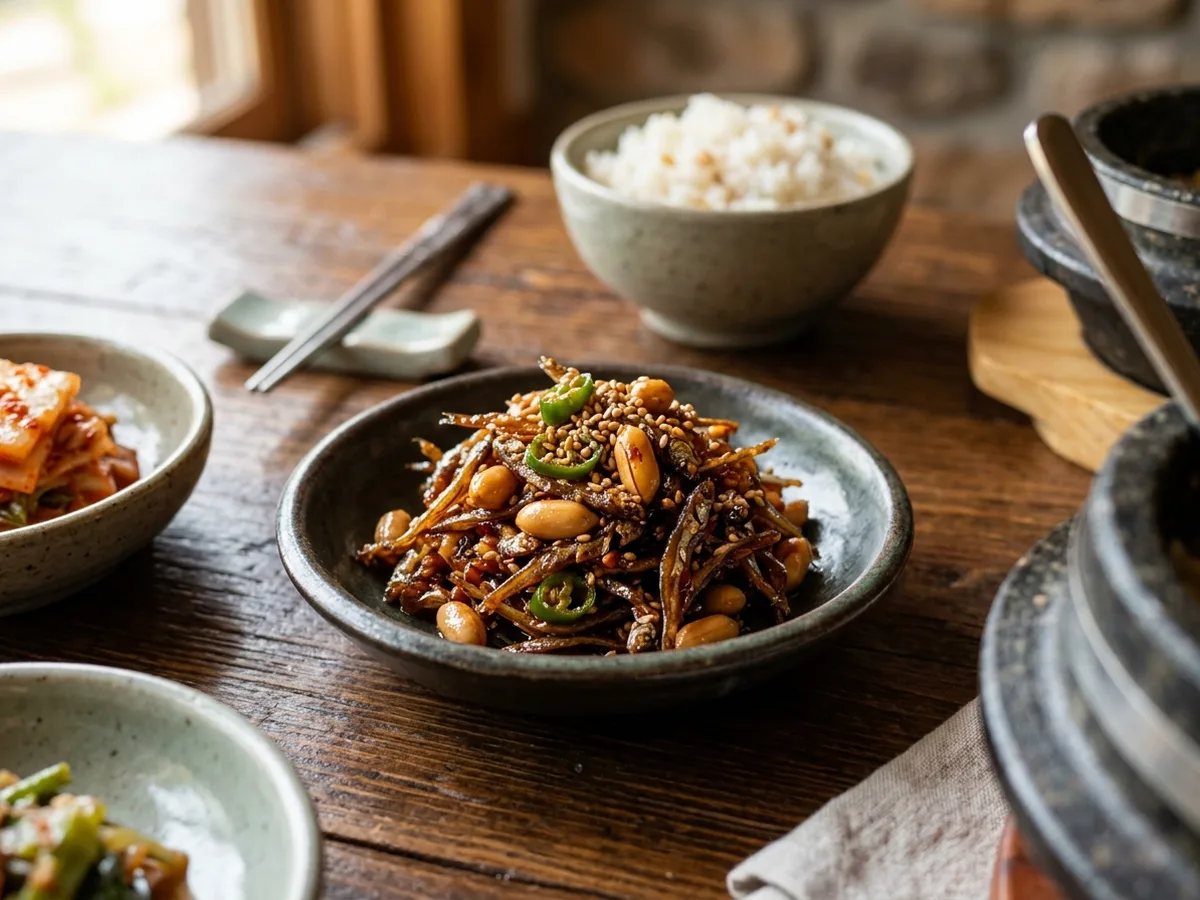
What is Myeolchi Bokkeum?
Myeolchi-bokkeum (멸치볶음) is stir-fried dried anchovies — tiny whole anchovies glazed sweet-savory with soy or gochujang, often with peanuts or walnuts. Crunchy, salty, and slightly candied, it is a classic mitbanchan (make-ahead side) found in home refrigerators and packed lunchboxes across Korea.
How to eat it
- Eat the anchovies whole. Head, bones, and all — the small sizes used are fully edible and are a traditional calcium source.
- Small pinches over rice. It is intensely seasoned; a few anchovies per spoon of plain rice is the intended ratio.
- Fine at room temperature. As a preserved side, it is served cold or ambient — no need to expect it hot.
Cooking it at home
- Dry-toast small dried anchovies (janmyeolchi) in a pan 1–2 minutes to remove fishiness, then set aside.
- Make a glaze of soy sauce, sugar or rice syrup, a little oil, and garlic (add gochujang for the red version); bubble briefly.
- Off the heat, toss anchovies (and nuts) through the glaze — cooking them in the sauce too long makes them tough.
- Finish with sesame seeds and a drop of syrup for gloss; keeps refrigerated about 2 weeks.
Good to know
- Fish and often nuts in one dish — a double allergen; it also runs salty-sweet, so portions are small.
- If it turns chewy rather than crunchy, it absorbed moisture — re-crisping in a dry pan works.
One of the "big three" lunchbox banchan of Korean childhood, alongside stir-fried fish cake and seasoned eggs.
Seen on Screen
Crash Course in Romance (일타 스캔들, 2023) — The make-ahead anchovy stir-fry that fills every Korean side-dish shop counter and lunchbox. (Theme connection.)
Theme connection — not a specific-scene claim
Nutrition
| Calories | 276 kcal |
|---|---|
| Carbohydrate | 13.62 g |
| Protein | 39.44 g |
| Fat | 7.08 g |
| Sodium | 2606 mg |
Per serving (~50g): ≈138 kcal · sodium ≈1,303 mg (65% of the WHO daily guideline, 2,000 mg)
Related foods
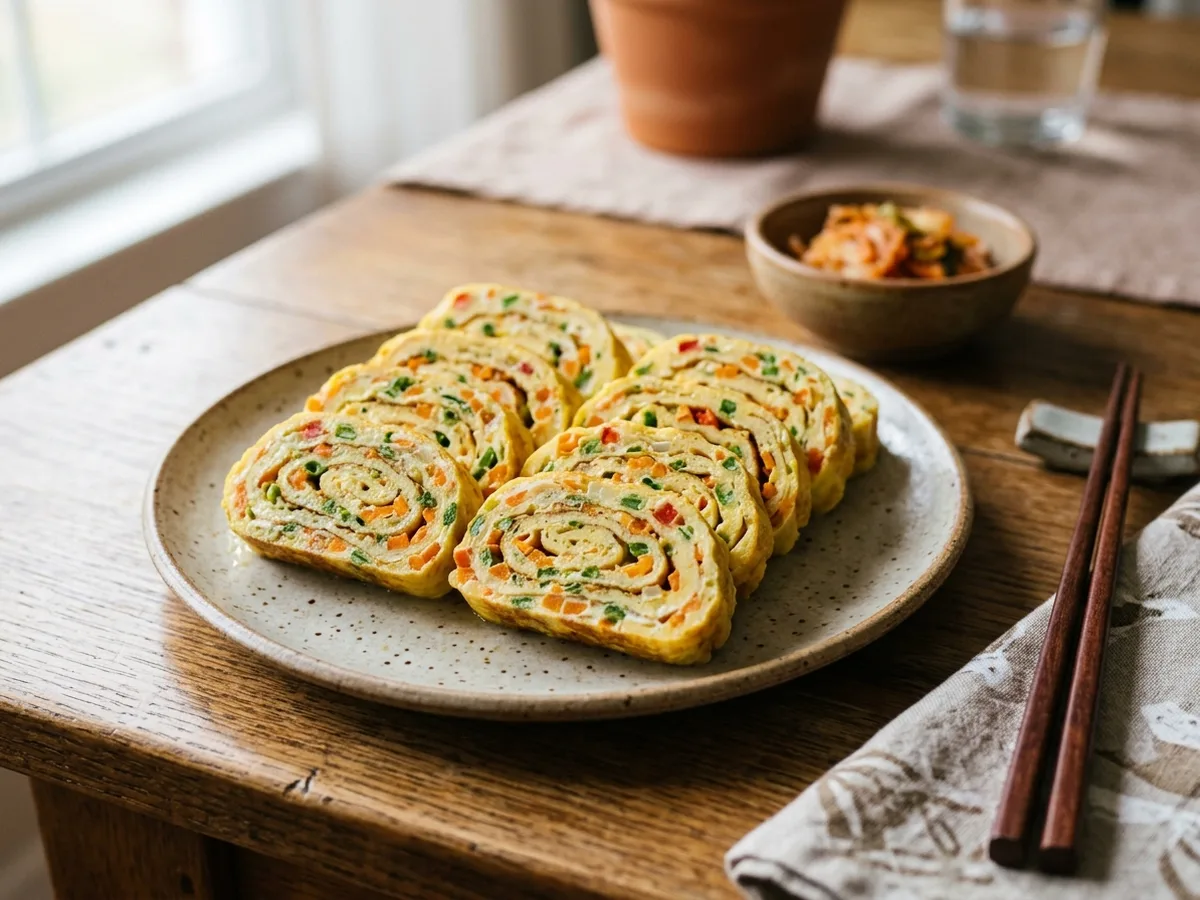 달걀말이 · Gyeran MariOften eaten together Rolled omelette, often with vegetables or gim inside.
 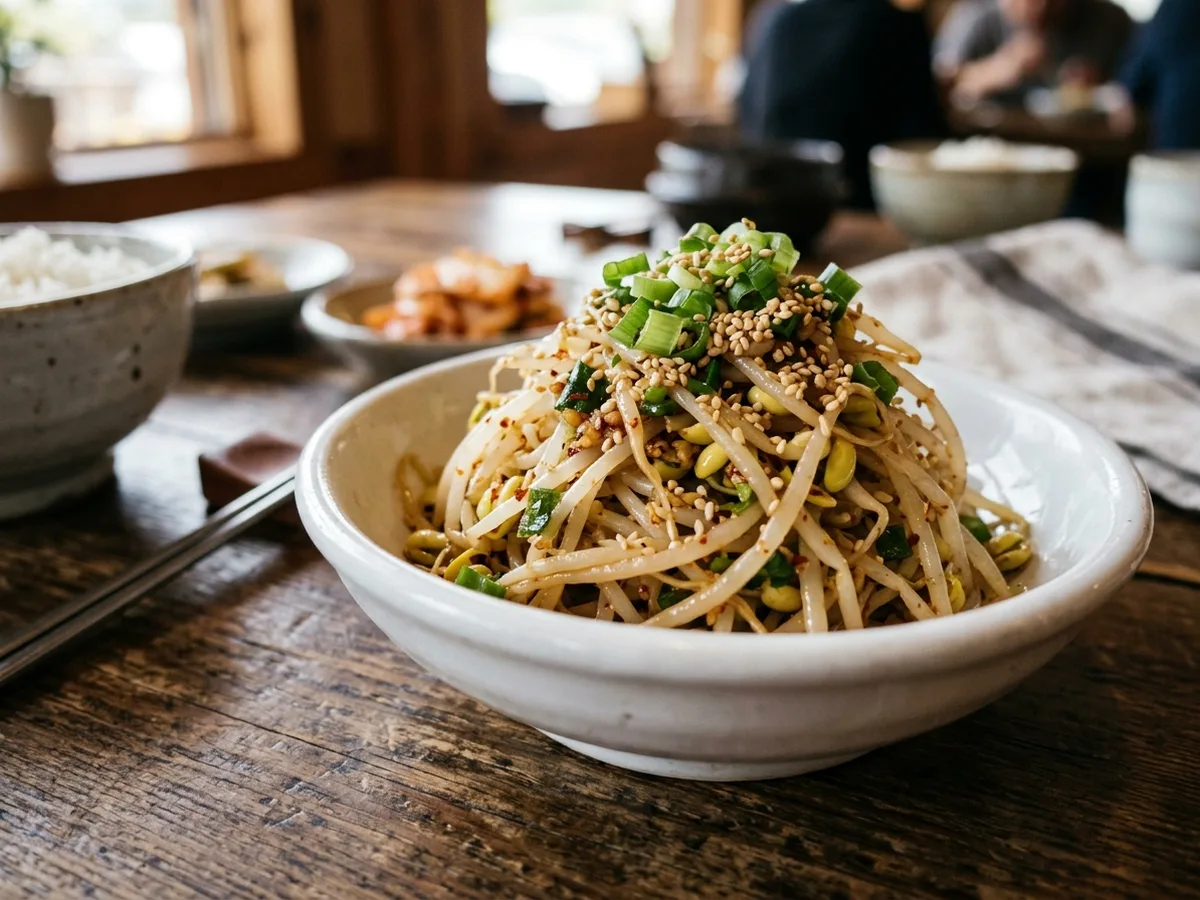 콩나물무침 · Kongnamul MuchimOften eaten together Seasoned soybean sprouts — the most common banchan of all.
 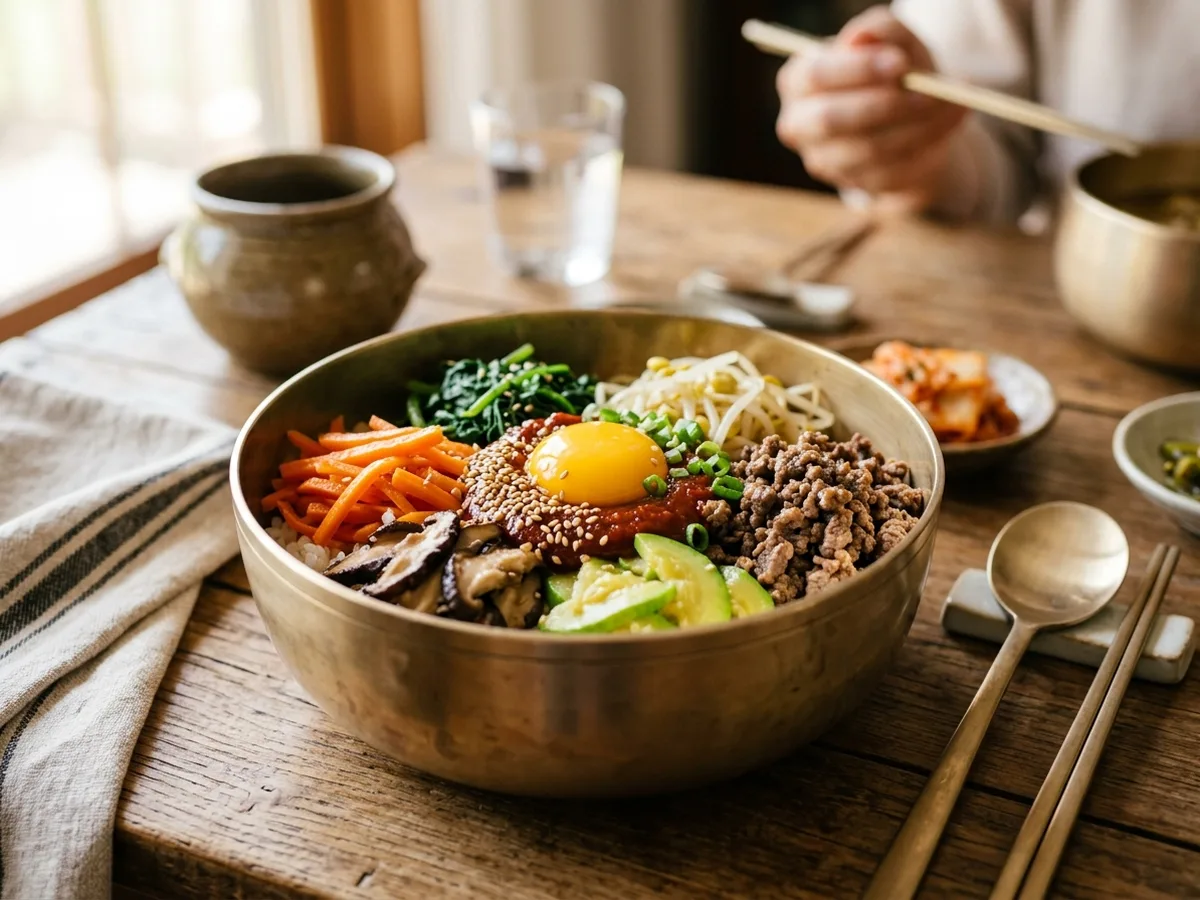 비빔밥 · BibimbapOften eaten together Rice bowl with seasoned vegetables and gochujang — mix hard, then eat.
 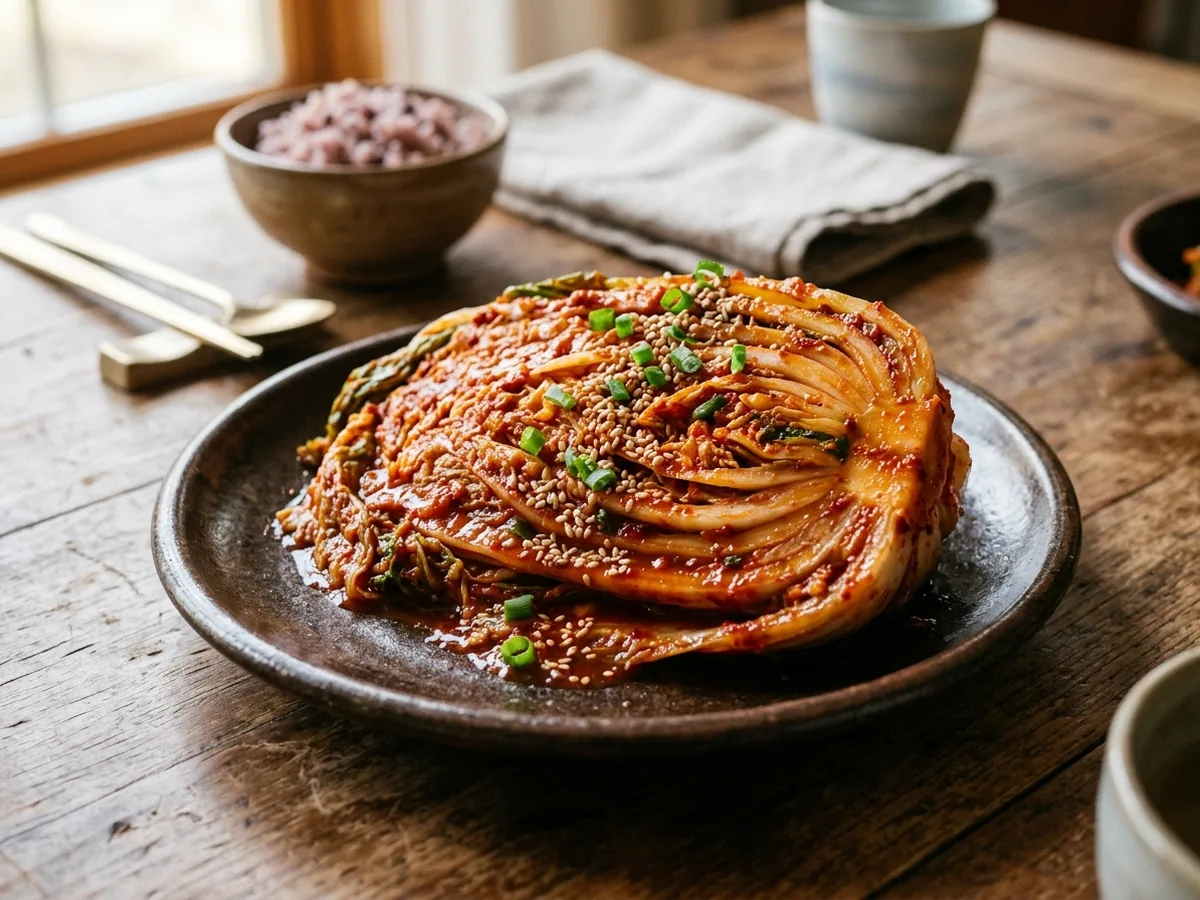 배추김치 · KimchiSame family · Kimchi & Banchan Fermented napa cabbage — the one dish on every Korean table.
 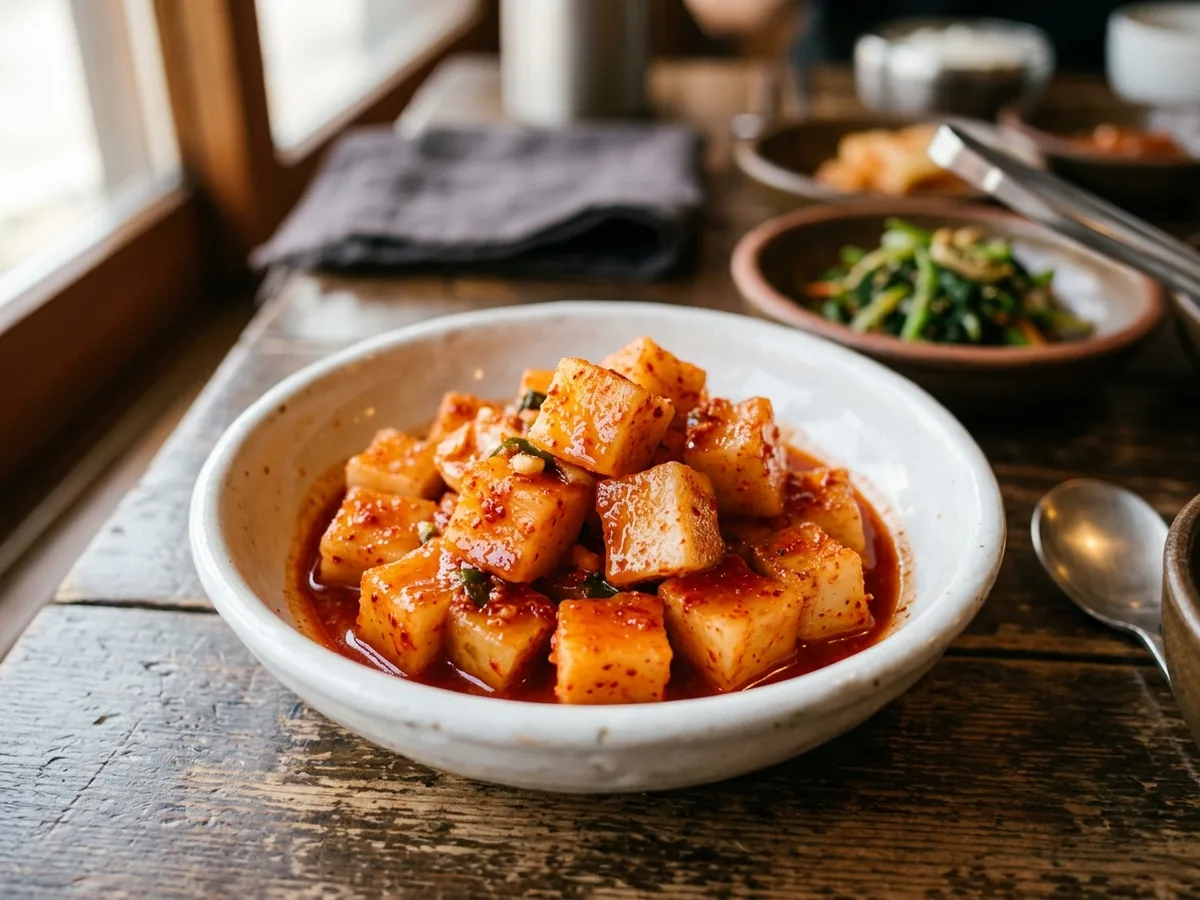 깍두기 · KkakdugiSame family · Kimchi & Banchan Cubed radish kimchi — crunchy, juicy, born for gukbap.