Oi Sobagi (오이소박이)
Stuffed cucumber kimchi — the crunchiest of the family.
- Korean name
- 오이소박이
- Spice level
- Medium
- Flavor
- spicy · crunchy
- Typically contains
- fermented seafood seasoning
- Vegetarian / vegan
- Sometimes — vegetable-forward, but anchovy broth, fish sauce or meat garnish is common. Ask first
- Good to know
- Beginner-friendly ●●●○○ Solo dining ●●●●● Kid-friendly ●●●○○
- Also written as
- oi sobagi, oisobagi, cucumber kimchi, stuffed cucumber kimchi
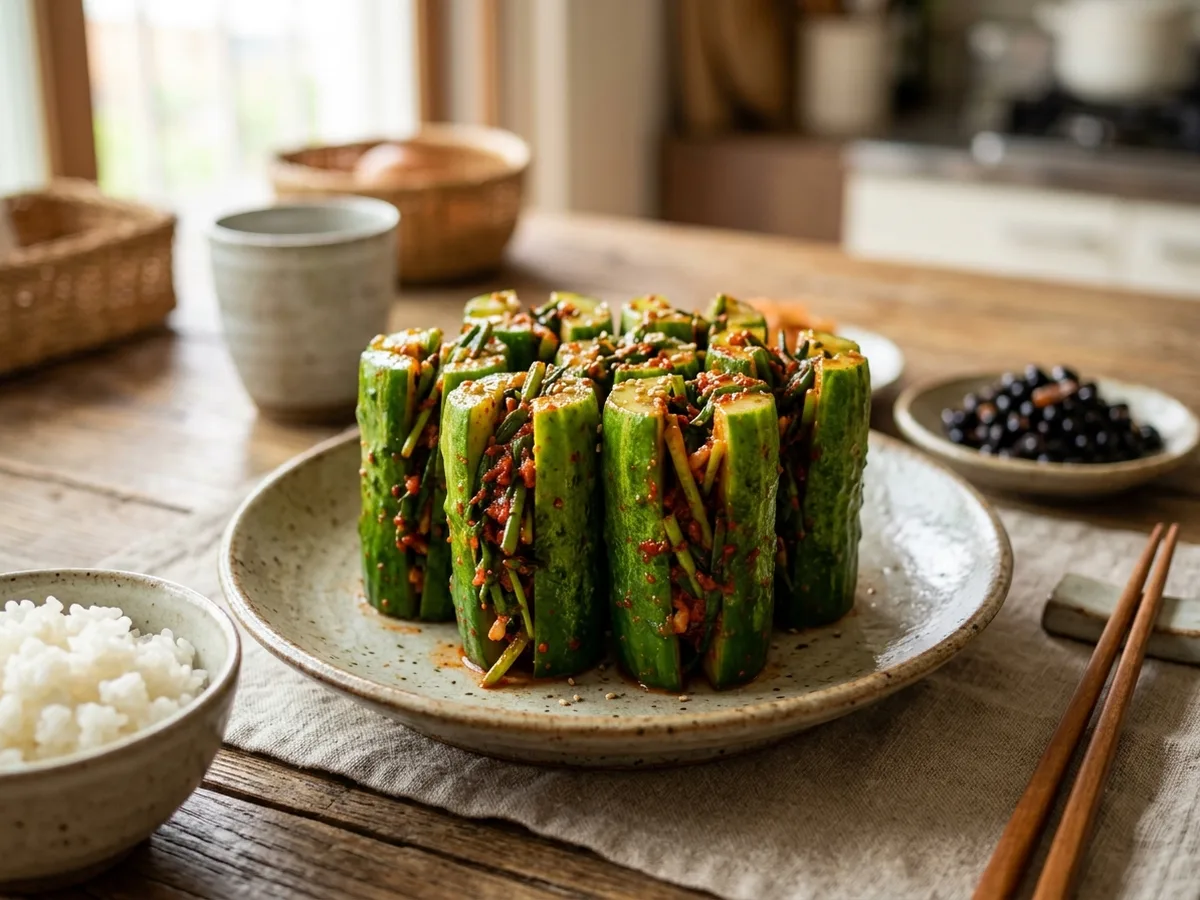
What is Oi Sobagi?
Oi-sobagi (오이소박이) is stuffed cucumber kimchi — cucumbers cross-cut into pockets and filled with a chive-and-chili stuffing. It is a summer kimchi, eaten young and crunchy rather than deeply fermented, and its cold juiciness makes it the season's favorite banchan alongside hot rice and grilled fish.
How to eat it
- Eat it fresh and cold. Oi-sobagi is at its peak within days of being made, while the cucumber still snaps.
- One stuffed segment is one bite (or two). Pick up a whole piece; the stuffing is meant to stay in its pocket.
- Serve it with hot, heavy food. Its cooling crunch is the classic counterpoint to grilled mackerel, stews, and barbecue in summer.
Cooking it at home
- Cut Kirby-type cucumbers into 5 cm lengths and cross-cut an X almost through; brine in salted water 30 minutes until flexible.
- Stuff the X with a mix of Korean chives (buchu), gochugaru, garlic, fish sauce, and a touch of sugar.
- Eat right away as a fresh kimchi, or leave half a day at room temperature then refrigerate; finish within a week.
Good to know
- Usually contains fish sauce — ask for vegan versions at temple-food or specialty shops.
- It waters out and softens quickly; unlike cabbage kimchi, old oi-sobagi is genuinely past it.
A staple of home summer tables — restaurants serve it seasonally, so seeing it is a sign the banchan is made in-house.
Nutrition
| Calories | 37 kcal |
|---|---|
| Carbohydrate | 6.66 g |
| Protein | 1.76 g |
| Fat | 0.37 g |
| Sodium | 302 mg |
Per serving (~100g): ≈37 kcal · sodium ≈302 mg (15% of the WHO daily guideline, 2,000 mg)
Related foods
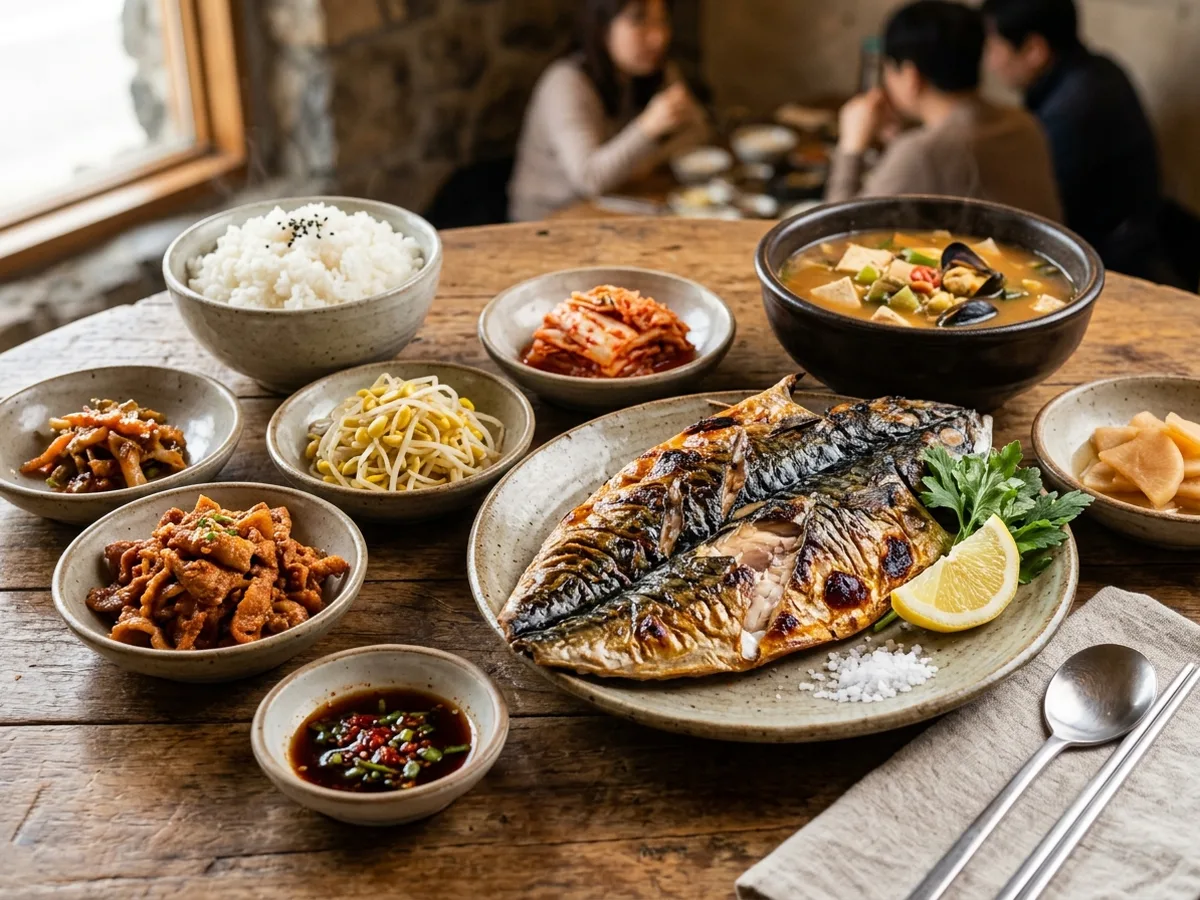 고등어구이 · Godeungeo GuiOften eaten together Grilled mackerel — the backbone of a Korean set meal.
 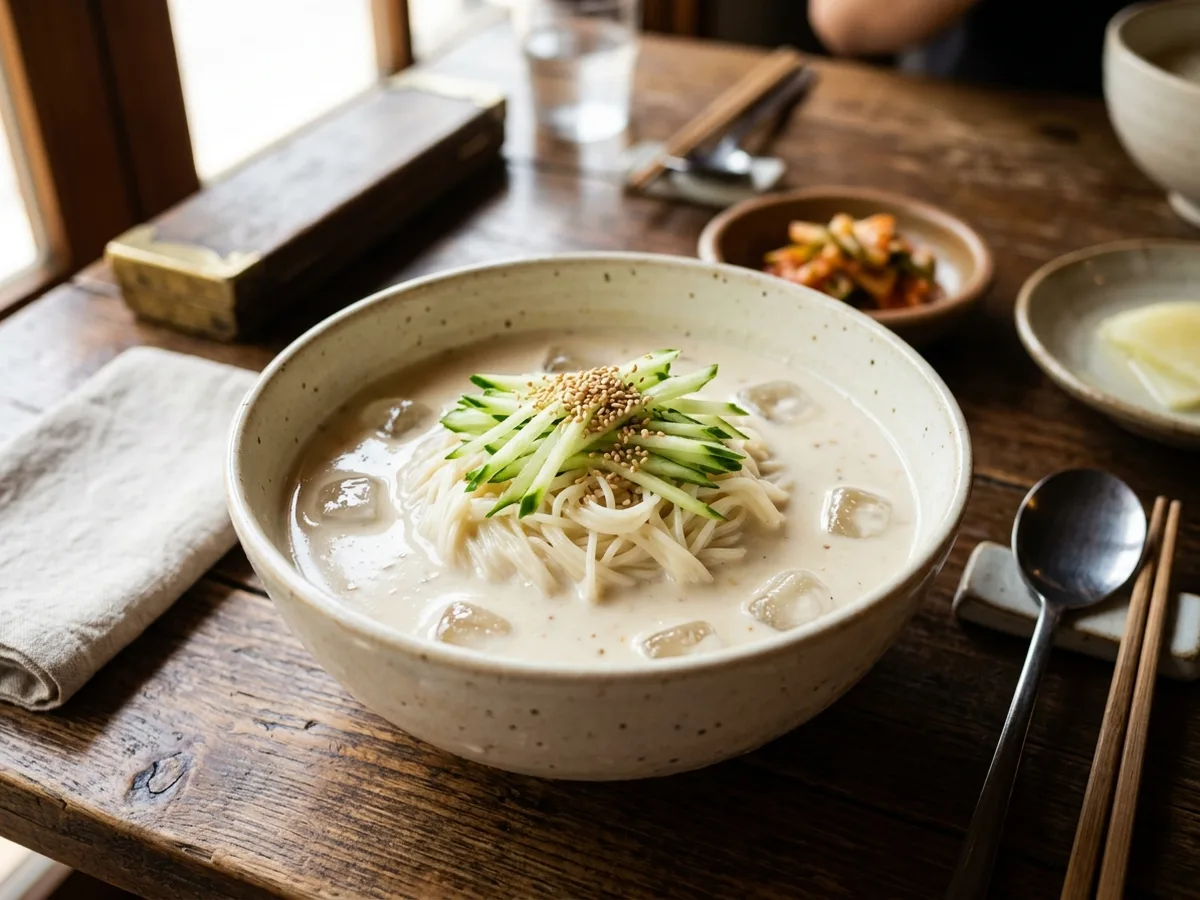 콩국수 · KongguksuOften eaten together Noodles in chilled soy-milk broth — a summer-only obsession.
 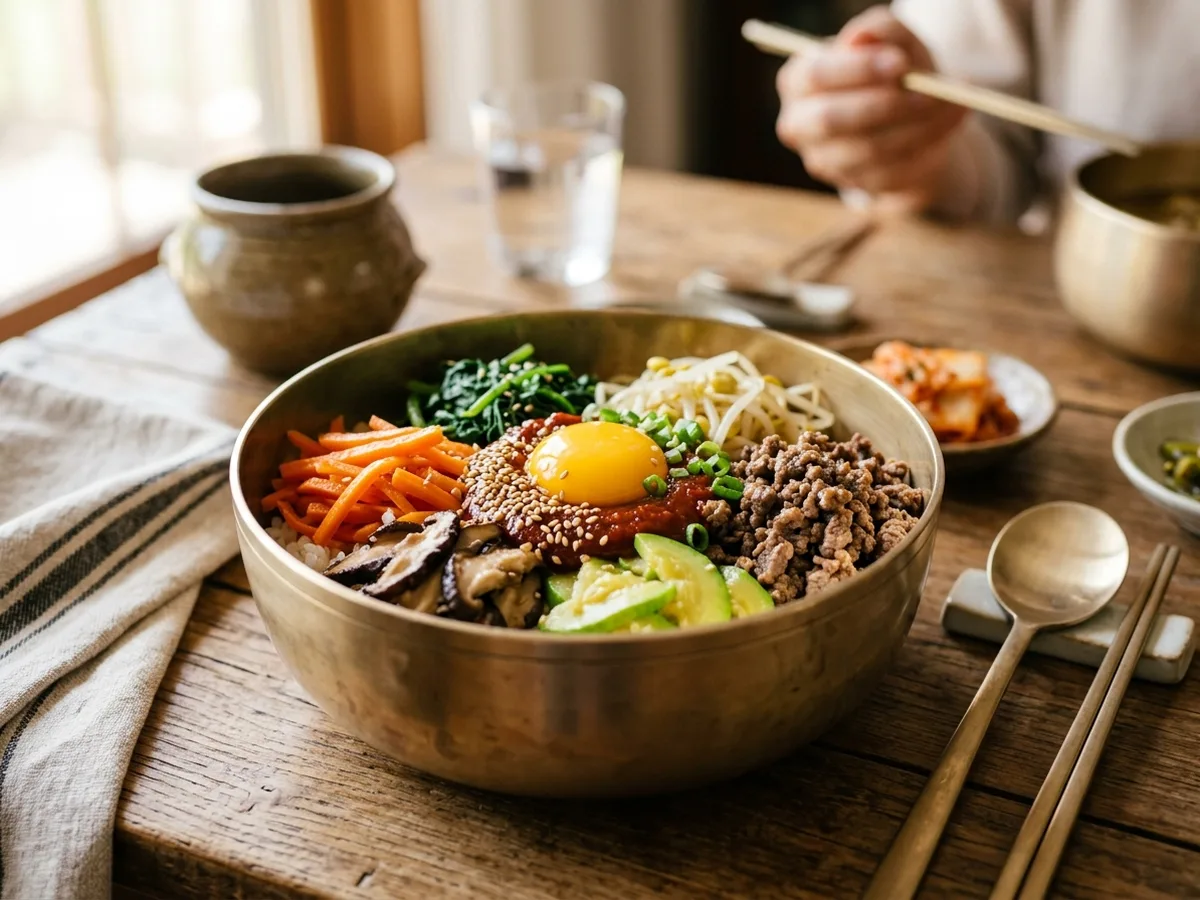 비빔밥 · BibimbapOften eaten together Rice bowl with seasoned vegetables and gochujang — mix hard, then eat.
 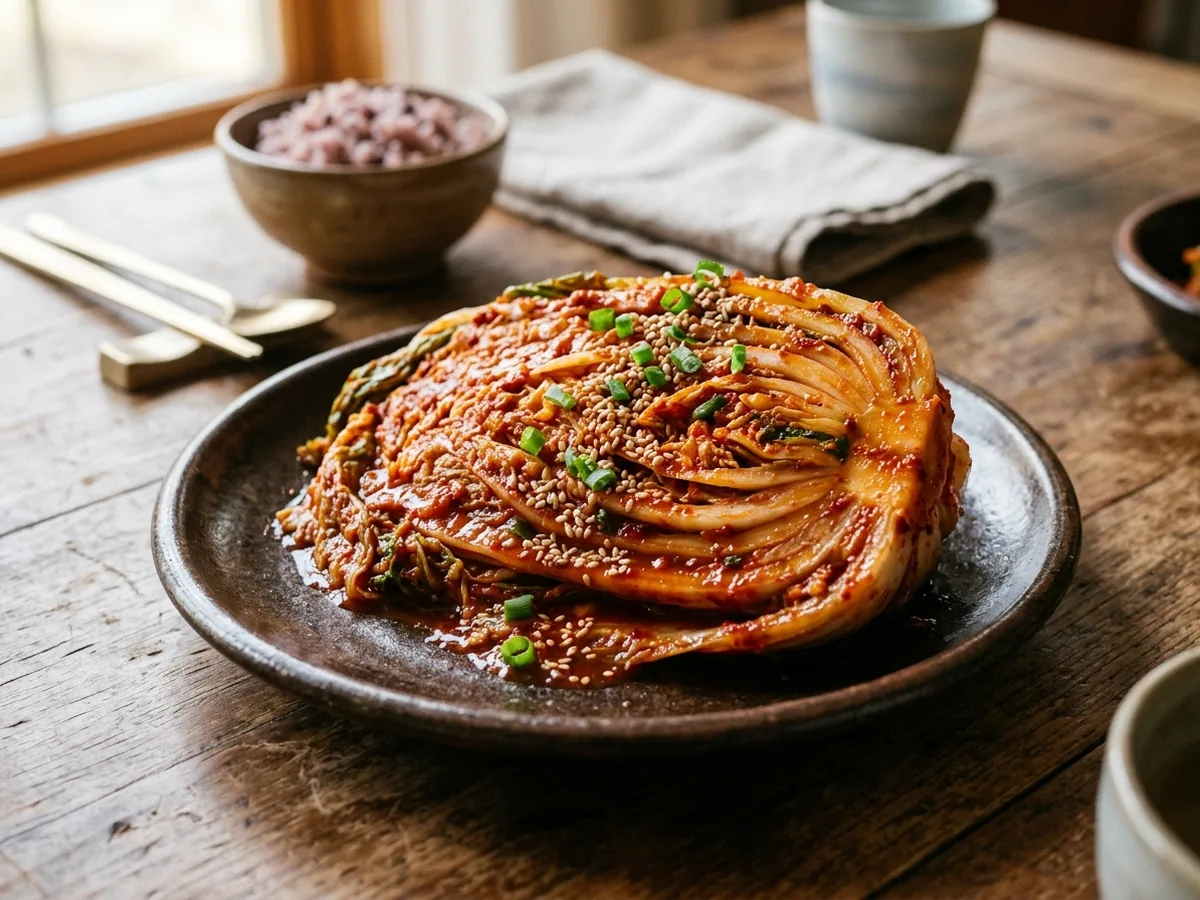 배추김치 · KimchiSame family · fermented seafood seasoning Fermented napa cabbage — the one dish on every Korean table.
 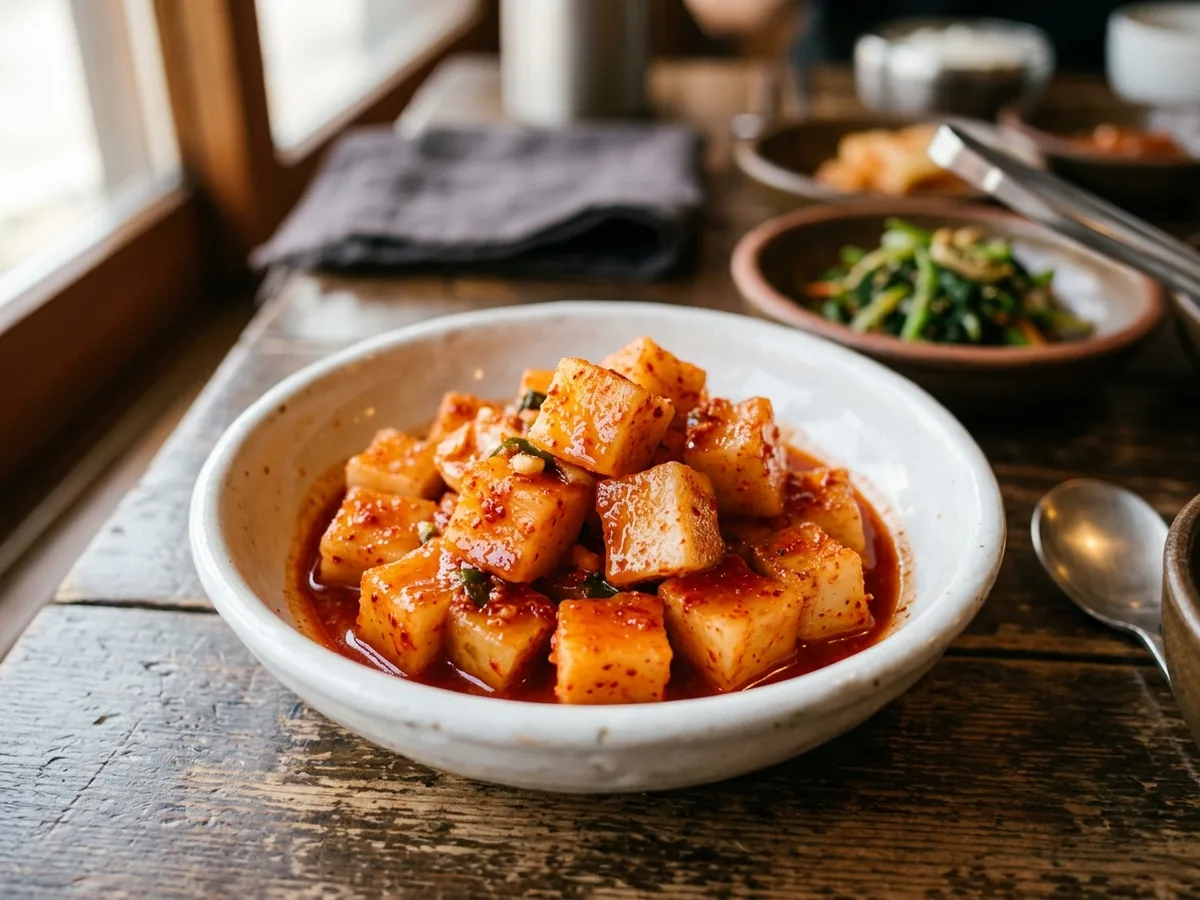 깍두기 · KkakdugiSame family · fermented seafood seasoning Cubed radish kimchi — crunchy, juicy, born for gukbap.