Kalguksu (칼국수)
Knife-cut wheat noodles in anchovy or clam broth.
- Korean name
- 칼국수
- Spice level
- Not spicy
- Flavor
- savory · mild
- Typically contains
- wheat noodles
- Vegetarian / vegan
- Sometimes — vegetable-forward, but anchovy broth, fish sauce or meat garnish is common. Ask first
- Typical price
- ₩8,000–₩11,000 per person checked 2026-07 — varies by area
- Good to know
- Beginner-friendly ●●●●○ Solo dining ●●●●○ Kid-friendly ●●●●○
- Also written as
- kal guksu, knife-cut noodles, kalgooksoo, kalguksoo
What is Kalguksu?
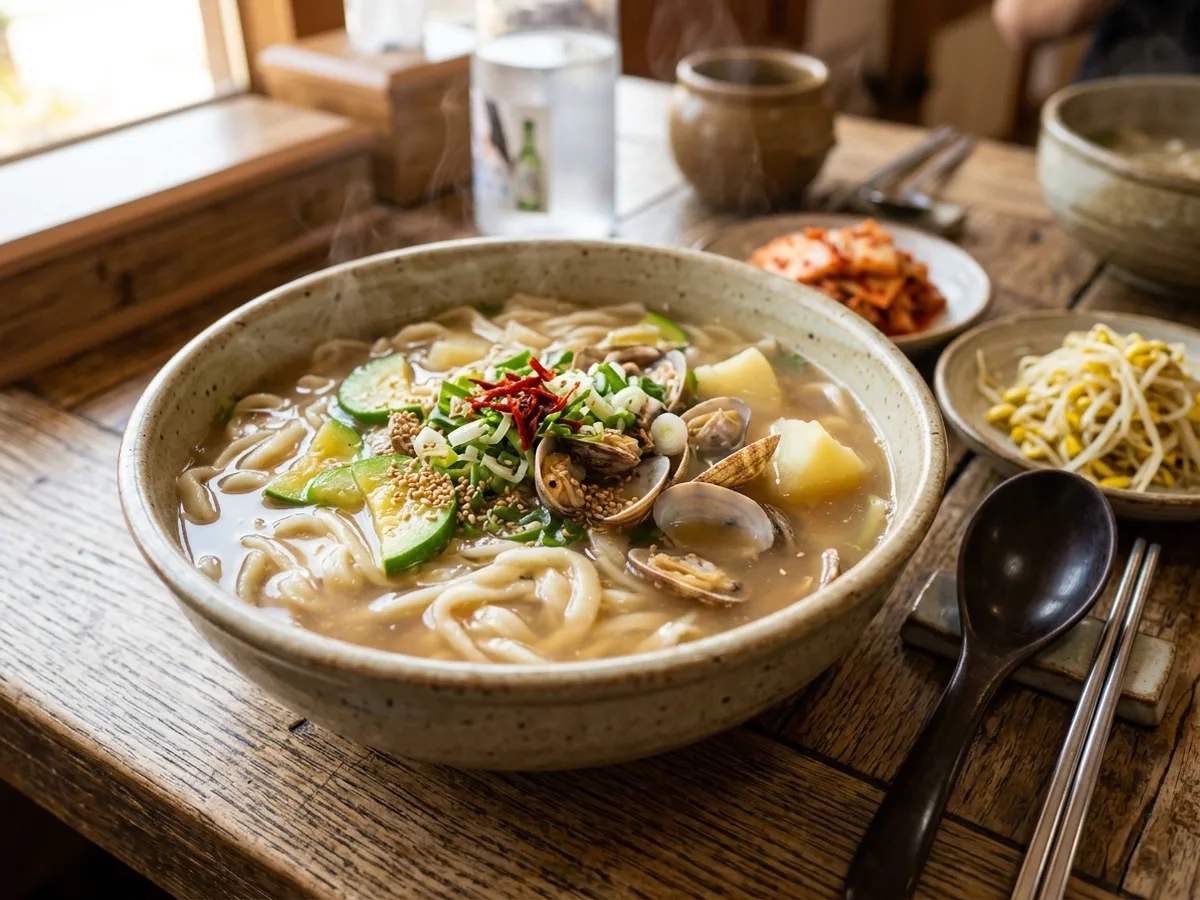
Kalguksu — 'knife noodles' — are hand-rolled, hand-cut wheat noodles boiled straight in their broth, which turns silky from the flour. Anchovy, clam or chicken versions all exist; all are grandmother food, market food, rainy-day food — the soft center of Korean noodle culture.
How to eat it
- Season with the scallion-chili dadaegi if provided; the broth starts gentle.
- Eat the noodles first while they're bouncy — they soften in the hot broth.
- Kimchi matters here: kalguksu houses live and die by their fresh geotjeori kimchi.
Cooking it at home
- Knead flour dough, rest it, roll thin and slice into ribbons.
- Boil noodles directly in anchovy-kelp broth with zucchini and potato — the starch thickens the soup.
- Finish with garlic and scallion.
Good to know
- Flour-heavy and filling — the 'light noodle soup' impression is a trap.
Kalguksu + geotjeori kimchi + summer boknal is a classic combination; Namdaemun market's kalguksu alley is the atmospheric way to try it.
Where to eat it
Best for first-time visitorsSince 1966MICHELIN Guide listed
The kalguksu institution that defined 'Myeongdong kalguksu' since 1966 — thick garlic-kimchi, plump mandu, and one of the fastest-moving queues in Seoul.
Open as of our last check (2026-07-20) · Sources: MICHELIN Guide — hours, prices and status can change; check the map link before visiting.
Nutrition
| Calories | 77 kcal |
|---|---|
| Carbohydrate | 14.9 g |
| Protein | 3.3 g |
| Fat | 0.49 g |
| Sodium | 220 mg |
Per serving (~700g): ≈539 kcal · sodium ≈1,540 mg (77% of the WHO daily guideline, 2,000 mg)
Related foods
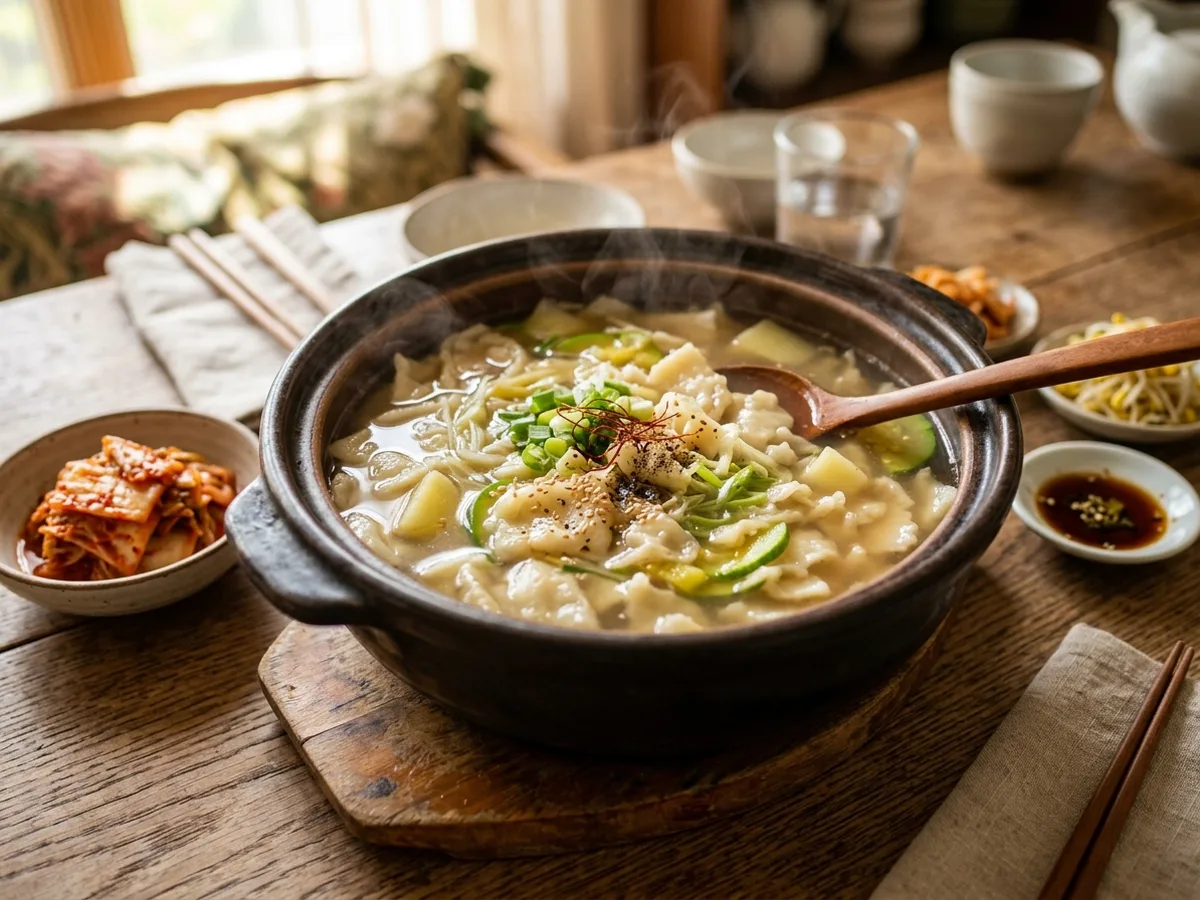 수제비 · SujebiOften eaten together Hand-torn dough flakes in broth — rainy-day comfort food.
 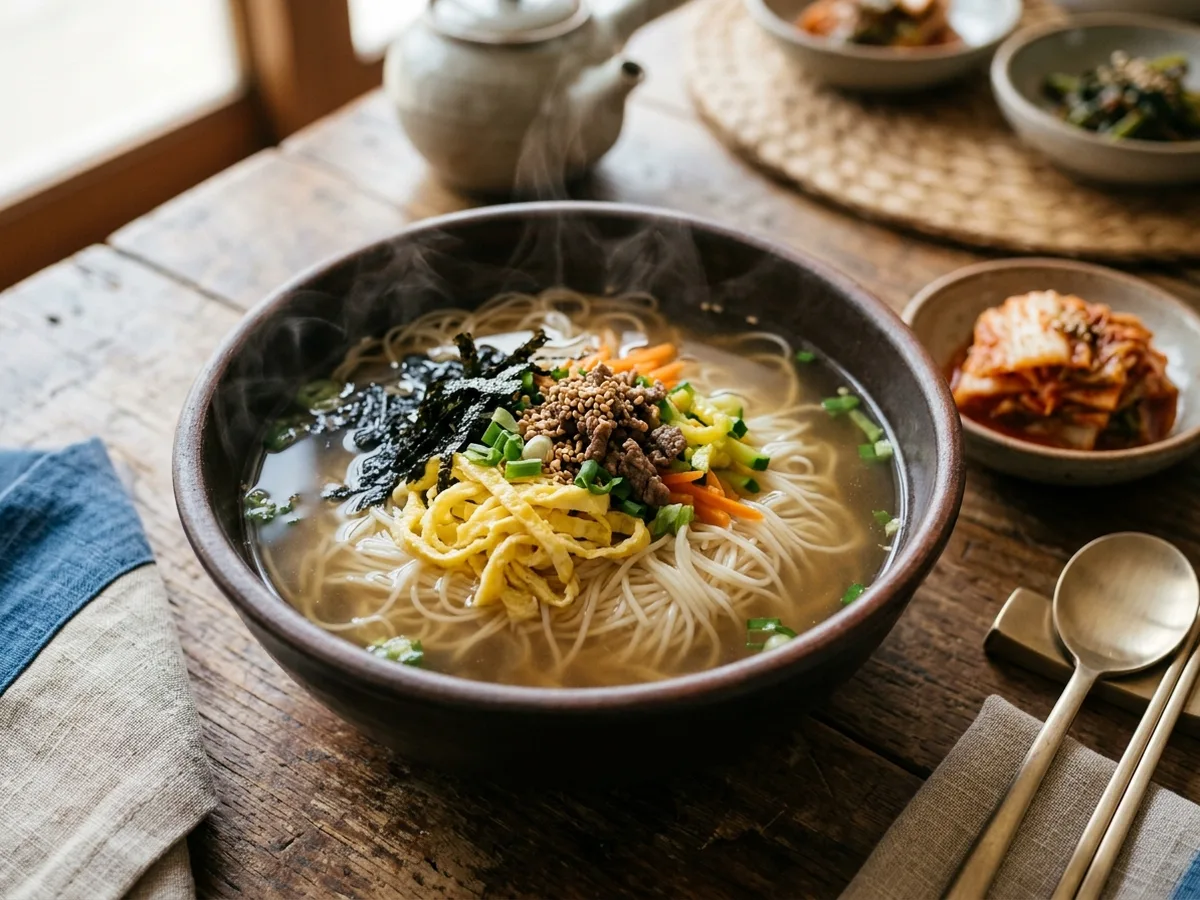 잔치국수 · Janchi GuksuOften eaten together 'Banquet noodles' in warm anchovy broth — simple and nostalgic.
 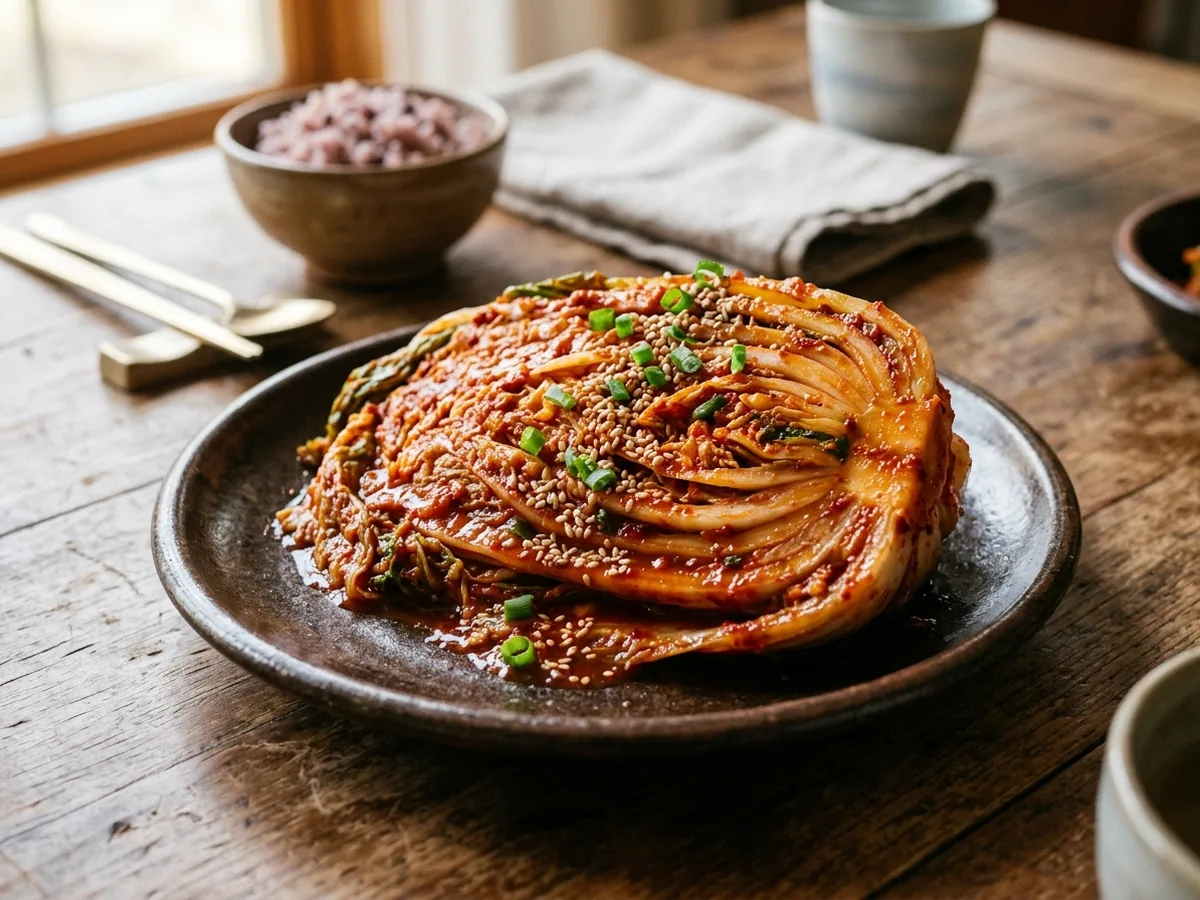 배추김치 · KimchiOften eaten together Fermented napa cabbage — the one dish on every Korean table.
 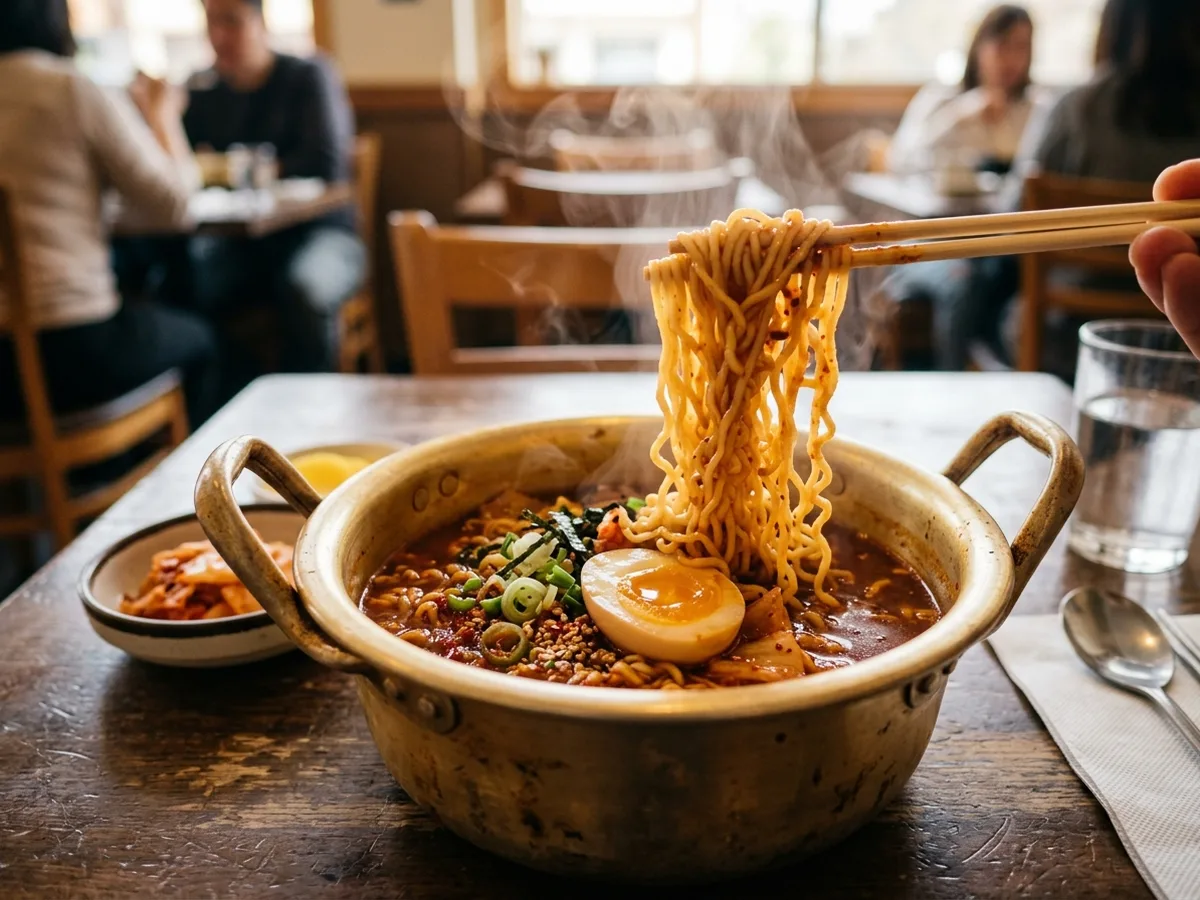 라면 · RamyeonSpicier alternative Korean instant noodles — a national institution, not a backup meal.
 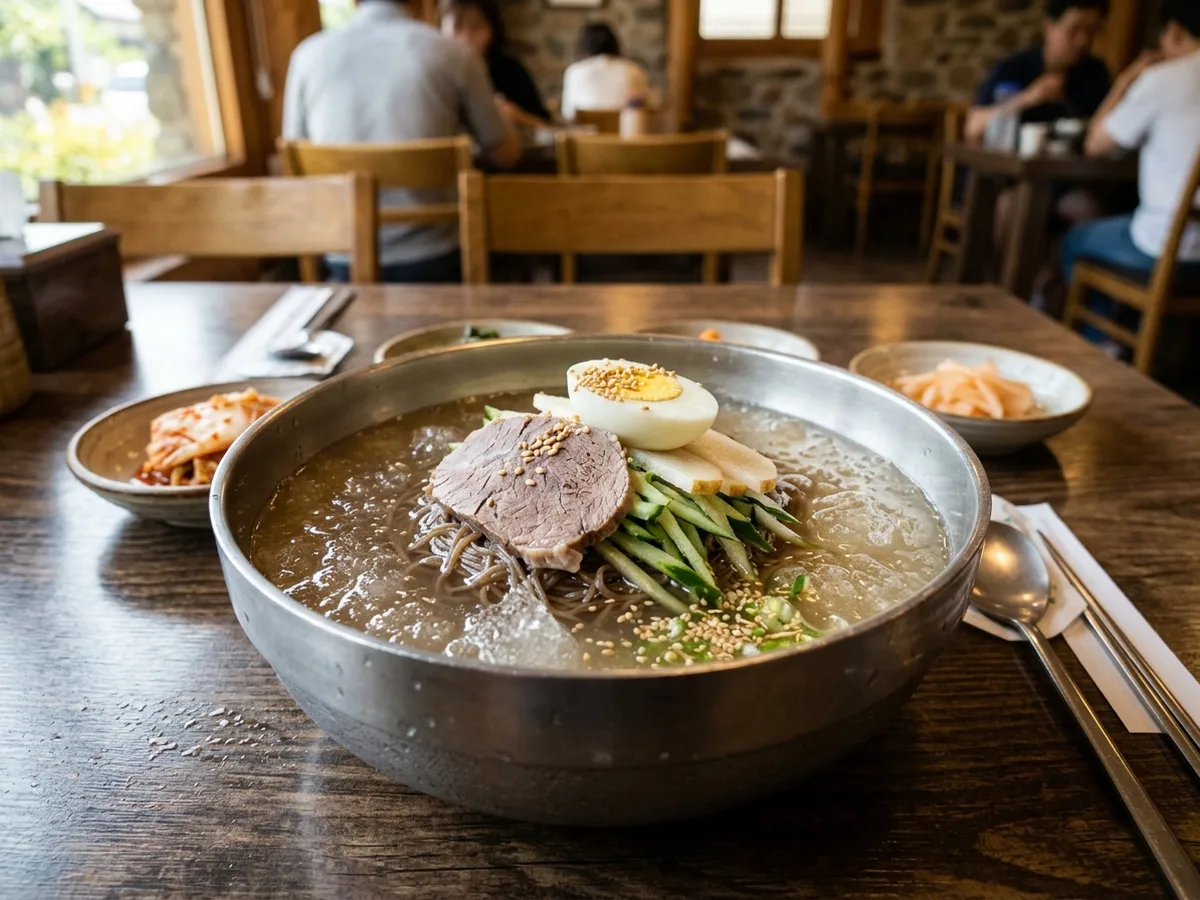 물냉면 · Mul NaengmyeonSame family · Noodles & Dumplings Buckwheat noodles in icy beef broth — the post-BBQ finisher.