Korean Winter Food: What to Eat When Seoul Freezes
Korean winter eating is an event: steam rising off street carts, stone pots that refuse to stop boiling, broths built for sub-zero commutes. Locals will tell you the cuisine is at its best in the cold months — this is the season the ttukbaegi (earthenware pot) was made for. The circuit below runs from street snacks to table-filling stews.
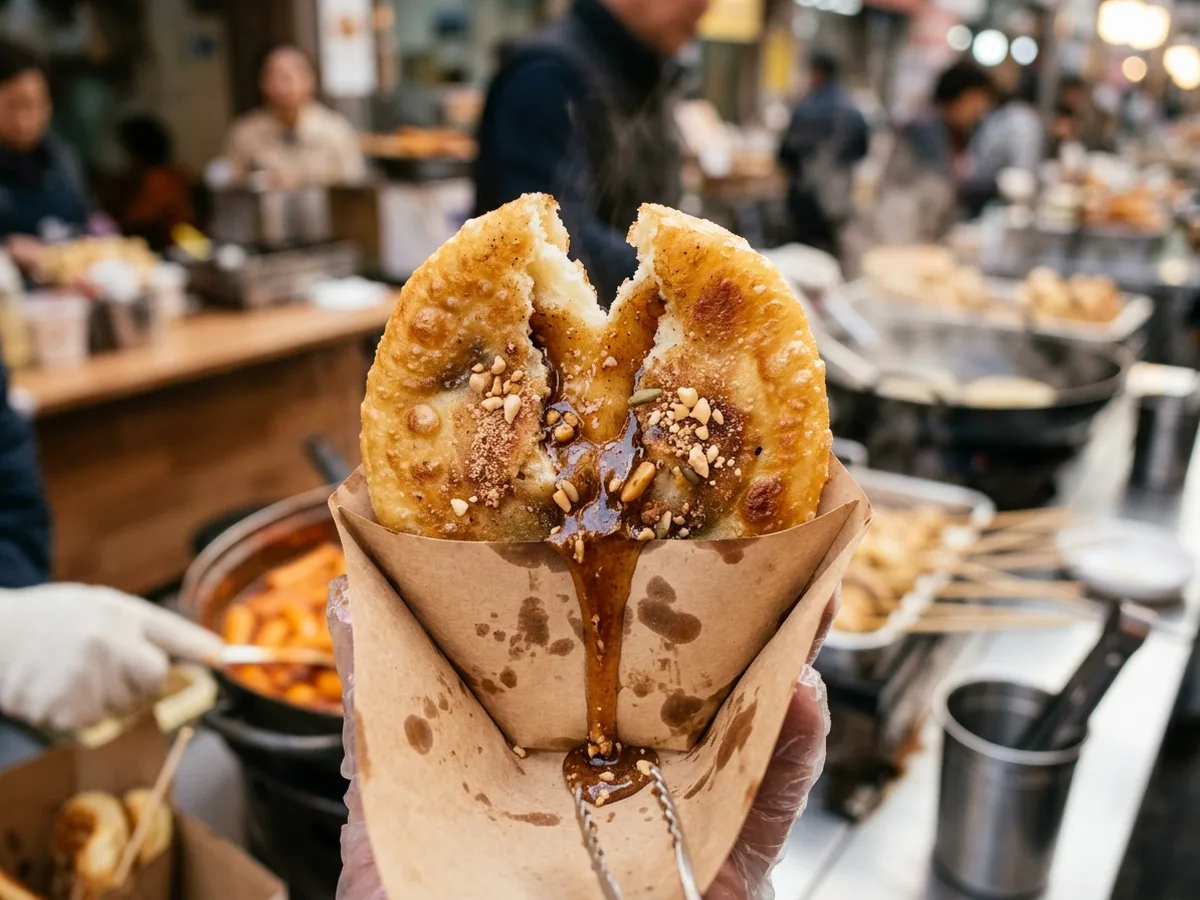 호떡 · Hotteok Griddled pancake with molten brown-sugar filling — winter street gold.
 The molten sugar pancake — winter's official street smell.
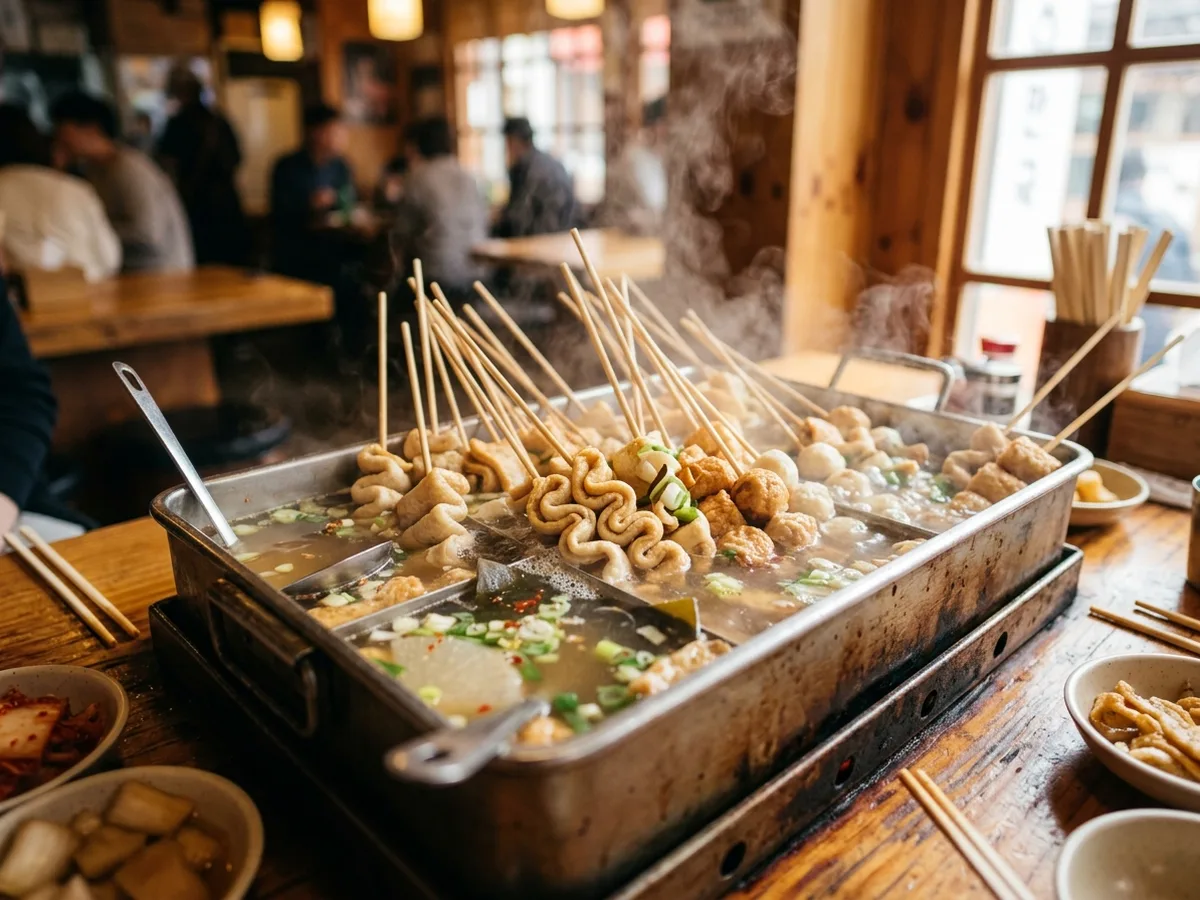 어묵탕 · Eomuk Tang Fish-cake skewer soup — the street-stall winter warmer.
 Fish-cake skewers with free hot broth in paper cups: Korea's street-corner radiator.
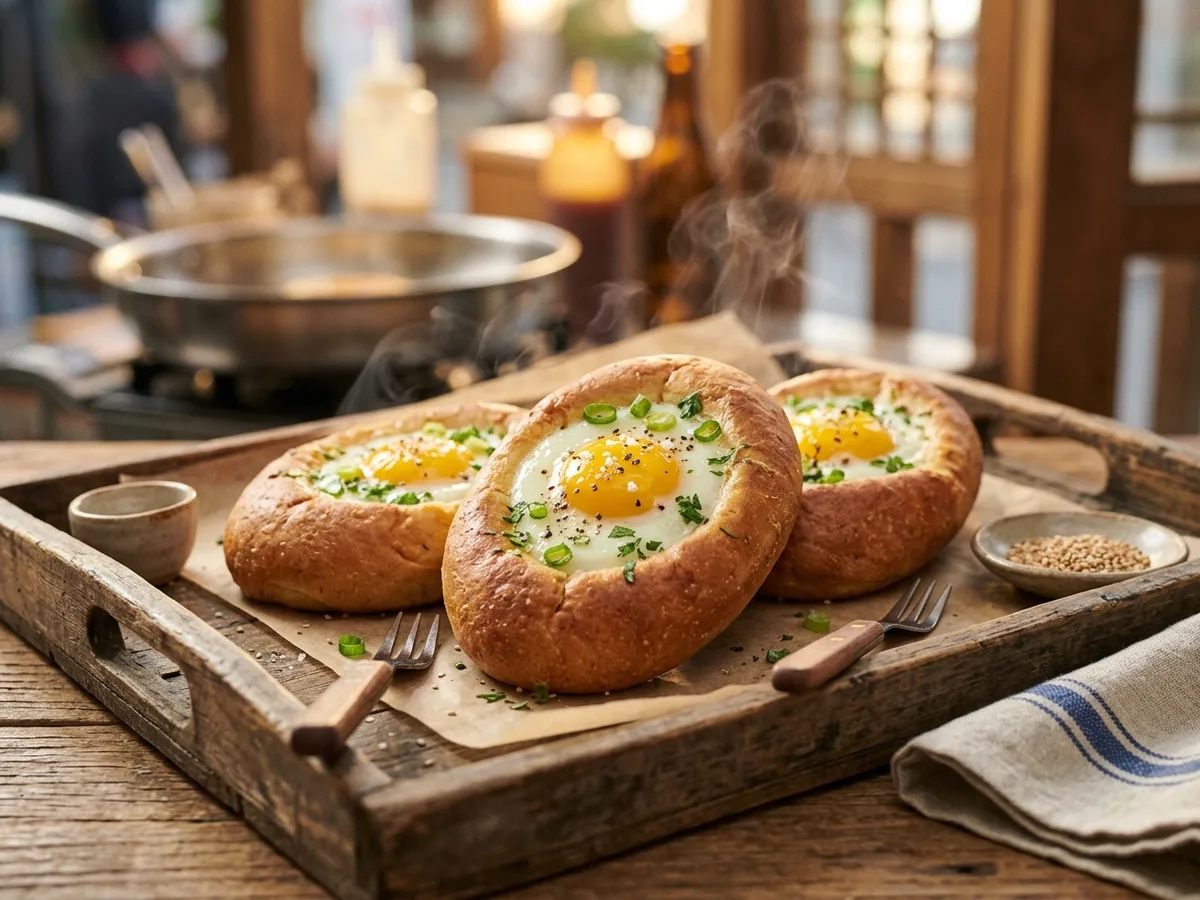 계란빵 · Gyeranppang Warm mini bread with a whole egg baked on top.
 Warm egg bread, best eaten with gloves on.
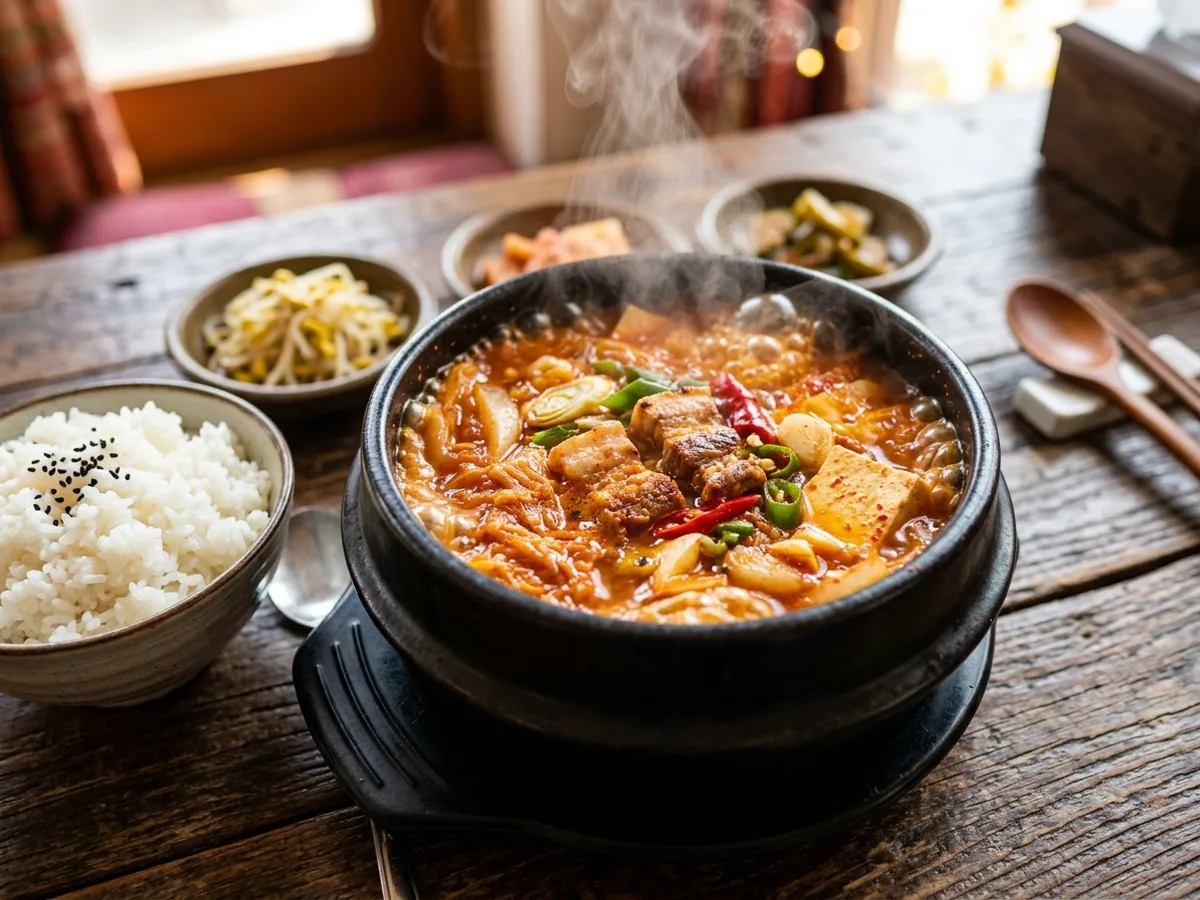 김치찌개 · Kimchi Jjigae Sour-aged kimchi stew, usually with pork — the national comfort food.
 The bubbling red stew that defines Korean cold-weather comfort.
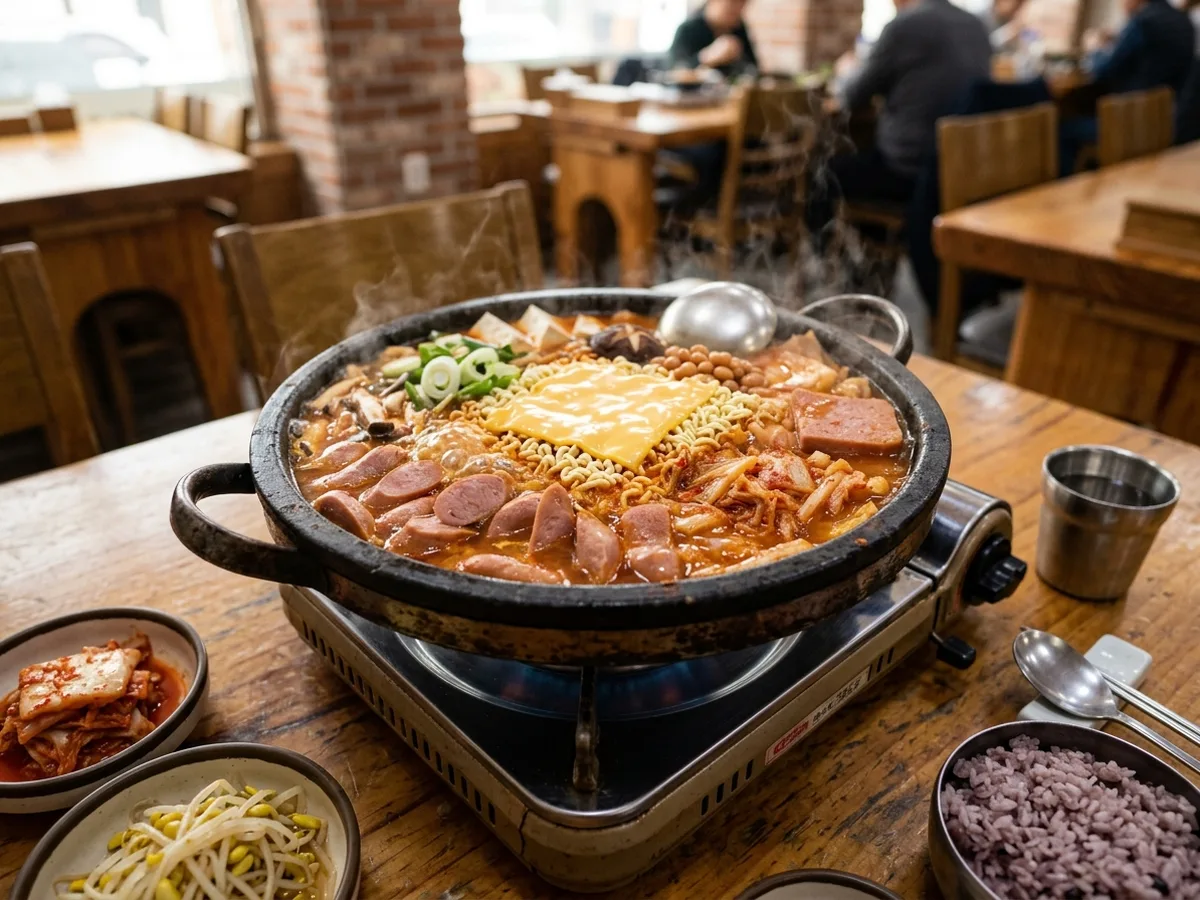 부대찌개 · Budae Jjigae 'Army stew' — sausage, spam, ramyeon and kimchi in one pot.
 The communal army stew — a table burner, a group, and no reason to leave.
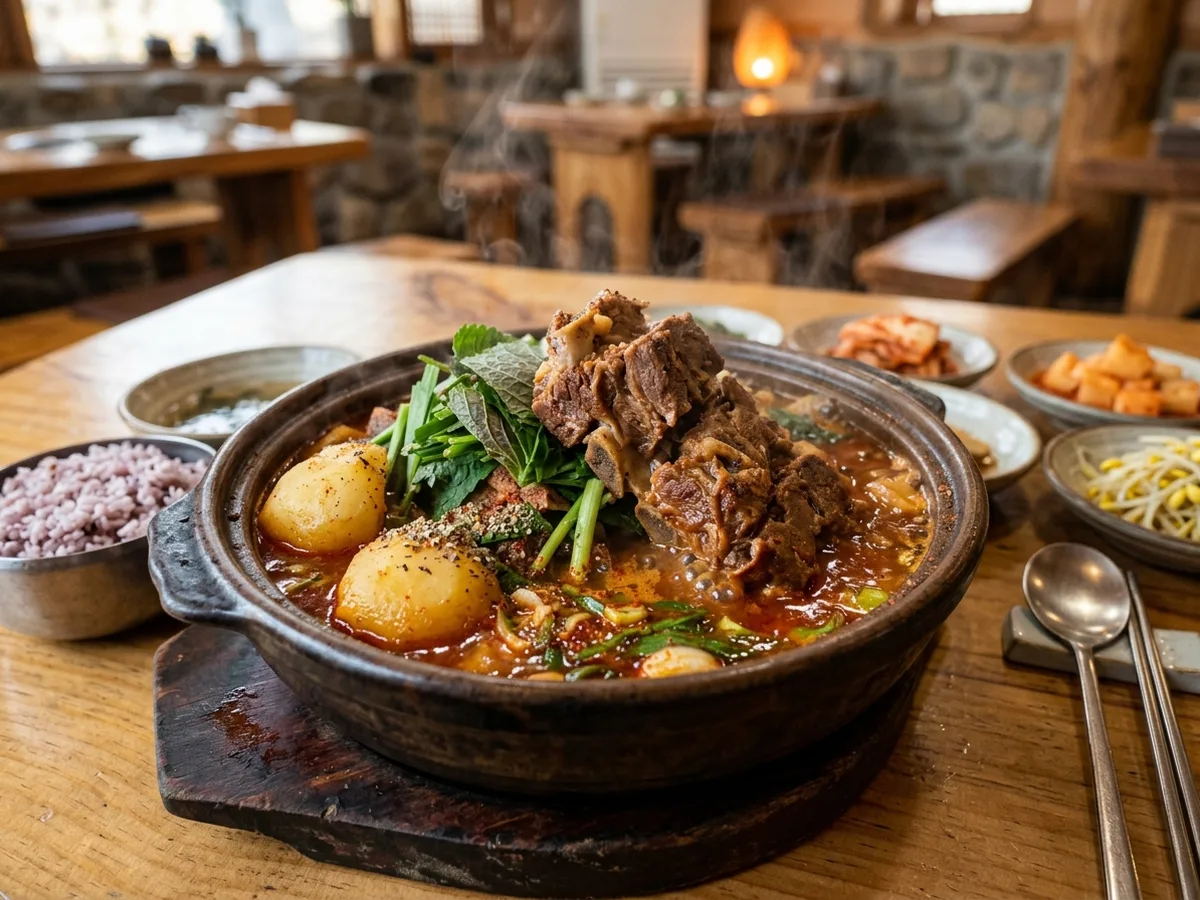 감자탕 · Gamjatang Spicy pork backbone stew with potatoes and perilla seeds.
 Pork-spine stew for the coldest nights, ideally after midnight.
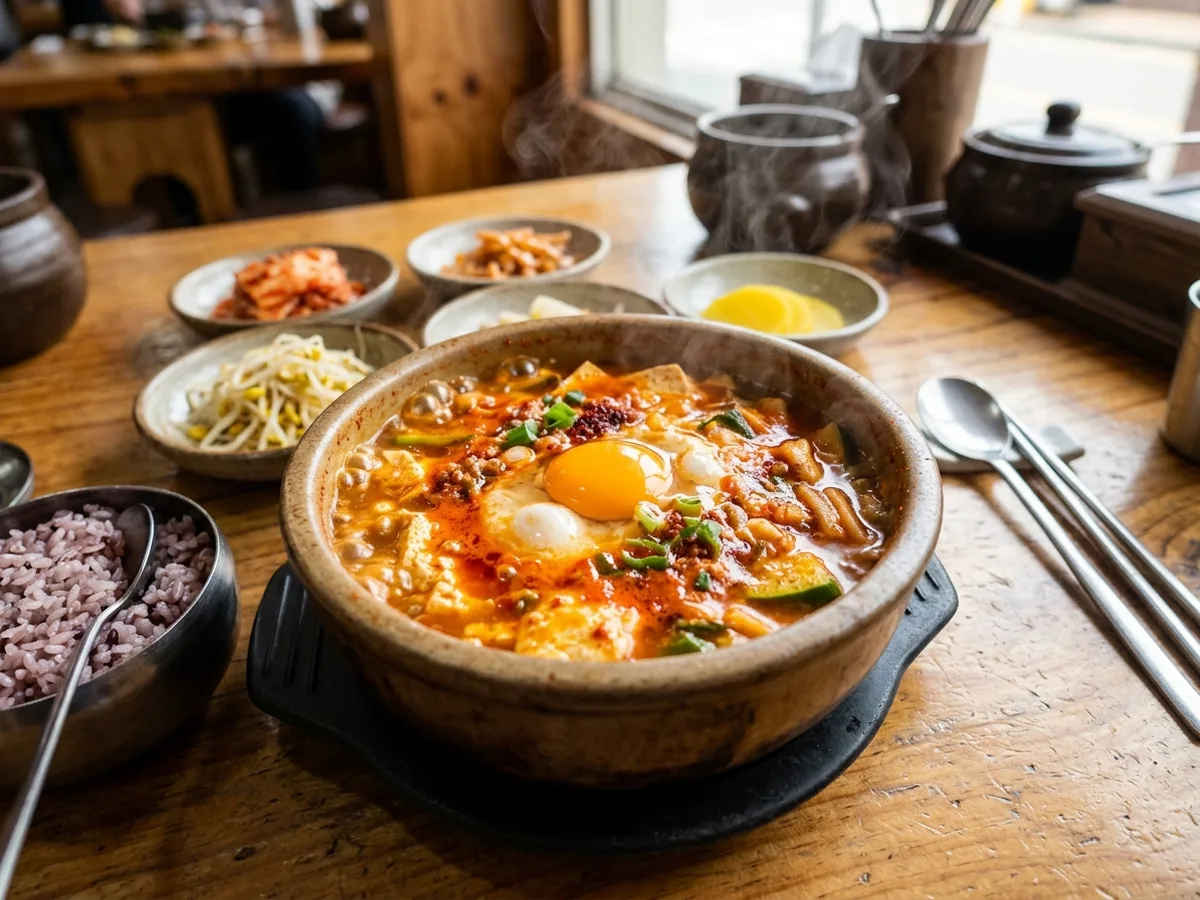 순두부찌개 · Sundubu Jjigae Bubbling soft-tofu stew, served with a raw egg to crack in.
 Scalding soft-tofu stew in a stone pot — arrives literally boiling.
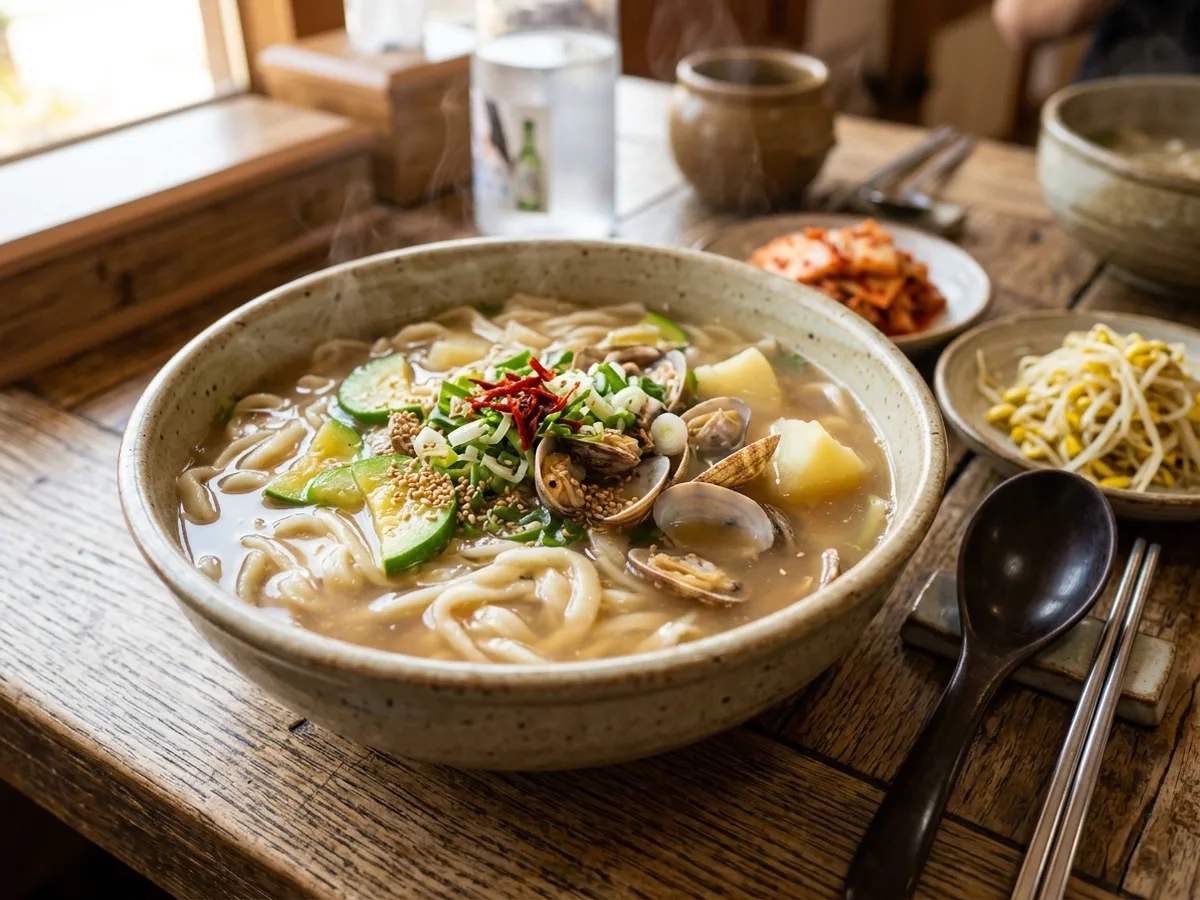 칼국수 · Kalguksu Knife-cut wheat noodles in anchovy or clam broth.
 Hot knife-cut noodles; the market-hall warm-up.
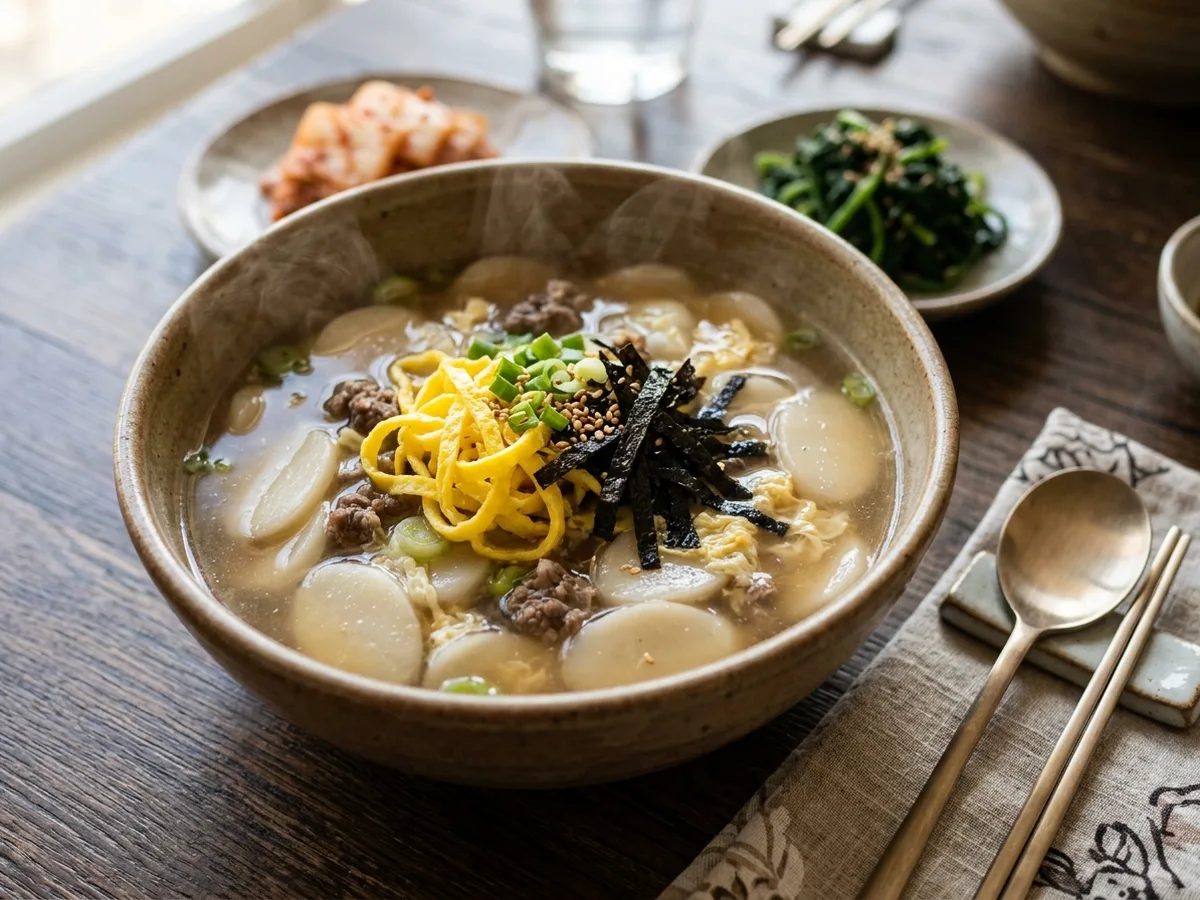 떡국 · Tteokguk Sliced rice-cake soup — eat a bowl, turn a year older (New Year).
 The New Year bowl — winter's ceremonial centerpiece.
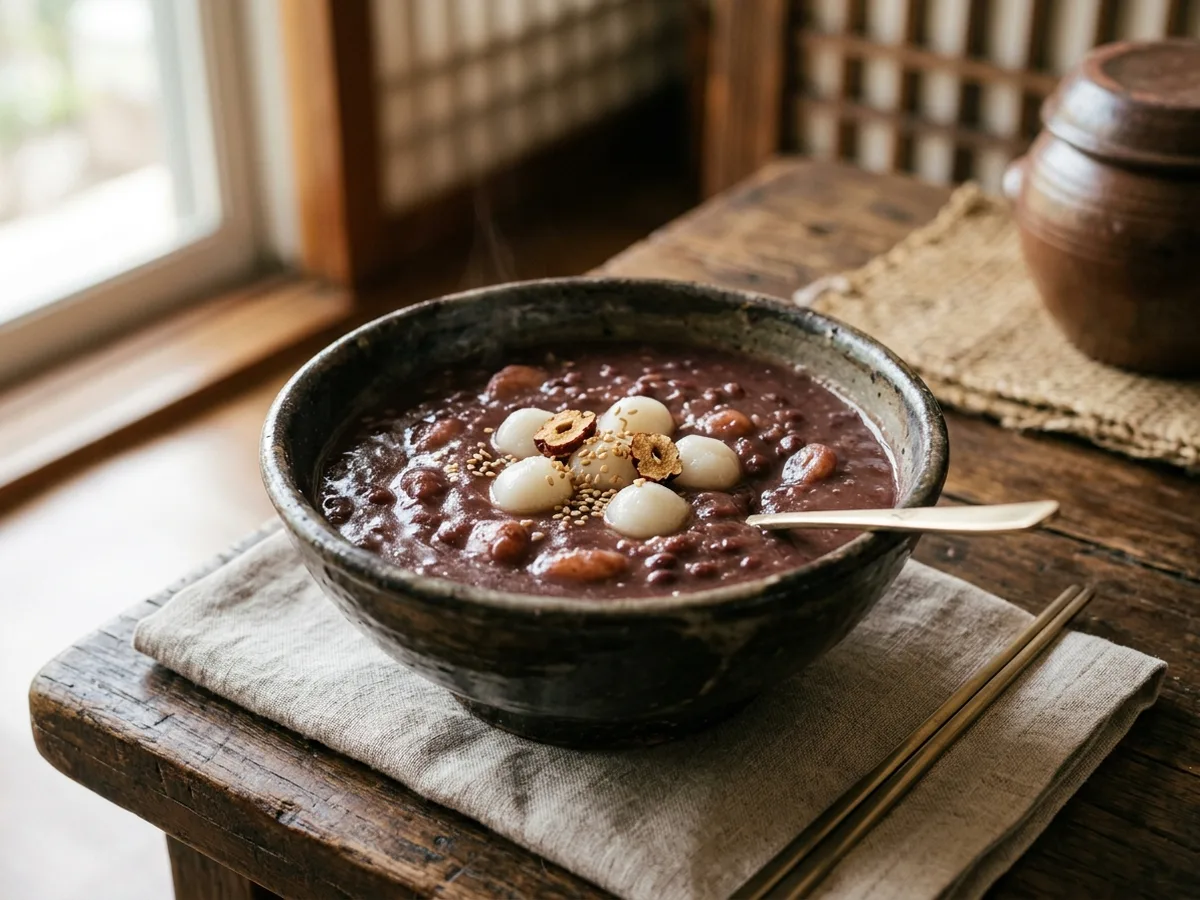 팥죽 · Patjuk Red-bean porridge, traditionally eaten on the winter solstice.
 Red-bean porridge, the winter-solstice tradition.